
When modular industrial equipment systems cut expansion costs
When modular industrial equipment systems cut expansion costs
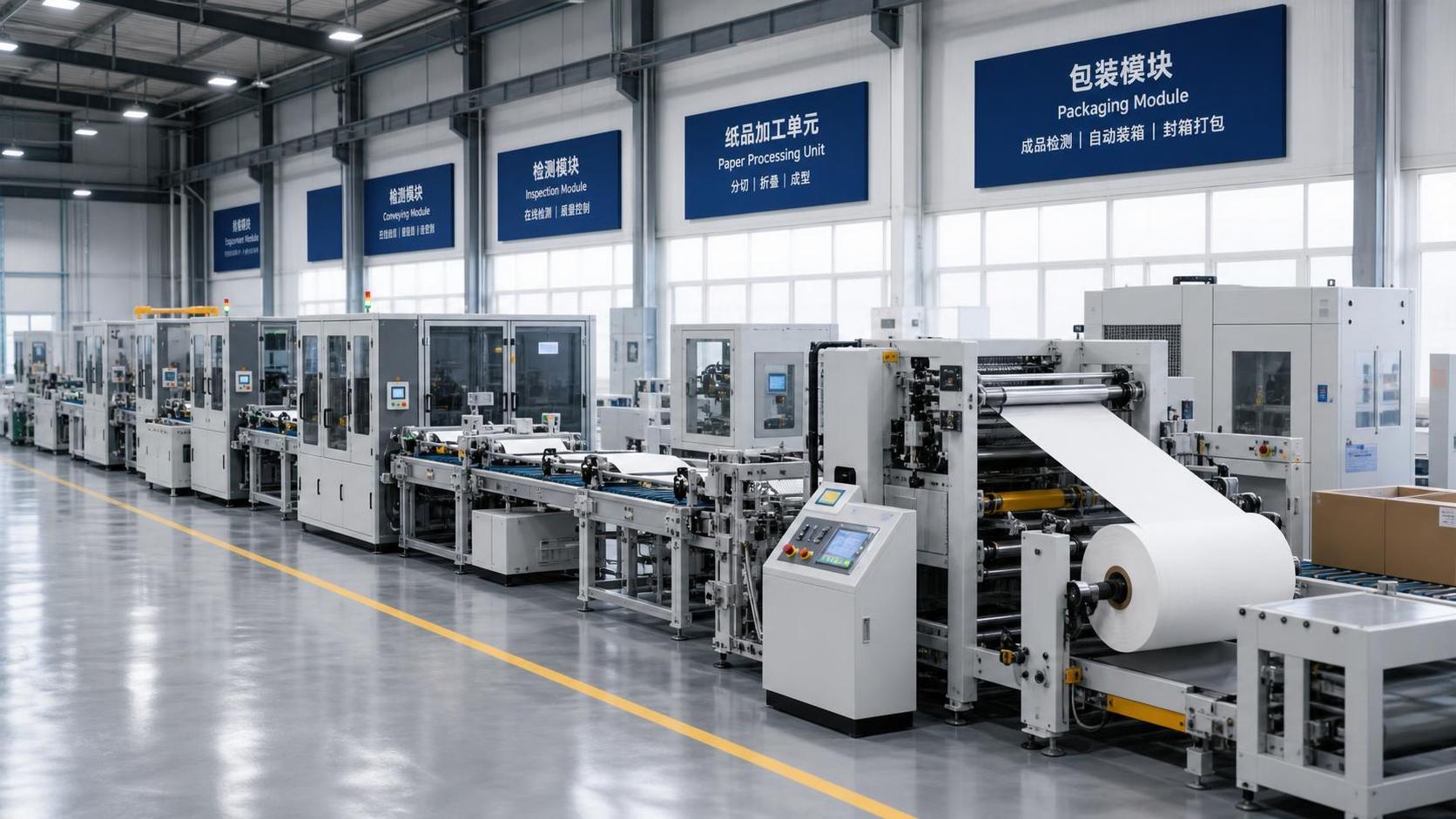
For manufacturers under pressure to add capacity without locking themselves into the wrong asset base, modular industrial equipment systems have become less of a design preference and more of a financial discipline. The logic is straightforward: demand is uneven, labor is expensive, utilities are volatile, and sustainability requirements keep moving from “nice to have” to procurement condition. In that environment, the old model of buying a fully loaded line for a five-year forecast can be hard to defend.
A modular approach does not automatically make equipment cheaper. In some cases, the initial price can even be higher than a fixed, single-purpose build. The cost advantage appears later, in the parts of expansion that usually hurt most: civil work, commissioning time, line stoppages, operator retraining, spare parts complexity, and the risk of paying today for capacity that may not be needed for another two years.
This is especially visible in print and paper converting, where production systems are rarely isolated. A digital press affects downstream finishing; a corrugator affects warp, moisture, and box performance; a folder gluer upgrade changes throughput balance across the plant. That is why decision-makers increasingly look at modularity not only machine by machine, but across the production architecture.
Where the savings really come from
The easiest mistake is to evaluate modular systems only on purchase price. Expansion cost is broader than capex. It includes the engineering effort needed to fit a new section into an existing plant, the downtime required to connect utilities and controls, the inventory tied up in unique components, and the production losses that happen when one upgraded section outruns the rest of the line.
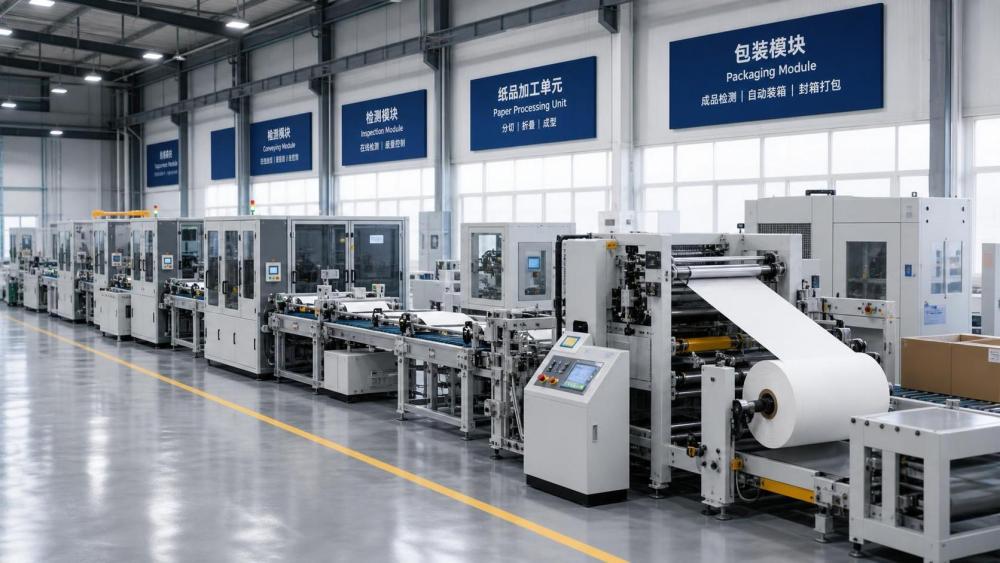
A modular layout can reduce those costs in several ways. Standardized interfaces simplify installation planning. Predefined electrical and software connections lower integration risk. Expandable frames, additional print bars, extra drying capacity, or optional automation cells allow output increases in steps rather than one large jump. For procurement teams, phased investment can also ease internal approval because each spending stage is tied to a clearer operational trigger.
In practice, the most valuable question is not “Is the system modular?” but “Which future changes does the modularity actually cover?” Some machines are marketed as modular because they offer optional accessories. That is not the same as a system engineered for later width changes, speed upgrades, automation add-ons, or digital workflow expansion.
Why this matters in print, corrugated, post-press, and tissue
In industrial digital printing, expansion rarely means adding one more identical machine and walking away. Throughput depends on printhead configuration, RIP performance, substrate handling, drying, inspection, and finishing synchronization. A modular platform may allow later addition of color stations, print width, inspection modules, or data-processing capacity. That matters when short runs and versioning grow faster than total volume. Paying for maximum configuration on day one can be wasteful if the real bottleneck turns out to be data handling or finishing.
Corrugated board lines are a different animal. They are long, capital-intensive, and heavily tied to steam, tension control, flute profiles, and plant layout. Here, modular thinking often shows up in stacker options, wet-end and dry-end balancing, automation sections, glue kitchen upgrades, and controls architecture rather than in simplistic plug-and-play expansion. Because these lines are deeply interconnected, poorly planned growth can trigger hidden costs through board instability, changeover delays, and maintenance overload.
Post-press is often where modularity becomes immediately visible. Die-cutting, stamping, and folder-gluing operations face product mix volatility more than pure tonnage growth. A plant may need more flexibility in blank types, premium finishing, inspection, or packing automation before it needs a larger upstream line. Modular downstream equipment can absorb that variation without forcing a full replacement of otherwise serviceable assets.
Tissue processing follows yet another pattern. Demand is relatively steady, but packaging formats, hygiene standards, labor availability, and automation depth can shift quickly. A converting line designed to accept later packing automation, embossing changes, or rewinding control upgrades can extend asset life and avoid a costly production break when customer requirements evolve.
This cross-process view is one reason industry observers such as IPPS have gained relevance. Its coverage of digital printing technology, corrugated board forming, post-press processing, and tissue machinery reflects how expansion decisions are no longer made in silos. Extreme web tension control, micron-level inkjet behavior, glue bonding curves, and rewinder control algorithms all sound technical, but they shape the real cost of scaling operations.
Modular does not mean low risk by default
There are cases where modular industrial equipment systems disappoint. Usually, the failure is not in the concept but in the assumptions behind the purchase.
One common problem is buying an expandable machine into a non-expandable factory. If power distribution, compressed air, steam, floor loading, network architecture, or material flow are already at their limits, future modules become expensive retrofits. Another is software fragmentation. A line that can physically accept new stations but requires major PLC, HMI, or MES rework each time is not saving much in the long run.
There is also a throughput trap. Decision-makers sometimes assume that adding one module increases total capacity proportionally. It rarely does. In packaging plants, the constraint may sit in drying, stacking, palletizing, or quality inspection. In tissue, wrapping and case packing can become the limiting step. In corrugated, upstream speed means little if moisture control and downstream stability are not aligned.
Vendor dependence needs a sober look too. Proprietary modular platforms can simplify integration while making future sourcing narrower. That trade-off is not inherently bad, but it should be explicit. Procurement should ask which interfaces are standardized, which spare parts are unique, and whether future modules must come from the original builder.
What procurement teams should verify before comparing quotes
A good quotation review for modular equipment goes beyond line speed and installed power. It should test the credibility of the future expansion path. In many projects, this matters more than a small gap in initial pricing.
For paper-based industries, compliance can no longer be treated as a side note. Requirements linked to fiber sourcing, traceability, energy use, and market access are tightening in many regions. The exact impact depends on product category and destination market, but expansion decisions increasingly need to account for FSC-related customer expectations, EUDR-linked documentation pressures, and the broader push toward lower-carbon operations. A modular system that can absorb future inspection, traceability, or energy-management upgrades may be worth more than a cheaper line with no room to adapt.
The hidden value of staged automation
In labor-tight markets, staged automation is often where modular systems justify themselves fastest. Not every plant needs full unmanned operation immediately. But many do need a credible route from manual handling to semi-automatic loading, then to robotic packing, then to closed-loop quality inspection. Buying that path upfront, even if all modules are not installed on day one, can be cheaper than stitching together third-party add-ons later.
This is particularly relevant in folder gluers and tissue packaging, where repetitive manual tasks remain common and labor turnover can erode consistency. The same applies to digital print environments where versioned work and fast changeovers strain operators more than headline speed suggests. If the mechanical base, software architecture, and data layer are designed for future automation, expansion becomes operationally smoother and financially less disruptive.
A better way to think about payback
Payback for modular industrial equipment systems should not be modeled only as labor saved or output added. In many projects, the stronger benefit is option value: the ability to delay part of the spend until demand, regulation, or customer mix becomes clearer. That flexibility has real economic weight, even if it is harder to express in a simple spreadsheet.
The discipline here is to map three scenarios instead of one: the base case, the likely expansion case, and the wrong-forecast case. If the system still makes sense when volume grows slowly or product mix changes unexpectedly, the modular design is doing its job. If the economics only work under an aggressive forecast, the plant may just be buying a more expensive form of uncertainty.
That is also why intelligence matters. IPPS has built its position around exactly this intersection: not just machine categories, but the technical and commercial signals that determine whether an upgrade path remains viable. From fluctuations in paper pricing to the shift toward eco-friendly molding and glue-free bonding, the external context can quickly change the value of a fixed line versus a scalable one.
When expansion costs are high, the best equipment decision is often the one that leaves room for correction. Not endless flexibility for its own sake, but targeted modularity tied to known risks: future format changes, downstream bottlenecks, automation gaps, compliance pressure, or uncertain regional demand. Before approving the next line, it is worth asking a harder question than “What does this machine cost today?” Ask what it will cost to change your mind later. That is usually where the real savings begin.
Industry Briefing
Get the top 5 industry headlines delivered to your inbox every morning.
Recommended News