
What to verify before choosing an industrial printing machinery supplier
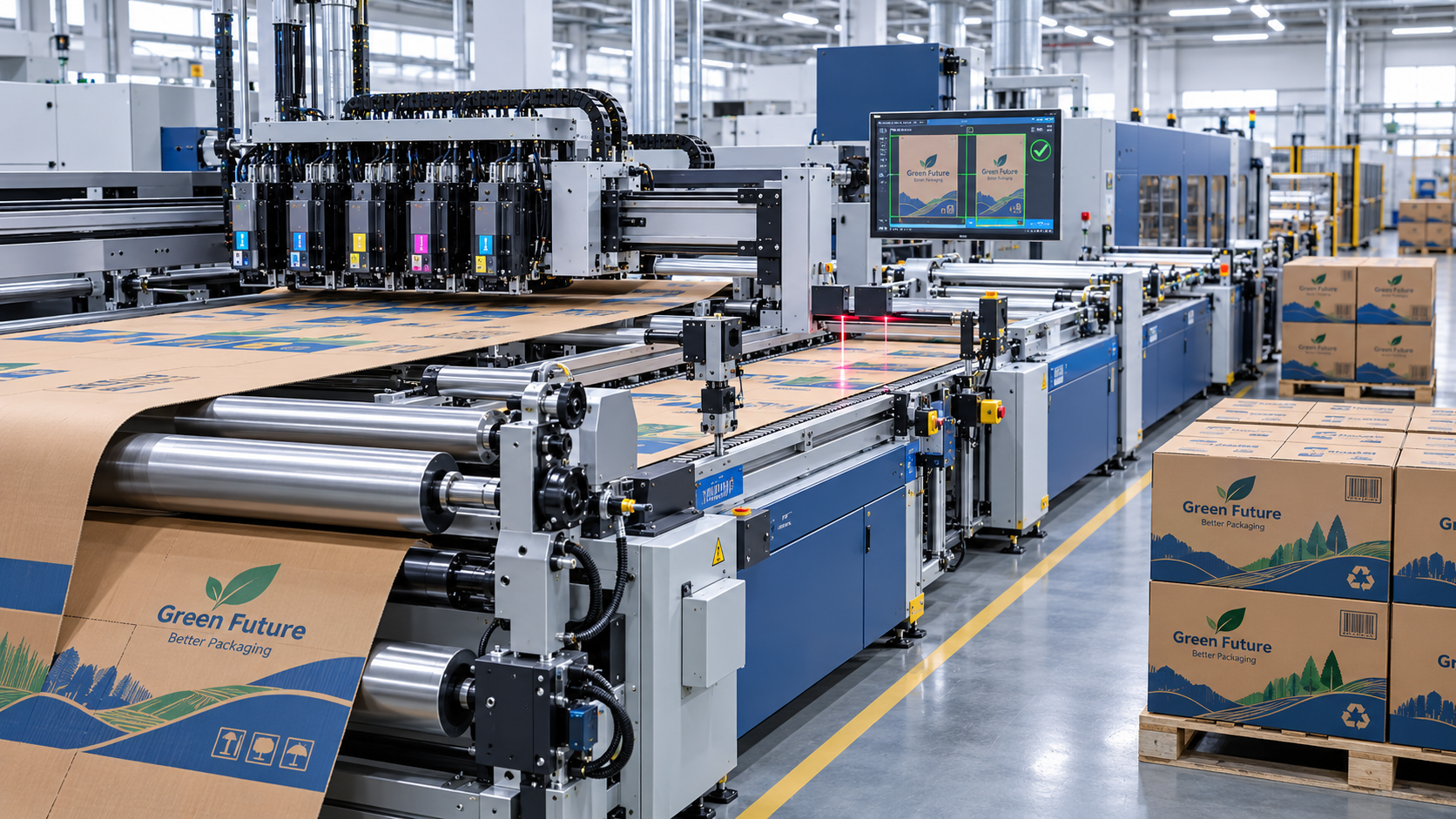
Choosing an industrial printing machinery supplier is a strategic decision, not a catalog comparison. A machine can look impressive during a short demonstration and still become a production bottleneck once it meets real substrates, changing shift crews, uneven board quality, seasonal humidity, or a rush order with tight colour requirements. For procurement teams, the right question is not simply “Which supplier offers the lowest price?” It is “Which supplier can reliably support the output, quality standard, operating model, and service reality we will have for years?”
This matters across industrial digital printing, corrugated board production, die-cutting and stamping, folder-gluing, and tissue converting. Each segment has different critical controls, but the purchasing risk is surprisingly similar: buyers often focus on rated capacity while underestimating material behaviour, integration complexity, spare-parts access, and the supplier’s ability to solve problems after commissioning.
Start with the production reality, not the machine brochure
Before approaching an industrial printing machinery supplier, document the production conditions the equipment must actually handle. This should include substrate range, sheet or web width, thickness variation, moisture sensitivity, expected job-change frequency, finishing requirements, operator skill level, and acceptable waste during start-up and changeover.
A corrugated converter running a narrow range of stable board grades has a different need from a plant processing recycled liners with changing surface characteristics. Likewise, a digital printer producing short runs of personalised retail packaging needs flexible workflow and colour consistency more than headline maximum speed. A tissue line may be judged less by its nominal rewinding speed than by parent-roll handling, embossing quality, dust management, and packaging-line synchronisation.
Ask suppliers to respond to a written application brief rather than a generic request for quotation. If the response does not clearly state assumptions, exclusions, and substrate limits, treat the quoted performance cautiously. “Up to” capacity figures are useful reference points, but they are not a production guarantee.
Verify performance on the materials you will really run
The most useful machine demonstration is rarely the clean, standard job prepared by the supplier. It is a controlled test using representative production material: the board grade, paper stock, coating, ink coverage, adhesive system, flute type, or tissue basis weight that creates difficulty in your own operation.
For industrial inkjet systems, check more than visual print quality. Ask how the machine manages ink adhesion, drying or curing, nozzle maintenance, colour control, and data processing when files become variable or artwork changes frequently. On corrugated surfaces, ink behaviour can shift with liner composition and porosity. A print sample that looks sharp on a smooth test sheet may not represent performance on a more absorbent or uneven production board.
For die-cutting and stamping equipment, inspect registration stability, crease quality, stripping reliability, tool-change procedure, and output consistency over a meaningful run. For folder gluers, do not only observe a simple straight-line carton. Include the box styles that create alignment problems, difficult folds, glue-stringing risks, or unstable squareness. These are the jobs that determine whether a line remains productive on a busy shift.
A practical factory acceptance test should define the test materials, job files, target tolerances, acceptance method, rejected-product criteria, utilities required, and who pays for repeat testing if agreed conditions are not met. The purpose is not to make the supplier uncomfortable. It is to make sure both sides are measuring the same thing before equipment is shipped.
Look behind speed claims: tension, registration, waste, and recovery time
In paper and packaging machinery, stable control is often more valuable than a dramatic top-speed number. A corrugator depends on heat, steam, adhesive application, web alignment, and tension management working together. If web tension fluctuates, the issue may appear later as board warp, poor bonding, trimming loss, or unstable downstream converting.
The same principle applies to unwinders, rewinders, and high-speed tissue systems. Ask how tension zones are controlled, what feedback devices are used, how the system responds to roll diameter changes, and what happens during splices or emergency stops. A supplier should be able to explain the operating logic in practical terms, not merely point to a control screen.
For every major line, procurement should request clarification on four operational measures:
- Expected changeover procedure and the manual steps still required.
- Typical sources of start-up waste for the intended application.
- Time and process required to recover after a jam, splice failure, print defect, or glue issue.
- Which operating conditions can reduce achievable speed or output quality.
No supplier can promise that a complex production line will never stop. What matters is whether faults can be located quickly, whether the machine gives operators useful diagnostics, and whether recovery is repeatable rather than dependent on one highly experienced technician.
Assess automation as an operating system, not a sales feature
Automation can reduce handling, improve repeatability, and make shorter runs more economical. It can also create a costly dependency if interfaces, recipes, sensors, and software ownership are unclear. The question is not whether a machine is “automated”; nearly every supplier will say it is. The question is which tasks are automated, which tasks remain manual, and how the automation behaves when real production becomes messy.
Review compatibility with the plant’s existing workflow. This may include prepress systems, ERP or MES platforms, barcode tracking, inspection systems, automatic pallet handling, robotic loading, downstream packing, or remote support tools. In digital print environments, front-end workflow and data handling can be as influential as the press itself. In post-press, the handover between feeder, die-cutter, folder gluer, and packing station deserves equal attention.
Ask who owns and can access machine data. Can your team export production records, alarm histories, maintenance logs, and energy-related operating data? Can recipes be backed up independently? Is remote access controlled and approved by the plant? These questions tend to become urgent only after a line has been installed, which is too late.
Examine engineering depth and component transparency
A credible supplier should be able to discuss the critical engineering choices behind the machine. For example, a digital printer supplier should explain printhead maintenance strategy, ink circulation, substrate transport, and defect-detection options. A corrugator supplier should clearly identify the design approach to heating, pressure, glue application, belt or roll condition, and web guidance. A folder-gluer manufacturer should be open about the glue system, folding section configuration, carrier design, and carton control points.
Component transparency matters because it affects lifetime maintenance. Procurement does not need to dictate every motor, bearing, sensor, or PLC brand, but it should know whether key parts are standard industrial components available locally or proprietary items obtainable only through the original supplier. Proprietary parts are not automatically a problem. They become a problem when lead times, prices, interchangeability, and emergency stock are not disclosed.
Request a recommended spare-parts list separated into commissioning spares, annual consumables, wear parts, and critical contingency parts. This prevents a common mistake: approving a capital budget for the machine while leaving the operating team without the parts needed to keep it running.
Treat service capability as part of the equipment specification
A sophisticated line installed far from the supplier’s service network can be a risky purchase, especially where production runs continuously or where downtime affects downstream filling, logistics, or retail commitments. Verify where technical support is based, which languages are available, whether local field engineers exist, and how escalation works when remote diagnosis is insufficient.
Do not settle for vague statements such as “global service available.” Ask for the supplier’s proposed support structure for your location: commissioning team, training plan, remote-support method, spare-parts logistics, preventive-maintenance scope, and responsibilities during the warranty period. Also clarify whether software updates, calibration support, printhead servicing, tooling setup, or process optimisation are included or separately charged.
Training needs special scrutiny. A good commissioning session is not the same as a sustainable operator-training programme. Shift leaders need fault diagnosis and quality-control routines; maintenance teams need lubrication, alignment, safety, electrical, pneumatic, and software access guidance. If complex knowledge remains with the supplier’s travelling technician, the plant is not yet operationally independent.
Confirm compliance, safety, and sustainability claims with documents
Compliance requirements depend on destination market, application, and local regulations. Machinery buyers should verify which declarations, risk assessments, manuals, electrical documentation, guarding arrangements, and safety functions are required for the installation country. A supplier’s statement that a machine is “compliant” is not enough if the documentation does not match the final configuration, including optional modules and linked automation.
Sustainability should also be examined at system level. In paper-based packaging, interest in recyclable formats, fibre sourcing, lighter board structures, paper replacing plastic, and glue-reduction concepts is growing in many markets. Yet a machine’s environmental fit cannot be judged by a label alone. Review energy demand, waste generation, cleaning materials, ink or adhesive chemistry, compressed-air needs, water use where relevant, and the ability to run the substrates your customers specify.
Where customers require FSC-related chain-of-custody documentation or where EUDR obligations may affect sourcing, the machinery supplier is not usually responsible for the buyer’s compliance system. Still, equipment choices can influence traceability, material segregation, job identification, and process records. That connection is worth discussing early rather than treating sustainability as a separate purchasing box.
Compare total operating exposure, not only purchase price
The cheapest quotation may be the expensive option if it brings high waste, difficult maintenance, unplanned tooling costs, restricted software access, or slow spare-parts delivery. At the same time, the most elaborate machine is not automatically the safest investment if its capacity, automation level, or complexity exceeds the plant’s actual order profile.
Build the comparison around the costs and constraints that matter to the project: installation and civil works, utilities, commissioning, operator training, tooling, inks or adhesives, routine maintenance, critical spares, planned upgrades, expected consumables, and integration with existing equipment. If a supplier cannot provide enough information for this evaluation, that lack of visibility is itself a purchasing risk.
For multi-stage packaging operations, look at the whole production route. A fast printer that creates finishing bottlenecks, or a high-output die-cutter that overwhelms folding and packing, does not deliver the capacity the quotation implies. The best equipment decision usually improves flow between processes rather than optimising one machine in isolation.
Use references to test fit, not just reputation
Supplier references are most valuable when they resemble your intended application. A reference site running a different substrate, product mix, climate, labour model, or service arrangement may still be useful, but its results should not be transferred directly to your project.
When speaking with a reference user, ask practical questions: What took longer than expected during installation? Which jobs are easiest and hardest to run? What parts are routinely kept on site? How responsive is support when a fault cannot be solved remotely? Would they specify the same options again? These questions often reveal more than a guided factory tour.
The strongest industrial printing machinery supplier is usually not the one making the broadest promises. It is the one willing to define operating boundaries, prove critical performance on relevant materials, explain service commitments in detail, and document what happens when production conditions are less than ideal. That discipline is especially important in printing and paper packaging, where micron-level print control, web tension, glue behaviour, fibre variation, and downstream handling all meet on the factory floor.
Before signing, turn every critical verbal commitment into a clear technical, commercial, or acceptance-test document. It may feel slower at the procurement stage. In practice, it is often the fastest way to avoid years of avoidable operational friction.
Industry Briefing
Get the top 5 industry headlines delivered to your inbox every morning.
Recommended News