
How to verify a green paper-based packaging supplier's claims
Choosing a green paper-based packaging supplier requires more than accepting sustainability claims at face value. A carton may carry a forest certification logo, contain recycled fiber, or be described as recyclable—but each statement answers a different question. For procurement teams, the challenge is to establish what the claim covers, whether the evidence applies to the packaging being purchased, and how it will hold up when the design or supply chain changes.
A useful review does not have to begin with a lengthy audit. Start with the proposed pack, identify the claims that matter to your business and customers, and request evidence specific to that product. The following checks can help you distinguish a credible supplier from one whose environmental story is stronger than its documentation.
Start by defining the packaging and the claim
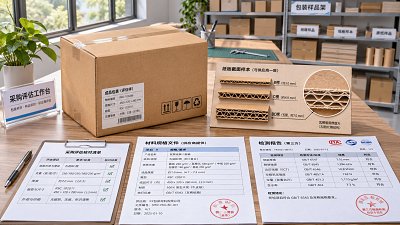
Ask the supplier to describe the complete packaging specification before discussing its environmental credentials. A corrugated shipping box, for example, may include virgin and recycled paper layers, printed graphics, adhesive, tape, labels, and a moisture barrier. A statement about the board alone may not reflect the finished pack.
Record the product or SKU, material composition, production site, intended market, and expected use. Then turn broad language into questions that can be checked:
- “Responsibly sourced”: Which fiber inputs and sites are covered, and under which sourcing standard?
- “Made with recycled content”: What percentage, measured how, and does it refer to the whole pack or only one layer?
- “Recyclable”: Is that assessment for the finished packaging, including coatings and attachments, in the intended market?
- “Lower carbon”: Lower than what alternative, across which life-cycle stages, and according to which methodology?
This distinction matters during supplier comparisons. Two quotes may look equivalent until one claim is found to cover the finished box and the other only the paper purchased by the converter.
Verify fiber certifications and chain of custody
Forest certification can support a sourcing claim, but a logo on a brochure is not enough. Systems such as FSC and PEFC have certification and chain-of-custody requirements designed to track eligible material through participating businesses. The procurement task is to check whether the certificate and the transaction actually support the claim being made.
Request the supplier’s certificate details, including the legal entity, site, scope, and validity dates. Check the information against the relevant certification scheme’s public database or the issuing certification body. If a trader, printer, or converter is involved, establish which entity will invoice you and whether the applicable chain-of-custody requirements are met.
Then compare the certificate with the proposed product documentation. Ask how the material will be identified on quotations, invoices, or delivery documents, and confirm that the specific certification claim is appropriate for that transaction. A valid certificate held by a parent company does not automatically establish that every product or facility is covered.
Keep regulatory due diligence separate from certification. A certificate may be useful supporting evidence, but it does not automatically demonstrate compliance with regulations such as the EU Deforestation Regulation (EUDR). Applicability depends on the product, supply-chain role, and current legal requirements. Where relevant, ask who is responsible for due diligence and what traceability information can be provided; confirm current requirements with qualified legal or compliance advisers.
Test recycled-content claims at the right level
“Contains recycled paper” is a starting point, not a specification. Ask for the percentage by mass, the calculation method, and whether the figure is a minimum, an average, or a product-specific value. Clarify whether it applies to the paper component, the board, or the entire finished package.
Distinguish pre-consumer from post-consumer recycled content where that matters to your purchasing policy or public claims. Request a material declaration and, where available, independent verification or certification relevant to the stated content. If the supplier uses a mass-balance or credit-based system, ask how that system works and avoid treating an allocated claim as a physical measurement of every individual box.
Recycled content also has to be evaluated alongside performance. Fiber composition can influence strength and consistency, while storage conditions, flute profile, liner selection, and conversion quality matter too. A higher recycled-content figure should not be accepted—or rejected—without testing the proposed specification against the actual application.
Investigate recyclability as a finished-pack question
Paper-based does not always mean a pack can be readily recycled everywhere. Plastic laminates, heavy coatings, barrier treatments, wet-strength additives, and non-paper components can affect how packaging behaves in collection, sorting, and paper recycling systems. Even where a material is technically recyclable, access to suitable collection and processing may vary by market.
Ask for the composition of coatings, inks, adhesives, labels, windows, and other attachments. Then request test reports or assessments appropriate to the packaging format and destination. Check the test method, laboratory, sample description, date, and whether the sample matches the pack you intend to buy. A result for an unprinted board is not necessarily evidence for a coated, printed, glued box.
When a supplier says a component is “recyclable,” ask whether it needs to be removed by the user. If the answer depends on a specialist recycling stream, consider whether that stream is realistically available to your customers. Marketing language and disposal instructions should reflect those conditions rather than imply universal acceptance.
Be careful with compostability claims
Compostability is a separate claim from recyclability and biodegradability. If it is relevant to the application, ask which recognized standard and certification scheme apply, whether the complete pack is covered, and whether the claim concerns industrial or home composting. Also check whether suitable facilities exist in the intended market. A compostable coating does not automatically make every part of a package compostable.
Look beyond the certificate: how is the pack made?
Manufacturing choices can affect both material use and operational performance. They also create opportunities for unsupported environmental claims. Ask the supplier to explain the production route and provide data for the site and period relevant to your order where feasible.
- Corrugated board: What are the liner and medium specifications, flute profile, and basis weights? Has the proposed lighter board been tested for stacking, handling, and transport?
- Printing: Which inks and print processes are used? If digital printing is proposed to reduce setup or obsolescence, what order pattern would make that benefit plausible for your application?
- Die-cutting and finishing: How much trim or process waste is expected, and how is it handled? Are foils, varnishes, or laminates necessary for the design?
- Folding and gluing: Which adhesive is used, at what points, and is it included in recyclability testing?
These questions do not require buyers to become machine specialists. They do help reveal whether a supplier understands the relationship between design, conversion, and the final environmental claim. A box that uses less board but fails in distribution may lead to product damage and replacement packaging; lightweighting should therefore be validated against performance, not evaluated in isolation.
How to assess carbon and other impact claims
Requests for emissions data often produce figures that look comparable but are not. Before using a supplier’s number in a sourcing decision, ask for the calculation basis: the functional unit, reporting period, geographic scope, system boundary, data sources, and methodology. For packaging, a useful functional unit might be a specified number of finished packs, with their dimensions and performance requirements clearly stated.
Find out which stages are included. Does the figure cover fiber production, purchased paper, conversion, transport, use, and end-of-life treatment—or only the supplier’s own factory operations? Ask how recycled inputs, biogenic carbon, electricity purchases, and offsets are treated. If two suppliers use different boundaries or assumptions, their results should not be ranked as if they were directly equivalent.
Independent review can strengthen confidence, but it is still important to read the scope of that review. A verified company inventory is not necessarily a verified footprint for your particular box. Likewise, a claim of “carbon neutral” should be examined for its reliance on offsets and the activities covered, rather than interpreted as meaning no emissions occurred.
A practical supplier evidence checklist
Use a consistent request across shortlisted suppliers. The goal is not to collect the thickest folder; it is to obtain documents that connect the claim to the item being purchased.
If a document is confidential, ask whether the supplier can provide a redacted version, a direct confirmation from its auditor, or a controlled review under a confidentiality agreement. An unwillingness to share commercially sensitive details is not automatically a warning sign; an inability to explain or substantiate a central claim deserves closer attention.
Build verification into the purchasing decision
Compare suppliers on more than the number of environmental claims they make. Give weight to traceable evidence, fitness for purpose, supply continuity, cost, and the supplier’s willingness to notify you when materials or processes change. A modest, well-supported claim can be more valuable than an ambitious one that cannot be checked.
Before placing an order, put the agreed board specification, recycled-content basis, certification claim, relevant performance requirements, and supporting documents into the purchasing record. Include a change-control clause requiring notice before substitutions to paper grade, coating, adhesive, ink, production site, or other features that could affect performance or environmental claims.
Finally, set a review point. Certificates expire, collection systems differ, and packaging designs evolve. Recheck documentation at renewal and whenever the specification changes. For a procurement team, the strongest relationship with a green paper-based packaging supplier is not built on a single promise; it is built on evidence both parties can maintain over time.
Industry Briefing
Get the top 5 industry headlines delivered to your inbox every morning.
Got questions about the latest insights discussed here, or seeking customized strategic advice for your business? Drop us a line below, and let the think-tank experts at IPPS help you out.
“We respect your privacy. Your information is strictly confidential.”
Recommended News