
How much does industrial print automation cost to implement?
Industrial print automation cost can range from the expense of a limited software or machine retrofit to a much larger investment in a new press and connected finishing line. There is no reliable universal price: equipment condition, integration work, production capacity and the amount of automation all change the total. An approval decision should therefore compare supplier quotes on a consistent scope and include costs beyond the purchase price.
The distinction matters when a proposal promises faster production but leaves installation, downtime or recurring software charges outside the initial figure. A financially useful estimate covers the path from the current workflow to an accepted, operating system, then tests whether the expected savings are achievable at the plant’s actual workload.
Start with the scope, not the machine price
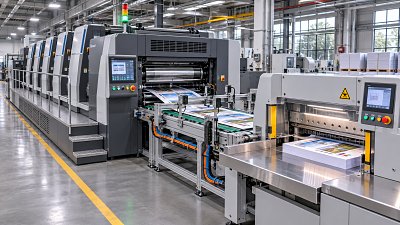
“Print automation” can describe several different purchases. Automating job intake and prepress may require software, configuration and connections to existing systems. Retrofitting an existing press may add sensors, controls or automated handling. Replacing a press can also bring changes to finishing, material movement, utilities and operator roles. These options do not provide the same output or carry the same implementation risk.
Before requesting a budget, define the production boundary. Does the proposal end when a job is printed, or when finished, inspected and packed work is ready for dispatch? A press that runs faster may simply move a bottleneck to die-cutting, folding, gluing or packing. Conversely, improving job preparation and scheduling may address delays without replacing the press.
These are scope categories, not price bands. The same category can produce very different quotations depending on speed, print width, substrate, finishing requirements and the condition of existing equipment. Obtain a budgetary quote for each credible option rather than applying a generic percentage to the press price.
Build the implementation budget around cost ownership
A supplier’s equipment quotation is a starting point, not necessarily the total project cost. Separate one-time implementation expenditure from ongoing operating costs, and identify who is responsible for each item. This also exposes costs that fall on internal teams rather than appearing on a supplier invoice.
Equipment, software and integration
Include the press or automation hardware, necessary software licenses, inspection equipment and material-handling interfaces within the defined scope. Confirm whether the quoted configuration includes the required production speed, print quality, substrate handling and finishing connections. Optional modules can materially change the price of an apparently comparable proposal.
Integration is often less visible. Job information may need to move from order entry or a management system into prepress, the press and production reporting. Existing equipment may use different interfaces, incomplete data fields or custom controls. Budget for interface development, configuration, testing and any third-party access or licensing charges. Ask each supplier to state which connections are included and who resolves failures between systems.
Site readiness and commissioning
Check whether electrical capacity, compressed air, ventilation, floor loading, network access or material storage must change. The relevant work depends on the equipment and site; not every project requires every modification. Include delivery, rigging, installation and disposal or relocation of replaced equipment where applicable.
Commissioning should cover more than switching the system on. Allow for setup, calibration, test materials, production trials and corrections before acceptance. Clarify whether supplier travel, additional visits and consumables used during testing are included. If production must pause during installation, model the economic impact of the affected orders rather than treating downtime as a free operational inconvenience.
People and recurring costs
Training includes time away from production as well as any supplier charges. Depending on the scope, operators, maintenance staff, prepress personnel and production planners may need different instruction. A budget that covers only initial operator training can leave the site dependent on external support for routine adjustments or troubleshooting.
For the operating model, identify maintenance contracts, software subscriptions, support response levels, spare parts, printheads where applicable, consumables and utility changes. Record renewal terms and any charges tied to volume, users or connected equipment. The relevant comparison is the incremental cost against the current process, not simply the new system’s annual bill.
Compare quotes using a common boundary
Two proposals may appear far apart because one includes installation and integration while the other quotes only hardware. Ask suppliers to price against the same production requirements and provide a breakdown of included, optional and excluded work. A useful request should specify the products and substrates to be handled, expected job sizes, required output, operating pattern and the systems that need to exchange data.
- Define a baseline. Record current production volumes, labor hours, setup time, waste and relevant operating costs for the work being considered. Use a representative period and note unusual demand or outages.
- Request itemized pricing. Separate equipment, software, installation, integration, training, testing, support and recurring charges. Ask for assumptions behind any allowance.
- Assign exclusions. For every excluded activity, identify whether the plant, another contractor or the supplier will perform it, and obtain an estimate where possible.
- Set acceptance conditions. Specify the products, operating conditions and evidence needed to demonstrate the agreed performance before final acceptance.
- Document change control. Require written approval for changes to scope, price or schedule, including work discovered during integration.
Pay particular attention to dependencies between suppliers. For example, an automation vendor may assume the press can supply production data, while the press vendor may charge separately to enable access. Neither quote alone reveals the full cost. An interface responsibility matrix can identify the owner of each connection, test and corrective action before contracts are signed.
Where a price is still uncertain, show an estimated range in the internal business case and explain its basis. Keep an explicit contingency for unresolved scope rather than hiding it inside an optimistic equipment estimate. The contingency should reflect identified risks and the maturity of the design; it is not a substitute for obtaining quotes.
Calculate payback without counting the same benefit twice
Simple payback is the total upfront investment divided by annual net cash benefit. For this purpose, upfront investment includes implementation costs through operational acceptance. Annual net benefit is the incremental cash savings and contribution from additional profitable output, less incremental operating costs. Use the organization’s normal cash-flow and discounting methods when the decision requires a fuller investment appraisal.
Consider a hypothetical calculation expressed in variables rather than assumed prices: if the complete implementation cost is I and the annual net cash benefit is B, simple payback is I ÷ B, provided B is positive and reasonably stable. A negative or uncertain B calls for a different scope or stronger evidence, not a forced payback figure. Include the timing of ramp-up in a cash-flow model, because savings may not begin at full capacity immediately after installation.
Labor savings need particular care. Reduced touch time does not automatically reduce payroll. A cash saving may arise if overtime, temporary labor or a vacant position is genuinely avoided; otherwise, the benefit may be released capacity. Treat released capacity as financial value only when there is a credible plan to use it, such as producing additional work with a measurable contribution after variable costs.
Waste reduction should also be valued at the relevant avoidable cost. Track the material, ink, finishing inputs and disposal costs that would actually change. Avoid counting the same reduction once as lower consumable spending and again as additional saleable output unless the model clearly separates those effects. Apply the same discipline to faster setup: time saved creates value only if it reduces paid time, avoids another cost or supports profitable throughput.
Against these benefits, deduct new support fees, additional consumables, maintenance and any other incremental operating expenditure. Keep financing, tax, depreciation and residual-value assumptions consistent with internal policy; their treatment differs depending on whether the calculation is simple payback, accounting return or discounted cash flow.
Test the assumptions that can overturn approval
Use a base case supported by current production records and supplier commitments, then vary the assumptions with the greatest impact. Useful tests include a slower ramp-up, lower order volume, smaller waste reduction, extra integration work and a longer production interruption. Show which assumptions are under the plant’s control and which depend on demand or supplier performance.
Capacity is a frequent source of overstated returns. If finishing or packing cannot handle additional printed output, the value of a faster press may be limited until those constraints are addressed. Include the cost of removing the bottleneck, or base the benefit on the output that the entire process can actually deliver. Similarly, a workflow automation project may save prepress time but produce little throughput gain if job specifications still arrive incomplete.
Separate committed outcomes from estimates. A supplier may specify equipment performance under defined conditions, while savings depend on the plant’s job mix, staffing and utilization. Ask for the assumptions behind performance claims, including substrate, coverage, changeovers and inspection requirements. A trial using representative work can reduce uncertainty, provided its cost, duration and success criteria are agreed in advance.
Link payment and acceptance to usable production
The approval package should describe when expenditure becomes due and what evidence releases each payment. Define delivery, installation and acceptance milestones in the contract, along with responsibilities for delays and remediation. Acceptance criteria should cover the agreed configuration and interfaces, not just a demonstration that the equipment can run.
For a connected print workflow, evidence might include successful transfer of representative job data, correct output through the agreed production stages and operator training completion. Where performance targets are included, specify how they will be measured, over what operating period and under which material and job conditions. Avoid relying on a single ideal test if the business case depends on a broader mix of work.
Finally, retain the baseline and assumptions used for approval so actual results can be reviewed after ramp-up. Compare implementation spending with the authorized scope and measure benefits against the same production boundary. If the expected return depends on a downstream upgrade, a staffing decision or a minimum volume of orders, record that dependency explicitly before funds are committed.
Industry Briefing
Get the top 5 industry headlines delivered to your inbox every morning.
Got questions about the latest insights discussed here, or seeking customized strategic advice for your business? Drop us a line below, and let the think-tank experts at IPPS help you out.
“We respect your privacy. Your information is strictly confidential.”
Recommended News