
How does automation affect folding and gluing system prices?
Automation raises the purchase price of a folder-gluer when it adds powered adjustments, electronic controls, inspection equipment, or automated material handling. Whether that higher price is justified depends less on the number of features than on how often they improve output, reduce changeover time, or prevent costly defects.
For a buyer comparing folding gluing systems price quotations, the most useful question is not simply “How automated is the machine?” It is “Which production tasks are automated, what remains manual, and what does each supplier include in the quoted system?” A lower-priced machine may be the better investment for long, stable runs, while a higher-priced configuration may earn its premium in a plant handling frequent job changes or demanding quality requirements.
Where automation adds to the price
A folder-gluer is rarely priced as a single, interchangeable piece of equipment. Its cost reflects the base machine, the box styles it must handle, and the equipment needed to feed, fold, glue, inspect, and deliver finished products. Automation can be added at several points in that process.
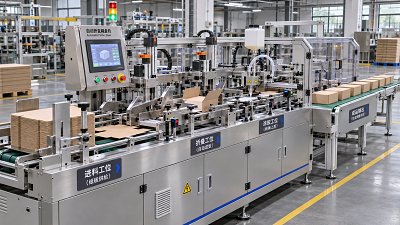
Automatic setup and job recall
Motorized adjustments and stored job settings can reduce the time operators spend repositioning components between orders. Depending on the configuration, these functions may control selected machine sections rather than the entire line. Some adjustments, tooling changes, and production checks may still require manual work.
This feature tends to be more valuable when the production schedule includes frequent changes between carton sizes or styles. A plant that runs the same straightforward product for long periods may have fewer opportunities to recover the extra investment. Ask suppliers which settings are recalled automatically and which steps remain outside the system.
Electronic glue control
Electronic glue systems can control where adhesive is applied and coordinate application with the movement of each blank. More sophisticated configurations may include programmable patterns, monitoring, and integration with inspection or rejection equipment.
The extra cost can be worthwhile when products have narrow glue areas, multiple application points, or exacting presentation requirements. However, a programmable gluing system does not eliminate the need to select the right adhesive or maintain clean applicators. Glue performance also depends on the board surface, production conditions, and the time available for the bond to develop.
Inspection and rejection
Inspection equipment adds cameras, sensors, controls, and often a mechanism to remove suspect cartons. Depending on the specified system, it may check for issues such as missing glue, incorrect codes, or print defects. These are different inspection tasks; one camera package should not be assumed to cover them all.
The financial case is strongest when an undetected defect could lead to rejected shipments, product recalls, or expensive sorting. For simpler products with less demanding inspection requirements, the same package may add cost without addressing the main production risk. Define the defect types to be detected and ask how the system handles false rejects and missed defects.
Feeding, delivery, and material handling
Automation can extend beyond the folder-gluer itself to blank feeding, collection, counting, packing, and connections with upstream or downstream equipment. These additions can reduce repetitive handling and help maintain a steady flow, but they also increase equipment cost, floor-space requirements, and integration work.
Consider the entire line before paying for a faster automated delivery. If upstream die-cutting cannot provide blanks consistently, or finished cartons still require manual packing at a slower rate, the folder-gluer may spend much of its time waiting.
Compare like-for-like configurations, not headline prices
Two quotations can appear to cover the same automatic folder-gluer while including very different capabilities. One may cover a basic straight-line configuration; another may include equipment for additional box styles, electronic glue control, inspection, or automated packing.
Build a common specification before comparing prices. At a minimum, ask each supplier to identify the following:
- Product range: supported box styles, blank dimensions, board types, and any required optional modules.
- Automation scope: which adjustments, glue functions, inspection tasks, and handling operations are included.
- Delivery scope: feeder, glue equipment, compressor or other utility requirements, conveyors, and downstream components.
- Implementation: installation, commissioning, operator training, integration, and production acceptance support.
- Ongoing support: warranty coverage, spare parts, software support, service response, and maintenance requirements.
Separate the base price from options and one-time project costs. A quote that excludes installation, freight, site preparation, or necessary auxiliaries is not directly comparable with an installed and commissioned system. Also check whether the listed capabilities apply to every product in your planned range or only to certain formats.
When does the automation premium pay for itself?
Start with the production constraint you want to change. Automatic setup is difficult to justify on changeover savings if the machine rarely changes jobs. Likewise, labor savings should not be counted unless the new workflow actually allows staff time to be reassigned or avoids a planned hire.
For a practical comparison, estimate the annual benefit of each relevant improvement and compare it with the additional investment. Use the same expected workload and operating period for all offers:
- Changeover hours avoided multiplied by the value of available production time.
- Labor hours genuinely eliminated or reassigned, valued using the applicable labor cost.
- Reduced board, ink, adhesive, and other waste, where the proposed equipment addresses its cause.
- Fewer quality-related sorting, rework, or rejection costs, where inspection can detect the defects in question.
- Additional contribution from saleable output only when there is both demand and capacity elsewhere in the line.
Then deduct the additional recurring costs associated with the automated option, such as maintenance, consumables, software support, and any extra training. A simple payback estimate divides the additional installed cost by the expected net annual benefit. It is a screening tool, not a complete investment appraisal: it does not account for financing, the timing of cash flows, or residual value.
Avoid counting the same benefit twice. For example, if shorter setup times are valued as additional saleable production, do not also assign the full value of those same hours as a separate capacity saving. And if the line is not fully loaded, extra available hours may improve scheduling flexibility without immediately producing extra revenue.
Use your product mix to choose the right level of automation
Long runs of a limited product range: A dependable base machine with the required folding and gluing configuration may offer better value than extensive automatic setup. Focus on consistent feeding, glue application, maintainability, and the actual production rate the complete line can sustain.
Short runs with frequent size or style changes: Job recall and powered adjustments deserve closer attention. Their value depends on the time saved across the full changeover, including tooling, glue setup, inspection settings, and approval of the first acceptable cartons.
Products with demanding quality requirements: Inspection and controlled rejection may justify a higher price even if they do not materially increase machine speed. Define the defects that matter, where they can occur, and whether they can be detected at the proposed inspection point.
Corrugated packaging or varied board conditions: Test the proposed configuration against the actual board grades and blank designs. Board stiffness, warp, scoring quality, and print coverage can affect feeding, folding, and bonding. An automated control system cannot fully compensate for unsuitable incoming material or a poorly designed blank.
These scenarios can overlap. A high-mix operation may need fast setup but only limited inspection, while a long-run operation may justify inspection because of the cost of releasing defective cartons. Specify each automation feature against a defined need rather than buying the highest available package.
What a production demonstration should prove
Before selecting a system, give suppliers representative blanks and a written test plan. Include a difficult product as well as a routine one: for example, a carton with challenging folds, a sensitive glue area, or material near the edge of the intended operating range.
Agree on what will be observed: setup from a defined starting condition, production of acceptable cartons, inspection of specified defects, and handling at delivery. Record operator involvement and any manual adjustments needed during the run. If job recall is part of the proposal, include a change back to a previously saved job.
Do not compare demonstrations solely by the highest speed displayed on the machine. A useful comparison considers saleable output over the agreed run, including stops, rejects, and handling constraints. A short demonstration cannot establish long-term reliability, but it can reveal whether the quoted configuration is suited to the products it must make.
Plan for costs after installation
More automation can mean more sensors, drives, cameras, software, and specialized components to maintain. Ask which parts are considered consumables, which spares are recommended on site, and how faults are diagnosed. For critical equipment, the availability of trained support and replacement parts may matter as much as the initial warranty period.
Training should cover more than starting and stopping the machine. Operators need to set up jobs, respond to inspection alarms, verify glue application, and understand when to stop production. Maintenance staff need access to the relevant diagnostics and documentation. Include the time required for training and commissioning in the project schedule.
Software and connectivity also deserve a line in the comparison. Establish whether job data can be backed up and restored, who can change settings, and whether future updates or remote support carry recurring charges. If the machine must exchange data with other systems, specify the interface and responsibility for integration in the purchase agreement.
Leave room for future requirements without overbuying
A modular machine can be attractive when future products may require additional folding styles, inspection, or handling equipment. Ask which upgrades can be installed later, what space and utility capacity they require, and whether the original controls will support them. A machine described as expandable may still need substantial hardware or engineering work before an option can be added.
At the same time, a possible future order is not always a sound reason to purchase every available module now. Compare the cost of installing an option initially with the cost and disruption of adding it later, then weigh both against the likelihood of needing it.
The strongest purchasing decision ties each automation expense to a measurable operating need, compares complete installed quotations, and tests the proposed configuration on representative products. That makes it easier to distinguish a useful investment from an expensive feature that the production schedule may rarely use.
Industry Briefing
Get the top 5 industry headlines delivered to your inbox every morning.
Got questions about the latest insights discussed here, or seeking customized strategic advice for your business? Drop us a line below, and let the think-tank experts at IPPS help you out.
“We respect your privacy. Your information is strictly confidential.”
Recommended News