
When does paper manufacturing intelligence for converting plants pay off?
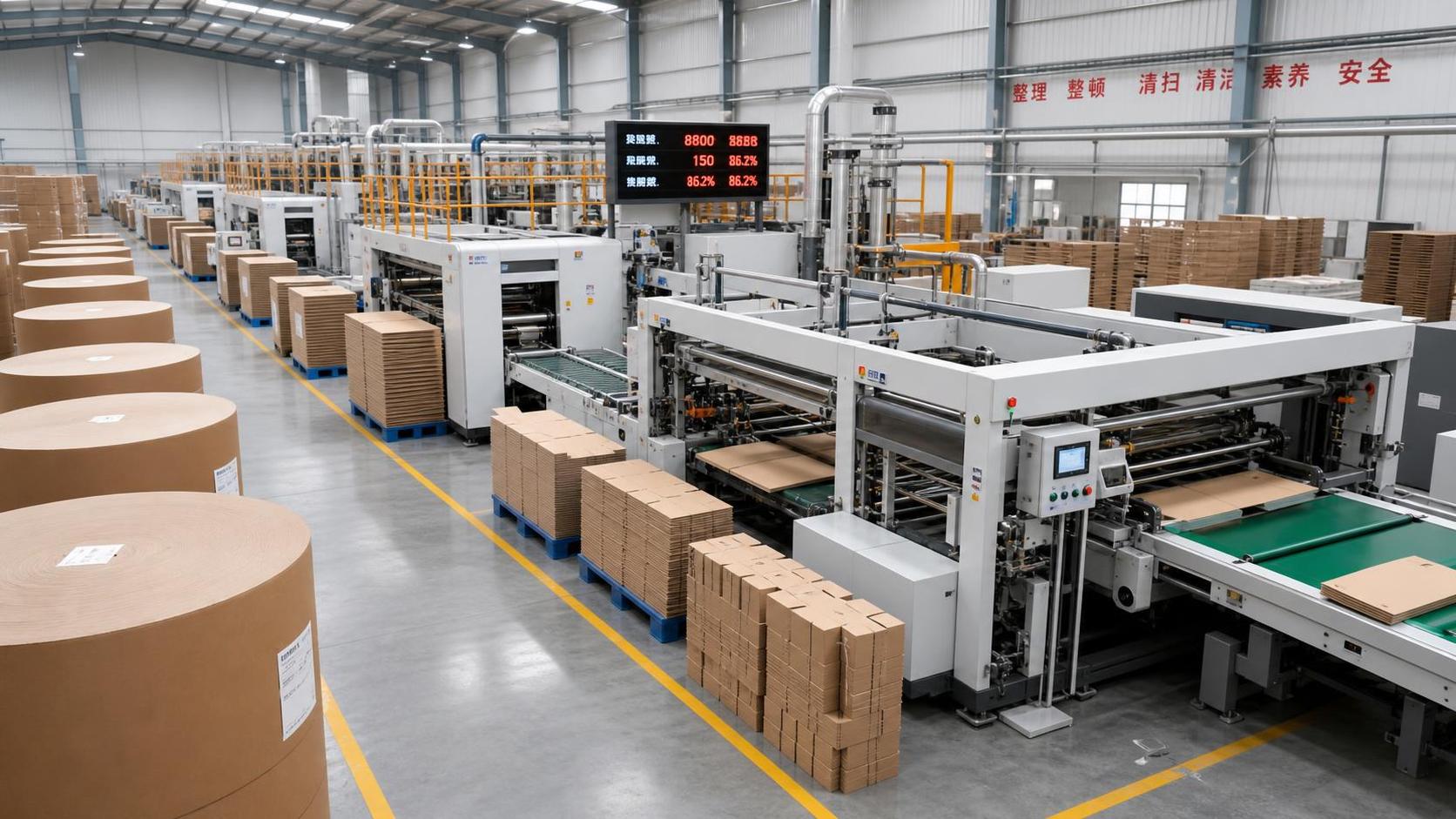
It usually starts with a familiar frustration on the plant floor. Orders are coming in with shorter lead times, board grades change more often, print files arrive late, and supervisors keep hearing that the line is “running,” yet waste, rework, and downtime still eat into the shift. On paper, the operation looks busy. In reality, no one can say with confidence where margin is leaking, which bottleneck deserves attention first, or whether another equipment purchase would fix the problem or just move it downstream.
That is the point where many operations leaders begin asking when paper manufacturing intelligence for converting plants actually pays off. Not in theory, and not as a broad digital transformation slogan, but in the practical sense: when does better production visibility lead to savings large enough to justify the effort, the software, the training, and the process changes that come with it?
The short answer is that intelligence pays off when it helps you make recurring decisions better than you do today. If the system only produces dashboards that no one uses, it becomes another layer of cost. If it turns setup history, tension behavior, glue performance, print registration drift, downtime codes, and material flow into decisions that operators, planners, and managers act on every day, the return starts much earlier than many expect.
That difference matters across digital print, corrugation, die-cutting, folder gluing, and tissue converting. These processes are linked more tightly than they often appear in reports. A board quality variation upstream can become print inconsistency later. A job sequencing choice in prepress can increase washups or knife changes. A folding-gluing issue may not begin at the gluer at all; it may start with warp, moisture, score quality, or even timing gaps between departments. Intelligence becomes valuable when it reveals those connections clearly enough to change how work is planned and run.
Why some investments feel late, while others feel early
A common mistake is to treat intelligence like a major automation project that only makes sense after every machine is already modernized. In practice, many plants wait too long because they assume they need perfect machine connectivity, complete data standardization, or a full replacement of older assets before they can benefit. By the time they revisit the idea, they may already be losing orders because lead times are unpredictable or quality variation is too hard to explain.
The opposite mistake also happens. Some teams buy software because they are told they need “smart manufacturing,” but they never define which decisions need to improve first. They connect data from printers, corrugators, die-cutters, folder gluers, or tissue lines, yet do not agree on how to use that information to reduce make-ready time, stabilize output, improve order scheduling, or lower waste. Then the project feels abstract, and finance starts viewing it as an overhead experiment.
The better question is not whether your plant is “ready” in a general sense. It is whether you have a repeated operational pain point that can be observed, measured, and changed through better timing or better visibility. That is where paper manufacturing intelligence for converting plants starts to move from optional to financially sensible.
Signals that the return window is already open
One strong sign is when managers spend too much time reconciling different versions of the truth. Production says throughput was acceptable, maintenance says micro-stops were excessive, quality says defects rose after a shift change, and planning says the schedule was broken by urgent jobs. When each function sees only a fragment, hidden costs persist because no one can prove root cause quickly enough to act.
Another sign is when your plant has islands of competence rather than repeatable process control. Experienced operators may know how to compensate for certain paper grades, glue behavior, flute profiles, or print conditions, but if that knowledge lives mostly in memory, performance will swing by shift, machine, and crew. Intelligence earns its keep when it captures patterns that can be repeated, not just admired.
A third sign is when adding volume no longer improves economics. If more orders simply create more changeovers, more waiting, more spoilage, and more stress between departments, the issue is rarely capacity alone. It is often coordination. Plants in this position sometimes think the answer is another machine, while the actual payoff may come first from seeing which jobs disrupt flow, which product families should be grouped, and where the real constraint sits by time of day or order mix.
There is also the sustainability pressure. Whether the focus is board yield, adhesive use, energy intensity, substrate selection, or traceability expectations, environmental targets increasingly overlap with cost control. When a plant cannot clearly connect consumption patterns with order types, setup habits, or process drift, both cost and compliance conversations become harder than they need to be.
Where intelligence tends to create value first
In converting environments, the earliest payback usually comes from a narrow set of recurring decisions.
Job sequencing and setup reduction
If planners can see which combinations of print requirements, board grades, tooling, glue settings, or folding styles create the least disruption, scheduling improves. This does not require an elaborate artificial intelligence initiative at the start. Even a disciplined intelligence layer that links historical run behavior with upcoming order characteristics can reduce avoidable changeover loss. Plants often underestimate how much cost sits in poor sequencing because that time is spread across the entire day.
Waste attribution
Many plants know total waste but cannot separate startup waste, speed-related defects, material-related variability, registration issues, converting damage, or rework caused by late file changes. Once those categories become visible and comparable across shifts or product types, discussions become more practical. Instead of arguing over whether waste is “high,” teams can ask whether a specific board combination, humidity pattern, or machine setting is repeatedly involved.
Downtime quality
Not all downtime is equal. A line that stops often for short periods can be harder to improve than one with a few obvious failures. Intelligence is valuable here because it captures patterns humans stop noticing: repeated feeder interruptions, glue delivery inconsistencies, knife-ready delays, tension fluctuations, or digital workflow handoff gaps. The return does not come from collecting every event. It comes from making small interruptions legible enough to fix.
Cross-process alignment
Plants running digital print, corrugation, post-press, and final box forming often have data in separate systems that do not speak well to each other. The practical value of connecting them is not the connection itself. It is being able to answer useful questions: Which print jobs trigger downstream quality checks more often? Which flute profiles create problems for specific finishing steps? Which order types look profitable until rework is counted? That is where operational intelligence becomes a procurement issue rather than just an IT topic.
When a plant should wait before buying anything
There are situations where the answer is not “invest now.” If your operation still lacks basic discipline in downtime coding, job master data, version control, maintenance response logging, or shift handover routines, a large intelligence purchase may simply digitize confusion. You do not need perfect data before starting, but you do need enough process consistency that the outputs will be trusted.
It is also wise to pause if leadership expects immediate savings without changing behavior. Intelligence does not replace daily management. If supervisors will not review trend exceptions, if planners will not adapt schedules based on new visibility, or if process owners are unwilling to standardize settings after findings emerge, the technology may reveal problems without creating any return.
Another reason to wait is if the project is being framed too broadly. “We want a smart factory” is usually a weak buying signal. “We need to understand where setup loss is growing across corrugation and finishing” is far stronger. Specificity reduces implementation drag and makes it easier to judge whether the investment is paying off.
A more reliable way to judge payback before procurement
For procurement-focused decisions, a useful approach is to test the investment against operational questions rather than feature lists.
Start with one or two high-cost decisions that happen frequently. Examples include how jobs are sequenced, when board or tissue stock should be switched, how print and converting data should be linked for root-cause review, or which recurring stop categories deserve maintenance attention. If a proposed system cannot improve those decisions in a visible way, it is unlikely to produce timely value.
Then look at data capture burden. Some solutions promise broad intelligence but require heavy manual input from already stretched teams. Others pull machine and workflow data more directly, then allow plants to layer operator context where needed. The right balance depends on your equipment mix, but the hidden cost of data maintenance should be part of the decision from the beginning.
Next, check whether the system reflects the reality of converting work. A plant dealing with digital print workflows, corrugator behavior, die-cutting variation, folding-gluing sensitivity, or tissue rewinding and packaging needs intelligence that respects those process differences. Generic manufacturing software may show output totals, but procurement value improves when the tool understands production logic close to the machine and the job.
For plants that rely on outside market and technical information to support internal decisions, an intelligence source can also help frame the buying process itself. Access to coverage on digital printing technology, corrugation process behavior, post-press trends, tissue machinery developments, paper price movement, sustainability requirements, and process-level analysis can sharpen internal evaluation. That kind of industry intelligence does not replace plant data, but it can help teams ask better questions about future compatibility, efficiency expectations, and risk exposure before they commit.
What a phased rollout usually looks like
The safest path is often narrower than people expect. Instead of trying to model the entire plant at once, begin where the operational pain is obvious and repeated. For one plant, that may be corrugator variability affecting downstream finishing. For another, it may be digital print scheduling that creates chaos in converting. For a tissue operation, it may be quality drift that is only noticed after packaging.
In the first phase, define a limited set of signals that matter. That could include setup duration, startup waste, stop frequency, speed loss bands, order waiting time between departments, or defect categories tied to specific machine states. The goal is not to monitor everything. It is to create enough clarity that supervisors and managers start making different decisions within weeks, not months of report building.
In the second phase, link those signals to actions. If sequencing is the issue, planners need a revised scheduling logic. If glue performance is unstable, standard operating ranges and escalation rules need to change. If tension or registration patterns are creating recurring problems, maintenance and process engineering need a common review rhythm. Without this step, intelligence stays descriptive.
Only after those habits are working does it make sense to expand into broader optimization, such as more advanced forecasting, tighter workflow integration, or wider benchmarking across machines and shifts.
The practical answer to “when does it pay off?”
It pays off when your plant has enough recurring complexity that people are making costly judgment calls every day, but not enough clarity to improve those calls consistently. That threshold arrives sooner than many assume, especially in operations juggling mixed order sizes, sustainability pressure, material variation, and several linked converting stages.
If you are still choosing mainly by machine speed, headcount assumptions, or headline software features, you may miss the real issue. The more useful procurement question is whether intelligence will help your team decide faster and more accurately on the matters that repeatedly affect waste, throughput, quality, and schedule reliability.
That is why paper manufacturing intelligence for converting plants tends to justify itself not at the moment of purchase, but at the moment a plant can tie visibility to action: better sequence choices, faster root-cause review, fewer repeated stops, steadier process windows, and less dependence on informal knowledge. If those conditions are already in front of you, waiting may be more expensive than starting small.
Industry Briefing
Get the top 5 industry headlines delivered to your inbox every morning.
Recommended News