
What to assess before choosing a packaging line solutions provider
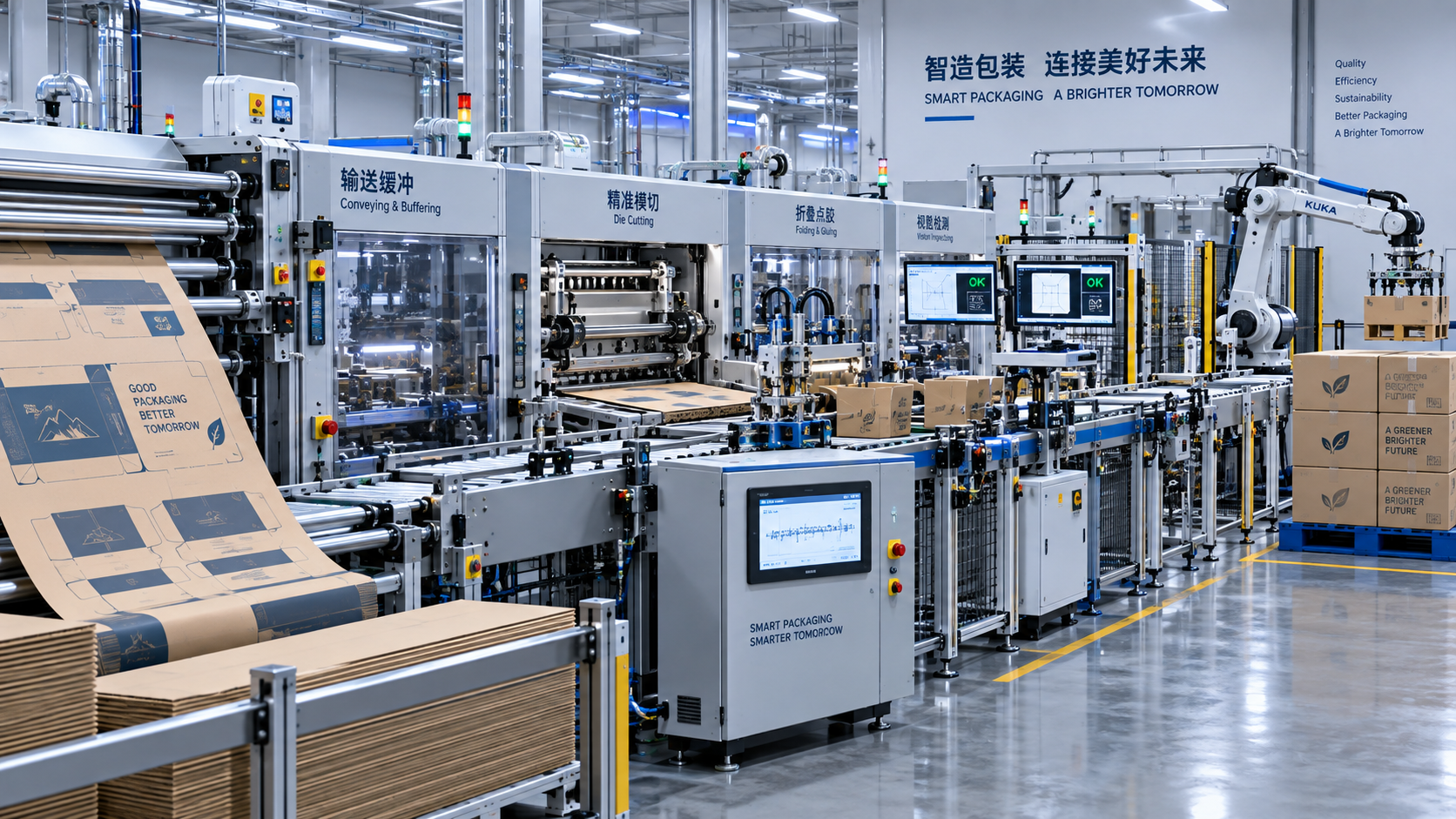
A packaging line can look capable during a supplier presentation and still become the source of daily production losses after installation. The warning signs usually appear at the interfaces: printed blanks arrive with variable moisture, corrugated sheets skew before die-cutting, glue patterns drift at speed, or a cartoner pauses because the upstream accumulation logic was never properly tuned. In these situations, the problem is rarely one machine alone. It is usually a weak connection between equipment, materials, controls, and service responsibility.
Before choosing a packaging line solutions provider, assess whether the provider can prove that it understands the complete operating system rather than merely supplying individual machines. The strongest choice is not automatically the provider with the highest stated speed or lowest capital price. It is the one that can define realistic performance conditions, manage integration risk, support the selected materials, and maintain stable output over the line’s working life.
Start with the production conditions, not the equipment catalogue
A line specification is only meaningful when tied to the products it must process. A provider should first ask detailed questions about pack formats, board grades, print coverage, coating types, blank tolerances, adhesive requirements, batch patterns, and expected changeover frequency. When these questions are skipped, quoted capacities can be based on ideal samples rather than the real mix that will run through the plant.
Consider a line handling e-commerce shippers alongside premium retail cartons. The first may demand high-volume corrugated conversion with rapid size changes, while the second may require accurate registration, clean creasing, sensitive surface handling, and tightly controlled glue application. A configuration suited to one product group may create unnecessary complexity or poor yield for the other. The provider should be able to separate common requirements from product-specific constraints and explain where compromises will occur.
Request a documented production profile before comparing proposals. It should identify:
- the range of substrates, flute profiles, basis weights, coatings, and recycled-content levels;
- minimum and maximum blank or sheet dimensions, including awkward short-run formats;
- required print, cut, crease, fold, glue, inspection, packing, and palletizing steps;
- target throughput by product family rather than one headline speed;
- planned operating hours, crew pattern, maintenance windows, and changeover expectations;
- quality limits that matter in practice, such as registration, squareness, glue placement, burst resistance, or pack count accuracy.
This profile becomes the basis for every later conversation. Without it, suppliers may appear comparable while actually sizing their systems around different assumptions.
Test integration competence at the handoff points
Packaging operations often lose efficiency at transfers between modules. A printer may be stable, a die-cutter may meet its mechanical rating, and a folder gluer may run well independently; yet the line can still underperform when sheet timing, buffer capacity, orientation, or communication between machines is unresolved.
Ask the provider to map every handoff from material infeed through finished-pack discharge. The map should show conveyors, accumulators, turning sections, inspection stations, reject paths, and the control signals that govern each transition. It should also state which party owns performance at each interface. This matters especially where third-party printers, corrugators, inspection devices, robots, or warehouse systems must connect to the proposed line.
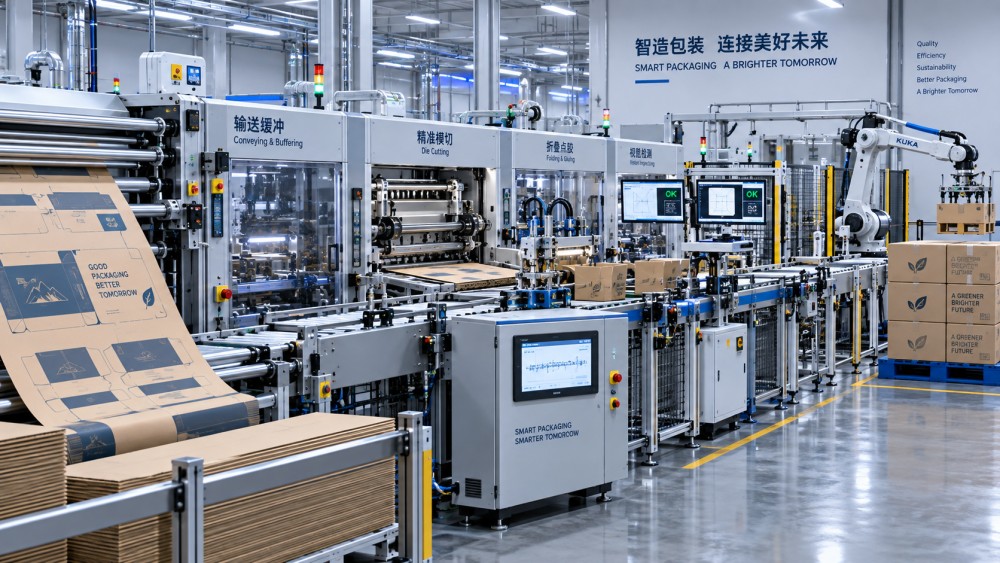
Web-fed and roll-processing applications require a similarly detailed review. Tension stability affects print quality, die-cut register, rewinding hardness, and downstream converting consistency. A credible provider should explain how unwind braking, dancer or load-cell feedback, nip control, splice events, and acceleration profiles are coordinated. General statements about “advanced tension control” are not enough. Ask what happens when roll diameter changes, material stiffness varies, or an upstream process slows unexpectedly.
Integration review should include the line’s recovery behavior. A temporary jam is inevitable in many packaging environments; an avoidable long restart is not. Find out whether the line can isolate a local fault, preserve upstream product where appropriate, clear affected zones safely, and restart without forcing a full manual reset. The answer reveals more about real engineering maturity than a maximum-speed claim.
Compare usable throughput instead of nominal speed
Suppliers may quote cycles per minute, sheets per hour, or boxes per hour. These figures are useful, but only after their conditions are clear. A stated speed may assume one format, a stable material batch, no inspection rejects, minimal downstream resistance, and extended operation without a changeover. Those assumptions may be reasonable for a reference point, but they are not a production forecast.
Ask each provider to distinguish between mechanical maximum, validated running speed, and expected operating speed for your product mix. Then examine the factors that reduce usable capacity: setup, plate or tooling changes, calibration, cleaning, refill time, quality checks, planned maintenance, and recovery after faults. The goal is not to demand an artificial guarantee. It is to expose whether the provider has considered the conditions under which capacity is actually earned.
Examine quality control as a process, not an optional add-on
Quality systems should match the defects that create real cost. In digital print, this may include missing-nozzle detection, color consistency, barcode readability, variable-data verification, and image inspection. In corrugated conversion, the focus may move toward warp, crush, score quality, cut accuracy, and board handling. Folding-gluing lines may require glue presence checks, flap alignment, code verification, and carton geometry controls.
The key question is what the system does after it detects a defect. Detection without a defined response can simply create more alarms. Review whether the line can reject the affected unit, trace the defect to a production interval, alert the correct operator, prevent an incorrect pack from proceeding, and retain useful fault data for root-cause work.
Also verify the boundaries of automated inspection. Cameras and sensors can be highly effective when the acceptance criteria are well defined, but reflective coatings, textured papers, open flutes, low-contrast print, and variable surface contamination can complicate detection. The provider should identify those limitations early and describe how recipes, lighting, tolerances, or manual verification will be managed.
Look beneath the machine frame: controls, data, and maintainability
Controls architecture affects both uptime and future modification cost. Determine whether the line uses a coherent control structure with clear alarm logic, accessible diagnostics, and documented communication interfaces. Operators and maintenance teams should be able to see where a stop originated rather than receiving a vague line-fault message after several machines have already stopped.
Data ownership deserves equal attention. Production records, fault histories, energy readings, quality events, and recipe data can support better maintenance and planning, but only if they are retrievable in a usable format. Clarify what data is available, how long it is retained, whether it can connect to existing manufacturing systems, and who controls access to it. Avoid assuming that a dashboard automatically provides actionable information.
Maintenance assessment should move beyond a standard spare-parts list. Ask which components are wear items, how they are accessed, whether replacement requires alignment or recalibration, and what preventive tasks must occur during normal production weeks. For systems involving precision die-cutting, printheads, glue units, high-speed belts, vacuum transport, or tension-sensitive rollers, routine maintenance conditions directly affect yield.
A provider should be able to explain the difference between an operator intervention, a planned maintenance activity, and a task requiring specialist support. That distinction helps determine staffing needs and prevents the line from becoming dependent on infrequent external visits for ordinary adjustments.
Challenge material compatibility and sustainability claims
Packaging materials are changing quickly at plant level even when a line layout stays unchanged. Higher recycled content can introduce variation in stiffness, dust, moisture response, and surface behavior. Water-based inks, coatings, fiber-based alternatives, lighter board grades, and reduced-plastic designs may alter drying, bonding, feeding, or forming behavior.
Do not accept broad statements that a line is “suitable for sustainable packaging.” Ask which materials have been considered and under what running conditions. For example, a folder-gluer’s adhesive system must be assessed against the actual coating, fiber composition, fold stress, storage environment, and pack-use requirements. A corrugated line must account for paper variability, steam and heat control, flute formation, and adhesive application. A digital print process should address how ink interacts with the selected substrate and any downstream converting operation.
Compliance requirements should be separated into material traceability, machine safety, emissions or waste management, and destination-market obligations. A provider does not need to act as the final legal authority, but it should identify the technical information, machine documentation, and material records needed for the buyer’s compliance process. That is especially important when fiber sourcing, recycled content, or export documentation affects product acceptance.
Assess service by its operating model
Service quality is often described in general terms until a critical unit stops during a production period. A more useful assessment examines practical coverage: remote diagnostic capability, escalation routes, field-service availability, spare-part logistics, software support, training scope, and the process for handling recurring faults.
Ask for a clear boundary between provider responsibilities and site responsibilities after commissioning. This should cover mechanical maintenance, software updates, consumables, calibration tools, critical spares, and recommended stock levels. Where a line combines equipment from several sources, confirm who leads fault diagnosis when the issue may involve both mechanical timing and control communication.
Training should reflect the different jobs required to keep the line productive. Basic operation, format change, quality response, fault recovery, preventive maintenance, and recipe management are not the same skill. A short handover session may be enough for simple equipment, but integrated packaging lines need training that reflects actual operating decisions.
Use acceptance testing to turn promises into measurable criteria
Before placing an order, convert the important assumptions into an acceptance plan. The plan should use representative materials and defined product formats wherever possible. It should identify required operating states, such as startup, sustained running, format change, normal stop, fault recovery, and reject handling. It should also describe what evidence will show that each condition has been met.
Acceptance criteria should include more than output count. They may cover product quality, registration, glue integrity, inspection performance, data accuracy, safety interlocks, alarm traceability, documentation, and operator access. Where full testing with final materials is not yet possible, record the limitation explicitly and define what must be verified later during site acceptance.
A capable packaging line solutions provider will not resist this level of definition. Clear acceptance criteria protect both parties by preventing a vague handover and by distinguishing controllable equipment performance from upstream material or site conditions that must be resolved separately.
Decide on lifecycle fit, not the most impressive proposal
The final comparison should show how each option handles the production mix expected now and the changes likely to occur during the equipment’s service life. Expansion space, modular automation, additional inspection points, new pack formats, revised materials, and software integration may matter more than an extra increment of initial speed.
Give particular weight to unresolved assumptions. A proposal with a slightly lower stated output but well-defined material limits, interface ownership, maintenance access, and acceptance testing may present less operational risk than a faster proposal built on vague integration claims. The right decision is the one that provides a credible path to stable throughput, controlled quality, recoverable faults, and manageable change as packaging requirements evolve.
Industry Briefing
Get the top 5 industry headlines delivered to your inbox every morning.
Recommended News