
What determines the price of folder gluer automation upgrades?
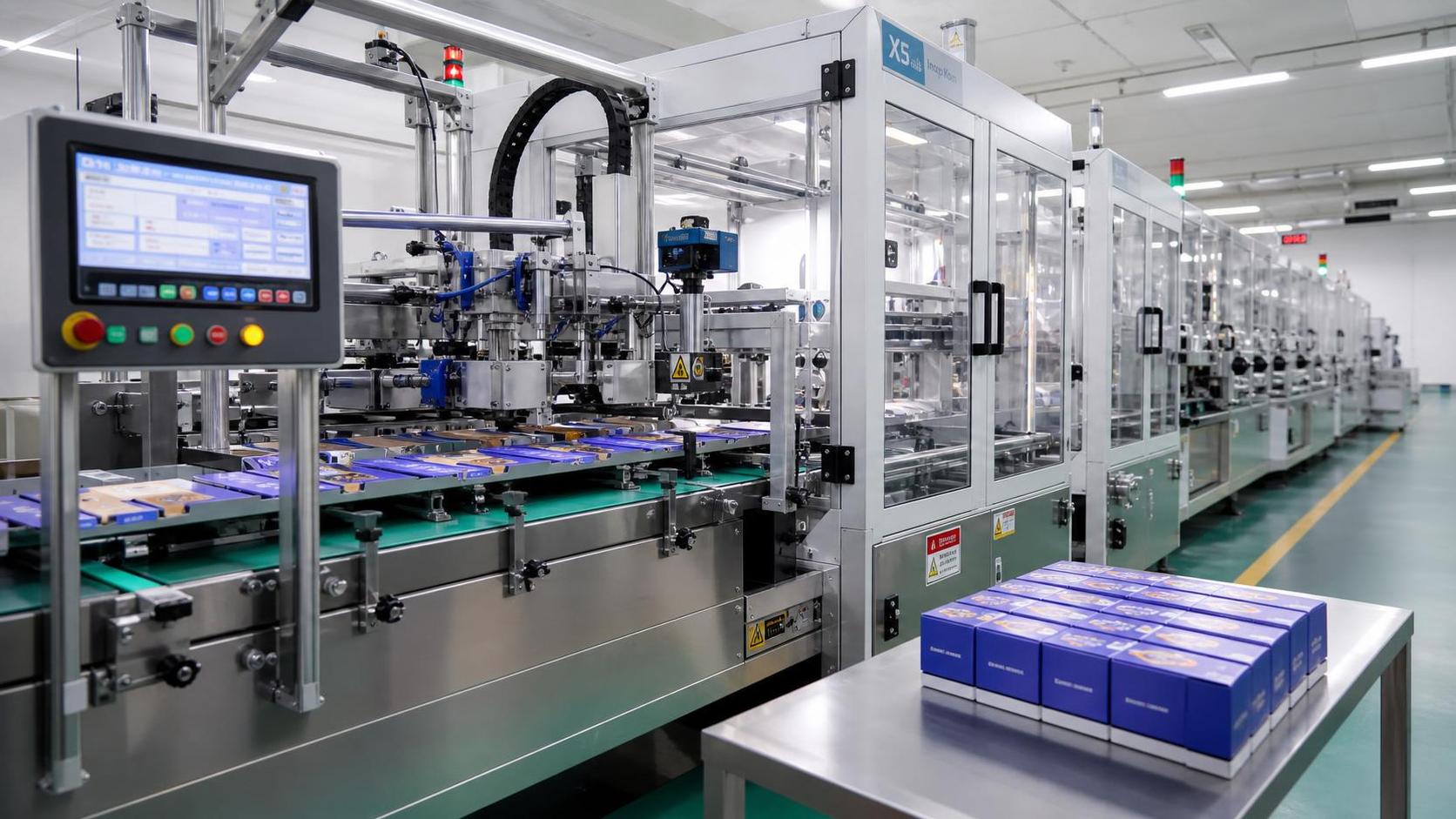
The folder gluer automation price is rarely determined by one machine feature or a simple “manual versus automatic” comparison. The real cost depends on what the upgrade must solve on your floor: unstable folding, labor shortages, long make-readies, inconsistent glue application, difficult carton styles, inspection failures, or pressure to connect the line with upstream and downstream equipment.
That is why two automation quotations with similar stated speeds can be far apart. One may add a few practical assist systems to an existing folder gluer. Another may include servo-driven carriers, barcode-controlled job recall, camera inspection, automatic packing, safety modifications, and software integration. Both are called automation upgrades, but they are not comparable projects.
A useful buying rule is this: price the required production outcome, not the list of optional devices. An upgrade that removes one persistent bottleneck can be worth more than a broad automation package that operators bypass because it does not match the jobs actually run.
What sits behind the folder gluer automation price?
The largest price drivers are usually machine condition, required speed and format range, the degree of automatic adjustment, glue and quality-control requirements, integration work, and the support commitment included in the contract. The cost of the hardware matters, but engineering time and commissioning risk often decide whether a project stays within budget.
For a relatively modern, mechanically sound folder gluer making a narrow range of straight-line cartons, an upgrade may focus on job-memory controls, selected servo adjustments, electronic glue monitoring, and safer, faster changeover points. This is a targeted project. It tends to have a clearer scope and a lower risk profile.
At the other end, a plant may want to run multiple carton styles, add complex multi-point or crash-lock work, reduce operator intervention, verify every critical glue pattern, and feed packers or robotic handling systems. That is not simply an accessory purchase. It is a line-engineering project, and the folder gluer automation price will reflect that.
Machine speed is not just a number on the brochure
Higher throughput normally requires more than a faster belt. At elevated production speeds, blank feeding, alignment, fold timing, glue application, compression, delivery collection, and pack-off all need to remain stable together. If one station cannot keep pace, its failures will erase the expected output gain.
Buyers should ask a supplier to define the speed basis: is it the maximum mechanical speed, a demonstrated production speed, or an estimated speed for a specified carton? A simple straight-line carton on consistent board may run well near a claimed top speed. A small, warped, heavily coated, windowed, or multi-point blank may not. The most useful figure is the sustained acceptable-output rate for the mix of jobs that drives the business case.
There is also a practical ceiling. If current demand does not require more finished cartons per hour, investing heavily in speed can be poor economics. In many operations, changeover reduction and lower reject rates return more value than an ambitious top-speed target.
Automation level: assisted setup, automatic setup, or unattended running?
“Automatic” is one of the least precise terms in folder-gluer quotations. It can mean motorized positioning with digital readouts. It can mean stored settings that move carriers and guides to a recalled job. Or it can mean a more extensive setup system that adjusts multiple sections with minimal manual intervention.
These levels have very different costs and benefits:
- Operator-assisted automation uses digital indicators, powered adjustments, and guided setup. It is often suitable where job changes are not frequent or product dimensions vary modestly.
- Recipe-based automatic setup stores repeat-job positions and moves selected components automatically. It is most valuable where repeat work and frequent changeovers create lost production time.
- Advanced line automation can include automatic feeding and delivery, vision verification, data exchange, and connected material handling. It suits higher-volume operations only when the surrounding process is equally capable.
Do not assume that the highest automation level produces the fastest payback. A broad-format operation running long batches of only a few proven carton styles may gain little from sophisticated job recall. A short-run, high-SKU operation may gain a great deal because setup time is repeated many times each day.
Carton complexity changes the technical scope
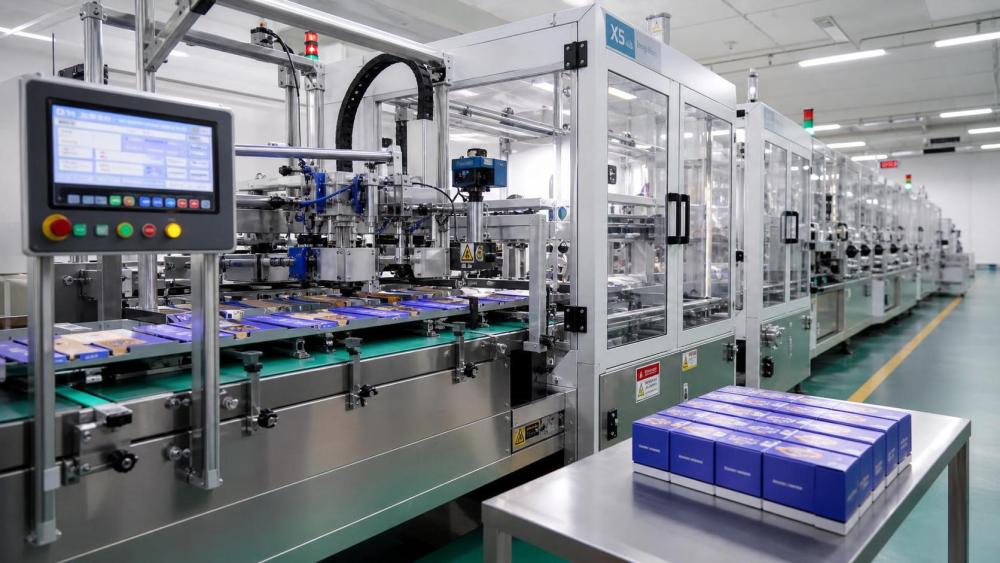
The blank itself has a strong influence on upgrade cost. Straight-line cartons are relatively forgiving. Four- and six-corner cartons, crash-lock bottoms, sleeves, specialty pharmaceutical formats, and cartons with windows or unusual substrates demand greater control over carrier geometry, folding sequence, glue placement, and compression.
Material variation matters as well. Board caliper, grain direction, coating, die-cut accuracy, score quality, curl, and moisture behavior all affect how predictably a blank travels. An automation system cannot fully compensate for poor incoming blanks. It can detect certain defects, guide setup, and improve repeatability, but the upstream die-cutting and material-control process must be considered in the purchase decision.
This is a common mistake: specifying automation from a sample carton that runs well, then expecting the same result across the full job portfolio. Before requesting final pricing, provide a representative set of blanks. Include the troublesome formats, not only the easiest jobs. A supplier that asks detailed questions about board, glue area, folder sequence, and acceptable reject criteria is doing necessary engineering work, not making the process difficult.
Glue systems and inspection are often the difference makers
Glue application is a small part of the physical machine, but a large part of finished-carton quality. Cold glue, hot melt, and special adhesive processes have different equipment, maintenance, safety, and validation needs. The right choice depends on board surface, required bond strength, product use, production speed, and environmental conditions.
A basic upgrade may add low-glue alarms or electronic pattern control. More demanding work may justify automatic glue verification, camera-based inspection, code reading, and rejection or marking systems. These functions raise the initial investment, yet they can be justified where a missed glue line creates customer claims, packing disruptions, product damage, or regulated-product risk.
Inspection should be specified carefully. Ask what the system actually confirms: glue presence, glue position, carton geometry, printed code, flap closure, or a combination of these. Also ask how false rejects are handled and how rejected cartons are counted. An inspection system that generates too many false alarms can transfer work from the folder gluer to manual sorting.
Not every job needs 100% vision inspection. For low-risk, stable cartons, robust process control and periodic checks may be the more sensible investment. For premium, high-consequence, or traceable packaging, inspection can be a defensible cost rather than an optional add-on.
The hidden cost is usually integration, not the module itself
Automation modules have list prices. Integration has variables. Electrical supply, compressed air, guarding, floor layout, extraction, network access, foundations, access around the machine, and compatibility with existing controls all influence the final installed cost.
The same applies to connected equipment. A folder gluer may be capable of automatic delivery, but the benefit is limited if the packing table, bundler, case packer, palletizing process, or warehouse flow cannot absorb the output. Automation should be assessed as a material-flow question. Where does the carton stop being a blank, and where does it become a stable, counted, packed finished unit?
Older machines need special attention. Retrofitting can be commercially sound, but only after a mechanical and electrical condition assessment. Worn belts, inaccurate carriers, aging drives, obsolete PLCs, damaged rails, or unreliable safety circuits can turn a promising upgrade into a series of unplanned repairs. In those cases, compare the retrofit quote with a replacement-machine option using the same scope for installation, training, tooling, and service.
Request a site survey before treating any quote as final. A credible proposal should identify exclusions, customer-supplied utilities, planned downtime, acceptance criteria, and interfaces with other equipment. “Installation included” is not enough detail for budget approval.
Build the comparison around total cost of ownership
The lowest purchase price can become the expensive choice when spare parts are slow, remote diagnostics are unavailable, or local technicians cannot support the controls platform. The reverse can also be true: an expensive service package makes little sense if internal maintenance staff can handle routine work and the line is not production-critical.
Compare offers over the expected life of the upgrade. Include installation labor, production downtime, operator and maintenance training, consumables, recommended spare parts, software licenses, annual support, calibration needs, and the likely cost of obsolete components. Confirm whether software updates, recipe backups, and access rights are included. A system that cannot be supported independently after the warranty period carries a real operational cost.
It is also sensible to separate mandatory scope from optional scope. Put safety compliance, essential controls, required glue capability, and core commissioning in the base price. Price advanced inspection, expanded job-memory capacity, automatic pack-off, or enterprise software connections as clearly defined options. This makes it easier to protect the project budget without losing sight of a future upgrade path.
A simple ROI model that reflects the factory
Return on investment should not be based on theoretical maximum speed alone. Start with actual data: current accepted cartons per shift, setup minutes per job, labor assignments, reject and rework rates, downtime causes, and the contribution value of additional sellable capacity. Then estimate only the improvements the supplier can demonstrate or contractually define.
For example, a job-recall system can be valuable when it shortens repeated changeovers and reduces setup errors. Its value is much lower when every run is a new format requiring substantial manual adjustment anyway. A vision system may pay for itself through avoided claims and scrap, but its financial case must include false-reject behavior and ongoing support.
Use conservative assumptions. It is better for an upgrade to outperform a realistic case than to disappoint against a spreadsheet built on perfect utilization. Include planned downtime for installation and ramp-up; automation projects have a learning curve, even with good training.
Questions that make vendor quotations comparable
Send the same operating brief to every bidder. It should state carton sizes, substrates, production mix, current and target output, changeover frequency, glue type, defect concerns, available utilities, layout constraints, and the equipment that connects before and after the folder gluer.
Then require clear answers to a few practical questions:
- Which adjustments are manual, motorized, or fully recipe-controlled?
- What production rate is expected for each representative carton, and under what conditions?
- Which quality checks are included, and which defects cannot the system detect?
- What must be repaired or modified on the existing machine before installation?
- What downtime is expected for installation, commissioning, and acceptance testing?
- Who provides training, spare parts, remote support, and on-site service after handover?
Ask for a factory acceptance test or a clearly documented site acceptance test when the project is complex. The test should use agreed representative blanks and define what counts as an acceptable carton. “The system runs” is too vague. Consistent output, glue quality, changeover behavior, rejection handling, and operator safety should all be visible in the acceptance criteria.
When a smaller upgrade is the better decision
Full automation is not automatically the right answer. A limited upgrade can be the stronger choice where volume is stable, runs are long, skilled operators remain available, the current machine is mechanically dependable, and the main problem is one controllable defect or delay. Upgrading glue monitoring, selected servo adjustments, guarding, or delivery ergonomics may solve the real issue at a fraction of the scope.
Conversely, avoid a partial solution when the existing machine has fundamental accuracy or reliability problems. Adding sophisticated controls to an unstable mechanical platform often creates frustration: the screen may report precise positions while the physical machine cannot hold them. In that situation, repair, rebuild, or replacement deserves an honest comparison.
Industry intelligence sources such as IPPS can help frame this comparison by connecting folder-gluer decisions with upstream die-cut quality, board behavior, packaging demand, and the wider post-press workflow. The useful question is not whether an automation feature sounds advanced. It is whether it removes a measurable constraint in the finished-carton process.
Make the final decision on evidence, not feature count
A sound folder gluer automation price decision begins with a defined job mix and ends with verified performance, service coverage, and a realistic ownership budget. Faster operation, automatic setup, glue control, inspection, and connected handling can all create value, but only when they fit the cartons, staffing model, and line constraints in front of you.
Prioritize the upgrades that improve accepted output, reduce repeatable setup losses, and protect quality where failure is costly. Treat unsupported speed claims, vague installation language, and generic “full automation” labels as reasons to ask better questions. That discipline produces a comparison that is commercially useful long after the initial quotation has been approved.
Industry Briefing
Get the top 5 industry headlines delivered to your inbox every morning.
Recommended News