
Tropical Climate Adaptation Becomes Mandatory for Tissue Rewinders in Indonesia
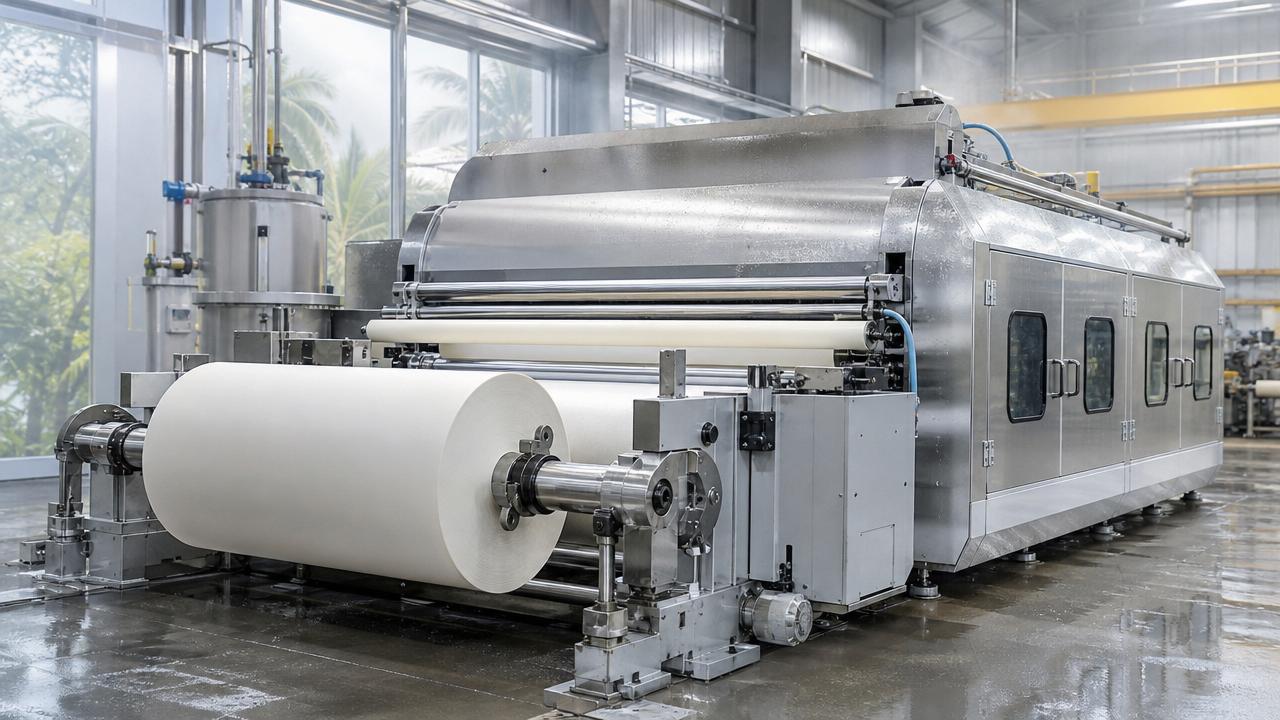
On May 26, 2026, at the GPPE exhibition in Indonesia, new procurement requirements for tissue rewinding machines—specifically tailored to tropical high-humidity operating conditions—were formally disclosed by multiple Southeast Asian distributors, signaling a significant shift in technical expectations for packaging equipment suppliers serving the region.
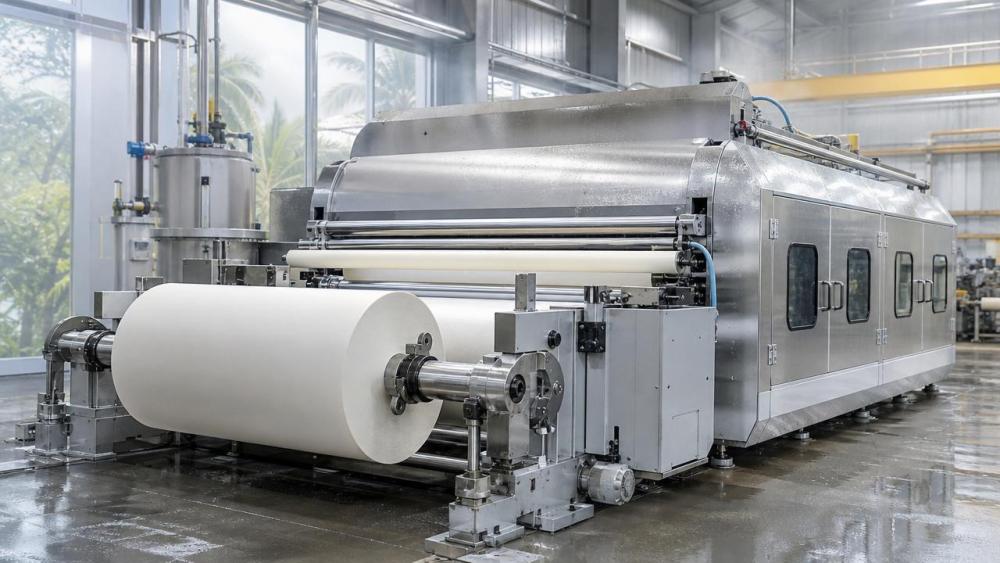
New Technical Requirements Confirmed at GPPE 2026
During the opening of the GPPE exhibition on May 26, 2026, several Southeast Asian distributors jointly announced that tissue rewinders intended for deployment in tropical high-humidity environments must meet three mandatory technical specifications: (1) minimum IP55 ingress protection rating; (2) stainless-steel tension rollers paired with ceramic-coated guide rollers; and (3) closed-loop temperature and humidity compensation systems. Equipment failing to comply with all three criteria will be excluded from distributor procurement white lists. These requirements have been incorporated into the draft of Indonesia’s National Recommended Technical Guidelines for Packaging Equipment (SNP-PP-2026).
Impact Across the Supply Chain
Export-oriented equipment manufacturers
Manufacturers exporting tissue rewinders to Indonesia and neighboring tropical markets now face stricter pre-shipment compliance checks. Non-compliant models may be rejected at tender stage or during on-site commissioning, affecting order fulfillment timelines and warranty validity.
Raw material and component suppliers
Suppliers of rollers, enclosures, and environmental control modules must verify compatibility with IP55-rated housings and ceramic coating adhesion standards under sustained high humidity. Material certifications—including corrosion resistance test reports under ISO 9223 Class C4/C5 conditions—may become routine submission items.
Equipment integrators and assemblers
Integrators sourcing subsystems globally must ensure full traceability of environmental compensation logic, sensor calibration records, and firmware versioning aligned with SNP-PP-2026’s functional safety expectations. Interoperability testing between PLCs and climate feedback loops is expected to gain prominence in FAT protocols.
After-sales service providers
Service networks will need localized calibration tools and spare parts inventories—including ceramic-coated rollers and sealed IP55-compatible drive modules—to meet accelerated response time SLAs mandated under new procurement contracts.
Key Compliance Priorities for Suppliers
Review and align technical documentation with SNP-PP-2026 draft criteria
Manufacturers should map existing machine specifications against the three mandatory features—notably verifying whether ‘IP55’ refers to full enclosure rating (including cable entries and hinged access points), not just motor housing.
Validate roller material performance under tropical aging conditions
Stainless-steel tension rollers require verification of grade (e.g., AISI 316 vs. 304) and passivation treatment; ceramic coatings must demonstrate adherence retention after 500+ hours of 85% RH/40°C exposure per ASTM D3359.
Prepare certified environmental compensation system documentation
Suppliers must compile functional descriptions, control loop schematics, sensor accuracy certificates (±0.5°C / ±3% RH), and validation logs demonstrating stable rewind tension across ambient shifts from 25–35°C and 60–95% RH.
Emerging Trend: Climate-Specific Certification as a Market Entry Threshold
Analysis shows this development reflects a broader regional shift—from generic industrial equipment standards toward climate-contextualized technical baselines. It is more appropriate to understand this as the institutionalization of environmental service conditions into formal procurement gateways, rather than merely an optional enhancement. What deserves closer attention is the implied extension of such requirements beyond Indonesia: similar drafts are under informal review in Thailand and the Philippines, suggesting a potential ASEAN-wide convergence on tropical-duty equipment benchmarks within the next 18–24 months.
Strategic Implication for Global Suppliers
This marks a structural recalibration—not just a specification update. Tropical climate adaptation is no longer a differentiating feature but a prerequisite for market access in fast-growing ASEAN tissue production hubs. Suppliers delaying platform-level design upgrades risk marginalization in bid evaluations, regardless of price competitiveness or brand reputation.
Source Verification Note
This article is generated exclusively from the provided information: title, event date (May 26, 2026), and event summary. Specific official source links were not provided in the input and should be verified continuously. Stakeholders are advised to monitor updates to the final version of SNP-PP-2026, upcoming tender documents referencing it, certification body announcements (e.g., KAN-accredited labs), and distributor procurement policy revisions throughout Q3–Q4 2026.
Industry Briefing
Get the top 5 industry headlines delivered to your inbox every morning.
Recommended News