
How flexo printing technology affects print consistency on long runs
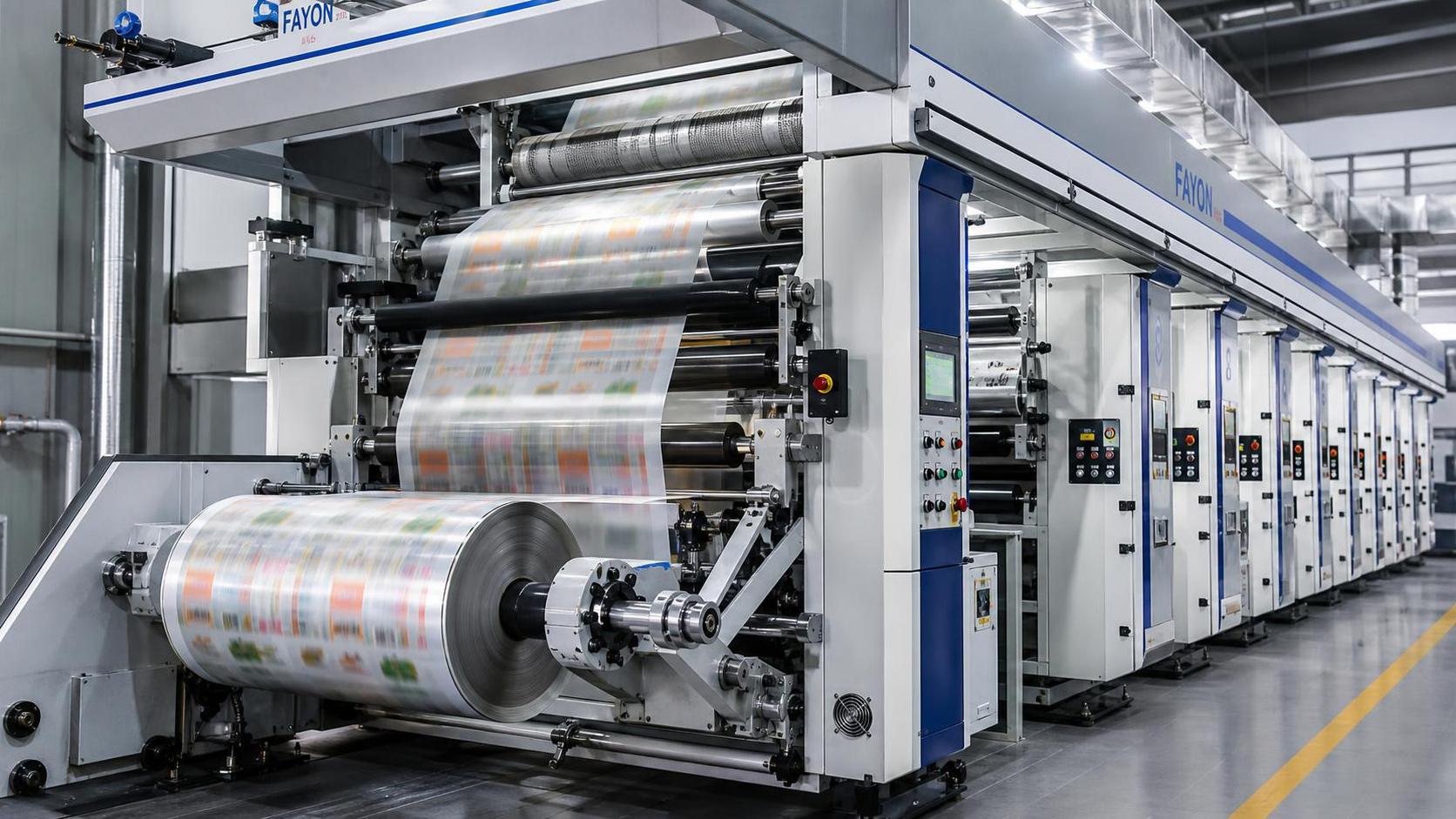
Print consistency on long flexo runs is governed by how steadily the press can hold ink film, impression, register, web tension, and substrate condition within tight limits. When variation appears, it usually starts as a small shift in one control point and then spreads across color density, dot gain, trap, and print-to-print repeatability. In a flexo printing technology guide, the practical question is not whether the press can print a good sheet or a good start-up sample. The question is whether it can keep that result when the roll keeps moving, the anilox keeps loading, and the substrate changes behavior after hours of heat, humidity, and mechanical stress.
Long-run stability begins with the ink train. Flexographic systems depend on the balance between the anilox volume, doctor blade condition, ink viscosity, pH, and temperature. If an anilox cell is chosen too aggressively for coverage, the press may achieve good density early in the job but become harder to control as ink dries on the roll face or in the cell openings. If the cell volume is too low, density may look clean while solid areas become weak and tonal work loses body. Both errors can produce a run that looks acceptable at the start and drifts by the middle of production. The failure mode is often misread as a color problem alone, when the root cause is really ink transfer consistency.
Impression pressure is another common source of long-run drift. Excess impression can hide a rough substrate or weak plate mounting during setup, but it also increases wear on the plate, encourages heat buildup, and changes the dot shape over time. On longer runs, that can show up as heavier solids, more gain in midtones, and a gradual loss of highlight detail. Too little impression creates a different issue: unstable transfer, incomplete release from the anilox, and sensitivity to minor substrate caliper changes. For technical evaluation, the relevant measure is not whether a press can print at a comfortable pressure window once; it is whether that window remains narrow enough to avoid progressive distortion across the run.
Plate condition matters more than many first-time evaluations assume. Flexible plates can swell, wear, or deform under solvent exposure, UV exposure, or repeated impression. Mounting tape choice also affects resilience over long production cycles, because a tape with poor recovery can introduce local pressure variation that becomes visible after repeated cylinder revolutions. In fine text, reverses, and small-barcode work, plate wear does not always present as a dramatic defect. It may appear first as edge softening, weak shoulder definition, or slight color inconsistency from one lane of the web to another. Once that starts, the press often needs tighter intervention than a simple density correction.
Substrate variation is just as important as press setup. Paper, film, and corrugated-facing stocks do not behave like fixed materials; they respond to moisture, tension, winding quality, and surface energy. A reel that looks uniform at loading can still vary in caliper, curl, porosity, or coating holdout. That variation changes how the ink sits, how quickly solvents leave the film, and how much pressure the web needs to transfer a clean image. On absorbent stocks, dot gain may move when room conditions shift. On non-porous films, slip and static can make tension control more visible than ink formula changes. Long-run consistency depends on matching these substrate behaviors to the press window rather than assuming one set of parameters will hold across all material lots.
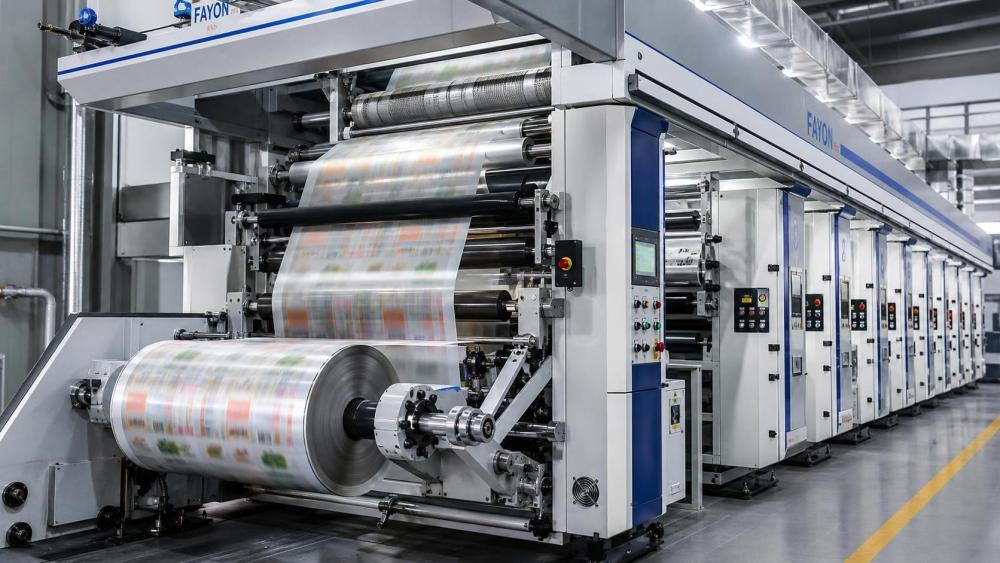
Web tension control is often the hidden variable behind repeatability complaints. If tension drifts through unwinding, printing, drying, and rewinding zones, registration can wander even when the print units themselves are stable. That drift may come from brake response, nip wear, splice behavior, or winding roll diameter changes. In wide-web work, a small difference in tension across the width can create side-to-side color differences or micro-movement that shows up as pattern misalignment over time. In narrow-web packaging and label work, the same issue can produce register loss that is easy to blame on tooling even when the real cause is mechanical instability upstream of the print station.
Drying and curing conditions affect long-run consistency in a more subtle way. If airflow, heat, or UV output is uneven, the ink film may set at different speeds across the web or across successive impressions. That changes gloss, rub resistance, and overprint behavior. Over-drying can make some inks brittle and reduce adhesion during downstream converting. Under-drying leaves residual tack that contaminates guide rollers, affects stack quality, and changes the way later colors interact with the first laydown. For long runs, the drying system must be evaluated as part of print consistency, not as a separate finishing unit.
Environmental control is often underweighted during procurement review. Flexo presses run differently when ambient humidity shifts, when paper moisture content rises, or when solvent recovery is not stable. A room that is acceptable for short jobs may still permit gradual drift in substrate dimension, ink evaporation rate, or static charge. Evaluators usually get better results by asking whether the press can hold spec under realistic factory conditions, including starts, stops, splice events, and shift changes. That matters more than a brief demonstration at ideal temperature and with freshly conditioned material.
Automation helps, but only when it is tied to the actual drift mechanism. Closed-loop color measurement can correct density within a limited range, yet it cannot fully compensate for plate wear, anilox damage, or substrate that changes absorbency mid-roll. Register systems can correct small positional errors, but they do not fix a tension profile that is oscillating between zones. Viscosity control stabilizes ink transfer, though it will not solve poor blade setup or dirty circulation paths. The practical value of modern press controls is in narrowing the correction window so the operator is not forced to chase the job manually while the run length keeps increasing.
Maintenance discipline has a direct effect on long-run outcomes. Doctor blades need consistent inspection because wear, burrs, and pressure loss alter the ink film before defects become obvious. Bearings, gears, idlers, and rewind components influence vibration, and vibration can move print position enough to show up in tight registration work. Cleaning practices also matter: leftover pigment in the ink system may not contaminate the first few hundred impressions, but it can affect later color balance if the next run uses a different hue family or opacity level. In practice, the best long-run results come from presses that are serviced for stability, not just for visible failure.
Procurement reviews sometimes overfocus on maximum speed and underfocus on operating envelope. A press rated for high throughput may still perform poorly on long runs if its stable operating band is narrow, if changeover parts are hard to maintain, or if the tension and drying architecture does not suit the substrate mix. The more useful question is whether the line can hold repeatable quality after the first roll is gone and the process has moved from setup into sustained production. That is where flexo printing technology guide principles become practical: match anilox selection, plate behavior, tension control, and drying capacity to the longest realistic production cycle, then verify that each part of the system can remain in tolerance without constant intervention.
For packaging, corrugated applications, and other paper-based jobs, the same logic applies with a few extra constraints. Surface roughness, flute variation, board memory, and glue-line proximity can all change how the impression behaves over time. A run that begins cleanly may still drift when the board stack warms up or when reel splices introduce slightly different surface profiles. Consistency on long runs is therefore a system property. It reflects how well the press, ink, substrate, and maintenance routine stay aligned after the initial setup has already been proven.
Industry Briefing
Get the top 5 industry headlines delivered to your inbox every morning.
Recommended News