
What should buyers compare when choosing an industrial print manufacturer
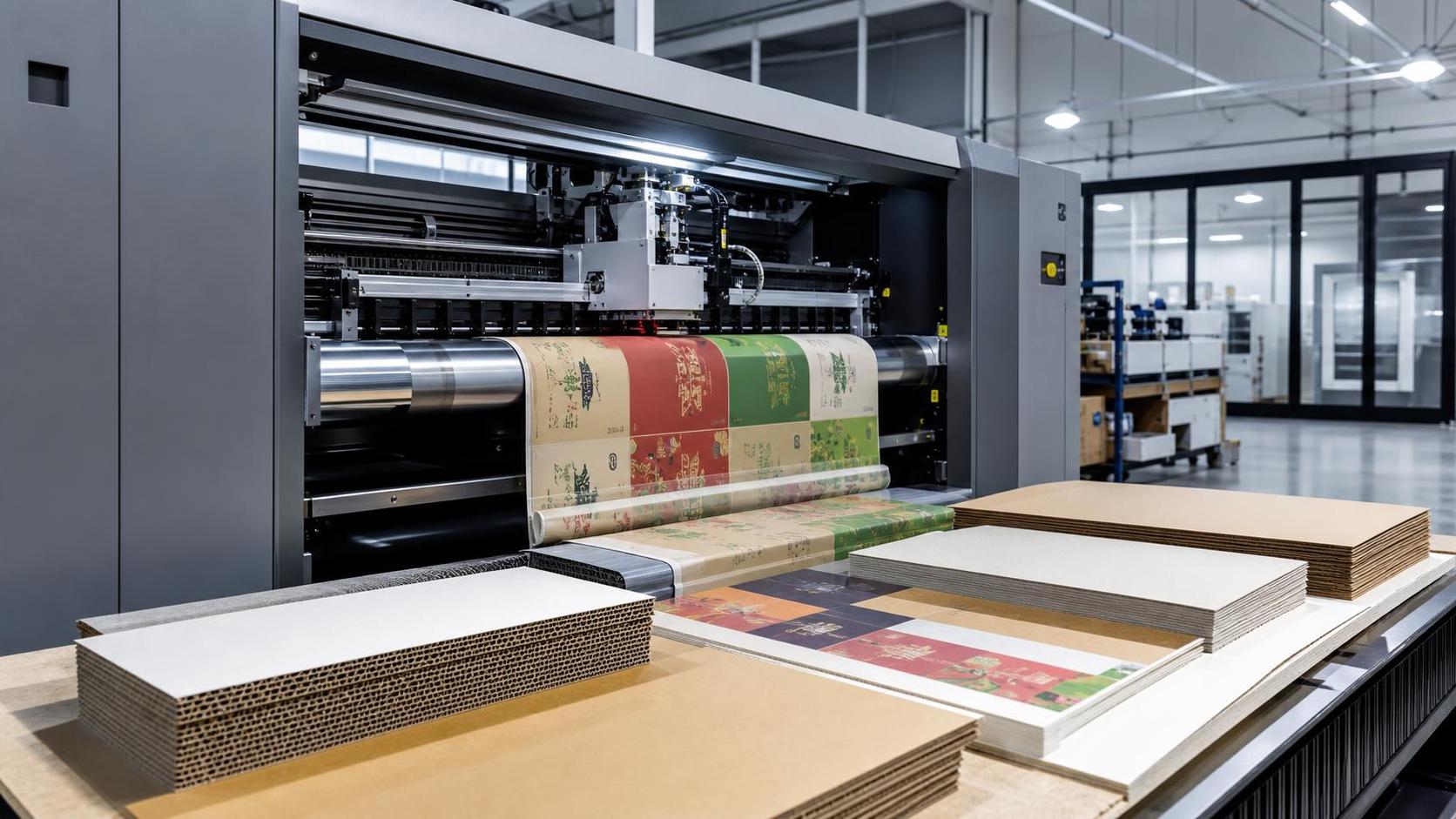
Choosing an industrial print manufacturer is rarely a simple equipment comparison. For procurement teams, the harder question is not which machine looks more advanced on paper, but which supplier can consistently support output quality, delivery stability, maintenance response, substrate flexibility, and commercial predictability over years of operation.
That is why an effective industrial print buyer guide manufacturer review must go beyond headline specifications. In packaging, paper converting, labels, corrugated, and other industrial print environments, two manufacturers may promise similar speed and resolution, yet perform very differently once the line is running three shifts, substrate lots begin to vary, software updates are needed, or a critical printhead fails during peak season.
The right comparison framework should help buyers avoid a common procurement mistake: selecting a machine based on price, nominal speed, or a trade-show demo, then discovering later that the true cost sits in downtime, rejected output, weak local service, limited material compatibility, or poor integration with upstream and downstream processes.
Start with the production reality, not the brochure
Before comparing manufacturers, buyers need to define the production environment the machine will actually face. This sounds obvious, but many sourcing processes still begin with vendor outreach before internal requirements are stabilized.
In industrial printing, the operating context changes the meaning of “best.” A manufacturer that performs well in short-run customized folding carton work may not be the right partner for high-volume corrugated packaging. A supplier strong in paper-based media may struggle when print consistency is required across coated, uncoated, recycled, or uneven substrates. A builder optimized for standardized jobs may be less suitable where SKU turnover is high and job changeovers are frequent.
Procurement teams should align early with production, maintenance, QA, and commercial planning on a few basic facts:
- Expected monthly and peak-season volume
- Typical run length and SKU variation
- Substrate types, thickness range, and surface variability
- Required print quality by application, not by lab condition
- Factory utilities, space, environmental controls, and operator capability
- Need for inline finishing, inspection, coding, or ERP/MES connectivity
Without that baseline, manufacturer comparison becomes vulnerable to spec-sheet inflation.
Print quality should be judged under production conditions
Printing precision is one of the first items buyers compare, but it is also one of the easiest to misunderstand. Resolution figures alone do not tell buyers whether a manufacturer can hold stable quality at target throughput, on the actual substrates used, with the required color tolerances and acceptable maintenance burden.
Procurement should ask a more operational set of questions:
- How stable is print registration over long runs?
- How does image quality change at higher line speeds?
- What is the real performance on porous, recycled, warped, or dust-prone materials?
- How often are nozzle compensation, calibration, and manual adjustments required?
- What inspection systems are included to detect defects before waste accumulates?
In corrugated and paper-based packaging, surface inconsistency is a practical issue. Ink behavior on ideal samples can look excellent, while live production reveals banding, mottle, feathering, or weak color density on lower-grade or variable substrates. Buyers should insist on test output from their own material set, including difficult grades, not only premium samples prepared by the supplier.
It is also worth comparing how manufacturers define acceptable quality. Some suppliers speak in best-case image terms. Better suppliers discuss repeatability, defect rate, quality drift over time, and the relationship between quality targets and sustained throughput.
Rated speed is less important than usable productivity
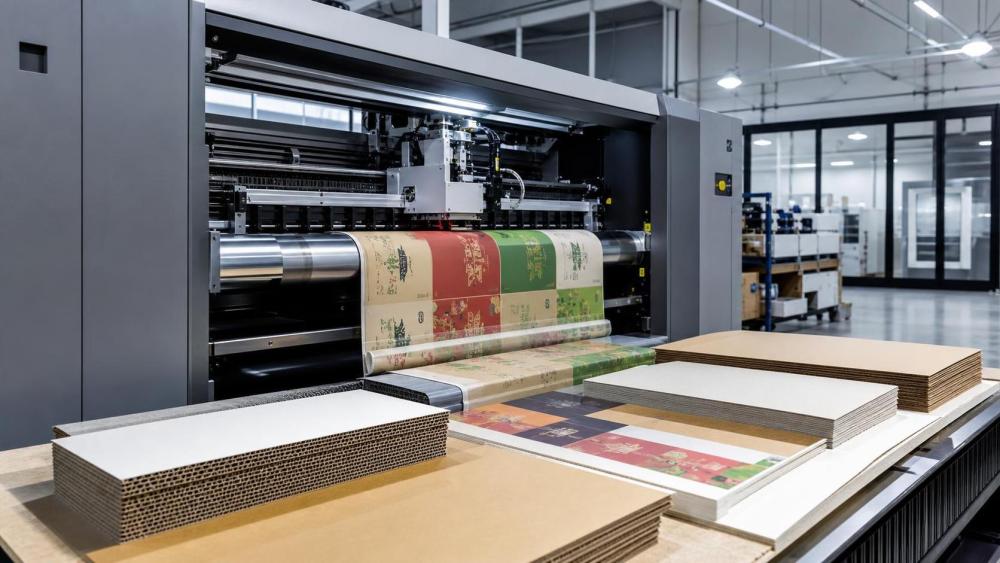
One of the most expensive mistakes in industrial print procurement is buying on peak speed. Rated speed often reflects ideal conditions: favorable artwork, limited coverage, easy substrate, controlled environment, and minimal interruptions. Buyers need to compare usable productivity instead.
Usable productivity combines several realities:
- Actual speed at required quality level
- Setup and changeover time
- Cleaning and maintenance intervals
- Job queue efficiency
- Waste generated during ramp-up and restart
- Operator intervention frequency
A manufacturer with a lower headline speed may deliver more saleable output per shift if the platform is easier to stabilize, faster to change over, and less dependent on manual tuning. This matters especially in markets where order fragmentation is increasing. E-commerce packaging, promotional runs, regional campaigns, and versioned packaging all favor systems that preserve productivity across frequent job changes.
Ask suppliers for OEE-related references, not just top-speed claims. Some vendors will not disclose full OEE, but buyers can still request field data on uptime, average cleaning time, startup waste, and the percentage of jobs run at nominal speed.
Material compatibility often decides long-term flexibility
For procurement teams serving packaging and paper sectors, material compatibility is often more strategic than buyers expect. It affects not only current jobs but future commercial flexibility.
A manufacturer should be evaluated on how broadly and reliably its system handles:
- Coated and uncoated papers
- Recycled-content substrates
- Corrugated board grades and flute profiles where relevant
- Moisture-sensitive media
- Variable caliper or warped sheets/webs
- Food-contact-related applications where additional compliance review may apply
Material compatibility is not just a print engine issue. It is tied to feeding, transport control, web tension, drying or curing, static management, dust handling, and downstream finishing behavior. A machine that prints acceptably may still create bottlenecks if the output is difficult to crease, fold, glue, laminate, or stack consistently afterward.
That is why experienced buyers compare the manufacturer’s process understanding, not only the printer hardware. Can the supplier discuss the interaction between ink set, substrate absorbency, drying window, and post-press performance? Can it support qualification of new materials as sourcing conditions change? In a market where recycled content and sustainability-driven substitution are increasing, this matters more than ever.
Automation level should reduce labor dependency, not just add features
Automation is often presented as a premium option, but for buyers dealing with labor constraints, quality consistency, and rising operating costs, it is increasingly a core selection criterion.
The question is not whether a manufacturer offers automation, but whether the automation solves actual production risk. Useful areas to compare include:
- Automatic calibration and printhead maintenance
- Inline quality inspection and defect rejection
- Color management and recipe recall
- Substrate setup memory for repeat jobs
- Remote diagnostics and predictive maintenance tools
- Data integration with MIS, ERP, or MES systems
Buyers should be cautious of feature-heavy platforms that still depend heavily on specialist operators. In many factories, the real cost is not the automation module itself but the operational fragility of running without it. If one skilled technician is required to keep the machine stable, scalability becomes difficult across shifts, plants, or regions.
Good procurement practice is to ask what tasks still require manual intervention after installation. That answer often reveals whether the system was designed for industrialized production or for demonstration performance.
After-sales support is part of the machine
In capital equipment sourcing, buyers often treat after-sales support as a contract line item. In practice, it is part of the machine’s real value. Two manufacturers with similar technology can diverge sharply in lifecycle performance because of spare parts access, field service structure, remote support capability, and software maintenance discipline.
For industrial print operations, especially those tied to packaging delivery windows, service response time directly affects customer commitments. Procurement should compare:
- Local or regional service presence
- Spare parts stocking strategy and lead times
- Remote troubleshooting capability
- Preventive maintenance programs
- Training depth for operators and maintenance staff
- Software update policy and cybersecurity handling where connected systems are involved
Reference checks are particularly important here. Buyers should speak with existing users about service responsiveness during unplanned downtime, not just during installation. It is easy for suppliers to manage launch support well. The real test is how they perform in year two, after warranty excitement is gone and a critical component fails before a seasonal production spike.
Total cost of ownership usually overturns the lowest bid
Price remains important, but in industrial print procurement the lowest purchase cost is often disconnected from the lowest operating cost. A serious industrial print buyer guide manufacturer comparison should include a total cost of ownership model over a realistic time horizon.
That model should include more than machine price and ink consumption. Buyers should compare:
- Consumables and maintenance parts
- Printhead life and replacement economics
- Energy use and environmental control requirements
- Labor needed per shift
- Expected waste rate
- Downtime risk and service cost exposure
- Software licensing or upgrade costs
- Installation, commissioning, and training expenses
- Residual value or upgrade path
For some applications, ink cost can dominate. For others, downtime, substrate waste, or maintenance complexity are far more financially important. Buyers should also test sensitivity: how does the economics change if volume is 20% below forecast, or if the business shifts toward shorter runs and more changeovers?
This matters because industrial printing investments are increasingly expected to support both efficiency and flexibility. A machine that is profitable only under one narrow utilization scenario may not be the safest procurement choice.
Manufacturer stability and supply reliability deserve closer scrutiny
Procurement teams are right to compare technical performance, but manufacturer reliability as a business partner is just as important. This includes financial resilience, supply chain maturity, quality discipline, and the ability to keep supporting the platform through its life.
Questions worth asking include:
- How dependent is the manufacturer on single-source critical components?
- Does it have a stable install base in similar applications?
- How often are major model revisions introduced, and what happens to legacy support?
- What quality management systems are in place? ISO 9001 is common, but buyers should verify scope and implementation rather than assume capability from certification alone.
- Can the supplier document FAT, SAT, and acceptance criteria clearly?
Where exports are involved, buyers should also review documentation quality, shipping readiness, and compliance support. Depending on market and equipment type, applicable safety, electrical, and environmental requirements may vary by jurisdiction. If the supplier cannot provide a clean documentation trail, customs delays, commissioning issues, or compliance disputes can erase any initial price advantage.
Claims related to certifications, food-contact suitability, sustainability attributes, or regional conformity should be verified carefully. If a requirement is application-specific and the supplier response is incomplete, mark it as 【待核实】 rather than assuming compliance.
Integration with the full line is often where projects succeed or fail
Industrial print equipment does not operate in isolation. Many disappointing investments come from buying a capable printer that does not fit the surrounding process.
Procurement should compare manufacturers on line integration capability: feeding, pre-treatment, drying, inspection, stacking, die-cutting, folder-gluing, coding, and workflow software. In paper packaging, the value of printing quality falls quickly if downstream conversion efficiency drops or if printed surfaces create issues in creasing and bonding.
Suppliers with genuine industrial experience tend to ask detailed questions about upstream substrate variation and downstream converting behavior. Suppliers that focus only on print samples may not fully understand plant-level constraints.
This is especially relevant when buyers are balancing customization demand with high-throughput packaging production. The strongest manufacturer is often the one whose machine works predictably within the full line, not the one with the most impressive standalone demo.
Common buyer mistakes are surprisingly consistent
Across industrial print sourcing projects, several errors appear repeatedly.
One is overvaluing peak specification and undervaluing process stability. Another is accepting a general reference rather than a reference in a comparable application. A third is treating service, training, and spare parts as negotiable extras instead of operational necessities.
Buyers also sometimes fail to distinguish between technology maturity and sales maturity. A manufacturer may present a convincing commercial team while the installed base in similar production conditions remains limited. That does not automatically disqualify the supplier, but it changes the risk profile and should influence acceptance terms, performance guarantees, and ramp-up planning.
Finally, some teams compare only equipment and forget business fit. If the company’s order structure is moving toward versioning, faster turnaround, and more sustainable substrates, the best manufacturer is not necessarily the cheapest current solution. It is the one best aligned with the direction of the business.
How procurement teams should make the final comparison
In practical terms, the strongest buying process usually combines technical trials, commercial modeling, and supplier risk assessment. That means scoring manufacturers not only on print quality and price, but on production realism: saleable output, ease of operation, service capacity, integration readiness, and lifecycle economics.
A disciplined comparison tends to answer five final questions:
- Can this manufacturer meet required quality on our real substrates at our real throughput?
- Will the platform remain productive when jobs change frequently or conditions vary?
- Can our plant support it without excessive dependence on specialist labor?
- Is the supplier reliable enough to protect uptime over the equipment life?
- Does the total cost structure still make sense if market conditions shift?
When buyers use those questions as the basis of evaluation, manufacturer selection becomes less vulnerable to short-term price pressure and more aligned with long-term operational performance. In industrial print, that is usually where the real return on investment is won or lost.
Industry Briefing
Get the top 5 industry headlines delivered to your inbox every morning.
Recommended News