
When modular packaging converting machinery improves line flexibility
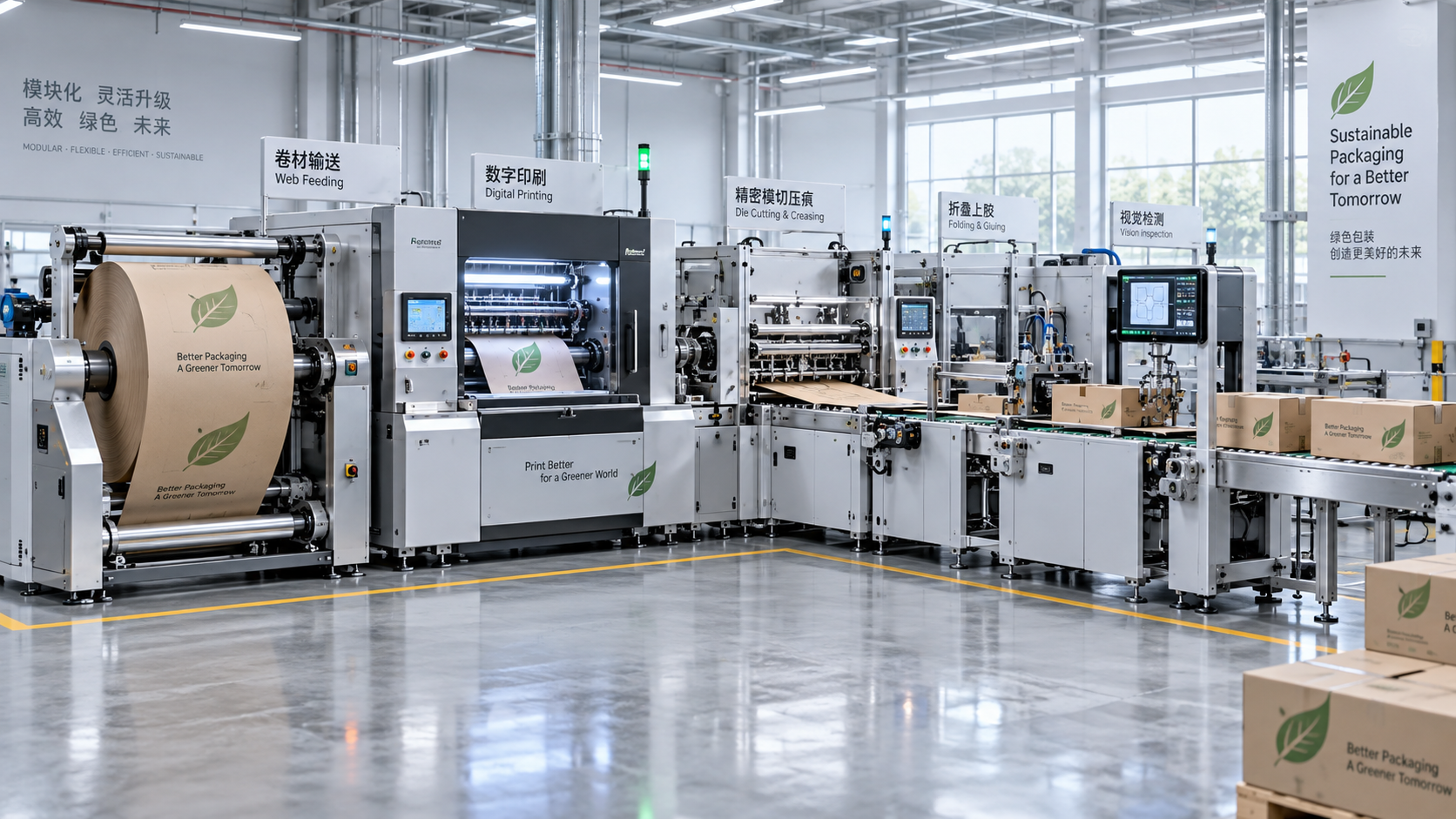
When Modular Packaging Converting Machinery Improves Line Flexibility
Packaging lines rarely become inflexible because a plant chose the wrong base machine. More often, flexibility is lost gradually: a new carton format is added, a brand requests more versions, e-commerce orders introduce smaller batches, or a paper-based alternative replaces a plastic component. The original line can still run, but every change starts to consume disproportionate time, engineering attention, and waste material.
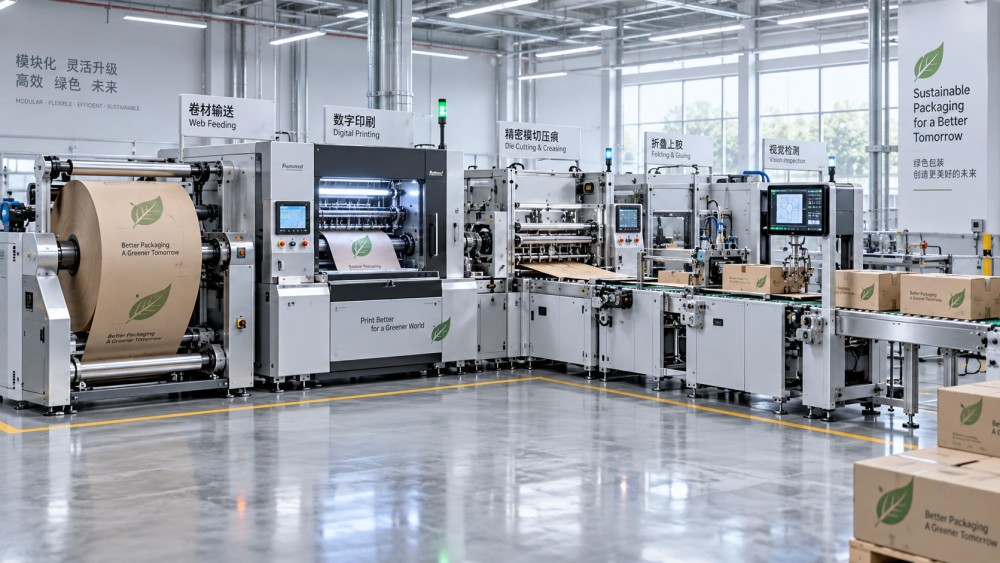
This is where packaging converting machinery modular design deserves serious consideration. Properly executed, modularity allows a converting line to accept changes in feeding, printing, die-cutting, creasing, folding, gluing, inspection, or packing without forcing the owner to replace the entire production architecture. It is not a universal answer, and it should not be confused with simply placing several standalone machines in sequence. The real question is whether the line can change function while preserving web control, registration accuracy, safety logic, and practical operating discipline.
For technical evaluations, the most useful starting point is not “How many modules are available?” It is: Which future production changes are genuinely likely, and which parts of the line create the highest cost or disruption when those changes arrive?
Flexibility is more than fast format change
A line may advertise rapid job changeovers yet remain structurally rigid. If every new substrate requires a different tension path, if tooling changes disturb print-to-cut registration, or if an added inspection station creates a bottleneck downstream, the apparent flexibility is narrow. It works for similar jobs, but not for a meaningful change in the production mix.
In packaging conversion, flexibility usually has several layers. Format flexibility concerns blank size, box geometry, flute profile, roll width, or pack count. Material flexibility concerns linerboard, coated paper, recycled grades, tissue, metallized stock, films, adhesive systems, and increasingly paper-based structures intended to reduce plastic content. Process flexibility is different again: a producer may need digital variable-data printing on one job, embossing or hot stamping on another, and a glue-free mechanical locking feature on a third.
A modular line is valuable when it addresses the layer of flexibility that actually constrains the business. For a converter producing short-run promotional cartons, quick exchange of print, embellishment, and die-cutting functions may matter most. For a corrugated operation serving e-commerce fulfillment, the priority may be changing board grades and box styles while keeping converting speed stable. In tissue processing, modularity may be more relevant at the rewinding, embossing, log-saw, and automatic packing stages than at the parent-roll handling end.
These distinctions matter because modularity has a cost. More interfaces can mean more alignment checks, more controls integration, more spare-part planning, and more training requirements. Buying a highly configurable machine for a stable, high-volume product family can introduce complexity without producing a useful return.
Where modular architectures tend to make practical sense
The strongest use case is a production environment where the core converting path remains consistent but one or two process steps change frequently. Think of a folding carton line that repeatedly moves between standard die-cut blanks and premium packs requiring foil, textured effects, or special window applications. A common platform with exchangeable converting stations can be more rational than building separate dedicated lines, provided the mechanical datum and registration control remain repeatable after each change.
Another good fit is phased automation. A plant may initially need reliable feeding, cutting, creasing, folding, and gluing, while manual packing remains acceptable. Later, labor availability, hygiene requirements, or export volumes may justify camera inspection, robotic case packing, automated pallet transfer, or closed-loop reject handling. If the original machine frame, electrical cabinet, safety circuit, and controls network were designed to accept these additions, the upgrade can be less disruptive than a full rebuild.
Digital printing has also changed the discussion. Piezoelectric inkjet systems can support shorter runs, variable graphics, and versioned packaging without traditional plate-making. Yet a digital print engine does not automatically create a flexible converting line. The printed web or sheet still has to travel through drying, inspection, cutting, creasing, folding, and gluing processes without damaging surface quality or losing registration. The best modular configurations treat printing as one controlled station in a connected process, not as an isolated “digital” upgrade bolted onto a mechanically conventional line.
For corrugated packaging, the upstream and downstream relationship deserves particular caution. A corrugator is a long, thermally and mechanically sensitive system where paper condition, steam balance, glue application, and web tension all influence board quality. A modular converting section may offer broader box-style capability, but it cannot compensate for unstable board flatness or inconsistent moisture. Evaluators should resist a common mistake: treating a flexible converting machine as a cure for upstream process variation.
The interfaces determine whether “modular” is real
The module itself is only half the story. A removable die-cutting unit, inspection system, print module, or glue application station has value only when its interfaces are engineered for repeatable reconnection. Mechanical positioning, material transport, power, compressed air, vacuum, adhesive supply, data exchange, guarding, and emergency-stop logic all need to be considered as one system.
Registration is often the first technical test. If a module is removed and reinstalled, how is its reference position restored? Is the machine relying on fixed mechanical locating surfaces, servo-driven calibration, camera feedback, operator adjustment, or some combination of these? The answer should be demonstrated under realistic substrates, not only with an ideal sample board. Thin coated stock, recycled paper with variable stiffness, and corrugated sheets do not behave the same way at speed.
Web-fed equipment introduces another concern: tension control. Adding a printer, laminating unit, coater, rewinder, or inspection station changes web path length and can alter draw relationships between sections. An apparently simple module may create oscillation, wrinkles, splice sensitivity, or registration drift if the control architecture does not decouple tension zones properly. In practice, a supplier should be able to explain where the tension zones begin and end, how dancer or load-cell feedback is handled, and what happens during acceleration, deceleration, and roll change.
Folder-gluer integration provides a similarly revealing test. A carton may pass die-cutting accurately yet fail at folding because crease behavior changes with fiber direction, board caliper, coating, humidity, or recycled content. Cold-glue and hot-melt systems also bring different operating windows. A modular gluing station should not be assessed only by nozzle count or stated speed; ask how glue pattern recipes are stored, how cleaning is managed, how temperature-sensitive materials are handled, and how the system prevents a bad glue application from moving unnoticed into final packing.
Evaluate the line around its likely bottlenecks
Technical teams sometimes compare nominal output figures and conclude that the fastest module will determine productivity. It rarely works that way. The usable line rate is set by the slowest reliable process under real operating conditions: feeder stability, ink drying, board settling, die-cut waste stripping, folding accuracy, glue cure behavior, inspection rejection, or downstream accumulation.
A high-speed flatbed die-cutter may be capable of operating near the upper range associated with modern packaging production, but the relevant question is whether the surrounding process can supply, receive, and maintain quality at that rhythm. Premium cartons with intricate stripping layouts, for example, may demand a different balance than straightforward transport cartons. The machine specification should therefore be read alongside job complexity, material range, tooling availability, and the time required to recover from a stop.
Before comparing proposals, map the current line in practical terms:
- Which jobs generate the most changeover time, make-ready waste, or operator intervention?
- Which product features are increasing: versioned graphics, smaller lots, special finishes, e-commerce protection, or plastic-replacement structures?
- Where does material quality vary enough to affect feeding, tension, folding, or glue performance?
- Which future additions are credible within the next equipment lifecycle, rather than merely attractive options on a brochure?
- Can downstream packing, material handling, and quality release keep pace with the proposed conversion capacity?
This exercise often produces an uncomfortable but useful finding: the desired flexibility may sit outside the converting machine. A plant may need better job data preparation, more disciplined tooling management, climate control for sensitive paper grades, or a buffer between converting and packing. Modularity cannot substitute for those basics.
Questions that expose upgrade risk early
A modular platform should be assessed as a lifecycle commitment, not a current configuration. Ask the machine builder to distinguish between a module that is physically possible and one that is commercially and technically supported on the proposed frame. Space on a layout drawing is not the same as reserved drive capacity, software readiness, guarding compatibility, and service access.
It is also wise to establish ownership of the controls boundary. If a third-party vision system, inkjet engine, robot, or glue unit is added later, who takes responsibility when the complete line will not restart after a fault? Can job recipes pass between systems without manual transcription? Are alarms time-stamped and traceable at line level? Is remote access governed by the owner’s cybersecurity requirements? These issues may feel secondary during capital approval, but they become central during commissioning and maintenance.
Serviceability is another practical filter. Modules need lifting paths, storage provisions, change-part identification, and safe access. A design that requires a specialist crew, extensive recabling, or hours of alignment every time a station is exchanged will not deliver everyday flexibility, even if it looks elegant at an exhibition. Request a changeover sequence that includes cleaning, safety isolation, reconnection, calibration, trial production, and quality approval—not just the physical swap.
Sustainability claims need process-level scrutiny
The move toward fiber-based packs, recyclable mono-material concepts, and lower-plastic formats is increasing demand for adaptable converting equipment. But “paper replacing plastic” does not mean every paper structure will run on every established line. Some barriers, coatings, fibers, and adhesive approaches may change crease performance, drying behavior, repulpability considerations, or seal strength. Forest certification requirements and market-specific obligations such as EUDR-related due diligence should be checked against the actual material supply chain and destination market rather than assumed from a machinery feature list.
Modularity can reduce the risk of committing too early to one packaging route. A producer might reserve space and controls capability for a future water-based coating, inspection function, or alternative bonding method while continuing to run established products. That is a sensible strategy when the direction of material development is clear but the final specification is not.
A better decision is usually a narrower one
The most effective modular packaging converting machinery is not the platform with the longest option list. It is the one whose modules correspond to foreseeable production changes, whose interfaces are stable, and whose controls, maintenance, and operator routines can support the added complexity.
For teams following industrial digital print, corrugation, precision post-press, folder-gluing, and tissue conversion, this is the useful lens: trace the material from input to finished pack, identify the step that limits response time, then judge whether a module removes that constraint without creating a new one elsewhere. Intelligence on paper prices, substrate availability, print behavior, adhesive performance, and tension control is most valuable when it informs that specific decision.
A modular line earns its place when it makes future change manageable in the real factory—during a rushed short-run order, a difficult board batch, a new sustainable pack trial, or an unexpected downstream stoppage. If it only makes the specification sheet more impressive, it is not flexibility. It is deferred complexity.
Industry Briefing
Get the top 5 industry headlines delivered to your inbox every morning.
Recommended News