
What drives the cost of tissue rewinding machines?
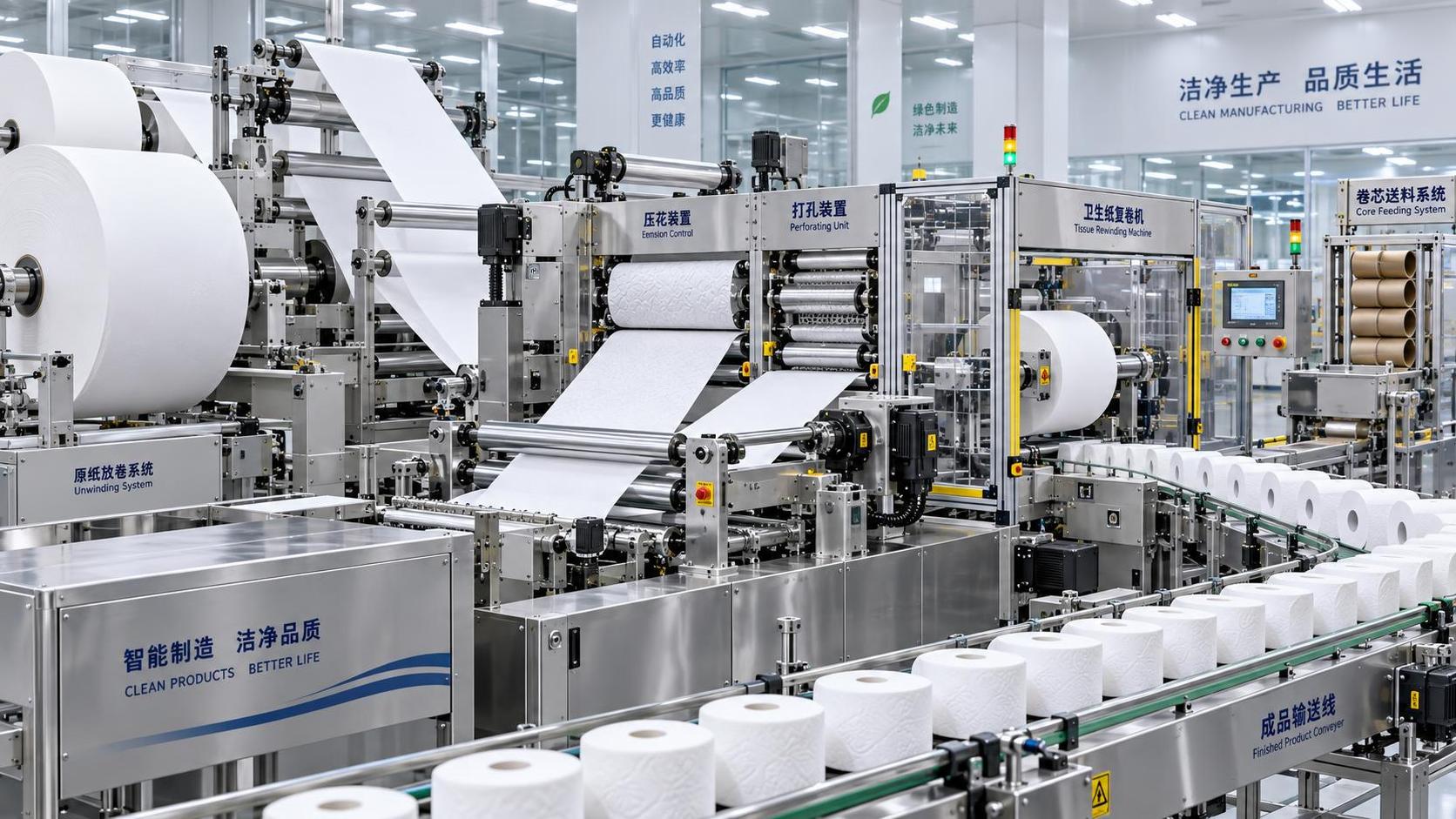
The cost of a tissue rewinding machine is driven less by the headline speed on a quotation than by the level of control required to make saleable rolls consistently. Two machines may both rewind toilet tissue or kitchen towel, yet differ sharply in price because one is built for basic converting while the other is designed to run varied parent rolls, hold tight diameter tolerances, emboss reliably, reduce manual handling, and feed downstream packaging with fewer interruptions.
When comparing tissue rewinding machines cost, the useful question is not simply, “Which machine is cheaper?” It is, “What production risk is included or excluded from this configuration?” A lower initial price can be sensible for a narrow, stable product range. It becomes costly when the machine cannot maintain quality at the required output, creates excessive trim waste, or depends on frequent operator adjustment.
Machine format and production scope set the starting point
A tissue rewinder is not a single, fixed product. Its base cost begins with the roll format it must produce and the kind of tissue it must handle. Toilet rolls, kitchen towels, jumbo rolls, and industrial wiping products can require different log diameters, perforation patterns, core sizes, sheet lengths, and roll densities. A machine intended for one standard consumer roll is structurally simpler than one expected to switch among several formats during the week.
Width is another major cost driver. A wider machine processes a wider parent roll and requires a more rigid frame, wider rollers, larger drives, and a more capable control system. The purchase decision should start with the usable web width, not only the desired finished-roll output. Buying more width than the converting plan can absorb adds capital cost and floor-space demand. Buying too little may force an early replacement when production expands.
Product complexity also matters. Plain rewinding is less expensive than a configuration that includes perforation, embossing, lamination, tail sealing, core handling, log discharge, and automatic transfer to cutting or packaging. Each module has a purpose, but it should be justified by the product specification and sales channel. A premium embossed household roll may need capabilities that are unnecessary for a simple commercial tissue product.
Speed costs money, but stable speed costs more
Suppliers often lead with maximum line speed because it is easy to compare. That number matters, but it should not be treated as the expected daily operating rate. A rewinder reaches its value when it runs steadily with the intended paper grades, roll sizes, and changeover frequency. Reaching a high peak speed under ideal material conditions is different from maintaining output while perforation is accurate, embossing remains even, and log diameter stays within tolerance.
Higher-speed tissue converting equipment generally needs stronger mechanical construction, more precise roller geometry, more responsive drives, better braking, and more sophisticated synchronization. These elements raise the initial price because they are what prevent web instability from becoming breaks, telescoped logs, loose rolls, or inconsistent perforation.
Speed should therefore be evaluated against the whole line. If the log saw, packaging equipment, warehouse flow, or available labor cannot support the rewinder’s output, paying for extra rewinding capacity creates a bottleneck elsewhere. Conversely, a rewinder that is slightly more expensive but properly matched to downstream capacity can reduce stops and simplify production planning.
Web tension control is a major differentiator
In tissue converting, tension control is not an invisible technical extra. It affects roll firmness, sheet registration, perforation consistency, embossing appearance, and web-break frequency. Tissue is light, extensible, and sensitive to variations in parent-roll quality. A basic tension arrangement may perform adequately with one stable grade of paper. It becomes less forgiving when paper basis weight, moisture, softness, bulk, or parent-roll winding quality varies.
More capable systems use coordinated drives, sensors, load control, and programmed recipes to keep the web under controlled tension through unwinding, embossing, perforating, and rewinding. This raises machine cost, yet it can be justified where product quality is closely inspected or raw material varies across suppliers or lots.
A useful comparison point is not whether a supplier lists “automatic tension control.” Ask how the system behaves during acceleration, deceleration, splice passage, parent-roll diameter reduction, and a change from one tissue grade to another. Also ask which settings are stored as recipes and which need manual tuning. The answers reveal whether the machine is built for repeatable operation or for frequent intervention.
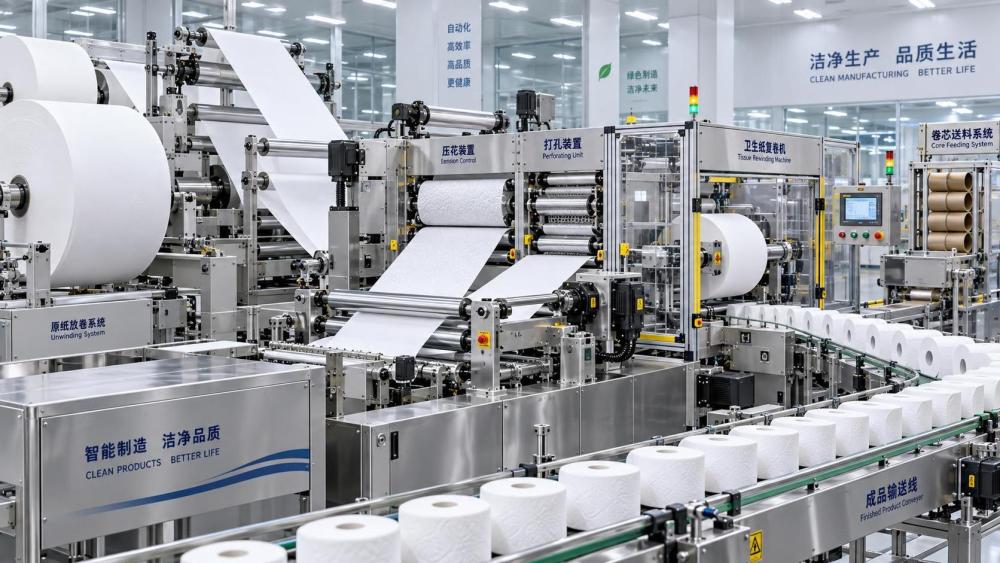
Automation changes both the quotation and the operating model
Automation is one of the clearest reasons why tissue rewinding machine prices vary. A manually loaded machine with operator-led adjustments has a lower entry cost. It may be appropriate for limited output, fewer product changes, or operations where skilled attendance is already available. The trade-off is dependence on consistent manual work during parent-roll loading, core feeding, format adjustment, tail handling, and log transfer.
Automatic parent-roll loading, core feeding, tail sealing, log discharge, and recipe-driven adjustment increase the investment. Their value is not merely labor reduction. Automation can improve repeatability, shorten changeovers, reduce handling damage, and make line performance less dependent on one experienced operator. This matters most when production runs are long, operating hours are extended, or output must be coordinated with automatic cutting and packaging equipment.
Embossing, perforation, and finished-roll quality add cost in different ways
Embossing is often discussed as a visual feature, but it also influences bulk, ply bonding, softness perception, and roll appearance. An embossing station requires accurately made rollers, controlled pressure, stable alignment, and a design suited to the tissue grade. Decorative patterns, edge embossing, point-to-point lamination, and different product widths can add further complexity.
These options should be evaluated through the finished product rather than the machine brochure. If the commercial requirement is a simple, cost-sensitive roll, an elaborate embossing package may not produce a return. If the product must carry a premium shelf appearance or maintain two-ply bonding through converting and use, embossing quality becomes a central buying criterion.
Perforation is similarly easy to underestimate. Sheet separation must feel clean to the user without causing breaks during high-speed rewinding or later packaging. Perforation settings interact with paper strength, ply count, sheet length, and line speed. A flexible perforation system costs more than a fixed, basic arrangement, but it has practical value for manufacturers serving several brands, markets, or pack formats.
Material compatibility affects the real cost of ownership
The machine should be specified around the parent rolls that will actually be purchased, not around a single ideal sample. Tissue grades can differ in width, diameter, core condition, bulk, tensile behavior, moisture response, and surface finish. Recycled-content tissue, softer grades, bulky embossed base tissue, and lightweight grades may all place different demands on web handling.
A machine that only runs smoothly with one narrow material range may appear economical until sourcing changes or paper availability becomes constrained. During technical discussions, provide representative material specifications and, where possible, samples from the grades expected in normal production. The aim is to establish whether the proposed unwinder, tension system, embossing configuration, and rewinding controls can accommodate realistic variation.
Raw-material waste deserves equal attention. Trim loss, start-up waste, rejected logs, and rolls that need reworking are often more meaningful than a small difference in quoted machine price. Better control does not eliminate waste, but it can reduce the sources of avoidable loss: unstable tension, poor log transfer, inconsistent tail sealing, and difficult changeovers.
Integration is often omitted from the first price comparison
A rewinder may be quoted as a standalone unit, but most production decisions involve a converting system. Upstream parent-roll storage and handling, core supply, dust extraction, log accumulation, log sawing, wrapping, case packing, and controls integration all influence the delivered investment. The physical layout also affects performance. Long manual transport routes or poorly placed accumulation points can undermine the advantage of an automated rewinder.
Electrical supply, compressed air, guarding, installation, commissioning, operator training, and spare parts should be clearly separated in the comparison. This is not administrative detail. Two quotations with similar base prices may have very different scope boundaries. A complete cost comparison needs to show what is included to make saleable tissue rolls, not just what is mounted on the rewinder frame.
After-sales capability should be priced as risk reduction
Tissue converting equipment has wear parts and process-critical components. Perforation blades, embossing rolls, bearings, belts, pneumatic parts, sensors, and control hardware all need service attention over time. The relevant question is whether replacement parts, troubleshooting support, technical documentation, and trained service personnel can be accessed without extended disruption.
A lower-priced machine can become the more expensive choice if routine parts are difficult to obtain, controls are poorly documented, or remote support cannot resolve common faults. Review the recommended spare-parts list before ordering. It should distinguish start-up spares, routine consumables, and components whose failure would stop the line. This makes the maintenance budget more realistic and avoids treating support as an afterthought.
Energy use also belongs in the lifecycle view, particularly for lines with multiple driven stations and continuous operation. Rather than comparing a generic energy claim, examine the drive architecture, standby behavior, compressed-air demand, and operating conditions required for the proposed configuration. The best choice is usually the machine that provides stable output with the least avoidable energy and material loss, not simply the machine with the lowest rated load.
How to compare quotations without being misled by a low base price
Build one product-and-process brief before sending requests for quotation. It should define the tissue grades, parent-roll dimensions, finished roll sizes, core specifications, ply structure, embossing requirement, perforation pattern, required changeovers, target output, downstream equipment, and available utilities. Without this common brief, suppliers may price different machines under similar descriptions.
Then compare each offer in four layers:
- Production fit: Can it run the intended product range at a sustainable operating rate?
- Quality control: How are tension, roll density, perforation, embossing, and tail sealing maintained?
- Operating burden: Which tasks remain manual, how often do formats change, and where are stoppages likely to occur?
- Delivered scope: What is included for installation, safety, interfaces, spares, training, service, and commissioning?
It is also worth asking suppliers to state the assumptions behind their offer. The stated output may depend on a certain tissue grade, roll diameter, perforation pitch, or product configuration. Making those assumptions visible turns a broad price comparison into a usable purchasing decision.
Choose the configuration that matches the commercial model
A basic rewinder can be the right investment for a focused product range, modest volume, and stable parent-roll supply. It is not automatically an inferior choice. Problems arise when a low-cost configuration is expected to deliver the flexibility, uptime, and quality consistency of a more automated line.
For a broader product portfolio, frequent changes, premium embossed tissue, or closely linked downstream packaging, the higher-cost machine may offer better lifecycle value because it protects throughput and reduces quality variation. The decision should be anchored to expected operating conditions, not to the most impressive specification or the lowest initial quote.
The strongest purchasing position comes from defining what the line must produce, what variation it must tolerate, and what interruptions the operation can realistically absorb. Once those limits are clear, the drivers behind tissue rewinding machine cost become easier to judge: every added capability should solve a specific production problem or support a specific commercial requirement.
Industry Briefing
Get the top 5 industry headlines delivered to your inbox every morning.
Recommended News