
Industrial Printing Systems: Maintenance Risks That Raise Rejects
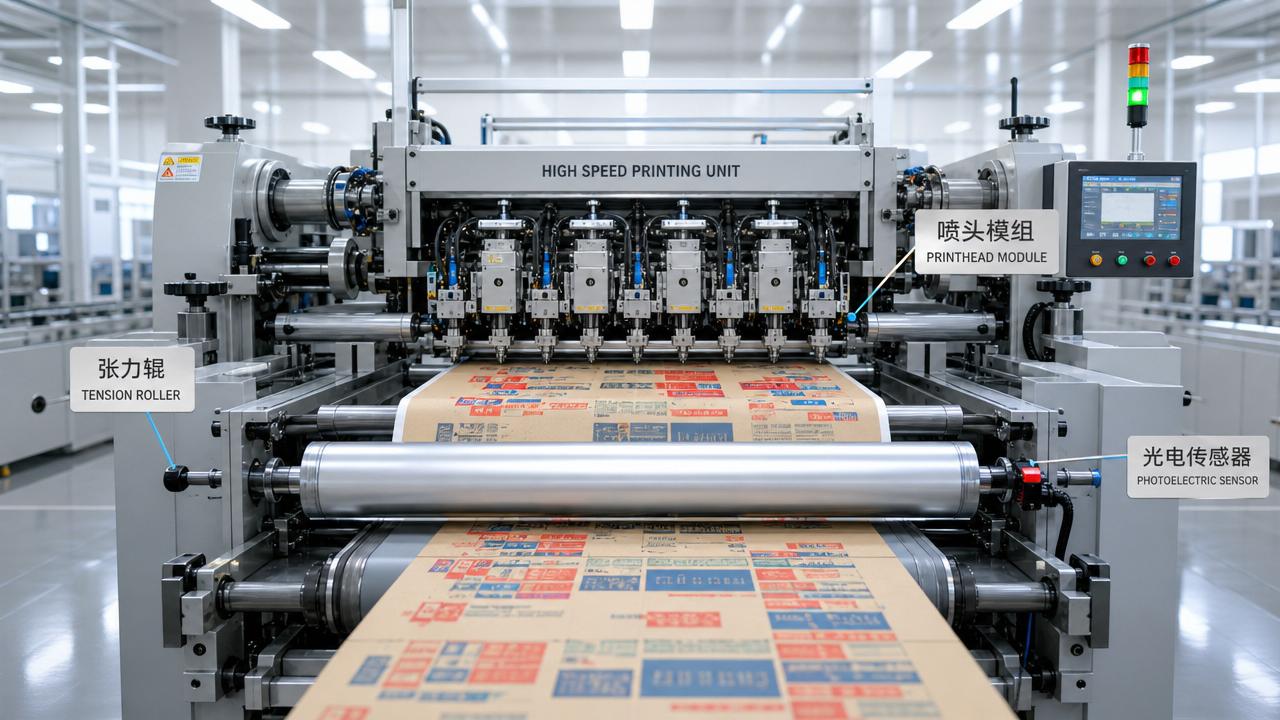
In industrial printing systems, small maintenance oversights can quickly turn into higher reject rates, unstable color output, web tension issues, and costly downtime. For after-sales maintenance teams, understanding where lubrication, calibration, printhead care, and sensor checks fail is critical to protecting yield and machine reliability. This article highlights the maintenance risks that most often raise rejects and how to control them before production quality drops.
For service engineers supporting digital printers, corrugated lines, folder gluers, post-press systems, and tissue converting equipment, reject reduction is not only a quality target. It is also a measurable maintenance outcome linked to uptime, parts life, operator confidence, and customer retention.
In most plants, rejects rise gradually before they become visible in scrap reports. A 1% drift in color density, a tension fluctuation of a few Newtons, or a sensor delay of 100–300 milliseconds can create cumulative waste across thousands of sheets or meters of substrate.
Why maintenance failures drive rejects in industrial printing systems
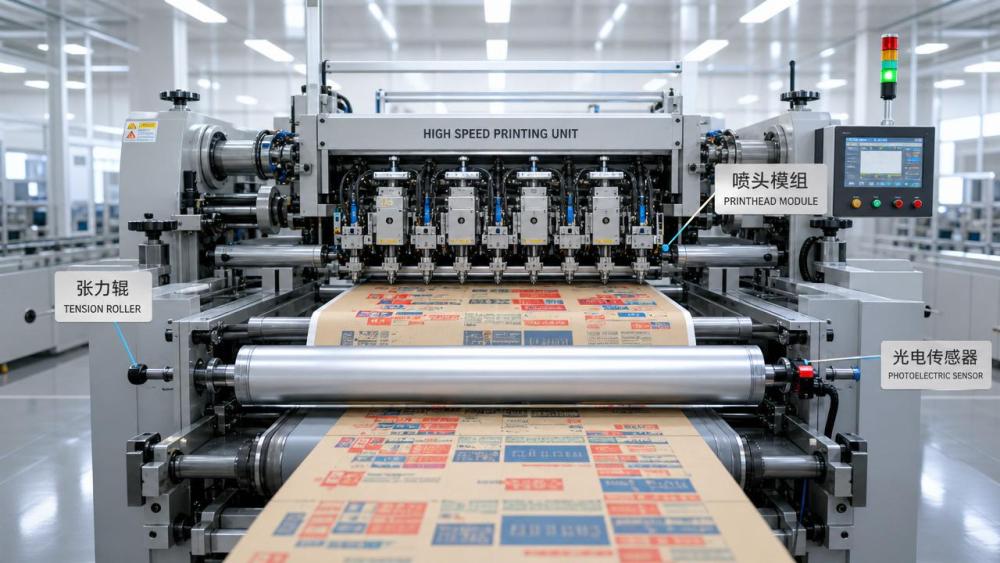
Industrial printing systems operate as linked mechanical, electrical, fluid, and software processes. Rejects rarely come from one isolated fault. More often, they appear when 2–4 small maintenance gaps overlap, such as weak lubrication control, inconsistent printhead cleaning, drifting registration, or contaminated sensors.
For after-sales maintenance personnel, this matters because the same machine can print acceptably at 60% speed and fail at 90% speed. High-speed production exposes hidden wear, delayed response, and unstable settings that do not show up during short service tests.
The reject chain: from minor deviation to scrap
A typical reject chain starts with a small deviation in one subsystem. For example, under-lubricated bearings increase vibration, vibration affects dot placement or cut accuracy, and poor placement leads to registration drift, misting, edge damage, or carton conversion errors.
In corrugated and web-fed applications, tension instability is especially costly. A deviation of even 3%–5% in web tension can alter print registration, warp board alignment, or create fold inaccuracies downstream. That means maintenance should not stop at the print unit alone.
High-risk maintenance zones service teams should prioritize
The most frequent reject-related risks in industrial printing systems usually fall into five zones: lubrication, calibration, printhead or ink delivery care, sensor integrity, and environmental control. Each zone affects yield in different ways, but all five influence repeatability.
- Lubrication failures increase heat, backlash, vibration, and premature wear.
- Calibration drift affects registration, print position, cutting alignment, and glue placement.
- Printhead neglect leads to nozzle loss, streaks, misting, and unstable drop formation.
- Sensor contamination causes false readings, timing errors, and poor auto-correction.
- Temperature and humidity swings alter ink behavior, substrate flatness, and web stability.
The table below maps common maintenance failures to reject symptoms and practical service responses. It can help after-sales teams connect visible production defects with likely root causes faster during plant visits.
The key lesson is that reject control in industrial printing systems should be symptom-led but root-cause verified. Service teams that only replace visible worn parts often miss the upstream causes that recreate the same scrap pattern within days or weeks.
Critical maintenance risks by subsystem
Different equipment families fail in different ways, but several patterns repeat across IPPS-related applications. A maintenance plan for a digital corrugated printer will not match a tissue rewinder exactly, yet both rely on stable motion, accurate sensing, clean fluid systems, and repeatable mechanical timing.
Lubrication errors and hidden wear
Over-lubrication and under-lubrication are both common service mistakes. Too little lubricant raises friction and heat. Too much can contaminate belts, encoder wheels, vacuum systems, or paper paths. In high-speed units, bearing temperature rising more than 10°C above baseline deserves immediate inspection.
Service teams should not rely on calendar maintenance alone. A mixed strategy works better: hourly intervals for moving assemblies, condition checks every 2–4 weeks, and temperature or vibration trending where available. This is especially important on corrugators, die-cutters, and folder gluers running multi-shift schedules.
Common lubrication mistakes
- Using one grease type across bearings, gears, and high-temperature zones without compatibility review
- Skipping lubrication point verification after part replacement
- Ignoring contamination from paper dust, adhesive mist, or ink aerosols
- Extending intervals beyond 500 hours in heavy-load or humid conditions
Calibration drift in motion and registration
Calibration drift is one of the most underestimated causes of rejects in industrial printing systems. It often follows servo replacement, belt change, mechanical shock, emergency stops, or software updates. The machine may still run, but print-to-cut accuracy can move outside acceptable limits such as ±0.2 mm to ±0.5 mm.
After-sales teams should treat calibration as a documented sequence, not a quick touch-up. The sequence typically includes reference position confirmation, encoder validation, transport synchronization, image registration check, and production-speed verification with the actual substrate.
Printhead care and ink delivery instability
In digital industrial printing systems, printhead maintenance directly affects reject rates. Nozzle dropout, deflection, poor wetting, or inconsistent drop volume may begin as minor image defects but quickly become unacceptable in branded packaging, variable data work, and high-coverage graphics.
Typical risk factors include poor filtration, dried residue on the nozzle plate, incorrect cleaning fluid, unstable negative pressure, and long idle periods without proper parking. In many plants, preventive printhead inspection every shift and deeper ink-path review every 1–2 weeks is more effective than reactive replacement.
Warning signs service engineers should not ignore
- Recurring nozzle loss after cleaning
- Color density variation above normal operating tolerance
- Increased purge volume without improved print quality
- Misting at higher line speeds or low humidity conditions
Sensor neglect and bad feedback loops
Photoelectric sensors, mark readers, web guides, edge detectors, pressure transducers, and camera systems form the correction layer of industrial printing systems. When these inputs degrade, the machine starts making bad decisions. Rejects then rise even if the mechanical sections remain within normal limits.
Dust from paper converting, glue vapors, and vibration are common causes. A lens film or loose shielded cable may appear minor, yet it can introduce intermittent errors that only occur at 120–200 meters per minute or during rapid job transitions.
How after-sales teams can reduce rejects before production quality drops
The most effective service model is preventive, evidence-based, and speed-aware. Instead of waiting for reject piles to confirm a problem, teams should look for early indicators across machine condition, process stability, and operator behavior. This approach reduces emergency calls and improves customer trust.
Build a reject-prevention service routine
A practical routine should be split into daily, weekly, and periodic checkpoints. Daily work focuses on visual condition, cleaning, and alarm review. Weekly work checks calibration drift, wear points, and consumables. Periodic work, every 250 hours or monthly, includes deeper alignment, lubrication verification, and performance testing at production speed.
The following checklist structure helps standardize service visits across industrial printing systems used for packaging, corrugated conversion, and tissue production.
The value of this schedule is consistency. Many reject problems are not technically complex; they persist because the same checks are skipped during busy production weeks or performed differently by different technicians.
Use reject data as a maintenance diagnostic tool
Scrap reports become more useful when they are coded by defect type, speed, substrate, shift, and machine section. If streaking rises only on coated linerboard, the issue may involve ink wetting or printhead height. If misregister appears after 6 hours, thermal growth or mechanical drift may be involved.
A practical method is to track the top 5 reject modes weekly and link each one to one maintenance owner. This creates accountability and shortens troubleshooting time. Even simple trend sheets can reveal whether a defect rate is falling from 4% to 2% after a service intervention.
Train operators to support maintenance stability
After-sales maintenance teams cannot control reject rates alone. Operators influence cleaning quality, start-up checks, substrate loading, and alarm response every hour. A 30-minute weekly review of defect samples, cleaning method, and warning signs can prevent avoidable repeat failures.
In industrial printing systems, operator habits often decide whether a maintenance action holds for 3 days or 3 months. Clear visual standards, signed checklists, and escalation rules improve the return on every service visit.
Common service mistakes that keep reject rates high
Even skilled technicians can unintentionally preserve reject problems when maintenance execution is incomplete. The issue is usually not effort, but method. Plants with recurring rejects often show the same four service mistakes across different machine types.
Changing parts without validating process conditions
Replacing a sensor, printhead, or bearing may solve the immediate symptom, but the root cause can remain. Misaligned transport, poor air quality, unstable substrate moisture, or unverified software parameters may damage the new part or recreate the same reject pattern within 1–2 production cycles.
Testing only at low speed
A machine that passes service checks at low speed can still fail under production load. Dynamic issues such as vibration, web oscillation, servo lag, or misting may only appear above 70%–80% of rated speed. Final validation should always include real-job conditions when possible.
Ignoring environmental influence
Temperature, humidity, dust load, and compressed air quality affect nearly every industrial printing system. Ink viscosity, substrate flatness, adhesive response, and static behavior can all change with the environment. A room shift from 45% to 30% relative humidity may be enough to trigger print instability or paper handling defects.
Poor documentation after service
If the baseline values before and after maintenance are not recorded, future technicians lose context. Useful records should include tension setpoints, printhead test results, alignment values, bearing temperature, defect images, and the exact consumables used. This reduces repeated diagnosis and supports stronger lifecycle service.
What customers should expect from a stronger maintenance partner
For IPPS readers and industrial equipment users, the best after-sales maintenance support goes beyond emergency repair. It should combine machine knowledge, process understanding, reject analysis, and clear field execution. That is especially important in digital packaging, corrugated conversion, post-press, and tissue processing lines where multiple stations interact.
A strong maintenance partner should offer structured inspections, consumable guidance, speed-based validation, operator support, and realistic spare-part planning. Customers should be able to see whether service actions lower rejects, stabilize output, and extend component life over a 3–6 month period.
Evaluation points for service capability
- Can the team diagnose defects by machine section and process stage?
- Do they provide measurable before-and-after maintenance records?
- Can they support print, corrugation, post-press, or tissue-specific maintenance variables?
- Do they recommend preventive intervals based on load, speed, and environment rather than calendar dates only?
Industrial printing systems reward disciplined maintenance and penalize inconsistency. When lubrication, calibration, printhead care, and sensor checks are handled with documented routines, reject rates become easier to predict and reduce. For after-sales maintenance teams, the goal is not just restoring operation, but protecting yield at production speed.
If you are looking to improve machine reliability across digital printing, corrugated board lines, die-cutting, folder gluing, or tissue processing, IPPS can help you assess maintenance risks, compare service priorities, and identify practical control points. Contact us now to discuss your equipment challenges, get a tailored maintenance approach, or explore more industrial printing systems solutions.
Industry Briefing
Get the top 5 industry headlines delivered to your inbox every morning.
Recommended News