
Digital Printing Technology Trends Shaping Packaging in 2026
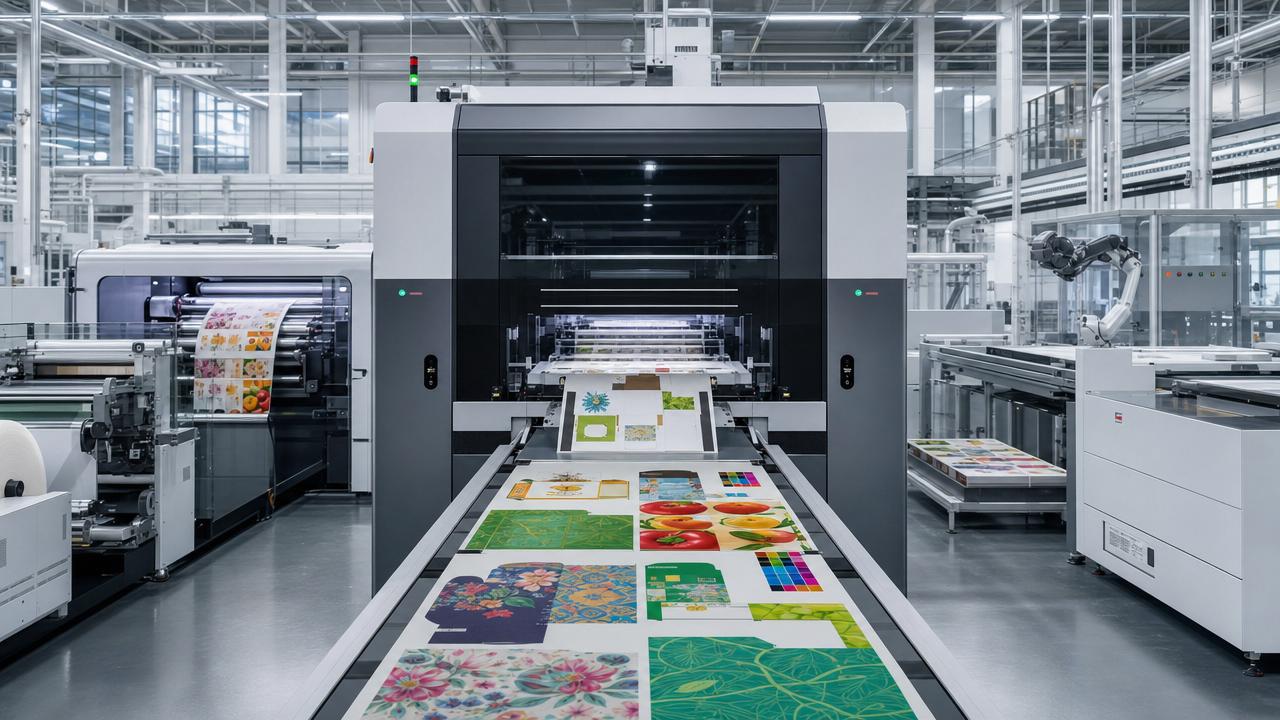
In 2026, digital printing technology is moving packaging from fixed-volume production to data-driven flexibility.
Faster versioning, shorter runs, and automated workflows now support both branding precision and supply chain resilience.
Across paper packaging, corrugated formats, labels, cartons, and tissue-related wraps, the shift is increasingly strategic.
This matters because digital printing technology no longer serves only niche customization.
It is becoming a core production model for sustainable packaging, agile logistics, and premium retail presentation.
For IPPS, these changes connect print engines, corrugated systems, post-press precision, and smart factory intelligence into one industrial story.
What Digital Printing Technology Means in Packaging
In packaging, digital printing technology refers to direct image transfer without conventional plates.
It typically relies on inkjet or electrophotographic systems, connected to fast data handling and variable design control.
The value is operational as much as visual.
Converters can change artwork instantly, reduce setup waste, and produce multiple SKUs in one coordinated run.
This supports e-commerce packaging, regional campaigns, compliance changes, and seasonal launches with lower friction.
Digital printing technology also fits broader paper-based manufacturing trends.
It works best when paired with tension control, surface treatment, color management, die-cutting accuracy, and automated folding-gluing.
Industry Signals Shaping 2026 Packaging Production
Several signals explain why digital printing technology is advancing quickly across the packaging value chain.
- More product variants are increasing artwork complexity and shortening campaign cycles.
- E-commerce growth is pushing demand for corrugated packaging with variable data and location-specific messaging.
- Sustainability targets are driving lower waste, right-sized production, and recyclable paper-based alternatives.
- Labor pressure is accelerating interest in automated workflows and unmanned print environments.
- Compliance labeling and traceability need more flexible print content at production speed.
These signals are especially visible in corrugated, folding cartons, display packaging, and tissue outer packaging.
They also align with IPPS coverage of industrial printers, board lines, precision converting, and intelligent post-press systems.
Key Digital Printing Technology Trends in 2026
1. Production-Grade Inkjet Is Expanding
Single-pass and advanced scanning systems are improving speed, consistency, and substrate range.
This makes digital printing technology more competitive for mainstream corrugated and carton applications.
2. Variable Data Is Becoming Standard
QR codes, serialization, language variation, and regional promotions are no longer optional in many packaging programs.
Digital printing technology supports these changes without stopping production for new plates.
3. Corrugated Surface Printing Is Improving
Better droplet control, pretreatment chemistry, and drying management are improving print quality on uneven board surfaces.
That expands the role of digital printing technology in shipping boxes and shelf-ready packaging.
4. Workflow Automation Is Delivering Real Returns
Automation now connects job onboarding, color adjustment, substrate presets, inspection, and finishing preparation.
The result is less operator dependence and more repeatable output across shifts.
5. Sustainable Printing Is Moving from Claim to Metric
In 2026, sustainability discussions focus on measurable waste, energy use, recyclability, and material compatibility.
Digital printing technology helps by reducing makeready waste and supporting right-quantity production.
Business Value Across the Packaging Chain
The impact of digital printing technology depends on how it interacts with converting, logistics, and commercial planning.
Its strongest value often appears when printing is integrated with upstream board production and downstream finishing.
- Reduced inventory through print-on-demand packaging programs.
- Faster design iteration for private label and promotional packaging.
- Lower waste during changeovers and artwork updates.
- Improved market testing through short, flexible production batches.
- Better traceability for regulated or export-oriented goods.
For paper-based systems, this value increases when print quality remains stable through die-cutting, creasing, folding, and gluing.
That is why integrated intelligence matters as much as printer speed.
Typical Application Scenarios in 2026
Digital printing technology is not replacing every conventional line.
It is gaining ground where responsiveness, complexity, and sustainability are more valuable than long-run standardization.
Practical Evaluation Points Before Investment
A useful decision framework should go beyond headline speed and image resolution.
Digital printing technology succeeds when the whole line supports throughput, accuracy, and lifecycle efficiency.
Assess substrate behavior
Test ink interaction on linerboard, carton stock, coated papers, and recycled fibers.
Surface variation can affect color density, drying, and barcode readability.
Map the finishing connection
Printed output must perform through die-cutting, stamping, folding, gluing, and packing.
Weak integration can erase the gains promised by digital printing technology.
Measure automation depth
Review prepress connectivity, inspection tools, maintenance alerts, and data feedback loops.
Automation quality often determines long-term operating stability.
Quantify sustainability outcomes
Compare waste rates, energy profiles, ink chemistry, and compatibility with recycling streams.
Sustainability performance should be verified, not assumed.
Strategic Direction for Future-Ready Packaging Operations
The 2026 outlook shows digital printing technology becoming a structural capability in packaging.
Its role is strongest where agility, premium presentation, variable data, and low-waste production must coexist.
A sound next step is to evaluate packaging workflows as one connected system.
That includes printer architecture, corrugated formation, post-press precision, folder-gluer compatibility, and factory intelligence.
IPPS tracks these intersections closely, helping industrial teams read technology signals before they become market pressure.
When digital printing technology is aligned with paper-based smart manufacturing, packaging becomes faster, cleaner, and more adaptive by design.
Industry Briefing
Get the top 5 industry headlines delivered to your inbox every morning.
Recommended News