
E-Commerce Packaging Shifts Driving New Box Design Rules
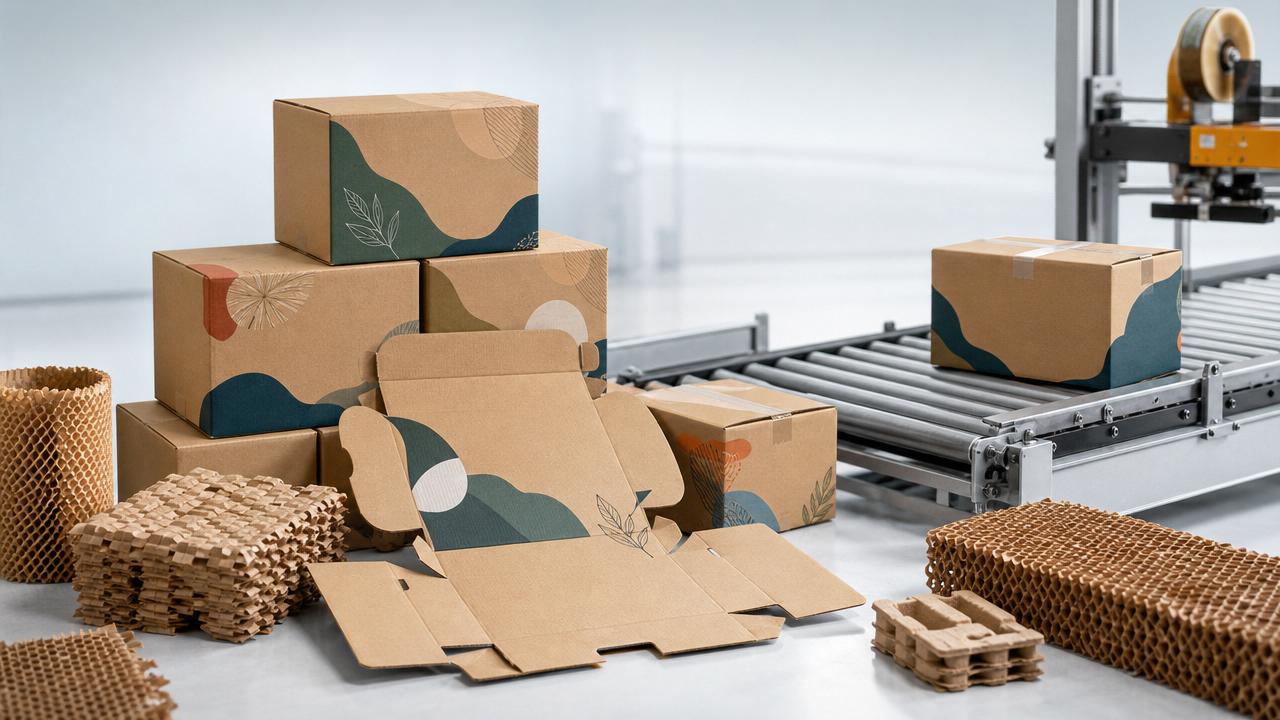
E-commerce packaging is no longer a simple shipping container. It has become a strategic interface between manufacturing efficiency, logistics protection, consumer experience, sustainability compliance, and brand communication. For companies tracking packaging trends, the key shift is clear: new box design rules are being shaped by parcel handling intensity, automation demands, digital print flexibility, and growing pressure to reduce material waste without sacrificing performance.
For information-driven readers, the most important takeaway is that box design is now less about isolated structural choices and more about system compatibility. A corrugated box must work across high-speed converting lines, survive fragmented last-mile logistics, support cost targets, carry stronger visual identity, and increasingly align with environmental reporting requirements. That is why e-commerce packaging has become a major decision point for packaging producers, equipment makers, converters, and supply chain planners.
What Is Actually Changing in E-Commerce Packaging Design?
The biggest change is that packaging is being designed for a harsher and more data-driven environment than traditional retail distribution. In a store-based supply chain, packaging often moved in larger, more stable transport units and shared shelf-display functions. In e-commerce, the shipping box itself often becomes the primary protective structure, the primary branded surface, and the primary operational unit.
This change creates new design rules. Boxes must tolerate more touchpoints, more sorting events, more compression variation, and more irregular handling. They must also be optimized for dimensional weight pricing, automated packing lines, right-sized fulfillment, and easier returns. As a result, e-commerce packaging design is moving from a decorative or secondary concern to an engineering discipline that connects materials science, print technology, converting precision, and logistics economics.
Another major shift is the rise of shorter runs and higher SKU variation. Online sellers frequently test campaigns, personalize packaging, launch seasonal editions, and serve multiple product categories from the same fulfillment network. This makes digital printing, flexible die-cutting strategies, and rapid changeover capability far more valuable than they were in traditional mass-standardized packaging models.
Why Are Traditional Box Design Assumptions No Longer Enough?
Many legacy packaging assumptions were built around pallet efficiency and retail presentation. Those assumptions break down when products move through courier networks as individual parcels. A box that performs well in bulk shipping may still fail in e-commerce if it leads to void fill overuse, poor cube utilization, damage at corners, barcode readability issues, or inefficient automated erection and sealing.
Traditional design also often focused on average load conditions. E-commerce requires resilience against unpredictable impact profiles: drops, conveyor transfers, chute collisions, mixed-load stacking, and exposure to moisture or temperature changes during last-mile delivery. This means packaging engineers must increasingly design for variable stress rather than ideal transport conditions.
There is also a commercial issue. Oversized packaging creates direct cost penalties through higher shipping charges, excess material consumption, lower trailer utilization, and weaker sustainability metrics. On the other hand, under-engineered boxes can increase returns, product damage, and negative customer reviews. The new rule is balance: optimize packaging to be light, compact, machinable, printable, and protective at the same time.
How Corrugated Board Design Is Evolving for E-Commerce Logistics
Corrugated board remains the backbone of e-commerce packaging, but its specification logic is becoming more nuanced. Instead of defaulting to heavier board grades, converters and brand owners are rethinking flute profiles, liner combinations, and board geometry according to actual shipping risk, product fragility, and fulfillment process requirements.
Microflute and lighter-weight structures are gaining attention where visual quality, dimensional efficiency, and material reduction matter. Meanwhile, stronger double-wall or reinforced single-wall constructions remain essential for heavier products, subscription shipments, and long-distance parcel networks. The goal is not simply to maximize strength, but to match board performance to real handling conditions with greater precision.
This is where corrugated board line capability becomes a critical part of the equation. Consistent flute formation, moisture control, bonding quality, and web tension stability directly affect box performance. If the board is inconsistent, even a well-designed box structure may fail under compression or repeated impacts. In modern e-commerce packaging, upstream board quality and downstream box design can no longer be treated as separate topics.
Designers are also paying closer attention to edge crush performance, puncture resistance, and stacking stability under dynamic loads. These characteristics matter because parcels are frequently sorted individually, not just stored as palletized units. The practical implication is that structural testing, simulation, and field feedback are becoming more important than rule-of-thumb board selection.
Why Right-Sizing Has Become a Core Box Design Rule
Right-sizing is one of the most influential trends in e-commerce packaging because it affects cost, sustainability, fulfillment speed, and customer perception at once. A right-sized box reduces empty space, lowers void fill demand, improves trailer and van utilization, and can reduce shipping costs tied to dimensional weight.
For operations teams, right-sizing also supports faster packing workflows when box options are intelligently standardized. Instead of maintaining too many carton sizes, companies are increasingly building optimized box families based on order patterns, product dimensions, and automation constraints. This creates a more disciplined packaging architecture rather than a random collection of SKUs.
From a design standpoint, right-sizing requires accurate product data, order mix analysis, and close collaboration between packaging engineers and fulfillment planners. It is not enough to shrink box dimensions. The package still has to accommodate protective inserts, sealing methods, opening experience, and machine handling tolerances. Poorly executed right-sizing can increase jams, crush risk, or assembly inefficiency.
This is why advanced e-commerce packaging programs often combine dimensional analysis software, packaging line feedback, and transport testing before redesigning box portfolios. The most successful programs treat right-sizing as an operational system, not as a one-time box reduction exercise.
How Digital Printing Is Rewriting Branding and Flexibility Rules
In e-commerce, the box is often the first physical brand touchpoint a buyer sees. This elevates the value of print quality, versioning flexibility, and on-demand graphics. Industrial digital printers are therefore playing a larger role in e-commerce packaging, especially where brands want shorter runs, regional customization, promotional agility, or personalized box experiences.
Unlike conventional processes that favor long static runs, digital printing supports frequent design changes without plate-making delays. This is highly relevant in online commerce, where brands may update messaging based on seasonality, influencer collaborations, campaign testing, or marketplace-specific promotions. The ability to print many designs efficiently makes the packaging supply chain more responsive.
Digital also improves the business case for smarter information layers. Boxes can carry variable QR codes, traceability marks, return instructions, campaign-specific messaging, or warehouse-routing graphics without forcing costly production complexity. For information-rich packaging environments, this transforms the box from a passive container into a flexible communication asset.
However, print flexibility only adds value when it aligns with substrate behavior and converting quality. Ink adhesion, drying performance, barcode readability, and color consistency on corrugated surfaces still depend on process control. That is why the relationship between print technology, board quality, and post-press finishing is becoming increasingly important in e-commerce packaging strategies.
What New Demands Are Being Placed on Die-Cutting, Folding, and Gluing?
The growth of e-commerce packaging is not only changing design concepts; it is also increasing precision requirements in post-press operations. Boxes must fold accurately, run smoothly through automated packing lines, maintain structural integrity during shipment, and often deliver a cleaner unboxing experience. These expectations make die-cutting and folder-gluer performance more important than ever.
Precision die-cutting matters because small dimensional errors can create major downstream problems. Inconsistent slots, weak creases, or poor registration can disrupt box erection, reduce stacking strength, or create sealing defects. As e-commerce box portfolios diversify, converters need equipment capable of maintaining accuracy even across shorter, more varied runs.
Folder gluers are also under pressure to support speed without sacrificing bond reliability. In fast-moving packaging environments, glue placement, folding consistency, and compression timing directly affect whether a box survives parcel transport and automated packing. This is especially critical for designs that aim to reduce tape use, improve tamper evidence, or streamline returns processing.
The broader lesson is that new box design rules cannot be separated from converting discipline. A structurally elegant design that performs poorly in high-speed production is not a successful e-commerce packaging solution. Manufacturability is now one of the design rules, not an afterthought.
Why Sustainability Is Changing Box Design Beyond Material Reduction
Sustainability is often discussed in terms of using less material, but the real impact on e-commerce packaging design is broader. Brands, converters, and equipment suppliers are now being pushed to think about fiber sourcing, recyclability, carbon footprint, adhesive choices, print chemistry, and overall pack efficiency across the supply chain.
Material reduction remains important, especially where right-sizing and lightweight corrugated structures can remove unnecessary paper consumption. But a lighter box is not automatically more sustainable if it leads to damage, re-shipment, or higher return rates. The environmental cost of product replacement can easily offset gains from board reduction.
Recyclability is another design rule gaining importance. Brands increasingly prefer mono-material or paper-dominant solutions that are easier for consumers to sort and for municipalities to process. This has encouraged interest in paper-based protective structures, reduced plastic components, and glue or coating systems that do not interfere with recovery streams.
Regulatory and market pressure also matter. Requirements linked to forest certification, traceability, and environmental disclosure are pushing packaging decisions upstream. In that environment, e-commerce packaging design becomes part of compliance strategy as much as brand strategy. Companies that understand this early are better positioned to avoid reactive redesigns later.
How Automation Is Influencing the New Rules for Box Geometry
Automation is now one of the strongest hidden forces shaping e-commerce packaging. Fulfillment centers want box formats that can be erected, loaded, closed, labeled, scanned, and sorted with minimal interruption. This shifts design priorities toward geometry consistency, machine-friendly tolerances, and reliable surface characteristics.
Boxes with complicated folds or inconsistent stiffness may look acceptable in prototypes but perform poorly in automated lines. Variations in board caliper, score quality, or glue application can lead to misfeeds and downtime. As labor costs rise and order volumes fluctuate, these small issues become strategically important.
That is why packaging teams increasingly evaluate designs through an automation lens. Can the box open cleanly on an erecting machine? Does it present stable faces for labeling? Will it maintain shape after packing? Can it be sealed quickly and consistently? A design that saves material but slows automation may not be economically viable.
For machinery-focused sectors, this trend creates opportunities. Corrugators, digital printers, die-cutters, and folder gluers that support repeatability, faster setup, and high-speed precision are becoming central enablers of next-generation e-commerce packaging systems.
What Should Readers Look At When Evaluating a Box Redesign?
For information researchers and industry observers, a useful way to assess any e-commerce packaging redesign is to focus on five questions. First, does it reduce total logistics cost, not just material cost? Second, does it improve actual protection in parcel handling conditions? Third, is it compatible with available automation and converting capability? Fourth, does it support brand and information needs? Fifth, does it strengthen sustainability performance without creating hidden trade-offs?
It is also important to ask what data supports the redesign. Strong packaging decisions are usually backed by damage reports, order-profile analysis, transport testing, machine trial results, and customer feedback. Without this evidence, redesign efforts can become trend-driven rather than performance-driven.
Readers should be cautious of simplistic claims such as “lighter is always better,” “premium printing always adds value,” or “one universal box family can serve every SKU.” In reality, the best e-commerce packaging solutions are highly context-dependent. Product type, shipping distance, automation level, return rates, and brand position all influence what “better” looks like.
The Bigger Industry Meaning of These New Box Design Rules
The rise of e-commerce packaging is not just changing boxes. It is reshaping the industrial relationships between digital printing systems, corrugated board manufacturing, post-press converting, and logistics planning. Packaging performance is now being judged across the full chain, from board formation and print data flow to glue integrity and delivery outcomes.
This broader perspective explains why intelligence platforms and technical observers are paying closer attention to the sector. The winning companies will not be those that treat packaging as a commodity alone. They will be the ones that understand how equipment capability, material science, workflow integration, and sustainability expectations interact in real operating conditions.
In practical terms, the new design rules for e-commerce packaging are about precision, adaptability, and systems thinking. Stronger boxes alone are not enough. Prettier graphics alone are not enough. Greener claims alone are not enough. Success depends on combining protective performance, production efficiency, logistics fit, and measurable environmental improvement into one coherent packaging strategy.
As e-commerce volumes continue to expand globally, these rules will only become more influential. For converters, machinery suppliers, and packaging decision-makers, the message is straightforward: box design is no longer a downstream detail. It is a strategic lever that affects cost, speed, resilience, and competitiveness across the modern paper-based packaging ecosystem.
Industry Briefing
Get the top 5 industry headlines delivered to your inbox every morning.
Recommended News