
Flexographic Printing vs Digital: Which Fits Mid-Volume Jobs
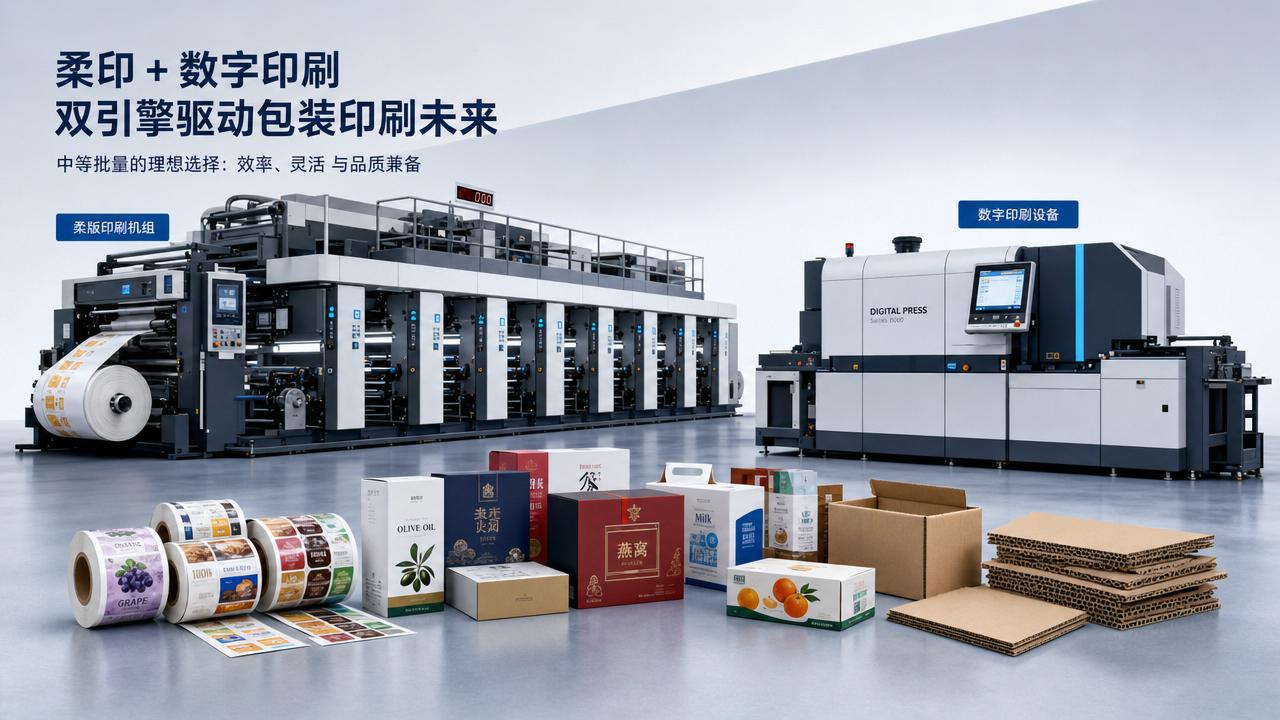
For procurement teams managing mid-volume packaging orders, choosing between flexographic printing and digital is more than a cost question—it affects lead times, customization, waste, and supply chain agility. This comparison explores where flexographic printing delivers stronger value, where digital gains the edge, and how buyers can match the right process to production goals, packaging performance, and long-term purchasing efficiency.
For most mid-volume jobs, there is no universal winner. Flexographic printing often delivers the best economics when artwork is stable, repeat runs are likely, and packaging specifications are already locked in. Digital becomes more attractive when SKUs change often, lead times are tight, versioning matters, or the true cost of inventory risk is high. For procurement, the right decision is usually not “Which technology is better?” but “Which process reduces total purchasing risk for this job profile?”
What procurement teams are really trying to decide
When buyers search for “flexographic printing vs digital” in the context of mid-volume work, they are rarely looking for a textbook explanation of print technologies. They want a sourcing decision framework. Their real question is how to balance unit price, setup cost, turnaround time, quality expectations, order flexibility, and supplier reliability without creating hidden downstream costs.
That is especially true in packaging, labels, corrugated applications, and retail-ready formats where purchase decisions affect not only print cost but also warehouse exposure, obsolescence risk, marketing responsiveness, and fulfillment performance. A cheaper print method on paper can become more expensive in reality if it forces larger minimums, longer lead times, or excess stock.
So for mid-volume purchasing, the most useful comparison is not flexographic printing versus digital in abstract terms. It is flexographic printing versus digital under specific commercial conditions: predictable demand versus uncertain demand, single design versus multi-version runs, speed to market versus lowest repeat cost, and standardization versus customization.
Where flexographic printing still creates stronger value
Flexographic printing remains a highly competitive choice for many mid-volume jobs because it combines production speed, substrate flexibility, and cost efficiency once setup has been absorbed. In practical procurement terms, flexo performs well when you expect repeat orders, can consolidate volumes, and do not need frequent design changes.
The biggest advantage of flexographic printing is that it scales well. Although plate creation and press setup add upfront cost and time, the unit cost generally drops as volume rises. That makes flexo attractive for buyers sourcing packaging with stable graphics, recurring demand, and medium-to-long production runs where the initial setup can be spread across more units.
Flexo also remains strong for a wide range of packaging substrates. It is widely used on corrugated board, flexible packaging materials, labels, folding carton, and liners. For buyers in industrial and transit packaging, that matters because the print process must work not only visually but mechanically, across rougher or more variable surfaces and in high-throughput converting environments.
Another procurement benefit is consistency in repeat manufacturing. Once plates, ink recipes, and press parameters are established, suppliers can often reproduce runs with predictable output, especially when the design remains unchanged. That repeatability supports longer-term contracts and sourcing standardization.
In short, flexographic printing usually delivers stronger value when the order profile looks like this: recurring SKUs, stable artwork, moderate-to-long run lengths, limited versioning, and strong emphasis on minimizing unit cost over time.
When digital printing gains the edge in mid-volume jobs
Digital printing changes the economics by removing plates and reducing setup complexity. That shifts value toward speed, flexibility, and lower commitment. For procurement teams handling mid-volume orders, this can be decisive when product launches are frequent, forecasts are uncertain, or campaigns require multiple versions.
The most obvious benefit is faster job changeover. If each SKU needs different graphics, languages, promotional codes, seasonal updates, or regional versions, digital can avoid the plate and setup burden that makes flexographic printing less efficient. Instead of forcing buyers to aggregate demand into larger runs, digital allows shorter, more responsive ordering patterns.
That flexibility matters more than many cost comparisons suggest. In real purchasing environments, demand volatility creates hidden costs: obsolete packaging, emergency reorders, write-offs, premium freight, and delayed launches. Digital may have a higher nominal unit cost at certain volumes, but it can lower total cost by reducing those commercial risks.
Digital is also attractive when time-to-market is critical. Procurement teams supporting brand refreshes, pilot launches, private label expansion, or e-commerce packaging tests often value speed more than the absolute lowest run cost. If packaging artwork may still change after sourcing begins, digital protects buyers from being locked into plates and larger inventories too early.
For mid-volume jobs with frequent design turnover or fragmented SKU portfolios, digital often wins because it aligns production with actual consumption rather than forecast assumptions.
Why “mid-volume” is the hardest category to evaluate
Low-volume jobs often lean digital, and very high-volume jobs often lean flexo. Mid-volume is where the decision becomes complicated because either process may be viable depending on the job structure. This is why procurement teams should not rely on a simple volume threshold alone.
A run of 30,000 units may favor flexographic printing if it is a single SKU, repeated monthly, with no design changes expected for a year. That same 30,000-unit requirement may favor digital if it is split across ten versions, tied to a seasonal campaign, or exposed to demand uncertainty. The commercial profile matters more than the headline quantity.
Mid-volume decisions also become harder when orders sit inside wider converting workflows. For example, print economics cannot be isolated from die-cutting, finishing, curing, drying, inventory policy, warehouse space, and fulfillment timing. A print method that looks efficient at press level may create friction elsewhere in the supply chain.
That is why procurement should evaluate jobs based on total operational fit, not only quoted print price. Mid-volume sourcing decisions reward buyers who examine the full production chain.
The cost comparison procurement should actually use
Too many sourcing decisions compare flexographic printing and digital only on per-unit price. That is incomplete. Procurement should evaluate total landed and operating cost across at least six categories: prepress and setup, run cost, lead time impact, inventory exposure, waste, and change management.
With flexographic printing, prepress includes plate creation, artwork preparation, color matching setup, and press makeready. Those costs are front-loaded. Once production starts, however, unit economics often improve, especially on repeat jobs. This is why flexo can look expensive at first quote but become highly competitive over a multi-run contract.
With digital, setup is usually lighter and faster. Buyers avoid plate costs and can place smaller or more varied orders with less administrative friction. But run costs can stay relatively flatter across volumes, meaning digital may lose some price advantage as quantities rise.
The overlooked cost category is inventory. If flexo encourages larger buys than actual demand requires, the “cheaper” method may increase carrying cost and write-off risk. If digital enables right-sized replenishment, the total business case can be stronger even when print cost per unit is higher.
Waste should also be examined honestly. Makeready waste, color adjustment waste, outdated stock, and obsolete branded packaging all affect real procurement outcomes. In industries with frequent SKU change, outdated inventory often costs more than differences in print pricing.
Finally, calculate the cost of change. If marketing revisions, regulatory updates, multilingual packaging, or retailer-specific designs are common, digital usually handles change with less friction. If designs remain stable for long periods, flexographic printing benefits from that stability.
Lead time, agility, and supply chain responsiveness
Procurement teams increasingly buy for resilience, not just cost. In that context, lead time and agility deserve equal weight with print economics. Flexographic printing can offer excellent throughput once a job is running, but its preparation stages may make it less agile when artwork approval is late or demand shifts suddenly.
Digital printing often shortens the path from approved file to finished output. That can reduce reorder delays, support test batches, and improve responsiveness for promotions or customer-specific packaging. In fast-moving supply chains, such agility can protect service levels and reduce the need for buffer inventory.
This matters especially in e-commerce, FMCG, and regionalized packaging programs where order profiles change quickly. Buyers should ask whether the packaging program is forecast-driven or demand-driven. The more demand-driven it is, the more digital’s agility may outweigh its apparent run-cost disadvantage.
However, agility is only valuable if the supplier can execute consistently. Procurement should verify not just press technology, but workflow automation, color management discipline, finishing integration, and fulfillment reliability. A digital supplier with weak operations may not outperform a well-run flexographic source.
Print quality, substrate fit, and packaging performance
Procurement teams do not buy print technology; they buy packaging that must perform in the market and through the supply chain. So quality decisions should be tied to end-use requirements, not broad assumptions that one method is always better.
Flexographic printing has improved significantly in print quality, particularly with modern plates, screening technologies, better inks, and tighter process control. For many corrugated, transit, retail, and flexible packaging applications, flexo can deliver more than sufficient shelf impact and brand consistency.
Digital, meanwhile, is often favored for high-detail graphics, rapid artwork changes, and precise variable content. It can be particularly useful when brand owners require multiple versions without sacrificing image sharpness or when short replenishment cycles make conventional setup less attractive.
Substrate compatibility is equally important. Some jobs involve challenging materials, absorption behavior, surface variation, or downstream converting requirements. Buyers should assess how each process performs on the actual board, film, label stock, or paper substrate in production conditions, not just in sample swatches.
For corrugated and industrial applications, print must coexist with compression needs, creasing, folding, transport conditions, and warehouse handling. A strong sourcing decision considers packaging performance as seriously as graphics.
Questions buyers should ask suppliers before choosing flexo or digital
To move beyond generic technology claims, procurement teams should structure supplier discussions around the job’s commercial and operational reality. A few practical questions can reveal whether flexographic printing or digital is the better fit.
First, ask for a cost curve, not just a single quote. At what volume points does flexo become more economical? How does pricing change across one run, repeated runs, and multi-SKU scenarios? This helps expose where setup cost is really being amortized.
Second, ask about lead time under normal and rush conditions. How long do plate preparation, approvals, and press scheduling take in flexographic printing? How quickly can digital orders be turned around when artwork changes late?
Third, ask about minimum order logic. Are minimums driven by true process economics or by supplier preference? Mid-volume procurement often suffers when buyers accept unnecessary batch sizes that later create stock risk.
Fourth, ask for evidence of repeat consistency, color management capability, and substrate testing. Especially when packaging is customer-facing, procurement should not separate purchasing from quality assurance.
Fifth, ask how each supplier handles versioning, mixed-SKU runs, and replenishment planning. The best process is the one that fits the program’s operating model, not the one with the most impressive machine specification.
A practical decision framework for mid-volume packaging orders
If the job involves stable artwork, repeat demand, and enough volume to spread setup over multiple runs, flexographic printing is often the better purchasing decision. It rewards predictability and can produce strong long-term unit economics.
If the job involves frequent revisions, regional or seasonal variants, uncertain demand, or pressure to reduce inventory commitments, digital is often the more strategic choice. It trades some unit-cost efficiency for responsiveness and lower commercial risk.
If your order sits in the gray zone, run a total-cost scenario based on actual business behavior. Compare not only print pricing, but also order frequency, expected artwork changes, warehouse duration, obsolescence probability, and service-level requirements. Mid-volume decisions become clearer when modeled this way.
Many procurement organizations also benefit from a hybrid sourcing strategy. Core SKUs with predictable demand can stay on flexographic printing, while promotional, test-market, or variable-design SKUs move to digital. This avoids forcing one process to serve two fundamentally different demand patterns.
Conclusion: choose the process that lowers total purchasing risk
For procurement teams, the flexographic printing versus digital debate should not be reduced to a simple price comparison. In mid-volume jobs, the best answer depends on whether your packaging program values repeat efficiency or operational flexibility more.
Flexographic printing is usually the stronger fit when demand is stable, artwork is fixed, and repeated production can absorb setup costs over time. Digital is often the smarter fit when change is frequent, lead time matters, and inventory risk is expensive.
The most effective buyers look past the quoted run cost and evaluate total business impact. When procurement connects print technology choice with demand volatility, supply chain responsiveness, substrate needs, and long-term purchasing efficiency, the decision becomes clearer—and much more valuable.
Industry Briefing
Get the top 5 industry headlines delivered to your inbox every morning.
Recommended News