
Packaging Automation ROI: Where Savings Show Up First
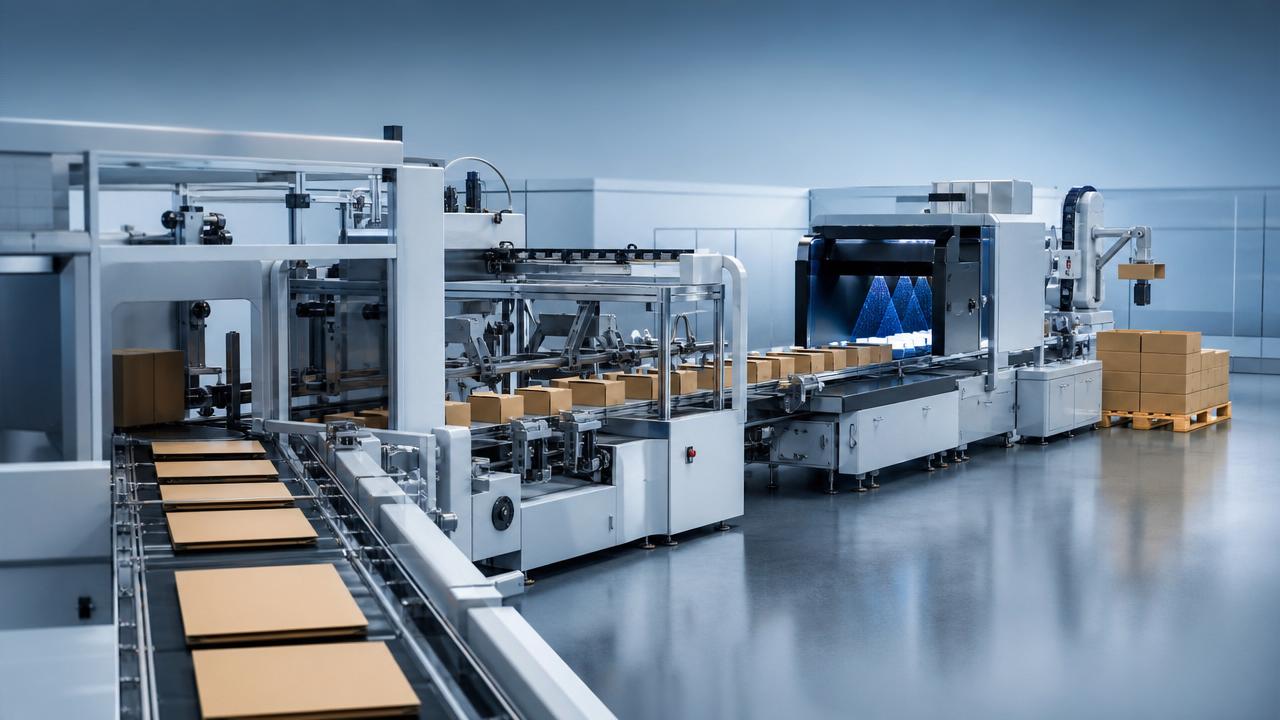
For business evaluators, packaging automation is no longer just a productivity upgrade—it is a financial decision with measurable early returns. The first gains often appear in labor reduction, waste control, throughput stability, and fewer costly errors across printing, corrugation, and post-press workflows. In facilities handling cartons, corrugated sheets, folded boxes, labels, or tissue packs, the earliest ROI often comes from visible operating improvements rather than ambitious long-term transformation claims. This article explains where savings show up first, how to verify them, and what to examine before making a capital decision.
Why a Structured Evaluation Matters for Packaging Automation ROI
Many automation projects are justified with broad promises such as “higher efficiency” or “smarter production.” Those phrases are not enough. A better approach is to evaluate packaging automation using a practical, measurable framework that connects machine capability to day-one operating costs. This matters across industrial digital printing, corrugated board production, die-cutting, folder gluing, and automated tissue packaging, where even small deviations in uptime, glue use, registration, or changeover consistency can quickly affect margin.
A structured review also prevents common errors. Some lines appear highly automated but still suffer from manual handling between steps. Others show strong nameplate speed but poor yield because setup waste, stoppages, or quality escapes remain unresolved. In these cases, the apparent value of packaging automation can be overstated unless early savings are separated from longer-term strategic benefits.
Where Savings from Packaging Automation Usually Appear First
The earliest ROI from packaging automation is usually not hidden in a complex financial model. It tends to appear in a few recurring areas that can be tracked within weeks or months after startup. These categories apply broadly across paper-based converting and packaging operations.
- Labor savings often appear first when repetitive feeding, stacking, folding, gluing, inspection, or transfer tasks are reduced or reassigned to higher-value production control activities.
- Waste reduction becomes visible through fewer setup sheets, better print registration, tighter glue application, and more stable corrugation or converting conditions across shifts.
- Throughput stability improves when automated controls reduce minor stops, inconsistent line speed, and bottlenecks between printing, die-cutting, folding, and final pack-out stages.
- Error-related costs fall when barcode checks, vision inspection, recipe control, and automated adjustment reduce mislabeled, misfolded, or dimensionally incorrect packaging output.
- Changeover efficiency delivers early savings by shortening setup time, reducing operator dependency, and improving repeatability for short runs and multi-SKU production.
- Material handling costs decline when automated conveying, robotic loading, and synchronized downstream flow reduce product damage, idle labor, and floor congestion.
- Energy and utility efficiency may show up sooner than expected when equipment runs more steadily, reducing rework, overheating, compressed air misuse, and unnecessary standby time.
Among these, labor, waste, and throughput consistency are usually the first three indicators to monitor. They are easier to quantify than strategic gains such as customer retention, premium quality perception, or future scalability.
A Practical Review Framework Before Approving Packaging Automation
Before estimating ROI, verify whether the current process is measured well enough to prove improvement. A weak baseline makes even effective packaging automation difficult to validate. The following points help establish a reliable decision framework.
- Measure current labor by task, not only by headcount, including setup, feeding, inspection, rework, stacking, internal transport, and downtime intervention minutes.
- Track waste by source, separating startup waste, changeover loss, registration scrap, glue defects, crushing damage, print errors, and rejected finished packs.
- Record actual throughput over full shifts, including micro-stoppages and recovery time, rather than relying on rated machine speed or best-case production hours.
- Quantify quality escapes by customer complaints, internal rejects, barcode failures, dimensional variation, and downstream packing disruption caused by unstable upstream output.
- Assess changeover frequency and SKU complexity, since high-mix production typically improves faster with recipe-driven, servo-controlled packaging automation systems.
- Check data connectivity needs, especially when linking printers, corrugators, die-cutters, folder gluers, and inspection units into a traceable production flow.
- Estimate support requirements such as training, spare parts, software updates, and maintenance access because hidden support gaps can delay expected savings.
This framework is especially useful in paper packaging environments where process variation travels downstream. A registration issue in digital printing, flute inconsistency in corrugation, or poor adhesive control in folder gluing can multiply losses later in the line. Effective packaging automation limits that chain reaction.
How Early Savings Appear in Different Production Scenarios
Industrial Digital Printing and Short-Run Packaging
In digitally printed packaging, the fastest ROI often comes from setup simplification and error prevention. Automated job loading, closed-loop color management, and barcode or vision verification reduce make-ready waste and help maintain consistency across short runs. This is especially valuable where versioning, seasonal artwork, or regional customization creates frequent changeovers.
For this environment, packaging automation should be assessed not only by print speed but by how reliably it supports downstream converting. Stable sheet flow, accurate registration, and synchronized data handling can reduce reprints and preserve throughput in finishing operations.
Corrugated Board Production and Box Converting
In corrugated operations, early savings usually come from lower board waste, better line balance, and reduced manual intervention. Automated tension control, temperature coordination, slitting precision, and stack handling can stabilize board quality before sheets reach die-cutting or folding-gluing. Small improvements at the corrugator often produce outsized downstream financial results.
When reviewing packaging automation in corrugated plants, pay attention to crush resistance consistency, warp reduction, and transfer reliability between line sections. Savings often emerge first through fewer stoppages and less rejected board rather than dramatic labor elimination.
Die-Cutting, Stamping, and Precision Post-Press
For die-cutting and premium finishing, the first ROI signals often come from reduced spoilage and better repeatability. Automated registration adjustment, sheet inspection, and recipe memory can lower the cost of high-value substrate waste. This matters even more when specialty coatings, foil, or embossed finishes increase the value of each rejected sheet.
In this scenario, packaging automation is strongest when it improves consistency under real production speed, not only under ideal test conditions. Faster setup recovery after tool changes can also shorten the payback period.
Folder Gluers and High-Volume Carton Output
Folder gluer lines often reveal ROI quickly because adhesive use, fold accuracy, and speed loss are highly measurable. Automated alignment, glue control, and inspection reduce rework and help maintain dimensional consistency, which is critical for downstream filling and palletizing. Labor savings may appear through fewer touchpoints and less manual sampling.
For folding-carton production, packaging automation should be judged by yield stability over long runs and by changeover repeatability across multiple box styles. These metrics often show savings before broader digital transformation benefits become visible.
Tissue Packaging and Fast-Moving Consumer Output
In tissue processing and final pack automation, early ROI commonly appears through labor redeployment, pack integrity improvement, and reduced line stoppage. Automated wrapping, bundling, and case packing can stabilize output in hygienic, high-speed conditions where manual variability is expensive.
Here, packaging automation also supports retail-readiness and logistics efficiency. Tighter pack consistency can improve stacking, transport protection, and shelf presentation, adding indirect value beyond the production floor.
Frequently Overlooked Cost Factors and ROI Risks
One of the most common mistakes is focusing only on direct labor reduction. In many facilities, the strongest case for packaging automation comes from waste reduction and throughput reliability. If labor is the only line item analyzed, the real financial value may be underestimated.
Another risk is poor upstream-downstream integration. A fast automated module cannot deliver expected savings if printing quality fluctuates, corrugated sheets arrive inconsistently, or data handoff between systems is unreliable. ROI weakens when automation is installed inside an unstable process chain.
Training is also underestimated. Even advanced packaging automation depends on disciplined setup, parameter control, preventive maintenance, and troubleshooting. If training is delayed or too shallow, the line may run below its intended performance for months.
A further issue is unrealistic ramp-up planning. New automation rarely delivers full savings on the first day. Commissioning time, recipe optimization, and operator familiarization should be included in the financial model. Conservative ramp assumptions make the ROI estimate more credible.
How to Execute a Stronger Evaluation and Capture Savings Faster
A practical way to evaluate packaging automation is to begin with one production family, one bottleneck, and one baseline period. Measure current labor hours, scrap rate, uptime, changeover time, and customer-facing quality losses for at least several representative weeks. Then compare these figures against realistic post-installation targets rather than best-case claims.
It is also useful to rank savings into three groups: immediate, near-term, and strategic. Immediate savings include reduced manual handling and lower setup waste. Near-term savings include improved throughput stability and fewer defects. Strategic gains include scalability, traceability, and support for sustainable packaging growth. This helps decision makers separate fast ROI from broader competitive value.
- Start with the process step that creates repeated downtime, scrap, or labor intensity, because this is where packaging automation usually delivers the clearest early proof.
- Use baseline data from normal production weeks, not exceptional weeks, to avoid overstating current losses or understating the effort required to improve them.
- Request performance validation tied to substrate type, run length, SKU variability, and downstream compatibility rather than relying on generic machine specifications.
- Include service response, spare parts availability, and controls support in the purchase review because uptime protection is part of real ROI.
- Review sustainability impact alongside cost savings, since lower waste and better material efficiency increasingly influence paper-based packaging competitiveness.
Key Questions Before Moving Forward
How soon should packaging automation pay back?
The answer depends on process complexity, labor intensity, waste level, and utilization. In many paper packaging environments, visible early savings can appear within the first operating quarter if implementation is disciplined and the targeted bottleneck is real.
What if labor savings are limited?
ROI can still be strong. Packaging automation often earns its value through scrap reduction, output consistency, lower rework, better changeovers, and reduced quality claims.
Is automation still worthwhile in high-mix production?
Yes, especially when frequent job changes create setup losses. Recipe control, servo adjustment, and integrated inspection can make high-mix packaging more profitable and less error-prone.
Final Takeaway and Next Step
Packaging automation delivers its earliest ROI where cost is already leaking every day: repetitive labor, material waste, unstable throughput, and preventable errors. In printing, corrugation, post-press, folder gluing, and tissue packaging, the first financial wins are usually operational and measurable. That is why a disciplined review process matters more than broad promises about smart manufacturing.
The most effective next step is simple: identify one line where downtime, scrap, or handling effort is consistently high, collect a clean baseline, and evaluate packaging automation against those exact losses. When savings are tied to real production data, ROI becomes easier to see, easier to defend, and far more likely to arrive on schedule.
Industry Briefing
Get the top 5 industry headlines delivered to your inbox every morning.
Recommended News