
Post-Press Finishing Bottlenecks Slowing Packaging Throughput
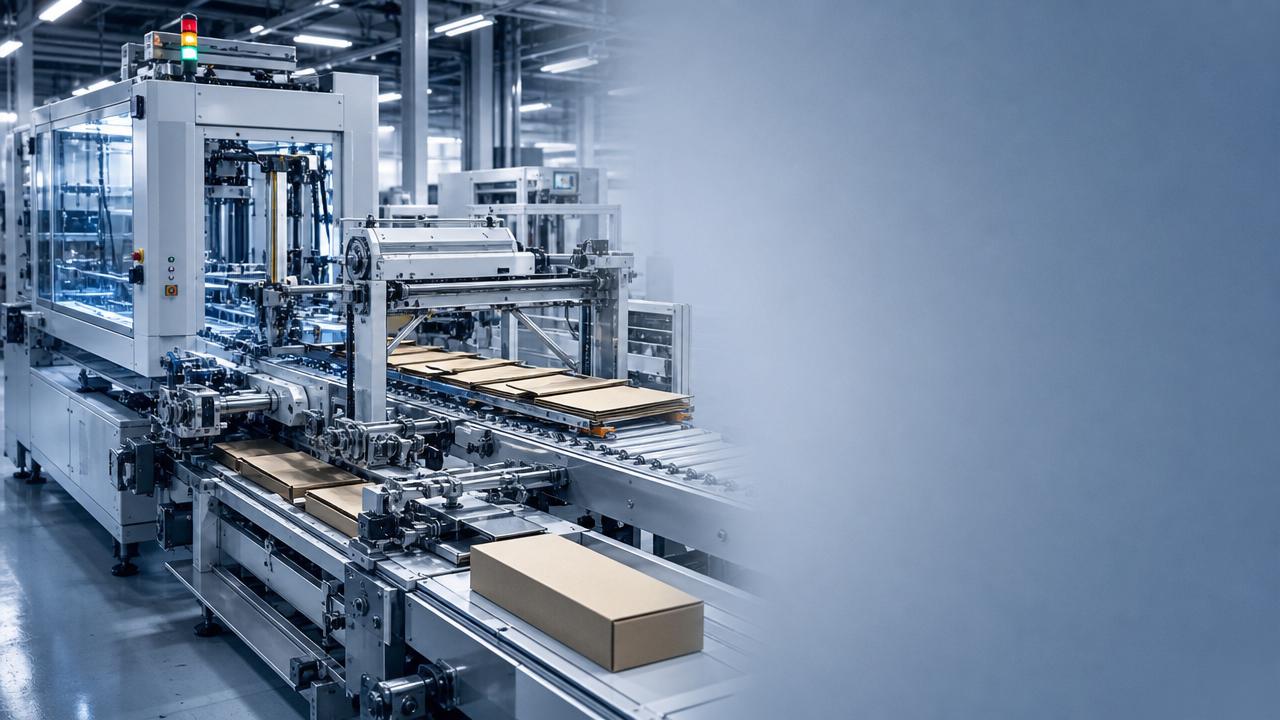
In high-volume packaging operations, post-press finishing is rarely the most visible process, yet it often dictates whether output targets are met or missed. A press line may run at impressive speed, but if die-cutting, stripping, blanking, folding-gluing, inspection, or transfer logistics cannot keep pace, the entire factory experiences delayed shipments, rising work-in-progress, and costly quality variation. In modern paper-based packaging, where short runs, versioning, sustainability targets, and e-commerce response times all matter, understanding where post-press finishing bottlenecks emerge is essential for protecting throughput, margin, and delivery reliability.
When post-press finishing becomes the real capacity limit
Not every packaging line suffers from the same constraint. In some plants, the bottleneck sits at flatbed die-cutting because job changeovers are too frequent. In others, the issue appears in folder-gluer stability, where adhesive performance, carton geometry, or feeder consistency reduce effective speed. There are also operations where post-press finishing slows because inspection and downstream packing are still semi-manual, making the mechanical line wait for human intervention.
This matters across the broader industrial print and paper ecosystem. Digital printing has increased SKU fragmentation, corrugated formats now require tighter converting precision, and premium finishing expectations continue to rise. As a result, post-press finishing is no longer a simple last step. It is a dynamic control zone where mechanical accuracy, material behavior, data flow, and takt synchronization meet. If that zone is unmanaged, upstream investments in printing and board production cannot fully translate into shipped cartons.
Scenario 1: Short-run and versioned packaging creates hidden finishing delays
Short-run folding carton and digitally printed packaging create a specific post-press finishing challenge: setup time consumes a much larger share of available production hours. Frequent artwork changes, variable substrate thickness, and mixed carton sizes reduce the benefit of high nominal machine speed. A die-cutter rated for high output may still deliver weak overall equipment effectiveness if makeready, registration verification, and waste removal adjustments occur every few thousand sheets.
The core judgment point in this scenario is not top speed, but repeatability between jobs. If setup sheets are excessive, crease quality varies, or folding rails require constant manual correction, the bottleneck is process stability rather than equipment nameplate capacity. For this environment, stronger recipe management, servo-assisted positioning, barcode-driven job calling, and faster tooling exchange often improve post-press finishing more than simply increasing machine speed.
Key signals in short-run environments
- High changeover frequency with low sustained runtime per job
- Frequent feeder and alignment resets after format changes
- Rework caused by inconsistent creasing or glue placement
- Inspection hold-ups due to many SKU-specific requirements
Scenario 2: Corrugated and heavy-board converting slows under material variation
In corrugated packaging and heavier paperboard applications, post-press finishing often slows because material behavior is less predictable than machine timing. Warp, flute variation, moisture imbalance, board memory, and crush sensitivity affect feeding, die-cut accuracy, and folding consistency. A line can appear mechanically sound while throughput falls because the substrate itself resists stable conversion at target speed.
The practical judgment point here is whether downtime is driven by machine faults or by substrate-condition mismatch. If stop events cluster around feeding difficulty, inaccurate slotting, poor stacking, fishtailing in folder-gluers, or bonding weakness at score lines, then the root cause likely sits in board quality control and process matching. In this scenario, post-press finishing improves through upstream moisture conditioning, flute-specific tooling settings, optimized nip pressure, and better handoff from corrugator to converting line.
Scenario 3: Premium cartons and decorative effects reduce effective finishing speed
Luxury cartons, pharmaceutical packs, and high-graphics retail packaging add another layer of complexity. Foil stamping, embossing, window patching, intricate die profiles, and strict cosmetic tolerances make post-press finishing more quality-sensitive than volume-driven. In these cases, line speed is often intentionally reduced to preserve registration, avoid surface marking, and maintain glue-line accuracy on coated or laminated substrates.
The critical decision factor is understanding acceptable trade-off. Not every slowdown is a failure; some are controlled reductions that prevent expensive rejects. The problem begins when there is no process window definition. If operators rely on trial-and-error for pressure, temperature, dwell, or folding sequence, then decorative complexity turns into unstable throughput. For premium work, post-press finishing benefits from digital job memory, defect classification standards, and in-line inspection capable of detecting both structural and visual deviations.
Scenario 4: End-of-line handling and inspection creates a non-mechanical bottleneck
Many packaging sites focus only on die-cutters and folder-gluers when reviewing post-press finishing performance. However, the true constraint may be the material flow after conversion. Bundling, counting, case packing, palletizing, and quality release can all slow finished output. If converted cartons wait in stacks for approval or manual packing, the effective speed of the entire finishing department drops even when the core machine is available.
This scenario is common in mixed production environments where one line serves multiple box styles and order profiles. The key judgment point is whether finished pieces leave the machine at the same rhythm they are produced. If not, then post-press finishing must be evaluated as a connected flow system rather than an isolated piece of equipment. Vision inspection, automatic rejection, robotic handling, and synchronized pack-out logic can remove these downstream constraints.
How scenario requirements differ across packaging operations
Practical post-press finishing adaptations that restore throughput
Improving post-press finishing starts with measuring the right loss categories. Average speed alone is misleading. The more useful view combines changeover time, minor stoppages, waste by defect type, operator interventions, queue time between processes, and actual released output. Once losses are visible by scenario, targeted adaptation becomes possible.
- Standardize setup logic: Use digital job recipes for feeder settings, pressure, gluing positions, folding geometry, and inspection criteria.
- Match process to substrate behavior: Build setting libraries by board grade, flute type, caliper, coating, and moisture condition.
- Reduce manual dependency: Add servo adjustment, camera guidance, automatic reject systems, and closed-loop glue monitoring.
- Balance the full finishing cell: Align die-cutting, folding-gluing, inspection, bundling, and palletizing around one takt model.
- Use defect feedback upstream: Crease cracking, glue failure, and feeding skew often indicate print, coating, or board-conditioning issues earlier in the line.
Common misjudgments that keep post-press finishing constrained
A frequent mistake is assuming a faster machine automatically solves a post-press finishing problem. If instability comes from job complexity, material inconsistency, or poor flow coordination, higher nominal speed may actually increase waste and unplanned stops. Another misjudgment is treating quality inspection as separate from throughput. In reality, delayed defect detection pushes more bad product downstream and makes recovery slower and more expensive.
It is also common to optimize each machine individually instead of the connected system. A die-cutter running at maximum output can overload stripping, blanking, or folding-gluing stages, creating hidden queues that distort performance data. In advanced packaging environments, post-press finishing must be managed as an integrated conversion architecture, not as disconnected equipment islands.
Next-step actions for a more stable finishing flow
The fastest route to improvement is a structured finishing audit. Map every handoff from printed sheet or board input to packed carton output, then identify where waiting time, setup loss, defect generation, and manual intervention are highest. Rank those losses by shipped-output impact rather than by machine alarm count alone. This approach reveals whether the primary post-press finishing bottleneck is mechanical, material-driven, or flow-related.
Within the broader industrial print and paper systems landscape, the most resilient operations combine intelligent converting equipment with process data, substrate discipline, and synchronized downstream automation. That is where higher throughput and consistent quality begin to reinforce each other. When post-press finishing is treated as a strategic control point rather than a final operational step, packaging output becomes more predictable, more scalable, and better aligned with the demands of fast-moving global supply chains.
Industry Briefing
Get the top 5 industry headlines delivered to your inbox every morning.
Recommended News