
Sustainable Packaging Trends Reshaping 2026 Supply Chains
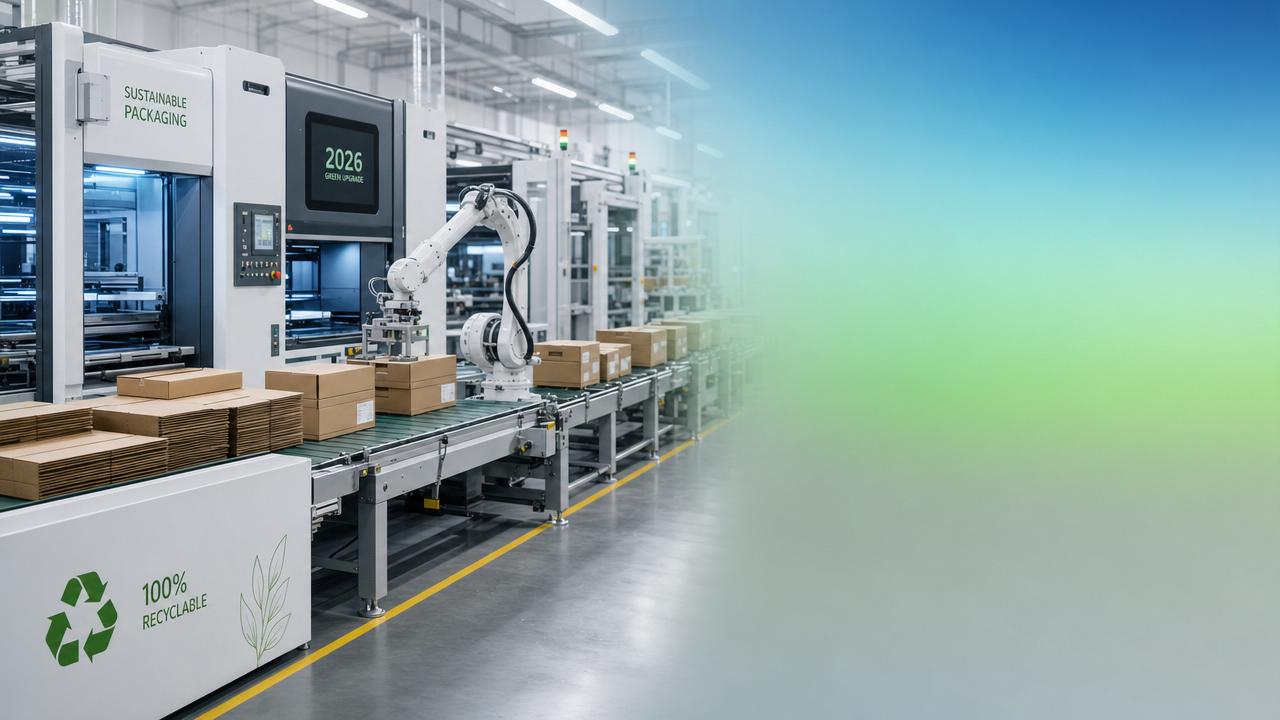
Sustainable packaging is no longer a niche initiative but a core supply chain strategy for 2026. Across the broader industrial landscape, the meaning of sustainable packaging has expanded from material substitution to a system-level redesign of packaging formats, print workflows, corrugated production, converting efficiency, traceability, and end-of-life recovery. As regulation tightens and e-commerce volumes continue to reshape distribution patterns, businesses are asking more practical questions: which trends will matter most, where the costs will land, and how to balance compliance, resilience, and brand performance without slowing operations.
The answer lies in how supply chains connect materials with machinery. In 2026, leading changes are emerging at the intersection of recyclable fiber structures, right-sized corrugated packaging, digital printing, automated post-press systems, and data-driven production control. This article answers the most important questions behind these shifts and explains what sustainable packaging really means for procurement, conversion, logistics, and long-term competitiveness.
What makes sustainable packaging a supply chain issue rather than just a branding decision?
For years, sustainable packaging was treated mainly as a visible marketing layer: lighter inks, greener messaging, or a recyclable logo placed on the box. That view is now outdated. In 2026, sustainable packaging influences material planning, transport economics, machine utilization, damage rates, regulatory exposure, and even data management across the full packaging lifecycle.
A package enters the supply chain long before it reaches a consumer. It begins with pulp sourcing, board formation, print compatibility, cutting accuracy, gluing performance, warehouse cube efficiency, and reverse recovery options. If one step fails, the result is often higher cost or lower sustainability. For example, switching to a lighter board grade may reduce raw material use, but if compression strength drops and transit damage rises, the total environmental and financial impact can become worse.
This is why industrial intelligence platforms such as IPPS are increasingly relevant. Packaging decisions today depend on technical relationships between digital printheads, corrugated flute geometry, die-cut precision, folding-gluing stability, and regulatory documentation. In practical terms, sustainable packaging now means designing a package that performs well on machines, ships efficiently, communicates clearly, and remains compliant in multiple markets.
Which sustainable packaging trends are reshaping 2026 operations most clearly?
Several trends are moving from experimentation to operational standard. Together, they are redefining how sustainable packaging is specified, produced, and measured.
1. Fiber-based replacement is becoming more engineered
Paper-based packaging is replacing plastic in more categories, but the transition is no longer driven by symbolism alone. It now depends on barrier performance, stiffness-to-weight optimization, and machine compatibility. Corrugated structures, molded fiber formats, and hybrid paper solutions are being engineered for product protection, automation, and recyclability at scale.
2. Right-sizing is reducing waste and freight inefficiency
Oversized e-commerce packaging is under pressure from cost and carbon metrics. Right-sized box production, flexible short-run packaging, and better dimensional planning are helping reduce filler use, storage burden, and transport emissions. This trend directly links sustainable packaging with logistics performance.
3. Digital printing is enabling lower waste and faster SKU variation
Industrial digital printers are becoming central to sustainable packaging because they eliminate plates, reduce setup waste, support variable designs, and shorten production cycles. In sectors with frequent design changes, regional campaigns, or compliance labeling updates, digital print makes packaging more responsive while reducing obsolete inventory.
4. Automation is improving consistency in converting
Automatic folder gluers, precision die-cutting, and advanced tension control systems are improving yield and reducing scrap. This matters because a sustainable material loses value if converting defects create waste. High-speed automation helps maintain structural consistency, adhesive accuracy, and throughput under increasingly diverse packaging formats.
5. Compliance data is becoming part of package design
FSC certification, EUDR readiness, recycled content claims, and traceability documentation are moving into mainstream packaging workflows. A package is no longer judged only by appearance and function. Its documentation trail now influences market access and customer trust, making data integrity a core dimension of sustainable packaging.
How do digital print and corrugated automation support sustainable packaging goals?
The most effective sustainable packaging strategies are often enabled by equipment, not just by materials. Digital print and corrugated automation stand out because they improve both resource efficiency and business flexibility.
In digital printing, precise droplet placement, high-speed data processing, and direct-to-board workflows help reduce makeready losses. This is especially valuable in corrugated applications where brands need shorter runs, personalized graphics, or rapid artwork changes. Instead of carrying excess printed stock, operations can print closer to actual demand, which lowers waste and working capital risk.
Corrugated board lines contribute in a different but equally important way. Better web tension control, flute stability, steam management, and board formation consistency allow converters to optimize paper use without compromising box strength. That means lightweighting can become a real performance gain instead of a gamble. When board quality is stable, downstream die-cutting and folding-gluing also become more efficient, reducing rejects and improving total line productivity.
For supply chains, this combination creates a stronger foundation for sustainable packaging: lower material consumption, lower spoilage, faster adaptation to market changes, and more reliable packaging performance in transit.
What should be evaluated before choosing a sustainable packaging strategy?
Not every sustainable packaging option fits every product or operation. A useful evaluation should consider five dimensions together rather than focusing on a single environmental claim.
This framework helps separate meaningful sustainable packaging improvements from attractive but incomplete claims. In many cases, the best option is not the most radical redesign, but the one that achieves measurable gains with minimal disruption to packaging lines and logistics systems.
What are the most common risks and misconceptions around sustainable packaging?
A common misconception is that any packaging made with paper or recycled content is automatically sustainable. In reality, poor structural design, incompatible coatings, weak bonding, or inefficient pack geometry can cancel out environmental benefits. Sustainable packaging must perform in use, not just look compliant on a specification sheet.
Another risk is underestimating production complexity. New substrates may behave differently in ink absorption, scoring, folding memory, or glue adhesion. Without process validation, converters may experience higher waste rates or slower line speeds. This is where detailed technical insight becomes critical, especially in digital print on corrugated surfaces and in high-speed folder-gluer applications.
There is also a cost illusion to avoid. A cheaper sustainable packaging material can become expensive if it increases damage, overpacking, machine stoppages, or compliance correction work. Total system cost matters more than isolated material price. The strongest programs measure carbon, waste, and operational efficiency together.
- Do not evaluate sustainability without transit performance data.
- Do not ignore print and converting compatibility.
- Do not rely on recyclability claims without local recovery context.
- Do not separate compliance documentation from packaging development.
How can businesses prepare now for 2026 sustainable packaging requirements?
Preparation starts with visibility. Map current packaging formats by material type, print process, damage rate, cube efficiency, certification status, and recyclability pathway. This establishes where sustainable packaging improvements will deliver the highest value and where technical constraints are likely to appear.
Next, prioritize pilot projects that combine material and process learning. A successful transition often includes board optimization, digital print trials, post-press validation, and transport testing as one connected effort. That approach is more reliable than changing material alone and hoping the rest of the line adapts.
It is also wise to strengthen intelligence capabilities. Monitoring paper price shifts, certification thresholds, converting technology, and packaging demand trends helps organizations make better-timed investments. Platforms focused on industrial printing, corrugated lines, post-press precision, and tissue or paper machinery ecosystems can provide an advantage because they connect sustainability goals with production reality.
Finally, set metrics that reflect actual outcomes. Useful indicators include material reduction per shipped unit, scrap rate, energy per pack, damage frequency, setup waste, and recycled fiber utilization. With these measures in place, sustainable packaging becomes manageable as an operational discipline rather than an abstract commitment.
Quick FAQ: what do these sustainable packaging trends mean in practice?
Sustainable packaging in 2026 is no longer about isolated material swaps. It is about building packaging systems that are lighter, smarter, traceable, efficient to convert, and reliable in global distribution. The strongest results come from connecting material science with digital print, corrugated engineering, precision post-press processing, and operational intelligence.
The next practical step is to review packaging lines, identify where waste and inefficiency are concentrated, and align redesign efforts with equipment capability and compliance requirements. When executed with technical discipline, sustainable packaging becomes more than an environmental objective. It becomes a resilient growth strategy for modern supply chains.
Industry Briefing
Get the top 5 industry headlines delivered to your inbox every morning.
Recommended News