
2026 Digital Print Solutions: Cost vs Flexibility
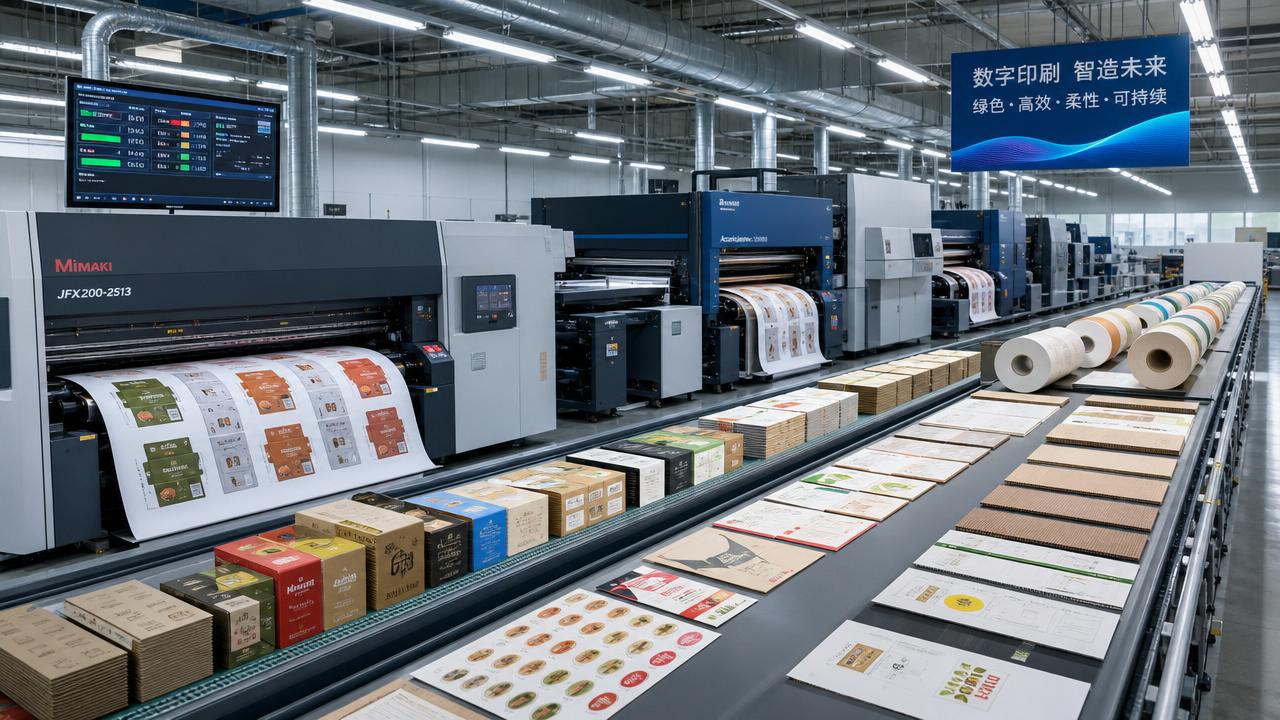
In 2026, digital print solutions are evaluated by a wider lens. Speed still matters, but cost control, flexibility, and sustainability now shape long-term value more directly.
Across packaging, corrugation, labeling, tissue conversion, and industrial graphics, market pressure has changed investment logic. Shorter runs, faster artwork updates, and stricter environmental targets are no longer exceptions.
That shift explains why digital print solutions have become strategic infrastructure. They reduce setup losses, support versioning, and improve responsiveness when demand patterns become less predictable.
Yet the equation is not simple. The most flexible platform is not always the cheapest, and the lowest headline price often hides workflow, ink, maintenance, or substrate costs.
Why 2026 has become a turning point for digital print solutions
The market has moved from stable volumes to fragmented demand. More stock keeping units, more regional versions, and more promotional cycles now challenge conventional production economics.
For paper packaging and industrial print systems, this means downtime has become as expensive as raw material waste. Every plate change, color correction, or job switch affects margin quality.
At the same time, e-commerce logistics keeps pushing corrugated formats toward shorter lifecycles. Brands need personalization, but operations still need repeatability, yield stability, and traceable output.
This is where digital print solutions stand out. They connect design variation with production continuity, especially when integrated with post-press automation and data-driven job management.
The strongest trend signals are coming from cost visibility and customization demand
The main trend is not simply digital replacing analog. The real shift is toward hybrid production models that assign each job to the most profitable process window.
In this model, digital print solutions handle variable, urgent, localized, and short-run work. Conventional lines continue serving long, stable runs where economies of scale remain stronger.
Another signal is deeper cost transparency. Buyers now compare total workflow efficiency, not just engine speed, print width, or list price.
- Job change frequency is increasing across packaging and commercial segments.
- SKU proliferation is raising the value of versioned printing.
- Sustainability targets favor lower waste and on-demand output.
- Data integration now influences print profitability as much as mechanics.
- Lead times are shrinking while quality expectations keep rising.
What is driving the cost-versus-flexibility debate
Several forces are shaping the conversation around digital print solutions. Some are technical, while others come from supply chains, compliance, and customer behavior.
Where hidden costs still weaken the business case
Not all digital print solutions deliver equal value. Many projects underperform because analysis focuses too heavily on machine purchase cost rather than operating behavior.
Ink and consumables can reshape unit economics
High-quality output depends on ink chemistry, coverage control, and substrate compatibility. If applications vary widely, consumable costs can rise faster than expected.
Workflow gaps often erase speed advantages
A fast engine cannot compensate for weak job preparation, poor color automation, or slow file handling. Bottlenecks simply move upstream or downstream.
Maintenance and uptime planning remain critical
Printhead health, cleaning cycles, and environmental control all affect productivity. When uptime planning is weak, flexibility becomes expensive rather than profitable.
Finishing integration decides real throughput
In corrugated and folding carton workflows, printing is only one step. If die-cutting, gluing, rewinding, or inspection lag behind, the entire line loses efficiency.
How digital print solutions affect different business links
The impact of digital print solutions extends well beyond print rooms. Their value appears across planning, substrate usage, finishing coordination, and inventory strategy.
- Design workflows benefit from faster artwork change and version release.
- Production planning gains better job sequencing for mixed run lengths.
- Inventory strategy improves through print-on-demand and lower obsolete stock.
- Post-press coordination becomes more data-driven and less manual.
- Sustainability reporting becomes easier when waste and usage are measured precisely.
For integrated packaging operations, digital print solutions also support better alignment between corrugators, converting equipment, and downstream packing requirements.
For intelligence-led platforms like IPPS, the bigger lesson is clear. Performance depends on how print engines, substrate behavior, and automation logic work together under real production conditions.
What deserves the closest attention before choosing a platform
A useful evaluation should compare digital print solutions by operational fit, not by abstract specifications alone. The strongest decisions usually start with application boundaries.
- Define average run length and frequency of urgent jobs.
- Measure substrate range, including coated and corrugated materials.
- Model ink cost under realistic coverage scenarios.
- Check integration with MIS, RIP, inspection, and finishing systems.
- Review service response, parts availability, and uptime guarantees.
- Assess environmental targets, including waste, energy, and certification needs.
A practical way to judge cost and flexibility together
The best approach is to separate jobs into economic tiers. This makes it easier to identify where digital print solutions create margin and where analog still holds an advantage.
This framework helps reveal whether digital print solutions should replace, complement, or selectively absorb existing production volume.
What the next decisions should look like
In 2026, the smartest investments will not chase flexibility at any cost. They will build controlled flexibility, where data, automation, and substrate discipline protect margin.
That means testing digital print solutions against live production patterns, not vendor benchmarks alone. Real value appears in reduced changeovers, lower waste, and faster market response.
A strong next step is to audit current job mix, isolate hidden setup losses, and compare workflow readiness across printing and finishing stages. This creates a realistic roadmap for future upgrades.
For organizations tracking industrial printing, corrugated systems, post-press precision, and paper-based sustainability, digital print solutions remain one of the clearest levers for resilient growth.
The question is no longer whether digital print solutions matter. The real question is where they create the most profitable flexibility, and how quickly that advantage can be operationalized.
Industry Briefing
Get the top 5 industry headlines delivered to your inbox every morning.
Recommended News