
Industrial Digital Printers: Cost Drivers to Watch
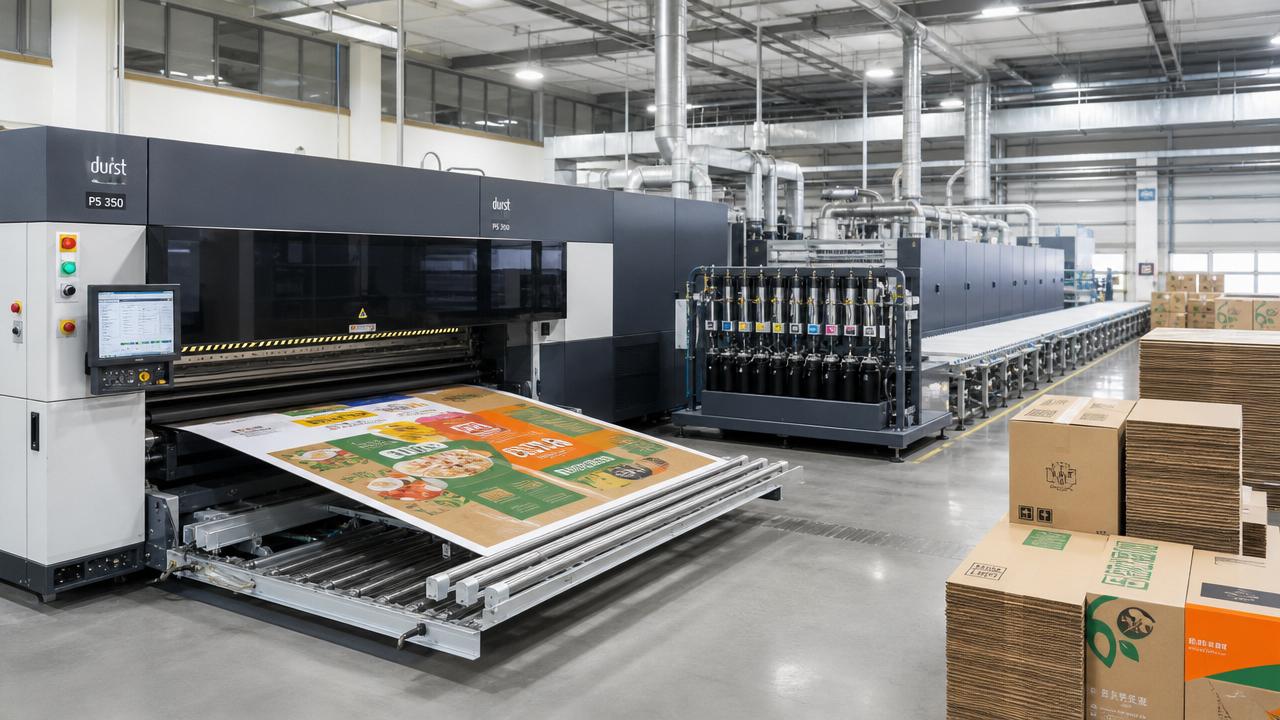
For financial approvers, industrial digital printers are no longer judged only by purchase price—they are evaluated by lifetime cost, uptime, ink efficiency, data workflow, energy use, and the speed at which personalized packaging demand converts into revenue. As e-commerce logistics, sustainable paper-based packaging, and short-run customization accelerate, understanding the true cost drivers behind these systems is critical to protecting margins and approving investments with confidence.
The decision is especially complex in paper-based manufacturing, where print quality, corrugated substrate behavior, web tension, post-press compatibility, and order volatility all affect financial return. A printer that looks affordable at purchase may become expensive if ink coverage, maintenance intervals, or workflow bottlenecks are misread.
This guide examines the cost drivers that matter most when approving industrial digital printers for packaging, labels, corrugated board, folding cartons, and short-run commercial print. The goal is not to favor the highest specification, but to identify the configuration that converts demand into reliable contribution margin.
Capital Cost Is Only the First Line Item
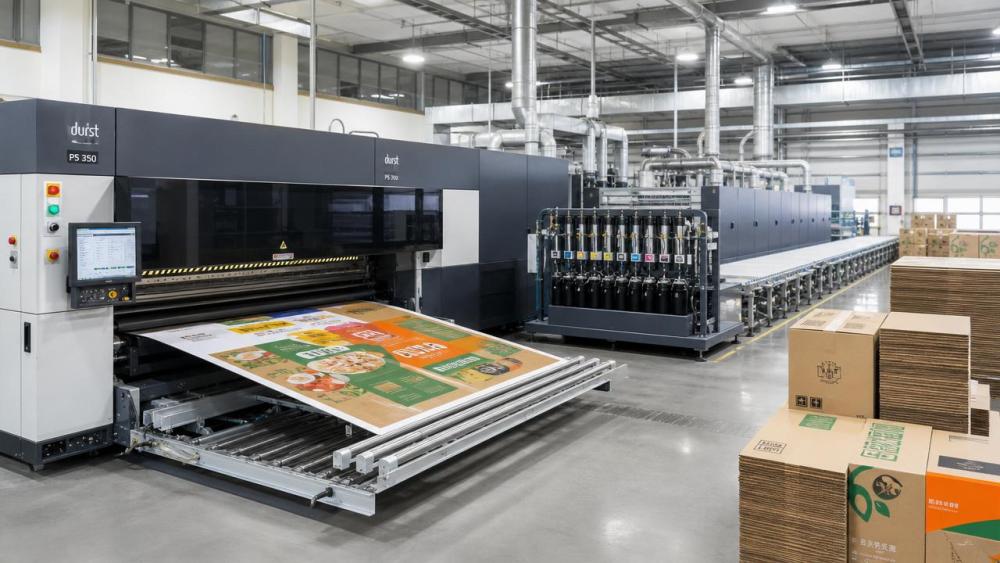
The acquisition price of industrial digital printers is visible, negotiable, and easy to compare. Yet it usually represents only one part of a 5-year to 7-year financial model. Installation, training, software, printheads, drying systems, inspection tools, and integration work can materially change the approved budget.
For financial approvers, the key question is whether the asset supports the company’s production mix. A facility printing 300 short-run packaging jobs per month has different needs from a plant producing long, repetitive graphics for corrugated displays or shelf-ready cartons.
What Should Be Included in the Initial Budget
A complete budget should cover at least 6 categories: the printer platform, front-end workflow, color management, substrate handling, curing or drying, and post-press alignment. Omitting one category often moves cost from capital expenditure into avoidable operating expense.
- Printer frame, printhead array, ink delivery system, and operator interface.
- RIP software, variable data capability, preflight tools, and job queue automation.
- Feeding, stacking, vacuum transport, or roll-to-roll tension control modules.
- Drying, curing, ventilation, humidity management, and safety systems.
- Training, preventive maintenance kits, spare parts, and printhead protection.
- Connection to die-cutting, folder-gluer, inspection, and ERP/MIS workflows.
The following table shows how common cost areas behave during procurement. It helps financial teams separate negotiable items from structural requirements that affect throughput and yield.
The main conclusion is simple: a lower purchase price is not automatically a lower investment. Industrial digital printers should be compared by validated production conditions, expected operating hours, and the cost of keeping sellable output within specification.
Ink, Substrate, and Coverage Drive Running Cost
In digital printing, consumables can become the largest cost driver after the asset is installed. Ink price per liter matters, but financial analysis should focus on ink consumption per square meter, typical coverage percentage, maintenance purging, and substrate absorption.
Corrugated board, kraft paper, coated folding carton stock, and recycled liners behave differently. On porous surfaces, ink can penetrate unevenly, increasing dot gain and requiring more controlled color profiles. A 5% coverage assumption may be unrealistic for premium e-commerce packaging.
Coverage Assumptions Need Commercial Validation
Before approving industrial digital printers, finance teams should request sample jobs grouped by coverage bands. A practical review often uses 3 bands: light graphics below 10%, standard branding around 10%–35%, and heavy image coverage above 35%.
The difference is not academic. If a plant quotes short-run boxes using light coverage assumptions while customers order high-color seasonal graphics, margin erosion can appear within the first quarter of production.
Consumable Questions for Approvers
- What is the ink consumption range for the top 20 recurring job types?
- How much ink is used in startup, cleaning, nozzle recovery, and shutdown?
- Does the system require primer, bonding agent, overprint varnish, or coating?
- Can color profiles be locked to prevent unnecessary density increases?
A disciplined consumable model also includes waste sheets used for calibration. For high-mix facilities, 10–30 setup sheets per job may be more expensive than expected when board cost is volatile.
Uptime, Maintenance, and Service Response Affect Payback
Industrial digital printers create value only when they produce approved, sellable sheets or rolls. Uptime is therefore a financial variable, not only an engineering metric. A machine running 2 shifts per day has a different risk profile from one used for overflow work twice a week.
Maintenance cost includes scheduled parts, operator cleaning time, service contracts, remote diagnostics, and unplanned downtime. In packaging plants, a 4-hour outage can also disrupt die-cutting, folder-gluer scheduling, and outbound logistics commitments.
Downtime Should Be Priced by Lost Contribution
Approvers often compare service contract prices without pricing production risk. A better method is to estimate contribution margin per productive hour, then multiply it by likely downtime scenarios such as 2 hours, 8 hours, or 24 hours.
The table below gives a practical framework for assessing service exposure before signing off on industrial digital printers.
The most useful service agreement is specific. It should define response time, preventive visits per year, consumable exclusions, operator responsibilities, and acceptance rules after repair.
Workflow Integration Can Make or Break ROI
Industrial digital printers are not standalone islands. Their financial value depends on how efficiently files move from customer order to prepress, production, inspection, die-cutting, folding, gluing, packing, and invoicing.
For packaging converters, workflow gaps are costly because digital print is often chosen for speed. If order entry takes 1 day, proof approval takes 2 days, and file correction takes another day, the equipment’s rapid print capability is underused.
A 5-Step Implementation View
- Map existing job flow from quotation to dispatch, including every manual approval point.
- Define file standards for PDF, color space, barcode verification, and variable data.
- Connect production scheduling to substrate availability and post-press capacity.
- Set measurable acceptance criteria for registration, color, drying, and rub resistance.
- Review the first 30, 60, and 90 days of jobs against quoted cost assumptions.
This process protects finance teams from approving a powerful machine that waits for files, boards, coatings, or post-press slots. In many plants, bottlenecks shift from print speed to data preparation once digital volume grows.
Integration Points Worth Testing
A reliable acceptance test should include at least 10 representative jobs, including small batches, repeat orders, heavy coverage artwork, barcoded logistics labels, and packaging designs requiring accurate crease-to-print alignment.
Approvers should also ask whether the printer can export production data. Job-level ink use, run time, waste sheets, stoppages, and operator notes are essential for cost accounting and continuous margin control.
Energy, Space, and Compliance Costs Are Often Underestimated
Energy use varies by print technology, drying method, climate control, and operating schedule. A system with high-speed drying may require additional electrical capacity, ventilation, compressed air, or humidity control between 40% and 60% relative humidity.
Space cost is also significant. Industrial digital printers may need room for feeder access, pallet staging, ink storage, operator movement, maintenance clearance, and downstream inspection. A crowded layout increases handling damage and slows changeovers.
Sustainability and Paper-Based Packaging Requirements
As brands replace plastic with paper-based packaging, finance teams increasingly evaluate environmental fit. This includes ink chemistry, waste reduction, substrate compatibility, recyclability expectations, and documentation needed for customer audits.
- Check whether inks and primers match the intended food, retail, or logistics application.
- Confirm drying conditions do not deform lightweight liner or micro-flute board.
- Evaluate waste reduction from plate-free production against ink and energy cost.
- Align documentation with customer requests for FSC, EUDR, or internal sourcing policies where applicable.
Digital print can support sustainable packaging by reducing obsolete inventory, enabling local production, and avoiding plates for short campaigns. However, the business case should still include energy consumption per shift and disposal procedures for consumables.
Approval Criteria for Different Business Scenarios
Not every plant needs the same type of industrial digital printers. A corrugated converter serving e-commerce brands may prioritize board handling and ink adhesion, while a folding carton producer may focus on fine text, varnish compatibility, and finishing accuracy.
Financial approval should therefore match the printer to revenue logic. The most defensible investments link equipment capability to at least 3 measurable outcomes: reduced lead time, higher mix flexibility, and profitable short-run order capture.
Scenario-Based Decision Factors
Use scenarios rather than generic specifications. A useful business case should include expected monthly volume, average order length, color coverage, substrate families, and target gross margin by job type.
- For e-commerce packaging: prioritize quick changeover, variable graphics, and corrugated board stability.
- For FMCG promotions: prioritize repeatable color, barcode quality, and campaign launch speed.
- For display packaging: prioritize heavy coverage performance, drying capacity, and post-press registration.
- For trade print services: prioritize estimating accuracy, job tracking, and multi-customer data security.
Common Approval Mistakes
One common mistake is approving speed based on ideal media while most real jobs use heavier or warped board. Another is overlooking the cost of color management when customers expect brand consistency across 5 or more substrates.
A third mistake is treating digital printing as a simple replacement for offset or flexo. Its stronger value often lies in personalization, fast replenishment, reduced stock risk, and the ability to test packaging designs before committing to mass production.
How IPPS Supports Better Financial Decisions
The Global Industrial Print & Paper Systems focuses on the machinery ecosystem surrounding digital printing, corrugated board lines, die-cutting, folder-gluing, and tissue processing. This broader view matters because print economics are shaped by the entire paper-based production chain.
For financial approvers, IPPS intelligence helps connect technical variables with commercial consequences. Ink droplet behavior, web tension control, flute selection, glue bonding curves, and post-press throughput all influence the cost of fulfilling real customer orders.
A Practical Approval Checklist
- Build a 5-year model covering equipment, ink, energy, service, labor, waste, and software.
- Test at least 10 live or representative jobs before final commercial acceptance.
- Calculate downtime exposure using contribution margin per productive hour.
- Validate integration with prepress, ERP/MIS, inspection, die-cutting, and folder-gluer processes.
- Review sustainability documentation and substrate compatibility for target customers.
- Set a 90-day post-installation review to compare actual cost per job with the approved model.
Industrial digital printers can unlock profitable short-run packaging, faster campaign response, and reduced inventory risk. The strongest approvals come from disciplined cost modeling, validated production trials, and clear links between equipment capability and revenue conversion.
If your team is evaluating industrial digital printers for corrugated, folding carton, label, or paper-based packaging applications, IPPS can help frame the right questions and compare the true cost drivers. Contact us to get a tailored decision framework, discuss product details, or explore more smart printing and packaging solutions.
Industry Briefing
Get the top 5 industry headlines delivered to your inbox every morning.
Recommended News