
Digital Printing Technology Cost Trends in 2026
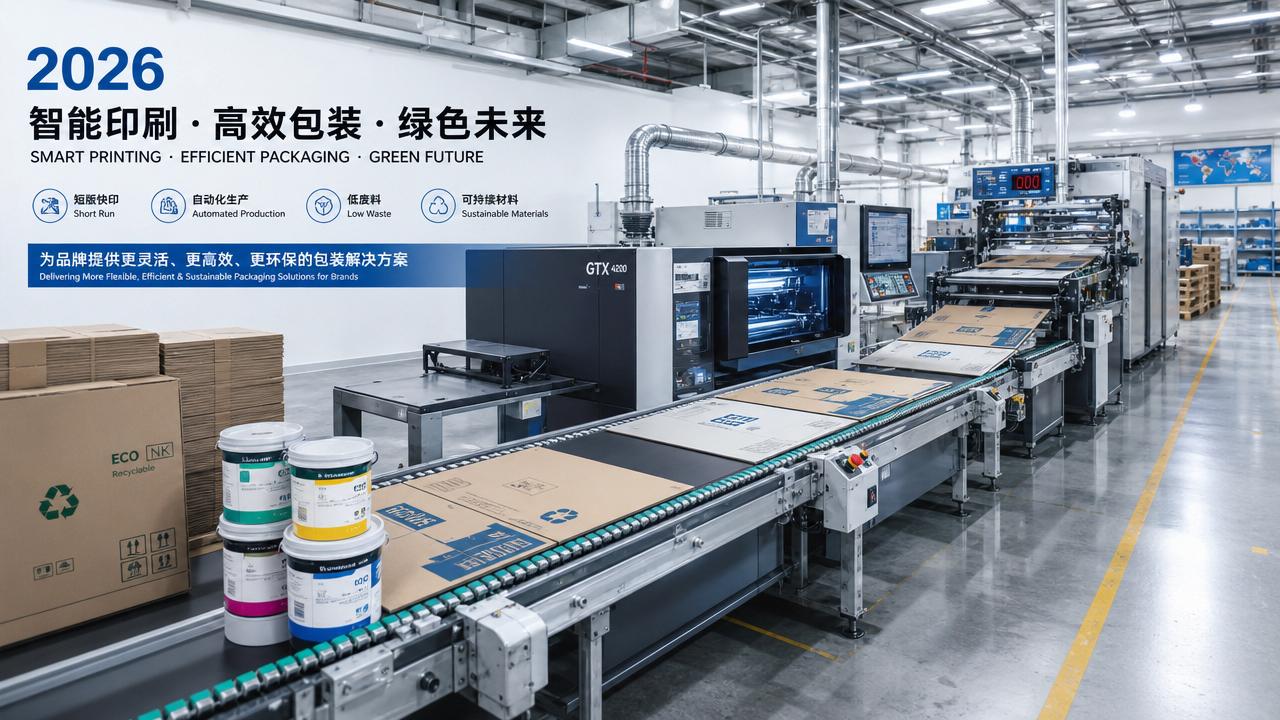
As capital budgets tighten and sustainability demands rise, understanding digital printing technology cost trends in 2026 has become essential for evaluating upgrades, production models, and long-term ROI.
From piezoelectric printhead efficiency and ink consumption to automation, maintenance, energy use, and short-run customization economics, cost structures are shifting quickly.
Across printing, corrugated packaging, post-press, and tissue-related operations, the real question is no longer only purchase price.
The stronger question is where digital printing technology creates measurable savings, faster response, and lower risk under specific production scenarios.
Digital Printing Technology Cost Trends in 2026 Start With Scenario Fit
In 2026, digital printing technology costs are becoming more scenario-dependent than machine-dependent.
A press that looks expensive in long static runs may be highly economical for frequent SKU changes.
This shift matters because modern commodity packaging is increasingly fragmented, seasonal, localized, and data-driven.
Short runs, personalized graphics, fast e-commerce launches, and regulatory updates all change the cost equation.
Traditional cost reviews often overemphasize equipment price and undercount plate-making, downtime, waste, labor, and inventory exposure.
Digital printing technology changes these hidden variables by replacing fixed preparation costs with more flexible variable production costs.
That is why 2026 evaluations should compare total cost per sellable unit, not only cost per printed square meter.
Scenario Background: Why Cost Priorities Are Splitting
The industrial print and paper packaging ecosystem is no longer driven by one dominant production logic.
Corrugated board lines, industrial digital printers, die-cutting machines, folder gluers, and tissue processing systems face different pressures.
Digital printing technology connects these pressures through faster data flow, adaptive color control, and reduced dependence on analog preparation.
However, each scenario values the technology differently.
E-commerce packaging values speed, versioning, and lightweight logistics branding.
FMCG packaging values repeatability, food-safe workflows, and rapid promotional refresh cycles.
Industrial labels value traceability, variable data, and compliance accuracy.
Sustainable paper packaging values lower waste, water-based inks, and print-on-demand inventory control.
These differences explain why digital printing technology investment decisions require scenario mapping before vendor comparison.
Scenario One: Short-Run Packaging and SKU Fragmentation
Short-run packaging is the strongest cost case for digital printing technology in 2026.
When order sizes shrink and design variations increase, analog plate costs become a growing burden.
Digital workflows reduce preparation time and make small batches commercially practical.
The key judgment point is the ratio between setup frequency and print volume.
If artwork changes weekly, digital printing technology usually improves cash flow and delivery confidence.
Savings appear in fewer plates, lower make-ready waste, reduced color adjustment time, and smaller finished-goods inventory.
The cost risk is ink coverage.
Heavy full-area graphics can raise consumable costs, especially on absorbent corrugated surfaces.
A practical review should test real artwork, actual board grades, and sellable output after finishing.
Scenario Two: E-Commerce Corrugated Packaging
E-commerce corrugated packaging is shaped by speed, personalization, protection, and logistics branding.
Here, digital printing technology often competes against pre-print, flexo post-print, and label application.
The main cost trend is integration.
Printing closer to corrugating, converting, or fulfillment reduces handling and intermediate storage.
For corrugated plants, digital printing technology cost depends heavily on board flatness, dust control, and web tension stability.
Poor substrate control can turn printhead performance into maintenance cost.
The best-fit cases involve regional brands, subscription boxes, seasonal campaigns, and demand forecasting uncertainty.
When graphics must change quickly, inventory avoidance becomes as important as machine productivity.
In 2026, the premium is not simply better print quality.
It is the ability to convert data into packaging without delaying logistics operations.
Scenario Three: FMCG Promotions and Personalized Packaging
Fast-moving consumer goods place digital printing technology under strict commercial timing pressure.
Campaign windows are shorter, regional versions are more common, and packaging often carries serialized marketing data.
The cost advantage comes from avoiding overproduction and obsolete packaging stock.
This is especially important when promotions, ingredients, languages, or retailer requirements change suddenly.
Digital printing technology supports late-stage differentiation, which protects working capital.
It also supports versioned cartons, sleeves, labels, inserts, and display packaging with fewer changeover penalties.
The main judgment point is color consistency across multiple substrates and finishing steps.
Die-cutting, stamping, folding, gluing, and packing can expose weak ink adhesion or curing control.
Cost reviews should therefore include post-press yield, not only printer output.
Scenario Four: Sustainable Paper-Based Packaging
Sustainability is changing the economics of digital printing technology in practical ways.
The global move from plastic to paper creates demand for recyclable, fiber-based, and certification-ready packaging.
In this scenario, cost is linked to waste reduction and compliance preparation.
Digital printing technology can reduce obsolete materials by matching production more closely to confirmed demand.
It can also support cleaner production records for FSC, EUDR, and brand-level sustainability audits.
The hidden cost issue is ink and coating compatibility with recycling streams.
Water-based systems may support sustainability goals, but drying energy and board distortion must be considered.
UV and hybrid systems can improve speed, but compliance requirements vary by application.
The right evaluation combines print economics, recyclability, energy intensity, and customer acceptance criteria.
Scenario Five: Variable Data, Traceability, and Compliance Printing
Variable data is one of the clearest value areas for digital printing technology.
Batch codes, QR codes, anti-counterfeit marks, logistics identifiers, and localized compliance text can be printed dynamically.
The cost trend here is error prevention.
A single compliance mistake can create recalls, relabeling costs, shipment delays, or retailer rejection.
Digital printing technology reduces manual intervention when data systems are correctly connected.
The investment focus should include workflow software, inspection cameras, barcode grading, and database integrity.
Hardware speed alone is not enough.
The best results come when print, inspection, rejection, and reporting are treated as one controlled process.
Cost Differences by Scenario
This comparison shows why digital printing technology should be priced against business risk and operational behavior.
A low machine price can be costly if it increases waste, rejects, or manual intervention.
What Is Driving Digital Printing Technology Costs in 2026?
Printheads and Reliability
Piezoelectric printheads remain a major cost element in digital printing technology.
In 2026, better nozzle monitoring and predictive maintenance are reducing unplanned stoppages.
However, harsh environments still raise lifecycle cost when dust, vibration, and poor cleaning routines are ignored.
Ink, Coverage, and Substrate Absorption
Ink remains one of the most visible variable costs in digital printing technology.
Actual cost depends on coverage, resolution, drop size, substrate porosity, and color management discipline.
Testing should use production artwork, not generic sample files.
Automation and Labor Reduction
Automation is becoming a decisive cost offset.
Automated feeding, inspection, color calibration, and job changeover reduce dependency on specialized manual adjustment.
Digital printing technology delivers stronger ROI when automation extends into converting and reporting.
Energy and Drying
Energy cost is increasingly important, especially for water-based inkjet systems on absorbent paper materials.
Drying strategy affects speed, board stability, and downstream folding or gluing performance.
Energy modeling should reflect local tariffs and peak-load penalties.
Scenario Adaptation Recommendations
- Map job history by run length, artwork changes, substrate type, and delivery urgency.
- Calculate total sellable output after die-cutting, stamping, folding, gluing, and packing.
- Test digital printing technology with real files, real board, and realistic curing conditions.
- Separate ink cost by coverage category instead of using one average estimate.
- Include maintenance contracts, printhead life assumptions, software fees, and operator training.
- Compare inventory reduction, faster launches, and avoided compliance errors as financial benefits.
- Review compatibility with FSC, EUDR, recyclability, and customer-specific sustainability standards.
These actions turn digital printing technology evaluation from a quotation exercise into a practical cost model.
They also reduce the risk of choosing equipment that performs well in demonstrations but poorly in daily production.
Common Misjudgments in 2026 Cost Reviews
The first mistake is comparing digital printing technology only with analog print cost at maximum analog efficiency.
That ignores changeovers, plates, waiting time, waste, and obsolete stock.
The second mistake is assuming every short run is profitable.
Poor artwork preparation, excessive ink coverage, and unstable substrates can erase expected savings.
The third mistake is isolating printing from post-press operations.
A beautiful print that cracks during creasing or slows folder gluer output is not a low-cost result.
The fourth mistake is underestimating data workflow.
Variable data printing requires clean files, controlled approvals, inspection, and traceable reporting.
The fifth mistake is treating sustainability as a marketing label.
True sustainable cost control requires material testing, waste measurement, and documentation readiness.
Investment Signals Worth Watching
Several signals indicate whether digital printing technology deserves priority in 2026 capital planning.
- SKU count is rising faster than total print volume.
- Artwork changes frequently create delays or rework.
- Finished packaging inventory is often written off.
- Customers request regional, seasonal, or personalized packaging.
- Compliance text and traceability data change regularly.
- Sustainability targets require lower waste and better documentation.
- Labor shortages make automation more valuable.
When several signals appear together, digital printing technology often moves from optional upgrade to strategic infrastructure.
Practical Next Step for Cost Evaluation
A reliable 2026 cost review should begin with a production scenario audit.
Select representative jobs from short-run, corrugated, FMCG, sustainable packaging, and traceability applications.
For each job, measure setup time, waste, ink use, energy, finishing yield, delivery time, and inventory impact.
Then compare those figures with a tested digital printing technology workflow under realistic operating conditions.
IPPS tracks these shifts across industrial digital printers, corrugated lines, post-press systems, folder gluers, and paper-based smart manufacturing.
The most valuable decisions will combine print science, material behavior, automation logic, and sustainability economics.
In 2026, digital printing technology cost trends reward disciplined evaluation.
The strongest ROI appears where flexible production, lower waste, reliable data, and faster market response meet a clearly defined scenario.
Industry Briefing
Get the top 5 industry headlines delivered to your inbox every morning.
Recommended News