
Digital Printing Equipment Cost Factors to Check
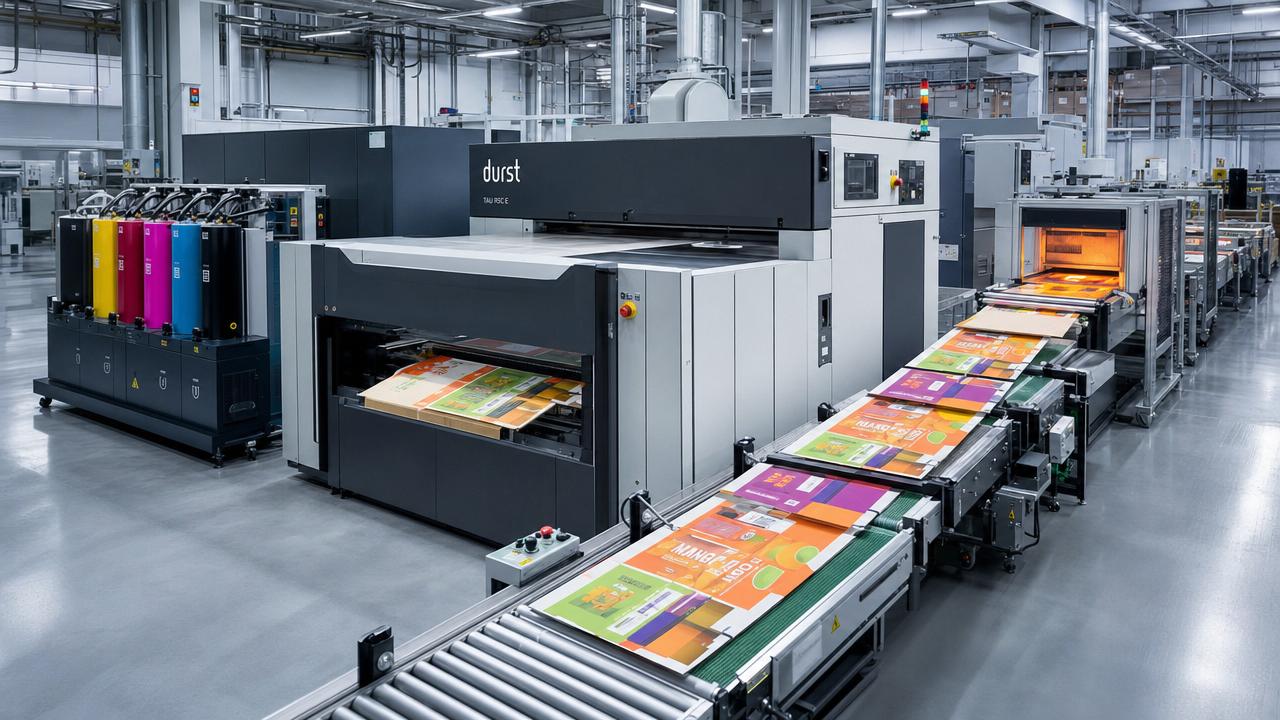
For financial approvers, the true cost of digital printing equipment extends far beyond the purchase price. Printhead architecture, ink consumption, substrate flexibility, maintenance cycles, automation level, energy use, and integration with finishing or packaging lines can all reshape ROI. As demand grows for short-run customization, sustainable packaging, and faster e-commerce fulfillment, understanding these cost factors helps decision-makers separate attractive quotations from long-term value. This guide highlights what to check before approving capital expenditure.
In industrial printing, packaging, corrugated converting, and paper-based manufacturing, capital approval is rarely a simple comparison of quotations. A machine priced 12% lower can become more expensive within 18–24 months if consumables, downtime, waste, and finishing bottlenecks are underestimated.
For CFOs, procurement committees, and investment controllers, the evaluation should connect technical configuration with cash flow discipline. The right digital printing equipment must support predictable unit cost, stable uptime, and measurable production flexibility across multiple order profiles.
1. Start With Total Cost of Ownership, Not Purchase Price
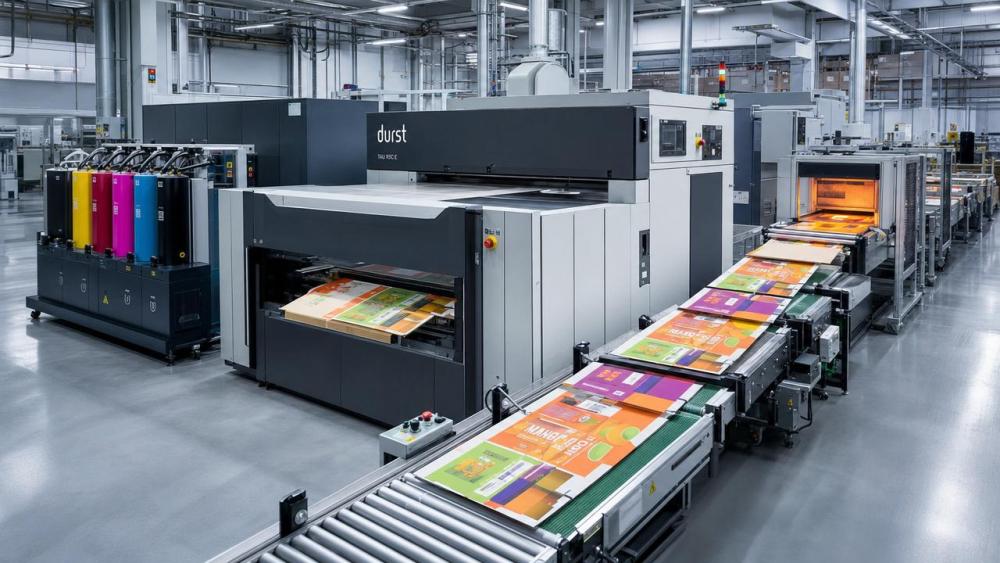
The first approval question is not “How much is the machine?” but “What will each sellable square meter, sheet, label, carton, or package cost over 3–5 years?” Digital printing equipment changes cost behavior because plates are removed, but ink, printheads, software, power, and workflow become more important.
A sound total cost of ownership model should include at least 6 categories: equipment price, installation, consumables, maintenance, labor, energy, and downstream finishing. For packaging plants, corrugated converters, and commercial printers, integration cost can be 5%–20% of the base machine price.
Key cost categories to separate in the approval file
Financial approvers should ask suppliers to split one-time capital expenditure from recurring operating expenditure. Bundled proposals may look convenient, but they can hide printhead replacement assumptions, service response limits, or software subscription costs.
The table below provides a practical view of cost items that often determine whether digital printing equipment delivers reliable ROI in real production environments.
The key conclusion is simple: lower capital price does not always mean lower production cost. A stronger proposal will make the cost curve visible, especially under different ink coverage, substrate, and shift-utilization scenarios.
Approval checkpoint
- Request a 36-month and 60-month cost model, not only a purchase quotation.
- Compare unit cost at 30%, 60%, and 85% machine utilization.
- Ask whether service contracts include preventive maintenance, software updates, and calibration support.
- Require sample calculations for at least 3 common products, such as labels, folding cartons, and corrugated boxes.
2. Printhead, Ink, and Substrate Choices Drive Daily Cost
Printhead architecture is one of the most important cost variables in digital printing equipment. Piezoelectric inkjet systems, thermal inkjet platforms, and electrophotographic engines each behave differently in speed, resolution, maintenance, and consumable consumption.
For financial approvers, the question is not only whether the image looks good during a demonstration. The real issue is whether the system can maintain acceptable quality across 2 shifts, changing humidity, multiple substrates, and repeated job changes.
Ink coverage and color strategy
Ink cost can vary widely between a low-coverage barcode job and a full-bleed packaging graphic. A 4-color CMYK configuration may suit many commercial jobs, while 6-color or 7-color systems improve gamut but increase inventory and profiling complexity.
If white ink, varnish, primer, or special fluids are required, approvals should include circulation, purging, and waste assumptions. White ink can strengthen premium packaging output, but it may require daily agitation or scheduled maintenance.
Substrate flexibility and hidden preparation cost
Substrate compatibility strongly affects profitability. Paper, coated board, kraft liner, corrugated board, synthetic labels, and flexible packaging films do not absorb ink in the same way. Some require corona treatment, primer, pre-coating, or controlled drying.
In corrugated and paper packaging operations, board warp, dust, surface porosity, and flute crush can influence print consistency. Financial evaluation should include waste during setup, usually measured in sheets, meters, or minutes per job.
- Validate at least 5 production substrates before final acceptance.
- Measure ink consumption on real artwork, not only supplier test charts.
- Check drying capacity at intended speed, such as 30–100 meters per minute for roll-fed applications.
- Confirm color stability after finishing steps, including die-cutting, folding, gluing, and lamination.
Why this matters to ROI
A machine with broader substrate tolerance can protect revenue when customers shift from plastic-based materials to recyclable paper-based packaging. It also reduces the need for separate equipment, duplicate inventories, and repeated operator trials.
3. Automation, Workflow, and Line Integration Costs
Digital printing equipment is increasingly evaluated as part of a connected manufacturing line, not as a standalone press. In packaging plants, the printer may need to feed die-cutters, folder gluers, inspection systems, stackers, or corrugated board lines.
Automation level affects labor cost, job turnaround, and error reduction. A system with automatic registration, barcode-driven job loading, and inline inspection may cost more upfront, but it can remove 2–4 manual touchpoints per order.
Integration areas that affect approval risk
Before signing a purchase order, the finance team should ask production, IT, and maintenance teams to validate integration requirements. A missed data interface or mechanical transfer point can delay commissioning by 2–6 weeks.
The following table outlines where digital printing equipment often creates extra cost or measurable value when connected with post-press and packaging processes.
The table shows why equipment approval should include cross-functional review. If finishing capacity cannot match print output, the business pays for speed it cannot monetize.
Automation maturity levels
- Level 1: Manual job setup, offline inspection, and operator-led color adjustment.
- Level 2: Semi-automatic registration, stored recipes, and guided maintenance procedures.
- Level 3: Barcode-driven workflow, inline inspection, and automated reporting to production systems.
- Level 4: Connected print-to-finish cell with predictive maintenance and minimal operator intervention.
Many plants do not need Level 4 immediately. However, approving digital printing equipment that cannot scale beyond Level 1 may restrict future competitiveness in short-run packaging and personalized FMCG work.
4. Maintenance, Uptime, and Service Contract Discipline
Maintenance is where attractive proposals often become expensive. Digital printing equipment depends on stable printhead condition, clean ink delivery, controlled temperature, calibrated motion systems, and reliable data processing.
Approvers should ask for a maintenance calendar covering daily, weekly, monthly, and annual tasks. If operators need 45 minutes every morning for cleaning and nozzle checks, that time should appear in the cost model.
Service contract questions before approval
A service agreement should define what happens when performance falls below expectation. Terms such as “remote support included” or “standard warranty” are not enough for capital governance.
- What is the guaranteed response time: 8 hours, 24 hours, or 72 hours?
- Which parts are consumables, and which are covered by warranty?
- How many preventive maintenance visits are included each year?
- Are printheads covered for nozzle failure, electrical damage, or only manufacturing defects?
- What local spare parts stock is available for pumps, filters, belts, lamps, and boards?
Downtime cost is not only lost printing time
If a press feeds corrugated packaging, label production, or folding carton orders, downtime can affect die-cutting schedules, folder-gluer utilization, shipment promises, and customer service levels. One stopped unit may idle 3 downstream processes.
Financial teams should model downtime by contribution margin, not only by labor cost. A realistic scenario may include 1 planned maintenance day per month and 2–4 unplanned service incidents per year.
5. Energy, Compliance, and Sustainability Cost Factors
Energy use is becoming a board-level issue, especially for manufacturers serving sustainable packaging, export retail, and paper-based replacement projects. Drying systems, curing lamps, chillers, compressors, and extraction units can materially change operating cost.
Depending on technology and format, digital printing equipment may require power capacity ranging from small-format units to industrial systems using tens of kilowatts during curing or drying peaks. Utility upgrades should be identified before approval.
Compliance areas to confirm
Packaging printers often face customer requirements around food-contact suitability, odor, recyclability, forest certification, and restricted substances. These requirements do not always come from the machine itself, but the equipment must support compliant production.
- Confirm whether ink systems meet the intended packaging application, especially indirect food packaging.
- Check drying and curing completeness to reduce odor, migration risk, and blocking during stacking.
- Evaluate waste streams, including cleaning fluids, ink containers, filters, and rejected substrates.
- Assess whether the system supports recyclable paper-based packaging without unnecessary lamination.
Sustainability as a commercial factor
Short-run digital workflows can reduce obsolete inventory and overproduction. For brands ordering 500, 2,000, or 10,000 customized units, print-on-demand can lower warehousing pressure and reduce waste linked to outdated graphics.
For financial approvers, sustainability should be translated into measurable business terms: lower inventory risk, fewer plates, reduced setup sheets, faster artwork changes, and improved access to tenders requiring paper-based or low-waste packaging solutions.
6. Approval Framework for Digital Printing Equipment Investment
A disciplined approval framework helps compare suppliers fairly. Instead of focusing on a single demonstration, decision-makers should score each proposal across commercial, technical, operational, and strategic dimensions.
For most B2B printing and packaging projects, a 5-step evaluation process is sufficient: define application scope, validate samples, model cost, verify service capability, and confirm integration readiness.
Recommended 5-step evaluation process
- Application scope: List target products, run lengths, substrates, color requirements, and finishing routes.
- Sample validation: Test real files on at least 3–5 materials under realistic speed settings.
- Cost modeling: Compare unit cost at different coverage levels, waste rates, and shift patterns.
- Service verification: Review spare parts, engineer access, preventive maintenance, and escalation rules.
- Final acceptance: Set measurable criteria for speed, color, registration, uptime, and operator training.
Common approval mistakes
One common mistake is using a single “cost per print” supplied by the vendor without checking artwork coverage. Another is approving digital printing equipment before confirming whether finishing assets can absorb the new output.
A third mistake is underestimating organizational learning. Operators, prepress teams, maintenance engineers, and sales staff usually need 2–8 weeks to convert machine capability into dependable commercial performance.
How IPPS supports informed decisions
The Global Industrial Print & Paper Systems observes digital printing, corrugated board forming, die-cutting, folder-gluing, and tissue processing from a connected production perspective. That matters because printing cost is shaped by the entire paper-based value chain.
For financial approvers, IPPS intelligence helps translate technical claims into procurement questions, operational thresholds, and long-term risk signals. The goal is not to chase the lowest quote, but to identify equipment that fits revenue strategy and production reality.
Final Decision: Approve Value, Not Just Equipment
Digital printing equipment can strengthen short-run customization, sustainable packaging, and fast e-commerce fulfillment, but only when its cost structure is understood clearly. Purchase price is one line in a much larger financial picture.
Before approving capital expenditure, examine printhead lifecycle, ink behavior, substrate flexibility, automation level, finishing integration, energy demand, maintenance obligations, and service response. These factors determine whether projected ROI survives daily production pressure.
If your team is evaluating industrial digital printing equipment for packaging, corrugated, commercial print, or paper-based manufacturing, IPPS can help you frame the right questions and compare options with greater confidence. Contact us to explore tailored intelligence, procurement checklists, and solution insights for your next investment decision.
Industry Briefing
Get the top 5 industry headlines delivered to your inbox every morning.
Recommended News