
Piezoelectric Positioning Systems: Accuracy Limits, Drift, and Control Basics
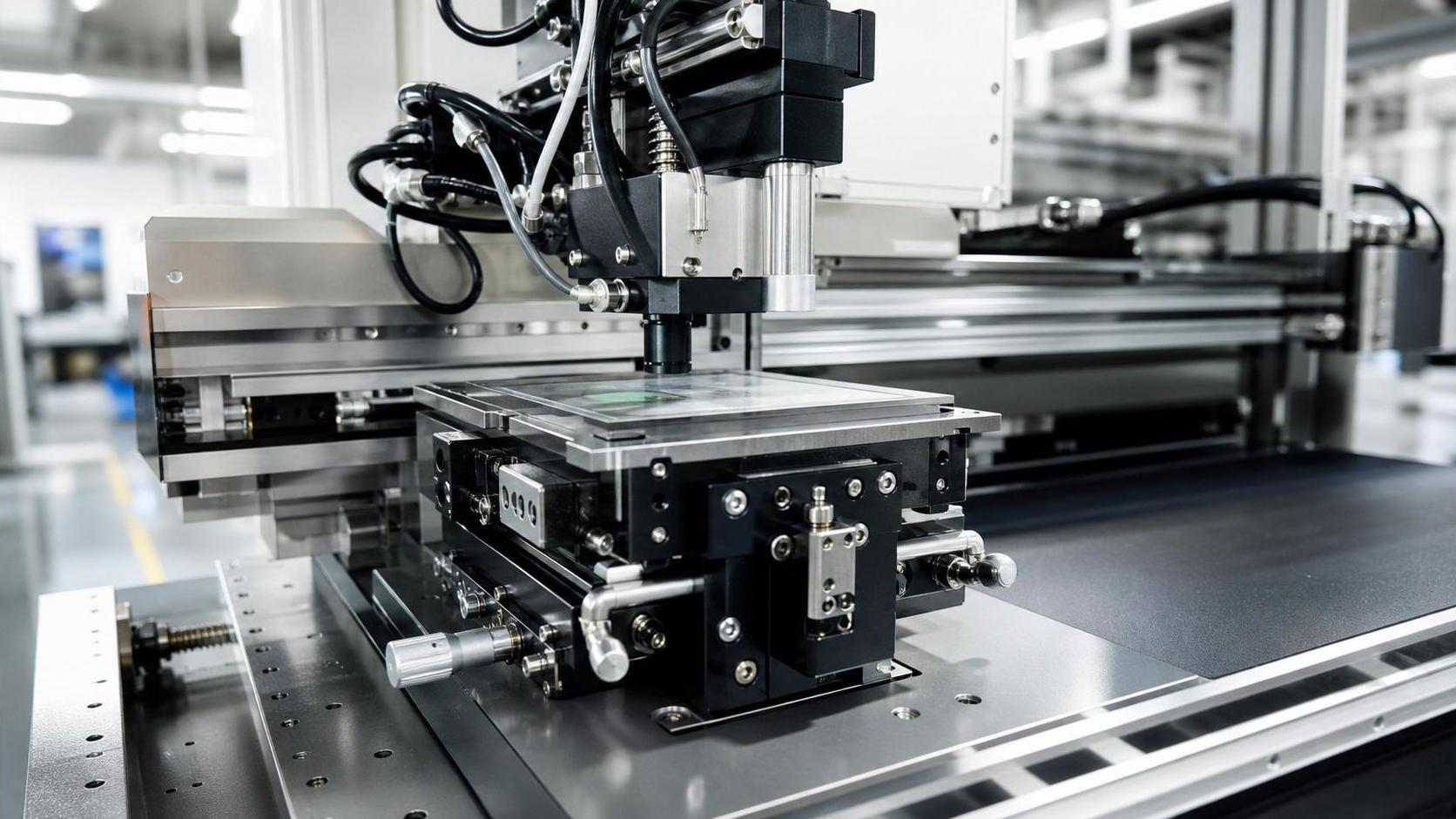
Piezoelectric Positioning Systems sit at the intersection of ultra-fine motion and real production reality. They are associated with nanometer resolution, yet useful performance depends on accuracy, drift behavior, control quality, load conditions, and environmental stability.
That gap matters across industrial digital printing, corrugated conversion, post-press finishing, and automated tissue machinery, where micron-level errors can influence print registration, tool alignment, bonding precision, and inspection repeatability.
For research-oriented evaluation, the key question is not whether these systems move in tiny steps. It is whether they can hold, repeat, and correct that motion under real thermal, mechanical, and control constraints.
Why precision motion is drawing wider industrial attention
In the IPPS landscape, motion quality is no longer an isolated component issue. It shapes how paper-based materials carry graphics, structure, and production data through increasingly automated lines.
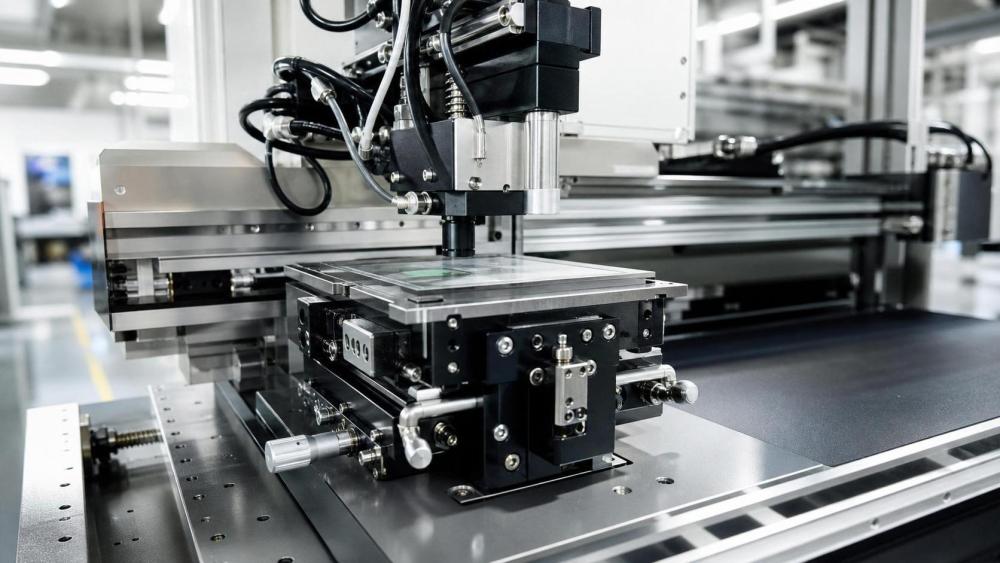
A piezoelectric printhead already converts electrical signals into controlled droplet formation. Related precision stages and alignment modules extend that principle into scanning, focusing, metrology, and micro-adjustment tasks.
As packaging runs become shorter and customization rises, more machines must switch jobs quickly without sacrificing registration. That makes Piezoelectric Positioning Systems relevant beyond laboratories and into production intelligence.
The same logic appears in greener manufacturing. When lines target less waste, lower energy use, and tighter material control, positioning errors become a direct cost driver rather than a hidden technical detail.
What Piezoelectric Positioning Systems actually do
At the core, a piezo actuator changes shape when voltage is applied. That microscopic deformation becomes controlled linear or flexure-based motion, often across very short travel ranges.
This is why Piezoelectric Positioning Systems are known for fast response, fine resolution, and high stiffness. They can correct position rapidly, with little backlash, because they do not rely on conventional rolling transmission elements.
Still, resolution is only one metric. A system may command tiny increments while missing the true target because of hysteresis, sensor errors, thermal expansion, or controller tuning limits.
In practical terms, useful assessment separates four ideas: commanded step size, repeatability, absolute accuracy, and stability over time. These are related, but they are not interchangeable.
Resolution is not the same as accuracy
Resolution describes the smallest change the system can command or detect. Accuracy describes how close the actual position is to the intended location.
Repeatability shows whether the same target can be reached consistently. Drift reveals whether that position holds after seconds, minutes, or changing temperatures.
Where the accuracy limits usually come from
Most accuracy limits in Piezoelectric Positioning Systems come from a stack of small influences rather than one dramatic fault. Understanding that stack is essential during comparison.
In many cases, brochures emphasize nanometer resolution while the real bottleneck sits in thermal management, mounting design, or sensor placement. That is especially relevant for integrated equipment rather than bench-top stages.
Drift is often the real decision point
Drift sounds minor until positioning must remain stable during a long imaging pass, repeated scan routine, or alignment cycle running near heat sources, steam zones, dryers, or high-speed electronics.
In print and paper environments, thermal conditions are rarely neutral. Web handling tension changes, nearby motors warm the frame, and local humidity can alter both materials and measurement conditions.
For that reason, Piezoelectric Positioning Systems should be reviewed as part of a mechanical and thermal assembly, not as isolated actuators. A stable stage on a drifting machine base will still produce drifting results.
This is why long-term stability data, warm-up behavior, and hold-position performance deserve as much attention as peak speed or nominal resolution.
Common drift sources in industrial settings
- Heat generated by nearby drives, lamps, print electronics, or process ovens.
- Structural expansion in mounts, brackets, and subframes.
- Voltage-related actuator self-heating during aggressive motion profiles.
- Sensor offset changes caused by environmental fluctuation.
- Material interaction, especially where contact force or web tension changes.
Control basics that shape usable performance
Open-loop operation is simple and fast, but it cannot automatically correct hysteresis or drift. Closed-loop operation adds sensor feedback, allowing the controller to compare commanded and actual position continuously.
For many advanced Piezoelectric Positioning Systems, closed-loop control is what turns fine actuator motion into dependable process motion. It improves accuracy, repeatability, and disturbance rejection, though it adds design complexity.
The controller itself also matters. Bandwidth, filtering, tuning strategy, and resonance suppression influence whether the stage settles quickly or oscillates around the target.
A fast response is valuable only if settling time stays short and overshoot remains controlled. In inspection, printing, and converting tasks, poor settling can erase the benefit of high nominal speed.
What to check in a control discussion
- Sensor type, range, noise level, and mounting method.
- Settling time at realistic payload and travel conditions.
- Closed-loop bandwidth versus expected disturbance frequency.
- Behavior near resonance and during repeated duty cycles.
- Compensation methods for creep, hysteresis, and temperature effects.
How these systems connect to print and paper workflows
In the IPPS context, precision motion appears wherever material value depends on exact placement, timing, or inspection. The use case may be hidden inside a subsystem, but the effect is visible in yield and consistency.
Industrial digital printers use piezo-based principles in printhead operation, while related positioning modules support carriage alignment, substrate sensing, nozzle inspection, and calibration routines.
Corrugated board lines and post-press equipment benefit from precision stages in measurement heads, registration correction, tool positioning, and quality verification, especially where lightweight substrates leave less tolerance for error.
Tissue processing machinery also reflects the same need. High-speed converting, embossing verification, and automated packaging increasingly depend on stable, repeatable sensing positions in moving environments.
The broader business value is straightforward: less waste, faster setup, tighter repeatability, and stronger confidence when moving toward digitalization, unmanned operation, and sustainable production targets.
A practical framework for comparison
When comparing Piezoelectric Positioning Systems, it helps to move from specification reading to condition-based evaluation. A short checklist can prevent misleading conclusions.
- Match travel range to the real task, not the smallest possible motion claim.
- Request accuracy and drift data under payload, duty cycle, and temperature conditions close to use.
- Separate repeatability from absolute accuracy during comparison.
- Review integration factors such as mounting stiffness, cable forces, and machine vibration.
- Check whether control software supports compensation, monitoring, and long-cycle diagnostics.
This approach is especially useful when evaluating intelligence-rich equipment. In connected production environments, motion data can support predictive maintenance, calibration planning, and process optimization across the machine lifecycle.
What deserves closer review next
Piezoelectric Positioning Systems are powerful, but their real value appears only when motion physics, control design, and operating context are evaluated together. Accuracy limits are rarely a single-number story.
The most useful next step is to define the actual motion task in detail: travel, load, cycle time, hold period, heat exposure, and allowable error over time. That framework makes vendor claims easier to test.
For IPPS-related research, it is also worth tracking how precision stages interact with print algorithms, web tension control, inline inspection, and sustainable packaging requirements. Those intersections often reveal the true system-level advantage.
A better comparison starts with fewer assumptions and better operating data. That is usually where reliable precision begins.
Industry Briefing
Get the top 5 industry headlines delivered to your inbox every morning.
Recommended News