
Extreme Environment Engineering Trends Shaping Industrial Systems in 2026
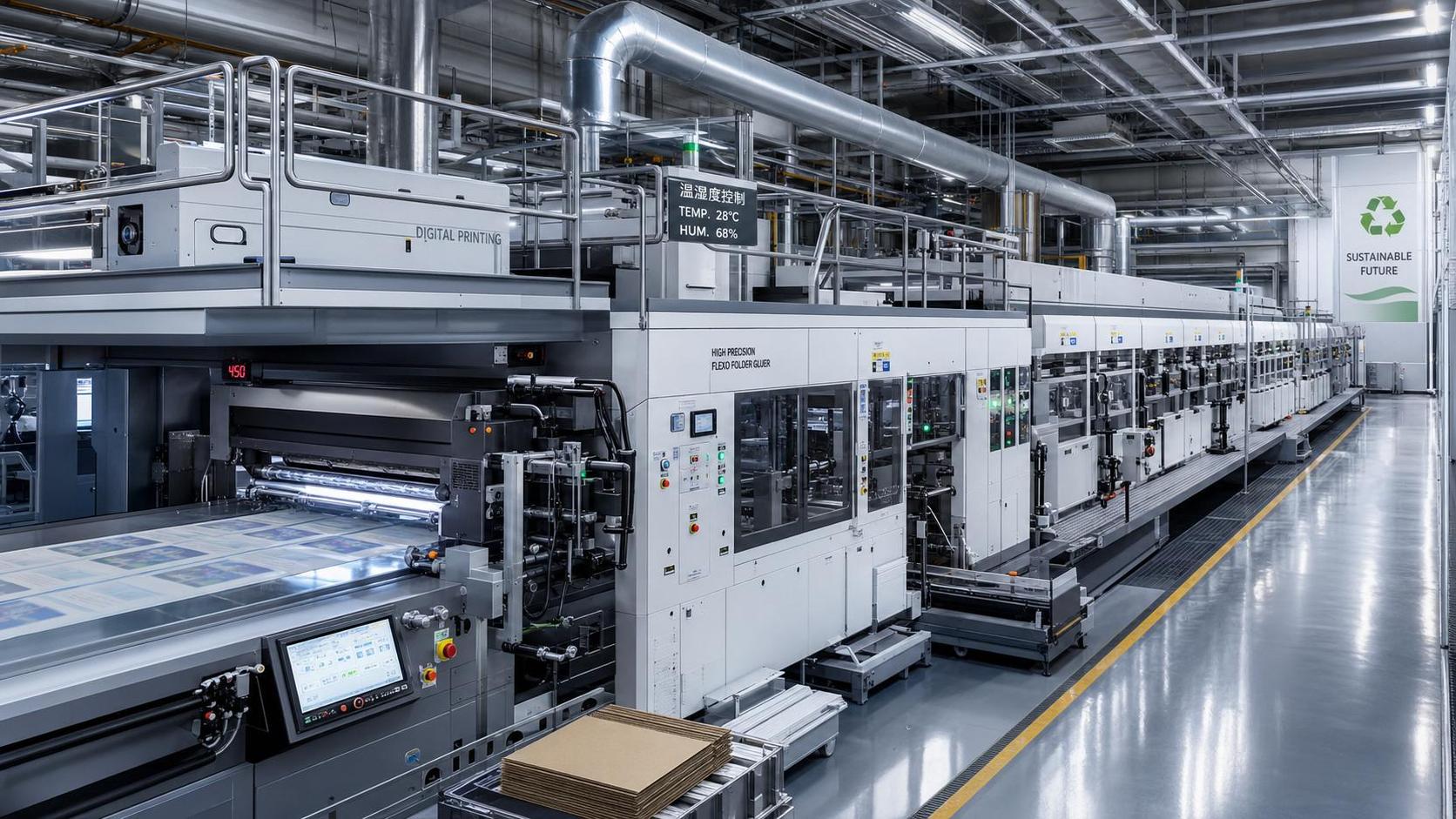
Why Extreme Environment Engineering Is Moving to the Center in 2026
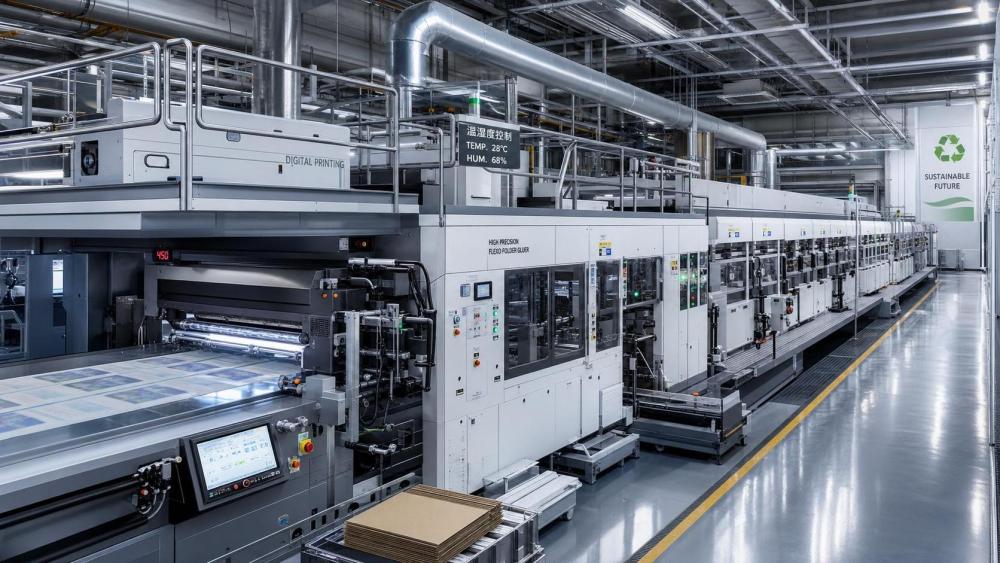
Industrial systems are entering a phase where stable performance matters more than nominal speed.
That shift is making Extreme Environment Engineering a board-level topic across print, packaging, converting, and tissue operations.
The pressure comes from several directions at once.
Machines run faster, product mixes change more often, and environmental rules are getting tighter.
In paper-based manufacturing, those changes rarely stay isolated inside one machine frame.
They spread through web tension, temperature stability, adhesive behavior, print accuracy, and energy consumption.
This is where IPPS has a useful vantage point.
Its coverage of digital printers, corrugated board lines, die-cutting systems, folder gluers, and tissue machinery reveals one clear pattern.
Extreme Environment Engineering is no longer just about surviving heat, pressure, dust, vibration, or humidity.
It is increasingly about maintaining precision under those conditions while still meeting sustainability targets.
That combination is reshaping investment logic in 2026.
The signals are becoming harder to ignore
Recent demand patterns show that buyers now compare systems by resilience metrics, not only by rated throughput.
A corrugator that reaches design speed but drifts under steam variation is no longer competitive.
A high-speed inkjet line that struggles with droplet placement on uneven corrugated surfaces loses value quickly.
A folder gluer that cannot manage mixed adhesive behavior across climate shifts creates hidden waste.
More importantly, these issues now intersect with compliance.
FSC and EUDR requirements, paper price volatility, and carbon pressure all increase the cost of instability.
When raw material windows narrow, engineering tolerance becomes a commercial advantage.
That is why Extreme Environment Engineering is showing up in tenders, retrofit planning, and lifecycle optimization discussions.
- Higher line speeds amplify vibration, thermal drift, and tension fluctuation.
- Shorter runs require faster setup without sacrificing calibration accuracy.
- Sustainable substrates often behave less predictably than legacy materials.
- Unmanned or lightly staffed production needs stronger fault tolerance.
The result is a market that rewards systems built for real operating extremes, not ideal laboratory conditions.
Why this change is accelerating across paper-based manufacturing
The drivers behind Extreme Environment Engineering are technical, economic, and structural at the same time.
E-commerce packaging continues to favor lightweight strength, variable print content, and rapid conversion.
That increases stress on corrugated board lines and digital print platforms alike.
At the same time, premium packaging keeps raising expectations for post-press precision.
Hot stamping consistency, crease quality, and clean cutting now depend on tighter environmental control than before.
In tissue converting, hygiene requirements and energy discipline are pushing machinery into a narrower performance corridor.
That corridor leaves less room for thermal instability, rewinding error, or moisture-related defects.
What stands out is not one dramatic disruption.
It is the accumulation of smaller constraints that make conventional engineering assumptions less reliable.
The biggest impact is on precision under stress
Extreme Environment Engineering increasingly defines whether a machine can stay accurate after conditions change mid-shift.
In industrial digital printers, micron-level inkjet algorithms must compensate for substrate inconsistency and ambient fluctuation.
That is especially relevant for corrugated printing, where surface topology complicates droplet behavior.
In corrugated board lines, extreme web tension control is becoming central to both board quality and line stability.
Small errors in tension decoupling can cascade into warp, bonding defects, and downstream converting losses.
Die-cutting and stamping systems face a similar challenge from another angle.
When speed rises, repeatable pressure distribution and thermal consistency become more valuable than peak stroke numbers.
Folder gluers are also shifting.
Cold and hot glue composite bonding curves must be controlled against substrate change, climate variation, and faster throughput.
In tissue machinery, rewinding stability, sterile operating discipline, and ultrasonic process precision now converge more tightly.
Across all five IPPS pillars, the question is no longer whether harsh conditions exist.
The question is whether engineering architecture treats those conditions as design inputs from the start.
What stronger systems are starting to look like
The most credible 2026 designs are not simply more rugged.
They are more adaptive, more observable, and more selective about where precision truly matters.
A useful shift is happening from component hardening alone to system-level coordination.
That includes sensor fusion, predictive compensation, modular thermal zones, and control loops tuned for variable substrates.
It also includes software logic that understands process drift before operators can visually detect defects.
Several engineering choices are gaining weight
- Closed-loop tension systems that isolate disturbances between unwinding, processing, and rewinding zones.
- Printhead and motion architectures designed for real-time correction under vibration and heat shift.
- Adhesive and thermal management models tied to climate data, not fixed setup assumptions.
- Condition monitoring that tracks energy deviation alongside mechanical wear and quality drift.
This is one reason intelligence portals such as IPPS are becoming more relevant.
Engineering decisions now depend on cross-process insight, not isolated machine specifications.
Where leadership attention should move next
In practical terms, Extreme Environment Engineering should be evaluated through uptime quality, not brochure language.
That means reviewing how systems behave during material changeovers, climate swings, steam instability, and continuous high-speed production.
It also means checking whether sustainability goals are engineered into process control rather than added as reporting layers.
A useful next step is to compare current equipment by stress tolerance, compensation speed, and defect containment logic.
Another is to map where small environmental deviations create the largest commercial losses.
That exercise often reveals that the weakest point is not the fastest machine, but the least adaptive connection between machines.
For 2026, the stronger position is to build a staged response.
- Audit stress-sensitive parameters across printing, corrugation, converting, and tissue workflows.
- Prioritize retrofits where tension, heat, moisture, or adhesive instability causes repeated losses.
- Track standards, certification thresholds, and substrate shifts that may tighten process windows further.
- Use intelligence sources that connect market pressure with machine-level engineering consequences.
Extreme Environment Engineering is shaping industrial systems because the operating environment itself has become a strategic variable.
The businesses that respond well will not chase extremes for their own sake.
They will design for resilience, verify under real conditions, and adapt before instability turns into cost.
Industry Briefing
Get the top 5 industry headlines delivered to your inbox every morning.
Recommended News