
Eco-Friendly Packaging Machinery: 2026 Trends in Energy, Materials, and Compliance
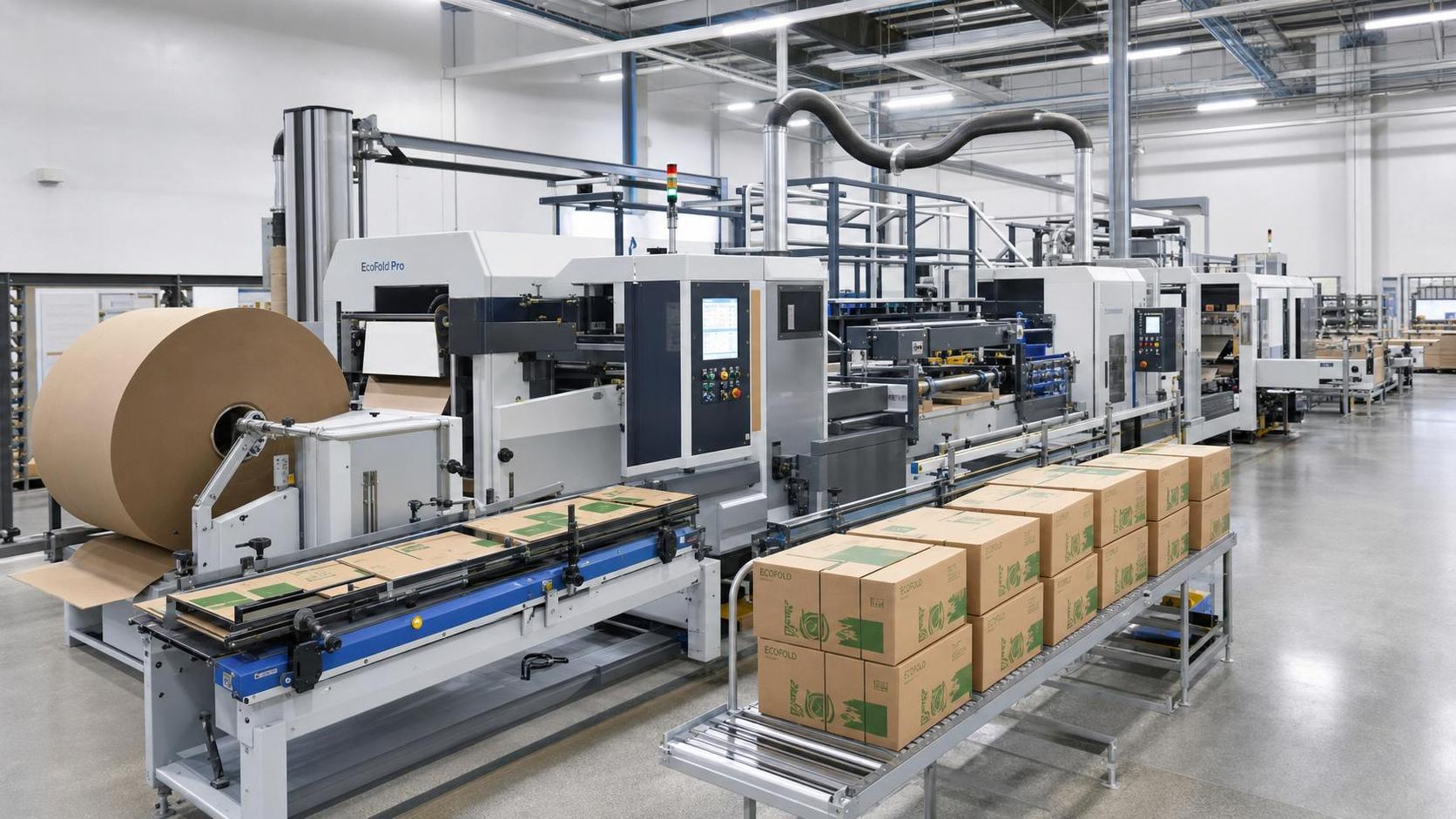
Why eco-friendly packaging machinery is moving from option to baseline
In 2026, eco-friendly packaging machinery is no longer judged by green claims alone.
It is being measured by energy draw, material flexibility, uptime stability, and compliance readiness.
That shift is especially visible across paper-based packaging, where digital printing, corrugation, converting, and automated finishing now intersect more tightly than before.
Operating costs remain a major trigger.
So do carbon reporting pressures, recycled fiber variability, and faster demand swings from e-commerce and retail promotions.
For businesses reviewing equipment plans, the real question has changed.
The issue is not whether eco-friendly packaging machinery looks sustainable on paper.
The issue is whether it can protect margin while adapting to stricter packaging expectations.
This is where the wider print and paper systems view matters.
IPPS has long tracked how web tension control, inkjet precision, corrugated board forming, and post-press automation shape packaging performance beyond the machine frame.
That broader lens makes one point clear.
Sustainability is becoming an operational specification, not a branding add-on.
The market signals are getting harder to ignore
Recent demand patterns show a sharper preference for machinery that handles recycled, lightweight, and paper-replacement materials without constant recalibration.
That preference is not limited to one equipment category.
It reaches industrial digital printers, corrugated board lines, die-cutting systems, folder gluers, and even tissue-related converting lines using lower-impact substrates.
More noticeably, buyers are asking for machine data that links sustainability claims to line economics.
Power consumption per output unit matters.
So do glue usage rates, waste percentages, start-up scrap, steam efficiency, and changeover losses.
This has made eco-friendly packaging machinery a more technical decision than many expected.
A machine can appear efficient in a brochure, yet struggle when recycled paper strength fluctuates or print coverage changes mid-run.
That is why deeper process intelligence is gaining value.
IPPS coverage increasingly reflects this need, especially where fluid behavior on corrugated surfaces, bonding curves, and tension decoupling affect both sustainability and throughput.
Three signals shaping 2026 decisions
- Energy visibility is replacing generic efficiency language in equipment evaluations.
- Material versatility is becoming essential as paper grades and fiber mixes fluctuate.
- Compliance readiness now influences machine architecture, traceability, and software integration.
Energy is no longer a utility issue alone
For many packaging lines, energy used to be tracked at plant level.
Now it is being pushed into machine-level investment logic.
Corrugators are a strong example.
Steam systems, drying zones, drive synchronization, and heat recovery increasingly determine whether a line remains competitive under volatile energy pricing.
The same pattern appears in digital printing.
High-speed inkjet systems promise less plate waste and shorter runs, but their value strengthens further when paired with efficient curing, stable data handling, and reduced rework.
In finishing, servo optimization and intelligent standby modes are gaining attention because they cut hidden consumption during frequent short-order cycles.
This makes eco-friendly packaging machinery a line-balancing issue.
Savings do not come only from one low-energy module.
They come from stable interaction between printing, forming, die-cutting, folding, and packing.
Material flexibility is becoming a stronger differentiator
The paper replacing plastic movement has widened the material challenge.
It is not just about running more paper.
It is about handling paper with different coatings, recycled content, moisture behavior, and compression performance.
This is where eco-friendly packaging machinery often succeeds or fails in practice.
A corrugated line may produce lightweight board efficiently, yet downstream die-cutting can lose precision if board stiffness varies too much.
A folder gluer may reduce adhesive use, yet unstable bonding on coated substrates can erase those gains through rejects.
Digital printing brings another layer.
When brands require localized graphics and faster product rotation, substrate response to ink becomes part of sustainability performance.
Cleaner print is valuable, but predictable droplet behavior on corrugated surfaces matters more when waste tolerance is low.
That helps explain why machine flexibility is now evaluated across the full paper-based packaging chain, not in isolated modules.
Where flexibility creates the most value
- Running mixed recycled fiber grades with fewer manual adjustments.
- Switching between short digital jobs and higher-volume box formats.
- Reducing adhesive, coating, and trim losses in premium paper packaging.
- Supporting glue-free or lower-glue formats where tenders now favor lower-impact designs.
Compliance is starting to reshape equipment decisions earlier
A few years ago, many compliance questions appeared after technical selection.
That sequence is changing.
FSC requirements, EUDR scrutiny, emissions reporting, and documentation traceability increasingly affect machine choice from the start.
For eco-friendly packaging machinery, this means software and sensors matter as much as motors and mechanics.
Lines must not only process sustainable materials.
They must also prove material origin, record process consistency, and support customer-facing sustainability claims with cleaner data.
More equipment reviews now ask whether a machine can integrate with plant reporting systems, supplier records, and quality audits.
This makes compliance a productivity issue too.
Poor traceability creates administrative drag, delayed approvals, and a higher risk of nonconforming output.
The strongest systems treat compliance as part of line design, not as a later software patch.
The impact is spreading across the full packaging workflow
One of the more important 2026 observations is that effects no longer stay in one department.
When eco-friendly packaging machinery performs well, planning becomes more resilient across scheduling, sourcing, conversion, and delivery.
When it performs poorly, the consequences multiply quickly.
A line that cannot stabilize recycled board tension may trigger print defects, cutting errors, gluing inconsistency, and shipment delays.
That is why integrated evaluation is becoming more practical than single-machine comparison.
IPPS has highlighted this systems logic for years through its focus on the five pillars of paper-based production.
Digital printers, corrugated board lines, die-cutters, folder gluers, and tissue processing systems all face the same structural pressure.
They must produce more adaptive output with lower environmental burden and tighter process transparency.
This also explains why unmanned operation and deeper automation are gaining weight.
Automation is not only about labor efficiency.
It is becoming one of the cleanest ways to reduce variation, waste, and reporting gaps.
What deserves closer attention before the next investment cycle
The next phase will likely reward disciplined comparison more than aggressive expansion.
Not every premium machine delivers a better sustainability return.
Not every low-energy promise survives real production variability.
A more reliable approach is to compare eco-friendly packaging machinery through business conditions that already exist.
- Map energy consumption to actual order mix, not theoretical peak output.
- Check substrate tolerance across recycled, lightweight, and coated paper grades.
- Review whether print, forming, cutting, and gluing data can be connected.
- Examine readiness for FSC, EUDR, and customer documentation requests.
- Test how quickly the line recovers from short-run changes and unstable input materials.
That kind of review gives a clearer picture of ROI, carbon exposure, and supply continuity.
It also avoids a common mistake.
Sustainability decisions become stronger when they are tied to process evidence, not just strategic intent.
In that sense, the best use of 2026 market intelligence is simple.
Track where energy, materials, and compliance start influencing each other, then build a phased response around those intersections.
For anyone following the paper-based packaging chain, that is where the next durable advantage is likely to appear.
Industry Briefing
Get the top 5 industry headlines delivered to your inbox every morning.
Recommended News