
Automated Packaging Systems Software: Integration Risks and ROI Factors
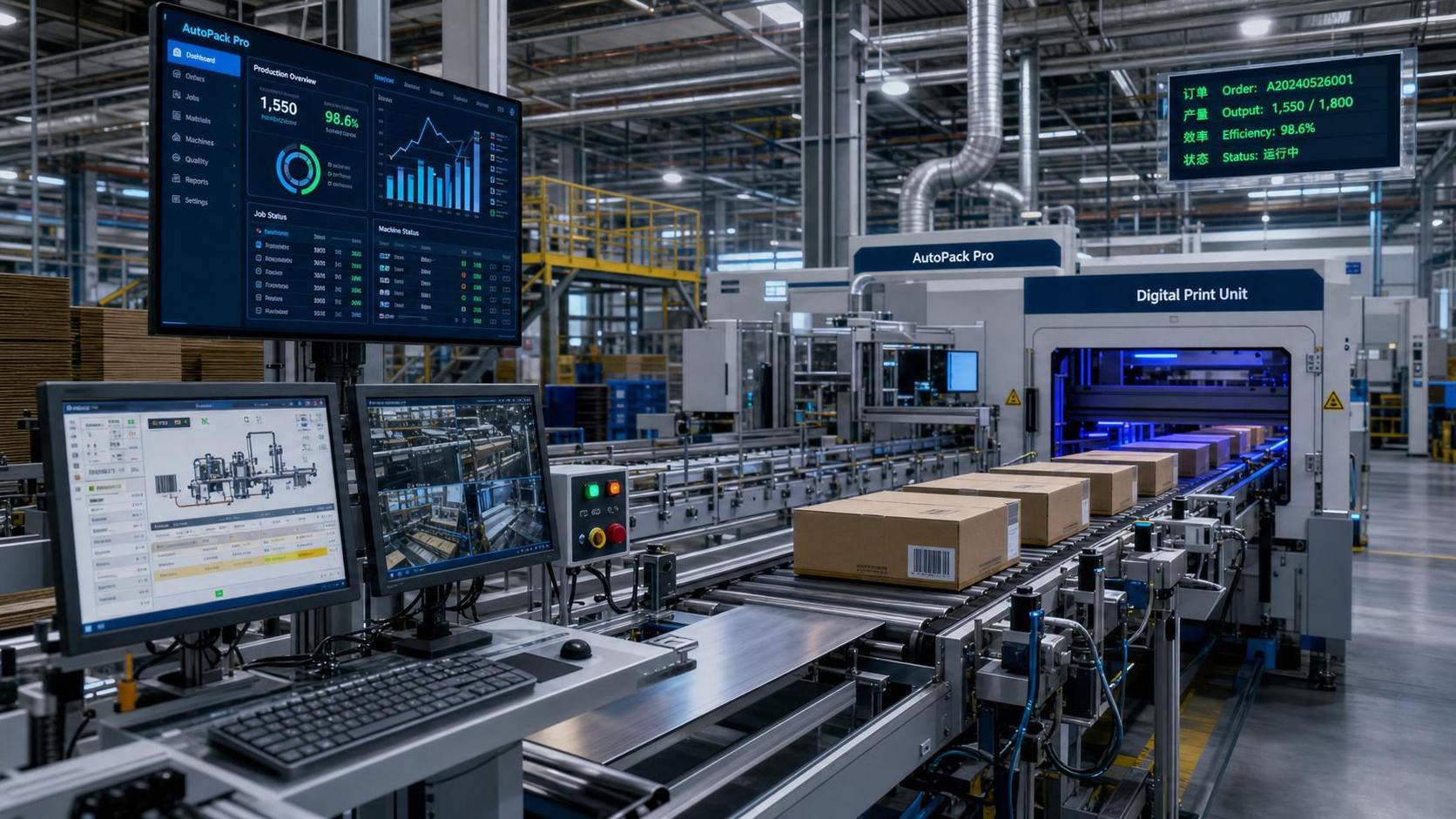
Choosing automated packaging systems software is rarely a simple technology purchase. In print, corrugated, converting, and tissue operations, the software layer connects machines, data, people, and production timing.
That is why integration risk often matters as much as feature depth. A platform may look strong in a demo, yet still create downtime, weak traceability, or poor ROI once it reaches the plant floor.
Across paper-based manufacturing, this decision now carries more weight. Custom print runs, e-commerce packaging pressure, sustainability reporting, and labor constraints are all pushing software from a support tool into an operating backbone.
Why the software layer has become strategic
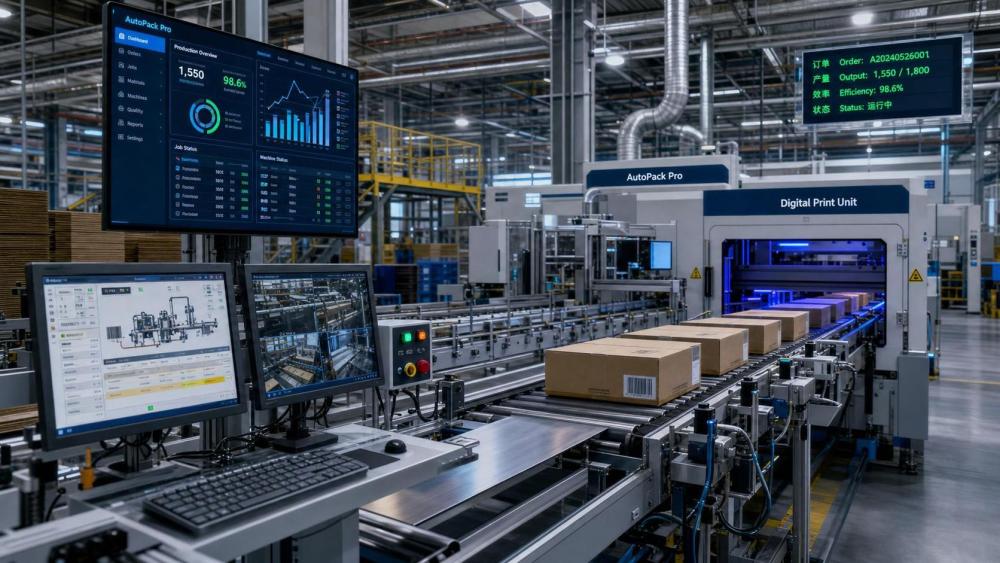
The image fits a familiar reality: multiple machines, multiple control systems, and one production target.
IPPS tracks sectors where mechanical performance and digital control increasingly depend on each other. Industrial digital printers need fast job handling. Corrugated lines depend on stable process visibility. Folder gluers and die-cutters need synchronized downstream data.
In tissue processing, the same pattern appears. Rewinders, embossing units, inspection, and automatic packaging all generate operating data that becomes useful only when software turns it into decisions.
Automated packaging systems software sits in the middle of that environment. It may handle scheduling, line monitoring, order flow, quality signals, recipe control, batch traceability, maintenance triggers, or ERP and MES exchange.
Simple descriptions can be misleading, though. In practice, the value of automated packaging systems software comes from how well it fits live production constraints, not from the length of a feature list.
What integration risk really means
Integration risk is often discussed too broadly. It is more useful to break it into concrete failure points that affect throughput, startup speed, and data trust.
Machine connectivity is only the first layer
A vendor may confirm support for PLCs, OPC UA, barcode systems, cameras, or printers. That does not guarantee consistent data timing, alarm mapping, or stable job status across mixed equipment generations.
Older corrugators or post-press machines often expose partial signals. Newer equipment may produce richer data, but with proprietary structures. Automated packaging systems software must normalize these differences without distorting operational meaning.
Workflow mismatch creates hidden disruption
Software can fail even when interfaces work. The common problem is workflow mismatch between system logic and plant reality.
A digital print line handles rapid artwork changes. A folder gluer prioritizes speed stability. A tissue line may focus on continuous flow and packaging balance. One rigid model rarely fits all three.
Data quality affects financial outcomes
If scrap codes are inconsistent, cycle counts are delayed, or downtime reasons are entered manually with weak discipline, ROI calculations become unreliable. Many software rollouts underperform because the reporting layer looks precise while source data remains weak.
Where ROI actually comes from
The return on automated packaging systems software is rarely driven by one dramatic gain. More often, it comes from several modest improvements that compound across shifts, orders, and product changes.
More importantly, ROI should be measured against the real constraint in the operation. If order variability is the issue, scheduling agility matters more than dashboard polish. If scrap is the issue, inspection feedback and recipe integrity deserve more attention.
Different lines, different software expectations
A useful evaluation starts by matching the software to the production physics of each environment.
Digital print and short-run packaging
Here, automated packaging systems software must support rapid file-driven workflows, version control, queue visibility, and smooth handoff to finishing. Job complexity can be high even when run lengths are short.
Corrugated board and sheet conversion
Corrugated operations need reliable line status, material tracking, tension-sensitive process visibility, and links between upstream board formation and downstream box conversion. Poor synchronization quickly becomes waste.
Die-cutting and folder-gluer lines
These lines benefit from fast setup recall, quality checkpoints, and accurate work-in-process tracking. Software must also reflect the reality that minor stop events can erode output long before a major failure occurs.
Tissue converting and automatic packaging
Continuous flow matters more here. Automated packaging systems software should help balance line speed, packaging capacity, reject handling, and maintenance windows without breaking the rhythm of production.
Questions that improve vendor evaluation
Good software selection depends on better questions, not broader brochures.
- Which machine types have already been integrated in comparable print, corrugated, converting, or tissue environments?
- What data is collected automatically, and what still depends on manual input?
- How does the system handle mixed-speed lines and temporary bottlenecks?
- Can job, lot, and quality data stay linked across the full packaging workflow?
- What happens during network interruption, line restart, or partial device failure?
- How are ROI assumptions documented before deployment?
These questions usually surface more value than a general request for features. They also reveal whether the provider understands production logic, not just software architecture.
Implementation choices that protect production continuity
The safest path is often phased, but not superficial. A limited rollout should still include enough real complexity to test interfaces, operator adoption, and reporting accuracy.
Usually, the first phase works best when tied to one defined business target. That could be changeover reduction on a digital print line, waste visibility on a corrugated plant, or downtime analysis on a folder-gluer cell.
It also helps to agree early on what counts as a validated result. Without baseline numbers, automated packaging systems software can appear successful without proving operational improvement.
Another practical step is governance. Someone must own tag definitions, downtime codes, job states, and interface change control. When this stays informal, system performance degrades over time.
Why industry context matters more now
Software decisions are no longer isolated from market pressure. Paper price volatility, sustainability reporting, FSC and EUDR requirements, and growing demand for customized packaging all affect what data plants need and how fast they need it.
This is where sector intelligence becomes useful. IPPS follows the interaction between print technology, corrugation, post-press precision, tissue automation, and the wider move toward green paper-based manufacturing.
That wider lens matters because automated packaging systems software is increasingly expected to support both efficiency and compliance. The platform may need to help with material traceability, waste accountability, energy analysis, or tender documentation.
A practical next step
A useful decision process starts with three lists: the production losses that matter most, the interfaces that carry the highest integration risk, and the metrics that can prove value within six to twelve months.
From there, compare automated packaging systems software against real workflows instead of ideal diagrams. Map the system to digital print variation, corrugated line complexity, post-press sequencing, or tissue flow balance as needed.
The strongest investment cases are usually built on operational clarity. When software scope, integration limits, and ROI logic are defined early, deployment becomes easier to govern and far easier to justify.
Industry Briefing
Get the top 5 industry headlines delivered to your inbox every morning.
Recommended News