
What drives tissue converting equipment pricing for a new line?
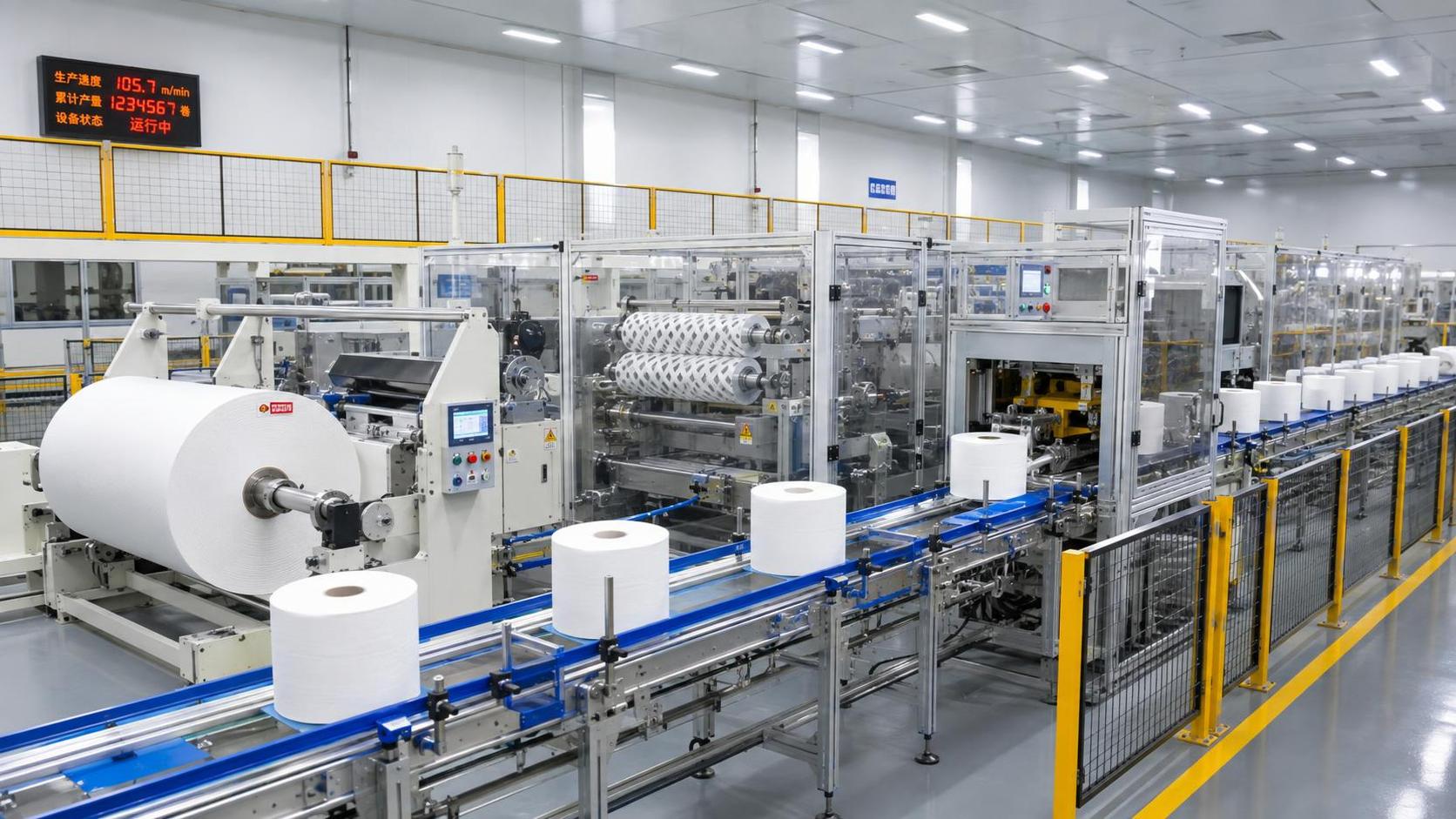
The quoted price for a tissue converting line is rarely the number that determines the real investment. Two suppliers may appear to offer the same rewinder, log saw, and packaging equipment, yet the proposals can differ substantially once production speed, finished-product range, automation boundaries, installation scope, and service support are defined.
For a new line, tissue converting equipment pricing is driven less by the machine label and more by what the line must reliably produce. Procurement teams should therefore begin with the operating requirement, then compare suppliers against the same technical and commercial baseline. A lower initial quotation can be the more expensive choice when it creates higher labor needs, frequent format-change downtime, unstable roll quality, or dependence on hard-to-source parts.
Start with the product you need to sell
A tissue line is not priced simply by its nominal speed. It is priced around the combination of products, material properties, pack formats, and quality expectations it must handle.
A dedicated toilet-roll line with a narrow, stable specification is generally less complex than a line expected to run multiple roll diameters, sheet lengths, embossing patterns, core sizes, and retail pack configurations. The same applies to facial tissue: flat-box, soft-pack, folded, and interfolded products may share raw material, but their converting and packing requirements are not interchangeable.
Before requesting quotations, define the commercial product brief in practical terms:
- Product families to be made in the first year and likely additions later.
- Jumbo roll width, parent-roll diameter, ply count, basis-weight range, and softness requirements.
- Finished roll diameter, perforation pitch, sheet count, core specification, and embossing appearance.
- Pack type, pack count, film or paper wrapping method, labeling, and case-packing needs.
- Required speed at the target product mix, rather than at one ideal sample product.
When this brief is vague, suppliers must make assumptions. One quotation may include a basic configuration for a single product, while another includes wider adjustment ranges and more robust handling for varied grades. The price gap may be legitimate, but it will not be visible until the scope is normalized.
Capacity affects more than the speed rating
Higher output raises costs across the line. It is not only a matter of a faster rewinder. At elevated speeds, web handling must remain stable, perforation must be consistent, embossing must not damage the sheet, logs must be transferred accurately, and downstream cutting and packaging must keep pace. The controls, drive systems, structural rigidity, safety design, and material-handling interfaces all become more demanding.
Procurement teams should be cautious when comparing headline speeds. A machine may achieve a high mechanical speed during a short demonstration using a favorable grade and a simple format. The more useful question is: what sustained saleable output can the complete line deliver with our intended tissue, formats, and changeover frequency?
Saleable output accounts for stops, splice events, rejects, blade changes, setup time, and packaging interruptions. A line designed for stable production at the required level can justify a higher capital cost. Buying a high-speed machine without matching cutting, wrapping, and conveying capacity creates a bottleneck rather than usable throughput.
Automation level is a labor, consistency, and risk decision
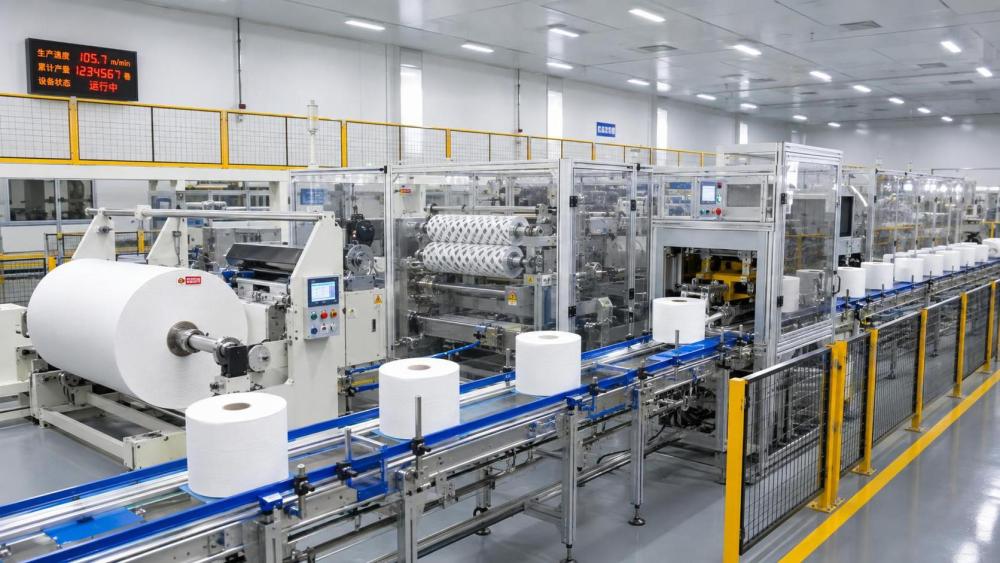
Automation is one of the clearest drivers of tissue converting equipment pricing. It can include automatic jumbo-roll loading, core feeding, glue application, tail sealing, log transfer, log accumulation, saw feeding, product counting, wrapping, cartoning, pallet handling, and recipe-based adjustments.
More automation usually raises the initial equipment cost, but its value should not be judged only by labor reduction. In a tissue operation, repetitive manual intervention can affect hygiene, product consistency, safety exposure, and the ability to maintain speed across shifts. Automated transfer and packaging also reduce the chance that the rewinder must wait for downstream operators.
That does not mean every new line needs the highest automation package. Semi-automatic systems can be sensible where product volume is modest, labor is available, the product range is still being tested, or capital must be staged. The important distinction is whether the selected design can be upgraded without replacing core equipment or rebuilding the plant layout.
Ask each supplier to identify exactly where manual work remains. “Automatic line” is too broad to compare. A proposal should show the operator stations, interventions per shift, changeover tasks, and the equipment supplied at each transfer point.
Converting modules change both product value and machine cost
A basic rewinding configuration can produce a functional roll, but commercial tissue products often depend on features that require additional modules and tighter process control. Embossing, lamination, decorative printing, edge embossing, scent application, special perforation patterns, and coreless winding each add cost and operational complexity.
Embossing deserves particular attention because it affects both product appearance and converting behavior. The chosen pattern, roll geometry, pressure control, and tissue grade influence bulk, softness perception, ply bonding, and roll stability. A supplier may price a standard embossing station very differently from a configuration that supports multiple patterns, quick roll changes, or more controlled lamination.
Do not specify features solely because competitors use them. A premium visual finish may be commercially necessary for branded retail tissue, while it may add little value for institutional products where reliable dispensing, pack economy, and consistent roll dimensions matter more. The right specification follows the route to market.
Line scope is where quotations often become misleading
The largest pricing errors usually come from comparing partial machine prices with a complete production-line budget. A converting line needs more than the central machine. Depending on the project, the scope may include parent-roll handling, unwind stands, conveyors, core preparation, log accumulation, saws, wrappers, cartoners, case packers, inspection, coding, compressed-air connections, dust extraction, electrical integration, guarding, and factory acceptance activities.
Insist on an inclusion-and-exclusion schedule. It should distinguish equipment supply from foundations, utilities, freight, unloading, installation, local electrical work, consumables, spare parts, and production support. This is not administrative detail; it is the basis for a realistic capital budget.
Hygiene, safety, and maintainability should be costed early
Tissue is a consumer hygiene product, so machine design must support orderly cleaning, controlled product transfer, and safe access for operating and maintenance tasks. Features such as enclosed transfer zones, accessible cleaning points, guarding, interlocks, and dust-management arrangements may increase the quoted price, yet they can prevent routine operational problems after startup.
Maintenance design is equally important. Rewinders, embossing stations, saws, and packaging equipment contain wear parts and adjustment points that affect product quality. A lower-cost machine can lose its advantage when blade changes are slow, common components are proprietary, access is poor, or diagnosis depends entirely on remote supplier support.
During technical evaluation, request a list of routine wear parts, recommended critical spares, maintenance intervals, and standard tools required for normal service. The aim is not to eliminate maintenance cost. It is to understand whether the line can be maintained predictably by the intended operating team.
Controls and integration are not optional extras
Modern tissue converting equipment may include recipe management, fault diagnostics, production reporting, remote assistance capability, and interfaces to upstream or downstream equipment. These functions affect pricing because they require control hardware, programming, commissioning time, and a clearer definition of responsibilities between suppliers.
For a standalone starter line, a highly elaborate integration package may not be necessary. For a plant that expects several lines, central production visibility and common data structures can be worth planning for from the beginning. The practical question is whether the controls help operators run the line, maintenance staff diagnose faults, and management distinguish theoretical speed from actual output.
IPPS tracks automated tissue machinery alongside other paper-converting systems, where web tension control, downstream synchronization, and lifecycle yield are recurring operational concerns. For tissue projects, those same principles matter: the equipment should be evaluated as a connected process, not as a collection of separately priced machines.
Compare lifecycle cost, not only the purchase order
A useful procurement comparison combines capital cost with the operating consequences of each configuration. The calculation does not require speculative market forecasts. It requires a disciplined view of what the proposed line will consume and how it will be supported.
- Material yield: waste during startup, splicing, trimming, rejected rolls, and packaging failures.
- Labor requirement: operators per shift, manual packing tasks, and maintenance dependence.
- Energy and utilities: installed load, compressed-air demand, vacuum or dust-extraction needs, and actual duty cycle.
- Changeover loss: time and waste needed to move between roll sizes, pack formats, or embossing specifications.
- Service resilience: local technical coverage, response method, spare-parts lead time, documentation, and training depth.
The cheapest option is often appropriate when the product range is narrow and the operating model is simple. It becomes risky when the business plan depends on frequent format changes, premium presentation, low manual handling, or reliable output over multiple shifts. In those cases, a more expensive configuration can be the lower-cost production asset because it protects usable capacity and product consistency.
How to request quotations that can actually be compared
Send each shortlisted supplier the same request package. Include the product brief, raw-material range, target capacity, layout constraints, utilities available, desired automation boundary, required packaging formats, and acceptance criteria. Ask suppliers to state assumptions rather than bury them in technical notes.
Then evaluate the offers in three layers: the supplied equipment list, the operating performance expected at your product mix, and the commercial support surrounding the line. Avoid accepting a single “turnkey” description without a detailed responsibility matrix. The matrix should identify who provides design information, interfaces, installation support, training, commissioning personnel, and post-startup service.
Before issuing an order, focus the final technical discussion on the products that are hardest to run, not the easiest demonstration samples. Confirm how the line handles the tissue grades, roll dimensions, and pack changes that are most likely to affect daily output. That is where tissue converting equipment pricing becomes meaningful: not as a headline machine cost, but as the cost of obtaining a line that can make the intended products consistently, safely, and at a commercially useful rate.
Industry Briefing
Get the top 5 industry headlines delivered to your inbox every morning.
Recommended News