
Print and Paper Systems for Converting: What to Compare First
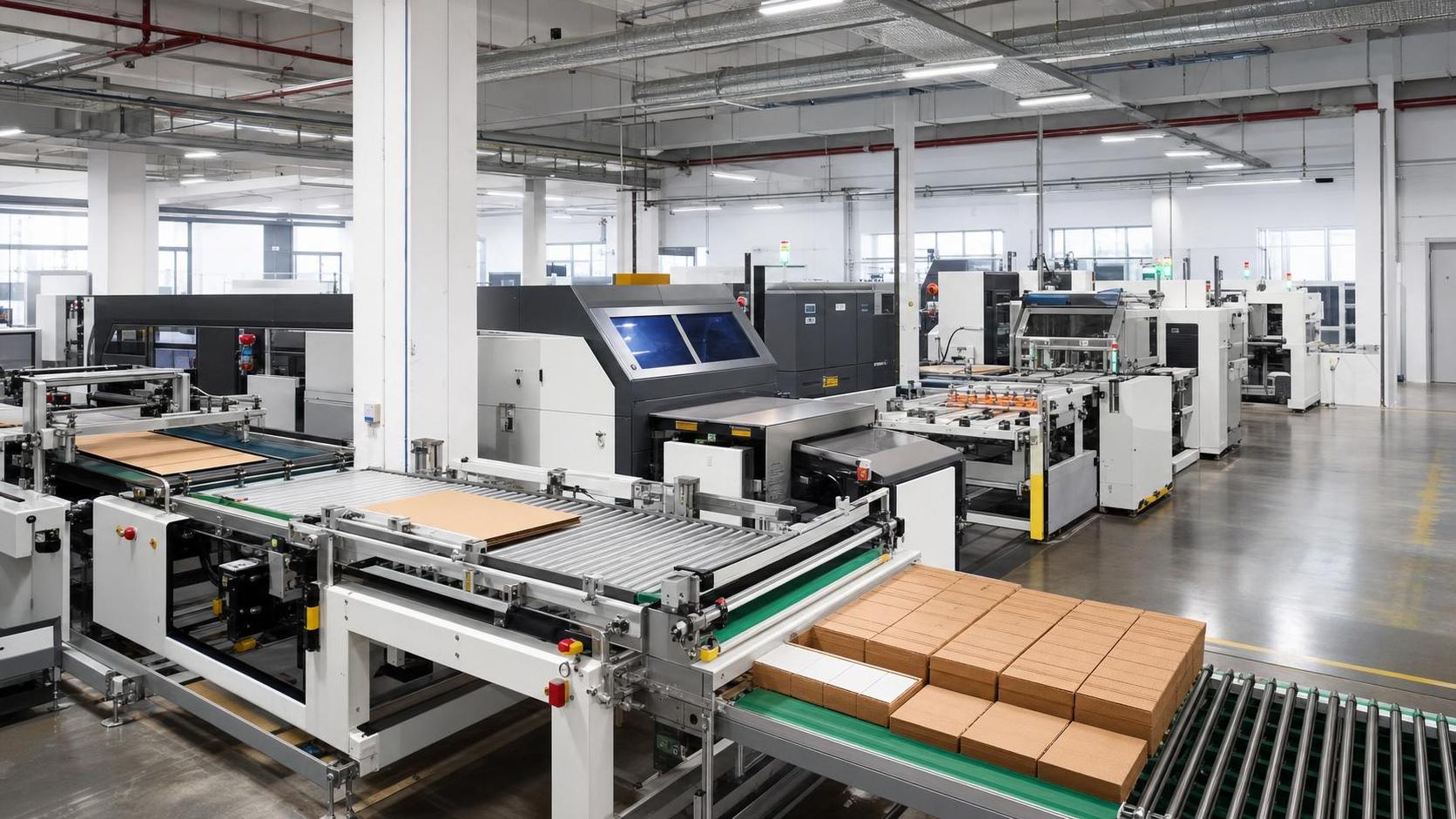
Choosing print and paper systems for converting is rarely a matter of comparing rated speed or headline cost. In real production, the better question is how consistently a line holds print quality, substrate behavior, converting accuracy, and uptime across changing jobs. That is why early comparisons matter. A weak benchmark at the evaluation stage can quietly become years of waste, rework, and missed delivery windows.
The pressure is stronger now because packaging demand is shifting in several directions at once. E-commerce expects shorter runs and faster changeovers. Brand owners want sharper graphics on paper-based formats. Sustainability rules, including FSC expectations and EUDR pressure, are pushing material choices and process traceability into the same discussion as output. In that setting, print and paper systems for converting need to be judged as connected production systems, not isolated machines.
What the comparison really covers
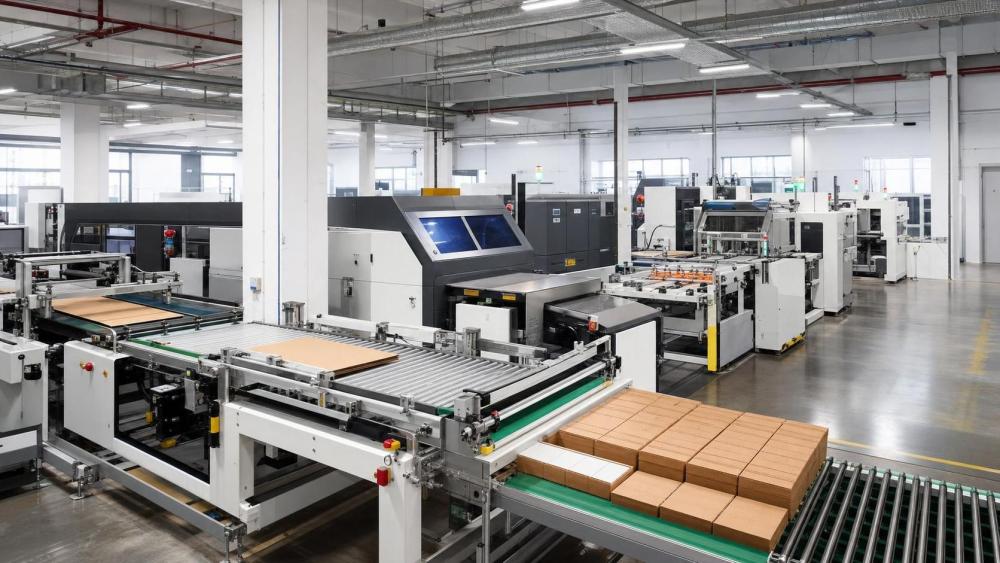
At a basic level, print and paper systems for converting include the technologies that shape, decorate, process, and finish paper-based materials into usable products. That can mean digital printers, corrugated board lines, die-cutting systems, folder gluers, or tissue converting equipment. Each machine has its own function, but the real value appears when performance stays stable from one stage to the next.
A digitally printed corrugated sheet, for example, is only as useful as its downstream die-cutting accuracy and folding-gluing reliability. A tissue line with impressive rewinding speed still underperforms if embossing consistency or packaging automation lags behind. So the first comparison should frame the production objective, not the machine category alone.
Why this topic matters more now
The converting sector is being reshaped by shorter product cycles, more SKU variation, and a stronger push toward paper replacing plastic. That has raised the importance of flexible digital printing, stronger corrugated design, cleaner post-press execution, and automation that reduces labor dependence without sacrificing yield.
IPPS follows this shift closely because the main bottlenecks are no longer purely mechanical. Web tension control, ink droplet behavior on uneven substrates, glue bonding curves, and data-driven line coordination all affect commercial output. In other words, technical comparison now reaches into software logic, sensor quality, and process intelligence.
That is especially relevant when comparing print and paper systems for converting across regions or product segments. A line that performs well in standard folding carton work may not translate smoothly to high-graphic corrugated, lightweight board, or hygienic tissue products.
The first benchmarks worth comparing
A useful evaluation starts with the conditions that most directly affect output quality and operating risk. The table below shows where attention usually pays off first.
These benchmarks work because they move the discussion away from sales claims and toward production behavior. They also help compare different equipment classes using the same business logic.
Print quality must be measured under stress
Print quality in converting is not just about a clean sample sheet. It should be tested across speed changes, substrate changes, and longer runs. On corrugated surfaces, for instance, micron-level inkjet control becomes critical because flute structure and liner variation can change droplet spread, edge sharpness, and color uniformity.
In practical terms, print and paper systems for converting should be compared on repeatability, not single-pass appearance. A line that prints beautifully for a short demo but drifts during continuous production is carrying hidden risk.
Tension control often decides the real ceiling
Extreme web tension control is one of the clearest separators between average and high-performing systems. It affects print registration, die-cut accuracy, folding geometry, and rewinding quality. In corrugation and tissue work, poor tension management can produce defects that appear downstream, which makes the source harder to trace.
This is why a serious comparison should include start-stop behavior, acceleration response, roll diameter compensation, and substrate deformation handling. A stable control algorithm often matters more than a higher nominal speed.
Different converting segments require different priorities
Not all print and paper systems for converting are judged by the same practical outcome. The evaluation focus shifts with the application.
- Digital packaging print: look closely at variable data handling, color stability, drying performance, and substrate versatility.
- Corrugated board production: compare flute consistency, board flatness, moisture balance, and high-load stability.
- Die-cutting and stamping: focus on register precision, tooling repeatability, waste stripping, and cosmetic finish quality.
- Folder gluing: test alignment control, glue application accuracy, crash-lock performance, and fast job changeovers.
- Tissue converting: assess embossing quality, rewinding speed stability, hygienic design, and pack integration.
This segmented view prevents a common mistake: using one generic scorecard for fundamentally different production goals. A line built for premium retail packaging will not be optimized in the same way as a line built for transport corrugated or consumer tissue.
Where lifecycle value becomes visible
The strongest systems usually look ordinary in one area and exceptional in another: they hold performance over time. Lifecycle value appears in energy demand, planned maintenance logic, remote diagnostics, operator dependency, and yield preservation during routine production shifts.
For that reason, comparing print and paper systems for converting should include questions such as these:
- How much waste is generated during setup and changeover?
- How quickly can inspection systems detect drift or defects?
- Which maintenance tasks require line stoppage, and how often?
- Can the system connect production data with traceability and compliance records?
- How resilient is output when paper quality, humidity, or order mix changes?
These points align with current market pressure. Sustainability is no longer limited to recyclable material claims. It also includes lower waste, lower energy use, better material utilization, and clearer process proof for customers and regulators.
A practical way to structure the evaluation
A sound comparison becomes easier when it follows the path of the finished product. Start with the target substrate and required packaging outcome. Then work backward through printing, forming, cutting, folding, gluing, rewinding, inspection, and data capture.
In actual assessment work, three habits improve decision quality.
Use production-like test conditions
Demo performance should mirror real substrates, realistic run lengths, and normal job changes. Otherwise, the comparison favors presentation quality over operating truth.
Score interaction between machines
Print and paper systems for converting should be reviewed as a connected chain. Upstream variation often multiplies downstream defects. A strong single machine cannot fully compensate for weak line integration.
Separate price from ownership cost
Lower capital cost can be erased quickly by unstable quality, frequent consumable use, or poor support response. Ownership cost is usually where the better system proves itself.
What to do next
The best next step is to build a comparison framework around operating risk, not machine brochures. Define the substrate mix, order variability, compliance demands, target waste rate, and required finishing accuracy. Then compare print and paper systems for converting against those conditions in a structured trial.
That approach also makes external intelligence more useful. Market signals around paper pricing, certification thresholds, digital printing capability, corrugation trends, and post-press automation are easier to interpret when the evaluation criteria are already clear. In a market moving toward smarter packaging and lower-carbon production, the first comparison should always be the one that protects long-term output.
Industry Briefing
Get the top 5 industry headlines delivered to your inbox every morning.
Recommended News