
Paper Packaging Material Reference: Key Grades and Use Cases
Why does a paper packaging material reference matter so much now?
A good paper packaging material reference is no longer a niche tool. It is a practical way to read modern packaging choices with more accuracy.
Material grades affect print sharpness, compression strength, folding behavior, glue pickup, and recycling outcomes. One paper change can alter the whole converting process.
That is why this topic sits close to printing, corrugation, die-cutting, and folder-gluing, not just raw material sourcing.
In practical terms, a paper packaging material reference helps connect grade names with real use cases. It turns broad labels into usable technical judgment.
This matters even more as packaging moves toward shorter runs, digital customization, lighter structures, and stricter sustainability checks such as FSC and EUDR.
IPPS follows this shift closely because paper grades do not perform in isolation. They interact with web tension control, inkjet behavior, flute formation, creasing, and bonding stability.
So the goal of this paper packaging material reference is simple. It gives a clear starting point for understanding which grades are used, why they are chosen, and where mistakes usually happen.
Which paper grades show up most often in a paper packaging material reference?
The short answer is that most references revolve around a few core families. Each family supports different packaging demands.
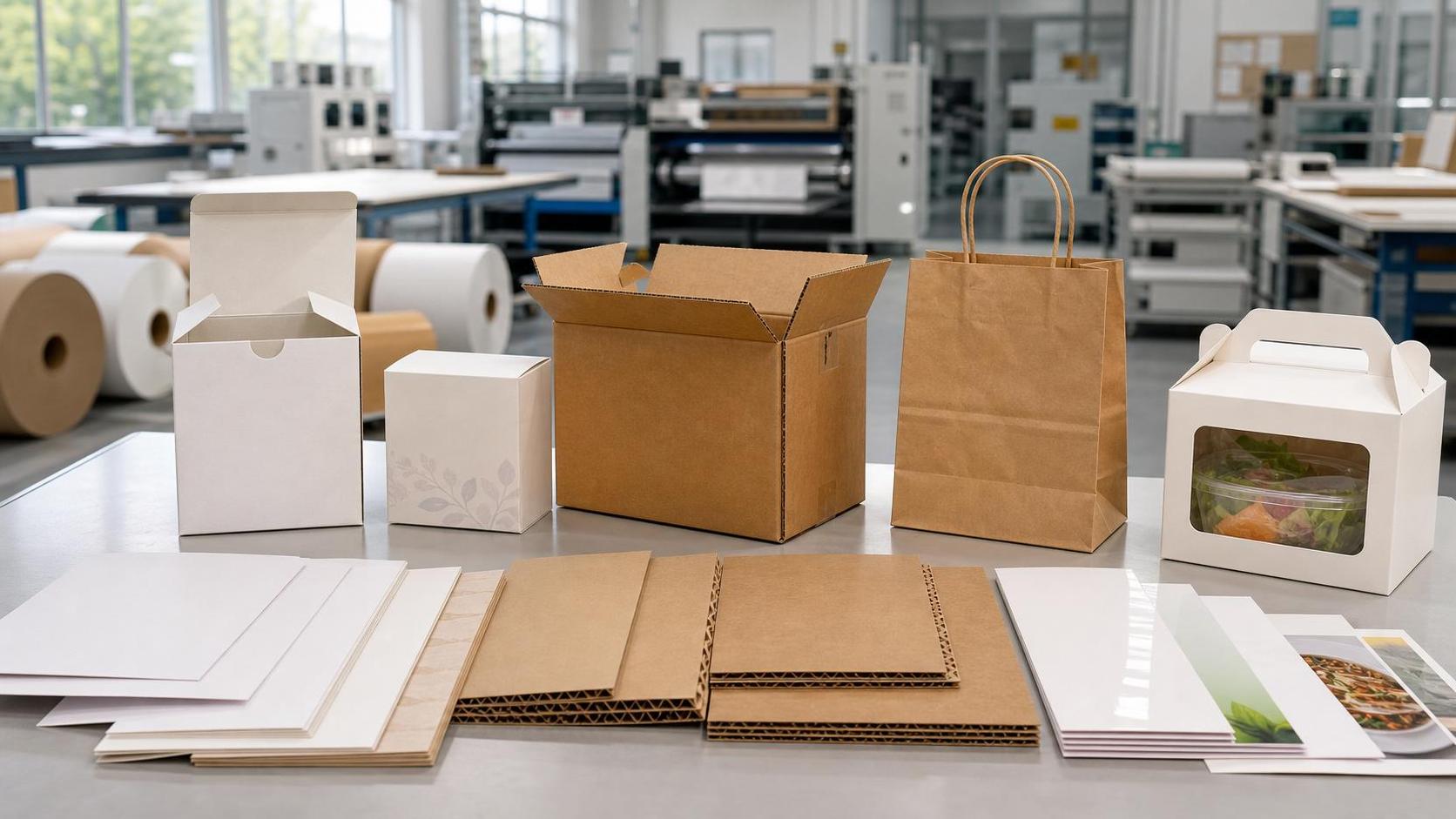
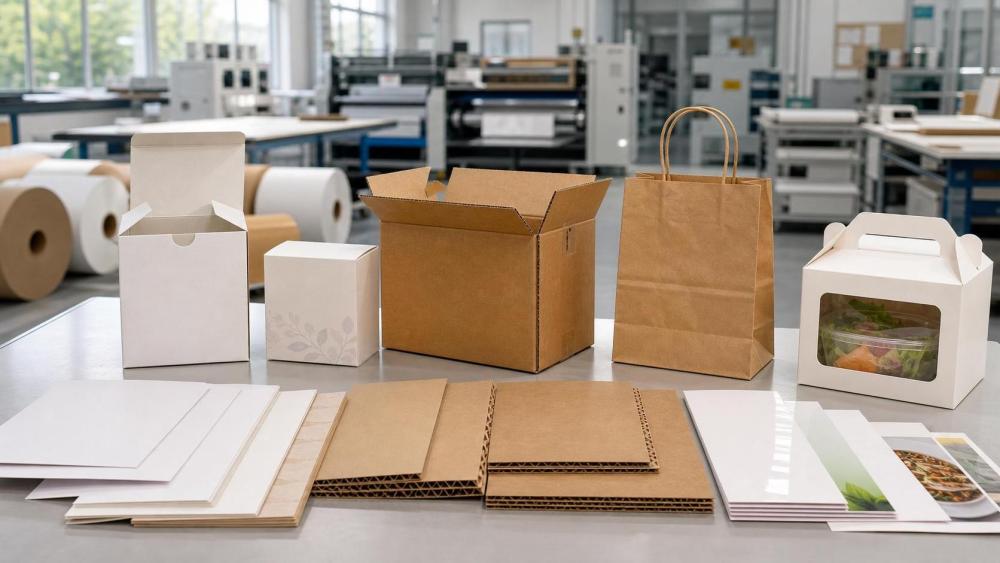
The most common grades include folding boxboard, solid bleached board, kraft paper, testliner, kraftliner, corrugating medium, duplex board, and specialty coated boards.
Folding boxboard is widely used for retail cartons. It offers good stiffness, smooth print surfaces, and reliable converting for branded packs.
Solid bleached board is often selected when appearance matters most. It supports premium graphics, clean edges, and food or cosmetics presentation.
Kraft paper and kraftliner are better known for strength. They work well in transport packaging, carrier bags, and applications where tear resistance matters.
Testliner is usually a recycled-content linerboard. It can perform very well, but the exact grade should match compression and moisture demands.
Corrugating medium forms the fluted center in corrugated board. Its runnability on corrugated board lines affects flute quality and stacking performance.
Specialty boards add functions such as grease resistance, wet strength, barrier coating, or high-end print effects. They are useful, but they also add converting constraints.
A quick grade-to-use overview
A compact table makes this paper packaging material reference easier to scan before comparing details.
How do you match the grade to the application without overcomplicating it?
A useful paper packaging material reference starts with the job, not the catalog. The question is not which grade sounds better. It is which grade carries the workload.
For shelf-ready cartons, print surface and crease quality usually come first. That pushes the decision toward folding boxboard or solid bleached board.
For e-commerce shipping, stacking strength and board integrity matter more. Here, liner and medium combinations become more important than surface smoothness alone.
For food contact or hygiene-related formats, the reference should include compliance needs, barrier demands, and how the board behaves under sealing or folding stress.
More often than not, the right choice is made by checking five points together:
- Required print result, especially for digital or high-speed inkjet workflows.
- Mechanical needs such as compression, burst, stiffness, and fold endurance.
- Converting steps including die-cutting, creasing, gluing, and embossing.
- Distribution conditions such as humidity, stacking time, and handling abuse.
- Recyclability, certification, and total cost across the packaging cycle.
This is where IPPS-style analysis becomes useful. A grade that looks fine on a specification sheet may still run poorly if ink holdout, flute formation, or glue response is unstable.
What is the real difference between print-friendly grades and strength-first grades?
This is one of the most common questions inside any paper packaging material reference, and for good reason. The trade-off is real.
Print-friendly grades usually offer smoother surfaces, better brightness, and tighter coating control. They support detailed graphics, cleaner barcodes, and more predictable ink behavior.
Strength-first grades focus on fiber toughness and structural performance. They are often better for load-bearing packs, transit cases, and rough logistics environments.
The difference becomes sharper in high-speed production. On industrial digital printers, surface energy and absorbency can affect dot gain and drying. On corrugated lines, fiber quality affects flute consistency.
Die-cutting and folder-gluing add another layer. A board can print beautifully and still crack at the crease, reject glue, or spring open after folding.
So a balanced paper packaging material reference should not rank grades in a generic way. It should clarify what performance is being optimized and what compromise comes with it.
A practical comparison lens
When comparing options, these questions usually reveal the answer faster than brand names do.
- Will the pack be judged first by appearance or by transport durability?
- Does the converting line run at speeds where cracking, warp, or glue miss become costly?
- Is moisture exposure occasional, frequent, or unavoidable?
- Does the design need premium decoration such as stamping or sharp color density?
Where do mistakes usually happen when using a paper packaging material reference?
Most errors do not come from choosing a completely wrong material. They come from using a partially correct grade for the wrong operating conditions.
One common mistake is treating basis weight as the full answer. Heavier paper does not automatically mean better packaging performance.
Another is ignoring machine interaction. A grade may pass lab checks but still behave poorly on a specific corrugator, digital press, or folder-gluer.
Barrier or coating layers also create confusion. They improve resistance, but they may change recyclability, print adhesion, or gluing response.
Recycled-content grades deserve careful reading as well. They can be strong and sustainable, yet fiber mix variation may affect consistency across runs.
The best safeguard is to read the paper packaging material reference as a process document, not just a material list.
That means checking these points before final selection:
- Humidity range during storage and transport.
- Ink system compatibility and drying behavior.
- Crease retention, fold cracking, and glue bonding curve.
- Certification needs and fiber traceability expectations.
- Whether the board structure fits actual pack geometry.
How should cost, sustainability, and performance be weighed together?
A paper packaging material reference is most useful when it avoids a single-variable decision. Lowest cost, highest strength, and best appearance rarely come from one grade.
In many cases, the better decision is not buying the cheapest paper. It is reducing failure, waste, overengineering, and repacking risk.
Sustainability also needs a wider view. Recycled content is important, but so are run efficiency, downgauging potential, and whether the final pack remains easy to recover.
IPPS often tracks this balance through the whole production chain. Paper price volatility, certification thresholds, and converting efficiency all change the real cost picture.
If the reference is being used for early-stage evaluation, a simple decision order works well:
- Define the pack’s non-negotiable performance needs.
- Shortlist grades that match printing and converting conditions.
- Compare sustainability claims with traceability and recovery reality.
- Test the best options under real production and logistics stress.
That sequence keeps the paper packaging material reference grounded in use, not assumption.
What is the best next step after reading a paper packaging material reference?
The next step is to turn the reference into a working checklist. That is where paper knowledge becomes usable packaging judgment.
Start by listing the intended format, print method, load condition, finish requirements, and sustainability target. Then map those needs against likely grades.
After that, compare not only paper names but also run behavior. In modern packaging, machine compatibility often decides whether a grade is truly efficient.
That is why a strong paper packaging material reference should sit close to intelligence on digital printing, corrugation, post-press processing, and automated converting.
In the end, the right grade is the one that holds up across design, production, logistics, and recovery. A reference is valuable when it helps make that full-path judgment clearer.
For further evaluation, build a short comparison sheet, test two or three realistic options, and watch the signals that matter most: print consistency, board stability, bonding reliability, and total material efficiency.
Industry Briefing
Get the top 5 industry headlines delivered to your inbox every morning.
Recommended News