
Post-Press Finishing Mistakes That Raise Rework Costs
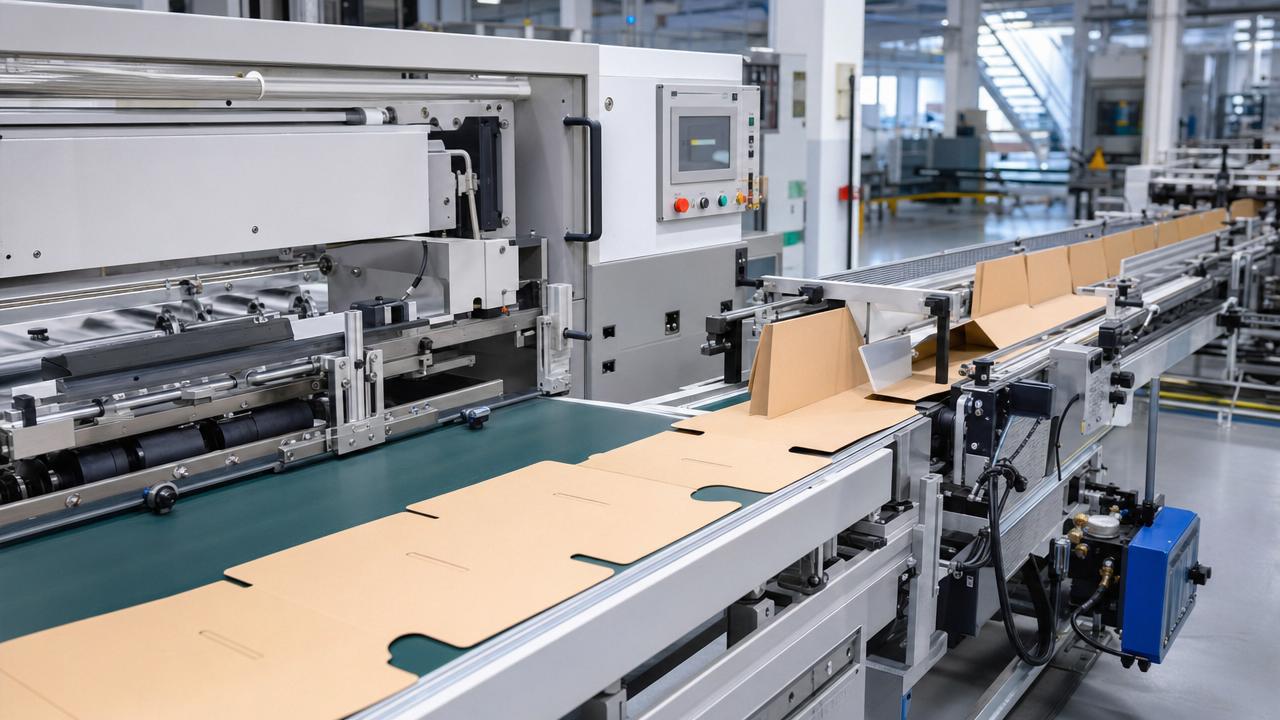
Where post-press finishing mistakes start costing more than expected
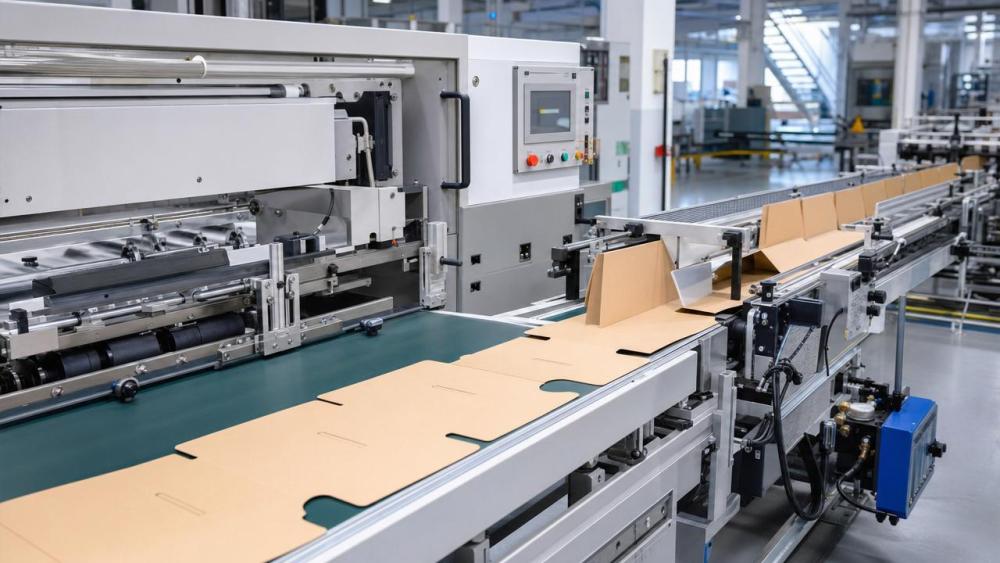
Post-press finishing rarely fails in one dramatic moment. Costs usually rise through small deviations that pass early checks and return later as waste, delay, or customer complaints.
That pattern is especially visible in packaging, commercial print, and tissue converting lines where throughput is high and tolerances are tight.
In practical post-press finishing work, the same defect can have very different consequences depending on substrate stability, print method, box geometry, and delivery pressure.
A misaligned crease on a short digital run may be recoverable. The same issue on corrugated e-commerce packaging can trigger broad rework across folding, gluing, and palletizing.
This is why post-press finishing should be judged as a connected process, not as isolated machine output.
Across the IPPS view of digital printing, corrugated forming, die-cutting, folder gluing, and automated paper conversion, the recurring issue is process mismatch.
Setup values may look acceptable on paper, yet become unstable once speed, humidity, adhesive behavior, and board memory begin interacting on the shop floor.
Better control starts with understanding which production setting creates which type of post-press finishing risk.
Different production settings create different post-press finishing priorities
A folding carton line, a heavy corrugated box line, and a tissue packaging line do not fail for the same reasons.
The materials respond differently to pressure, heat, scoring depth, and glue window timing. That changes what should be monitored first.
Short-run digital packaging usually faces more artwork variation and more frequent job changeovers. In that setting, post-press finishing mistakes often come from rushed makeready and incomplete reference resets.
Long-run corrugated production is different. There, cost escalation often begins with gradual drift, not obvious startup error.
Crease quality may weaken as board moisture changes. Die-cut registration may move as sheet flatness changes. Glue application may remain within range, yet become unreliable at stack pressure.
In premium printed work with stamping or decorative layers, post-press finishing is more sensitive to surface integrity. Minor pressure imbalance can mark the sheet, crack the coating, or reduce visual consistency.
A useful way to judge risk is to compare where value is added late in the process. The later the value, the more expensive the rework.
A quick comparison of where rework usually begins
The point is not that one environment is harder. The point is that post-press finishing control must reflect the real operating condition.
When die-cutting tolerances look acceptable but fail downstream
One of the most expensive post-press finishing mistakes is accepting die-cut accuracy without checking how the blank behaves in the next step.
A blank can pass dimensional inspection and still create folding instability, glue-line wander, or poor squareness in erected boxes.
This happens often in corrugated work because flute direction, liner stiffness, and accumulated tension history change how the board rebounds after cutting and creasing.
In folding cartons, the issue is often linked to score depth and matrix choice. A clean edge does not guarantee a predictable fold.
In actual production, a reliable check is not only sheet measurement. It is whether the blank runs at target speed in folder-gluer conditions without compensation.
If operators repeatedly slow the line or adjust side guides, the post-press finishing problem has already moved beyond cutting.
- Check crease symmetry under real folding direction, not just static sample review.
- Compare knife condition with recent substrate changes, especially recycled liner content.
- Test blanks at production speed before approving full-run stability.
- Record where correction is needed on the folder-gluer, then trace it back to die-cutting.
That trace-back matters because rework becomes far more expensive once print, embellishment, and gluing have already consumed value.
Folding and gluing errors usually come from variation, not from glue alone
A common misjudgment in post-press finishing is to blame bonding problems entirely on adhesive selection.
In many jobs, the glue is not the first issue. The real trigger is unstable presentation of the blank.
Warped board, uneven fold resistance, and inconsistent panel alignment change the contact window. That reduces bond reliability even when application volume stays within specification.
This is more common on fast-moving lines serving FMCG packaging, where throughput pressure encourages narrower setup margins.
For e-commerce corrugated boxes, the cost impact shows up later. Glued seams may hold during packing but fail under transport vibration or compression.
That is why post-press finishing quality should include transport behavior, not just line-side bond appearance.
IPPS often tracks this issue across equipment chains because gluing consistency depends on what happened earlier in printing, board forming, and die-cutting.
What to confirm before treating it as an adhesive problem
- Blank flatness at infeed and after pre-breaking.
- Panel registration under full machine speed.
- Compression dwell time against board thickness variation.
- Surface condition after coating, varnish, or digital ink coverage.
- Glue pattern position relative to fold memory and rebound.
When those checks are skipped, post-press finishing teams often overcorrect with more glue, which increases contamination, cleanup time, and hidden cost.
Decorative finishing raises risk when visual quality and structural quality diverge
Hot stamping, embossing, and specialty coatings add value late in production. They also narrow the tolerance window for post-press finishing.
A sheet can look excellent after decoration and still crack at the fold, scuff during transport, or resist proper adhesion at the seam.
This is a frequent issue in premium retail packaging where appearance approval happens before structural validation is complete.
The safer approach is to treat decorative finishing as a structural variable. Surface layers change friction, compressibility, and heat response.
In other words, post-press finishing should not separate beauty from mechanics.
A useful trial is to compare fold and bond performance before and after decoration on the same board lot. That exposes whether the premium effect is weakening conversion reliability.
The most common misreads happen when similar jobs are treated as identical
Not every repeat order is a true repeat. This is one of the most costly assumptions in post-press finishing.
Artwork may stay the same while board source changes. Box design may stay the same while flute profile shifts. Glue may stay the same while storage climate changes.
Each change can alter the conversion response enough to require new settings.
Another misread is focusing only on machine parameters. Post-press finishing performance depends just as much on upstream stability and downstream handling.
That is why a narrow equipment view often misses the root cause.
A practical way to reduce rework before it spreads across the line
Effective post-press finishing control is less about adding inspection everywhere and more about placing the right checks at the right transfer points.
The most useful checkpoints are usually between operations where defect cost multiplies fast.
For digitally printed cartons, that often means validating cut-to-fold behavior immediately after changeover. For corrugated packaging, it often means tracking moisture-linked drift during long runs.
For decorated cartons, it means confirming that appearance approval does not bypass structural validation. For tissue-related multipacks, it means testing final pack stability under realistic transport pressure.
- Create setup records that include substrate condition, not only machine settings.
- Use first-off approval that includes downstream runnability.
- Separate cosmetic acceptance from structural release criteria.
- Review rework by process link, not by department alone.
- Flag repeat jobs whenever board source, coating, or climate has changed.
That approach fits the broader IPPS perspective on smart paper-based manufacturing. Yield improves when process intelligence travels across the whole chain, not when each station optimizes alone.
If rework costs are rising, the next step is to map where post-press finishing decisions rely on assumption rather than verified production behavior.
Then compare those points against actual substrate variation, line speed, finishing sequence, and delivery conditions. That is usually where preventable cost begins.
Industry Briefing
Get the top 5 industry headlines delivered to your inbox every morning.
Recommended News