
Tissue Machinery Turnkey: Cost, Scope, and Delivery Risks
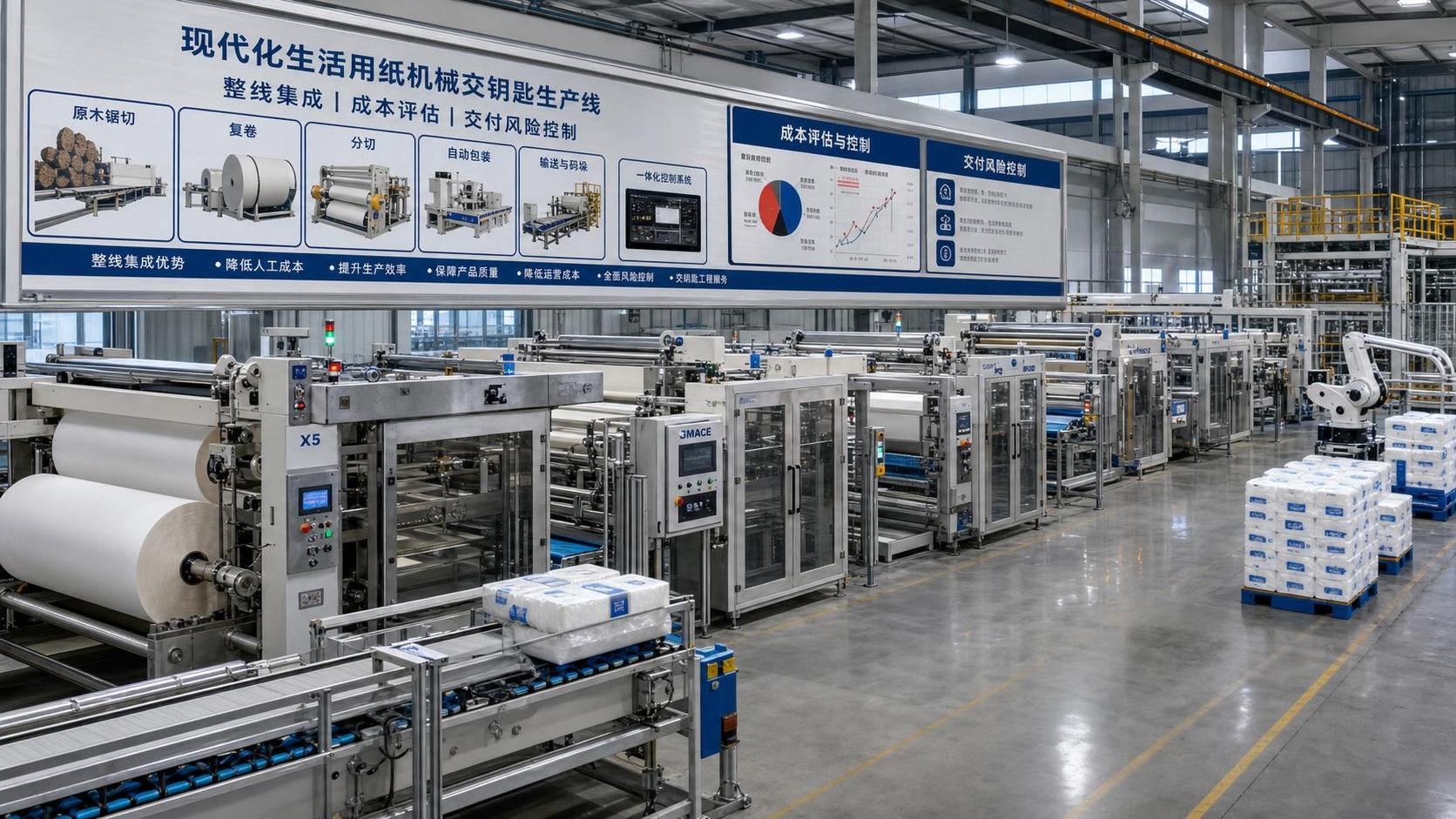
Tissue Machinery Turnkey: Cost, Scope, and Delivery Risks
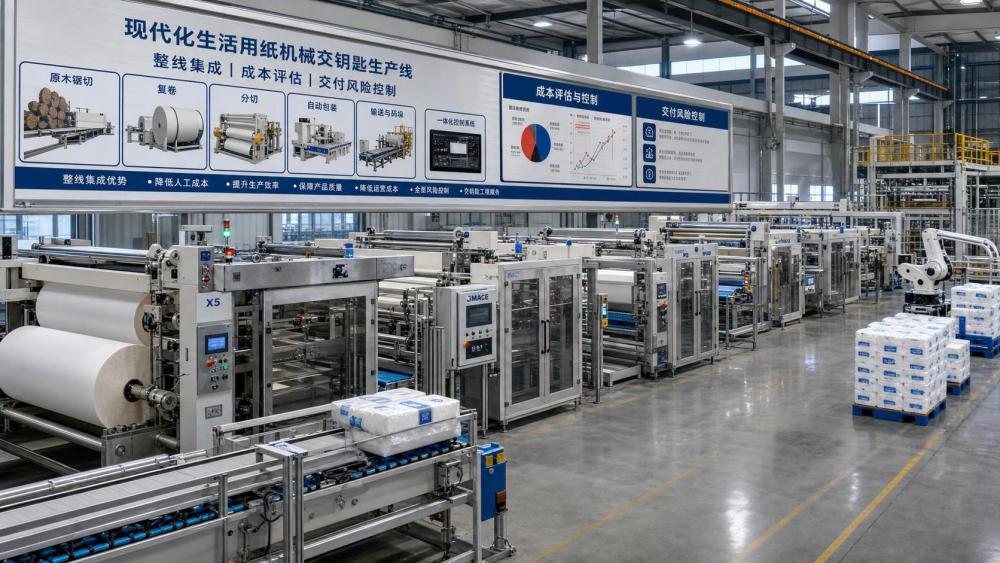
For procurement teams evaluating a tissue machinery turnkey project, the real challenge goes far beyond equipment price.
Scope clarity, utility matching, line integration, commissioning schedules, and supplier accountability shape both capital cost and delivery success.
That is why a tissue machinery turnkey proposal should be reviewed as a complete operating system, not just a machine quotation.
In practice, two suppliers can quote similar prices while offering very different project boundaries, performance assumptions, and risk exposure.
A strong comparison starts with understanding what drives cost, what belongs inside the turnkey scope, and where delivery failure usually begins.
Why tissue machinery turnkey pricing varies so much
The first cost layer is line configuration.
A basic converting line may include rewinding, slitting, log sawing, and simple packing.
A broader tissue machinery turnkey package may add embossing, lamination, core making, bundling, case packing, palletizing, and utility integration.
The second cost layer is speed and automation.
High-output lines demand better controls, stronger frames, more precise web handling, and tighter synchronization between stations.
The third layer is local adaptation.
Voltage standards, air quality, dust control, safety compliance, and operator language support can all shift total project cost.
This also means the cheapest tissue machinery turnkey offer often excludes the very items needed for real production.
Main cost drivers to compare line by line
- Parent roll width, GSM range, and finished product mix
- Rated speed versus stable commercial running speed
- Embossing style, lamination method, and roll quality targets
- Automatic packaging depth from single packs to end-of-line handling
- Control platform, servo brand, HMI language, and remote diagnostics
- Spare parts package, consumables, and training coverage
- Installation labor, commissioning days, and performance testing terms
What should be included in a real turnkey scope
A tissue machinery turnkey project should define more than machine names.
It should state exactly what the supplier will design, deliver, install, test, and hand over.
This is where many procurement problems begin.
One quotation may include interconnecting conveyors, cable trays, air piping, and start-up support.
Another may stop at standalone machines on a loading list.
Both may still be labeled tissue machinery turnkey, even when the project boundary is clearly different.
Core scope areas that should be written clearly
- Process scope: products, sizes, layer count, embossing patterns, pack formats, and output assumptions.
- Mechanical scope: each machine, conveyor, platform, guarding set, and interface point.
- Electrical scope: main cabinets, field wiring, sensors, drives, and software logic.
- Utility scope: compressed air, steam, vacuum, dust extraction, and power quality requirements.
- Site scope: foundation loads, layout approval, unloading needs, and erection responsibilities.
- Validation scope: FAT, SAT, trial materials, acceptance criteria, and documentation.
If these items remain vague, later cost additions are almost guaranteed.
Hidden costs that distort tissue machinery turnkey budgets
Recent projects show a familiar pattern.
The machine price gets attention first, while the supporting costs appear later through technical clarifications.
Those late additions can materially change return on investment.
For a tissue machinery turnkey review, the smarter move is to model the full delivered cost from the start.
Typical hidden budget items
- Ocean freight, inland transport, customs, and insurance
- Civil works, mezzanine structures, and equipment foundations
- Utility upgrades for compressors, chillers, transformers, and dust collection
- Raw material waste during tuning and ramp-up
- Interpreter support, visa delays, and extended commissioning stays
- Local safety modifications after site inspection
- Additional format parts and wear components for commercial launch
A reliable tissue machinery turnkey budget should separate machine value, project services, and buyer-side infrastructure spending.
Delivery risks that matter more than headline price
Lower pricing can be attractive, but delivery risk is often the more expensive problem.
A delayed or unstable tissue machinery turnkey line affects output, staffing plans, packaging commitments, and cash flow.
More importantly, some risks are visible early if the proposal is read carefully.
Common delivery risk signals
- Unclear responsibility for interface engineering between converting and packaging sections
- Performance promises without raw material specifications or test references
- Lead times that do not reflect supplier workload or outsourced component sourcing
- Weak FAT planning with no structured checklist or defect closure process
- Limited service network for commissioning and emergency troubleshooting
- Acceptance terms based only on speed, not waste, uptime, or pack quality
The stronger signal is not whether a supplier claims turnkey experience.
It is whether they can document accountability across design, build, integration, and start-up.
How to compare tissue machinery turnkey proposals fairly
A fair comparison requires a normalized bid matrix.
Without one, suppliers will quote to different assumptions, and price ranking becomes misleading.
For tissue machinery turnkey procurement, consistency in input data is the foundation of a usable decision.
Recommended comparison table
This kind of structure exposes where one tissue machinery turnkey quote is cheaper because it excludes real obligations.
Questions that reduce procurement risk before contract signing
The best time to control risk is before the contract is frozen.
A few direct questions can reveal whether a tissue machinery turnkey supplier truly understands execution.
- Who owns the full line layout and clash checking?
- What raw paper conditions were used for speed and quality claims?
- What buyer-side utilities must be ready before installation begins?
- What parts of the system are built in-house versus outsourced?
- What is the exact SAT acceptance formula?
- How quickly can service engineers respond during the first six months?
These questions move the discussion from brochure language to operating reality.
A practical way to make the final decision
A tissue machinery turnkey purchase should be judged on total delivered capability.
That includes stable output, product quality, predictable commissioning, and clear accountability after handover.
From recent market shifts, the stronger suppliers are not always the lowest bidders.
They are the ones whose tissue machinery turnkey proposals make scope visible, costs traceable, and delivery responsibilities measurable.
In real purchasing work, that clarity shortens internal approval cycles and lowers the chance of post-award surprises.
Before choosing a supplier, align every quote to the same technical sheet, utility checklist, acceptance standard, and project schedule.
That approach turns a tissue machinery turnkey decision from a price comparison into a controlled investment decision.
Industry Briefing
Get the top 5 industry headlines delivered to your inbox every morning.
Recommended News