
Paper Machinery Price Guide: What Drives Total Equipment Cost
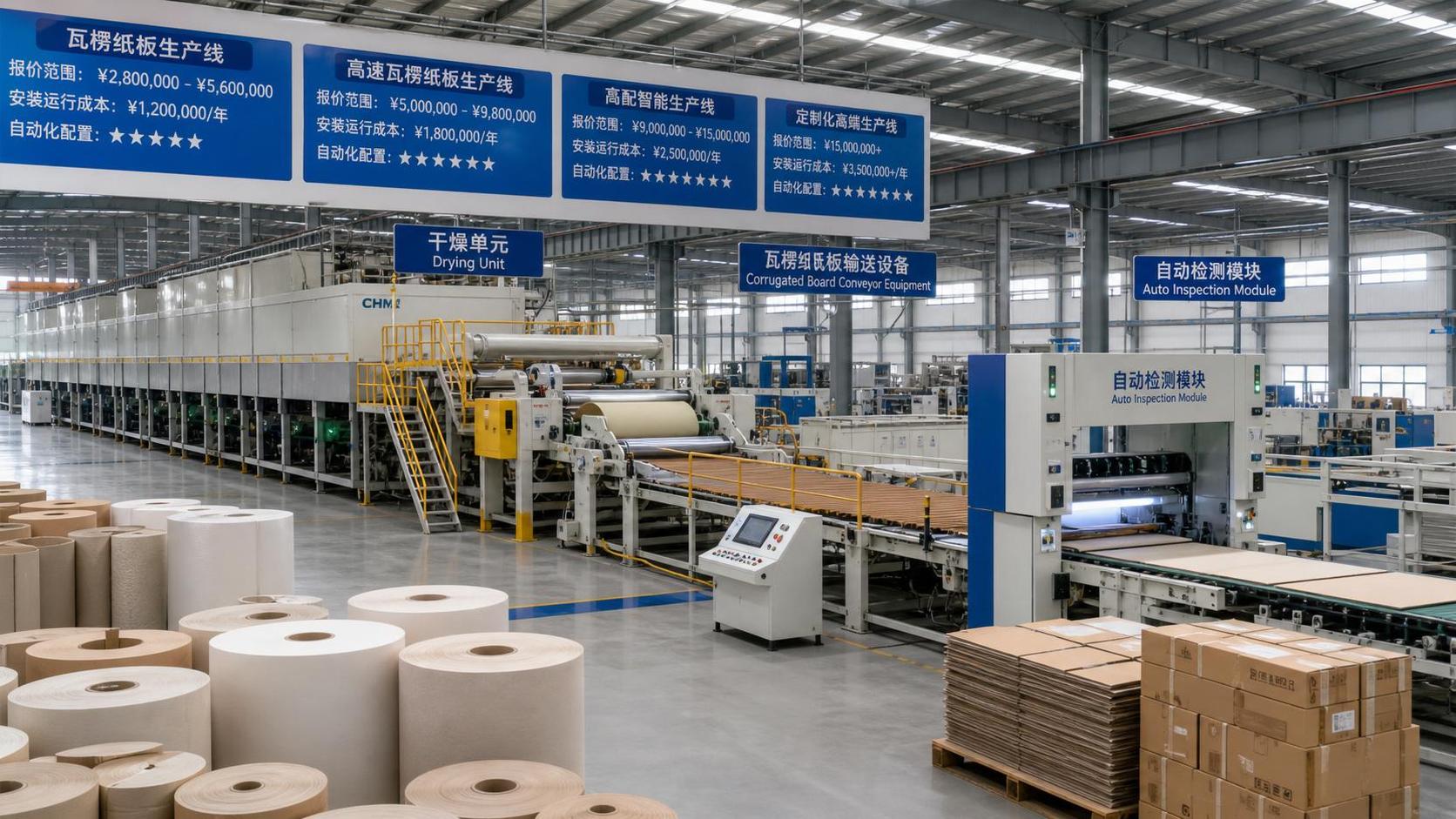
Paper Machinery Price Guide: why the machine quote is only the starting point
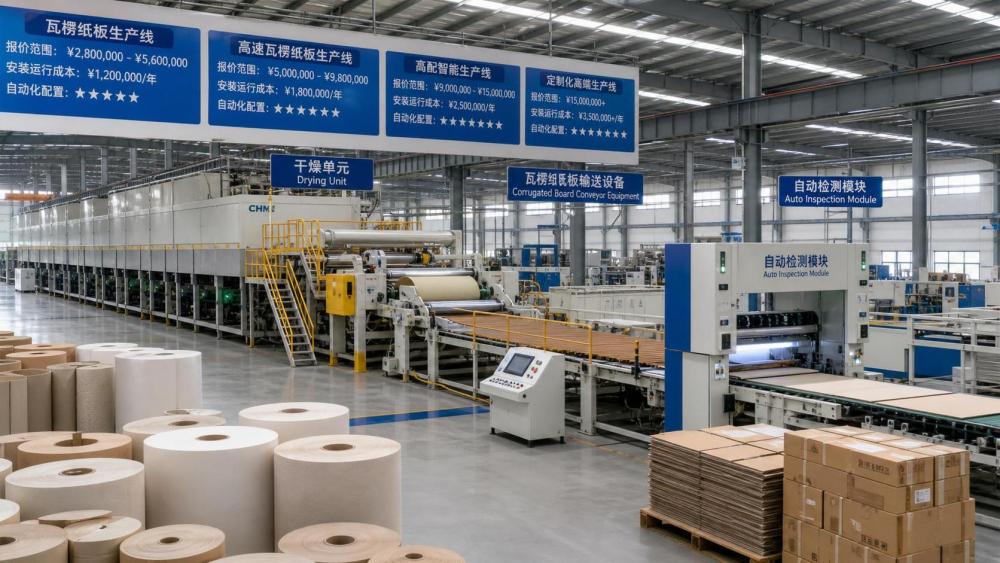
A paper machinery price guide is most useful when it explains total equipment cost, not just the supplier quote.
That matters across digital printing, corrugated board lines, die-cutting, folder gluing, and tissue converting.
In practice, the invoice for the machine frame is often only one layer of the investment.
Controls, dryers, steam systems, glue units, inspection modules, and downstream handling can change the budget quickly.
A stronger paper machinery price guide also looks at energy, compliance, yield loss, maintenance windows, and operator dependence.
That is especially relevant now, as packaging demand, e-commerce logistics, and sustainability rules reshape equipment choices.
IPPS follows these shifts closely across printheads, web tension systems, corrugation lines, post-press accuracy, and automated tissue output.
The useful question is simple: what will this asset really cost to install, run, and defend over its working life?
What does total equipment cost include beyond the list price?
The quoted machine price usually covers the base configuration.
It may exclude transport, civil work, commissioning, software licenses, local taxes, and utility upgrades.
For corrugated and tissue systems, steam, compressed air, power stability, and moisture control can be major hidden items.
For industrial digital printers, RIP workflow, color management, drying, and inspection often reshape the final number.
For die-cutting and folder gluing, feeders, stackers, stripping, blanking, and packing interfaces often sit outside the opening quote.
A reliable paper machinery price guide treats these as part of one system, not optional footnotes.
The table below gives a practical screening view before internal approval moves forward.
Why do machines with similar capacity show very different prices?
Capacity alone is a weak comparison point.
Two lines can share the same rated speed and still deliver very different economics.
One reason is automation depth.
Automatic register control, closed-loop tension, recipe memory, defect inspection, and robotic handling raise price but reduce variability.
Another reason is material range.
A line built for narrow substrate windows costs less than one designed for frequent changes in paper grade, flute type, width, or box style.
Engineering tolerance also matters.
Micron-level jetting control, precise creasing, or stable rewinding under high speed usually requires better sensors and motion systems.
This is where a paper machinery price guide should separate advertised speed from stable sellable output.
The less obvious premium often sits in uptime, waste control, and repeatability.
A quick way to compare similar-looking offers
- Check rated speed against guaranteed speed on your actual paper grades.
- Ask how long changeovers take with trained local staff, not factory demo teams.
- Review waste rates during startup, not only after stable operation.
- Confirm what inspection, data collection, and remote support are standard.
Which cost drivers have the biggest impact after installation?
Operating cost is where many approvals become difficult to defend later.
Energy is one major driver.
Drying systems, steam sections, vacuum, air compressors, and high-speed motion all reshape cost per finished unit.
Maintenance is another one.
A lower-priced line with proprietary wear parts or long service lead times can become expensive very quickly.
Labor exposure should also be reviewed carefully.
High automation may raise capex, yet it often stabilizes staffing, output consistency, and night-shift performance.
For sectors tracked by IPPS, that tradeoff is becoming more important as operations move toward digitalization and unattended workflows.
Then there is quality loss.
Rejects, board warp, poor bonding, color instability, and roll defects are not minor issues when paper prices are volatile.
A practical paper machinery price guide should convert those risks into monthly cash impact.
How do compliance and sustainability rules change the budget?
They can change it more than expected, especially in cross-border supply chains.
Machine choices now connect with energy targets, emissions controls, traceability, and certified material handling.
In packaging and paper conversion, FSC and EUDR-related documentation pressure can influence system design and reporting needs.
For some lines, lower glue consumption, reduced waste, or easier fiber recovery can justify a higher initial spend.
That is why IPPS places attention on green packaging, glue-free bonding trends, and zero-carbon operating pathways.
The relevant question is not whether sustainability adds cost.
The better question is whether a cheaper machine creates future compliance retrofit costs or weakens tender competitiveness.
More commonly, the cost difference appears in reporting capability, material flexibility, and utility efficiency.
Signals worth checking before approval
- Can the system document material batches and process data cleanly?
- Does energy consumption stay stable at normal production loads?
- Will export customers require certification-linked reporting later?
- Are retrofit options available if standards tighten?
What mistakes usually distort a paper machinery price guide?
The most common mistake is comparing equipment without aligning the production case.
A digital printer for short-run versioning should not be judged like a conventional long-run line.
A corrugator built for wide board mix should not be priced like a narrow, stable-format setup.
Another mistake is using nominal output in the payback model.
Real output depends on setup frequency, material variability, operator skill, and downstream bottlenecks.
Some teams also understate spare parts and overstate warranty protection.
Warranties rarely eliminate the cost of stoppage, expedited freight, or missed customer commitments.
The final distortion is ignoring integration risk.
If ERP links, workflow software, conveyors, or pack-out systems are immature, the cheapest quote can become the longest ramp-up.
So how should the final decision be structured?
A workable paper machinery price guide ends with a disciplined comparison model.
Start with one defined production scenario.
Use actual paper grades, job mix, utility rates, staffing assumptions, and target waste levels.
Then compare each offer on total delivered capability, not on entry price alone.
It helps to score the decision in five blocks.
- Acquisition cost: machine, options, logistics, installation, utilities.
- Operating cost: energy, labor, consumables, waste, service.
- Output quality: sellable throughput, repeatability, defect control.
- Compliance readiness: traceability, sustainability fit, upgrade path.
- Business resilience: local support, spare parts access, software continuity.
This approach is especially useful when evaluating printing, corrugated, post-press, and tissue assets on the same capital agenda.
The right answer is not always the lowest quote.
It is the option with the clearest cost logic, the least hidden exposure, and the strongest fit with future production conditions.
As a next step, build a side-by-side cost sheet that includes capex, startup loss, annual utilities, planned maintenance, and compliance-related upgrades.
That turns a paper machinery price guide from a reading exercise into a decision tool.
Industry Briefing
Get the top 5 industry headlines delivered to your inbox every morning.
Recommended News