
How to Choose Polymer Gaskets for Heat, Pressure, and Media
How to Choose Polymer Gaskets for Heat, Pressure, and Media
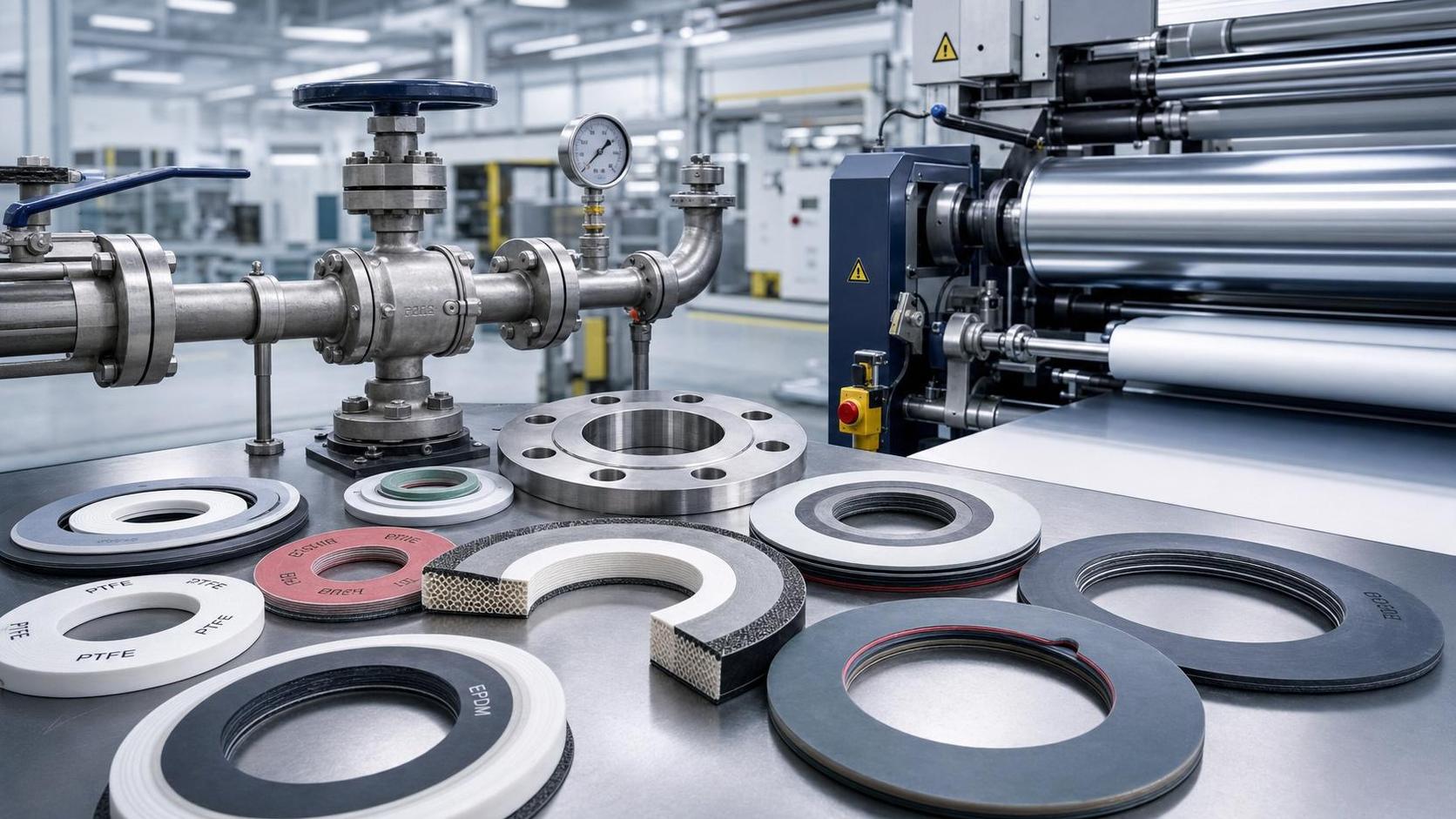
Selecting the right Polymer Gaskets is critical when equipment must withstand high heat, fluctuating pressure, and aggressive media.
For printing, corrugated, post-press, and tissue machinery, the wrong seal often becomes a hidden production risk.
Leaks, compression set, chemical swelling, and sudden blowout usually start with a mismatch between material and service conditions.
That is why Polymer Gaskets should be evaluated as part of system reliability, not as a low-cost consumable.
A solid selection process compares thermal limits, pressure profile, media compatibility, joint design, and maintenance expectations together.
This guide focuses on practical decision points that help narrow gasket options for demanding industrial systems.
Start with the Real Operating Window
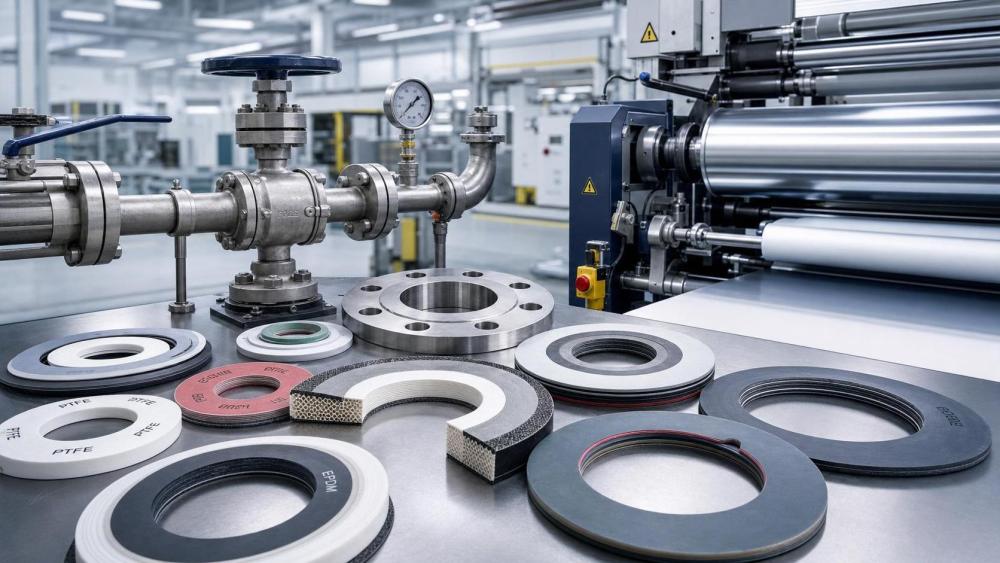
Before comparing materials, define the actual operating window instead of relying on nominal machine ratings.
Many Polymer Gaskets fail during startup, washdown, pressure spikes, or thermal cycling rather than during steady-state operation.
In corrugated and tissue systems, steam, condensate, glue chemistry, cleaning agents, and pulsing vacuum often overlap in one line.
In digital printing and post-press equipment, ink, solvent, coating, compressed air, and heated rollers create mixed service demands.
A useful starting checklist includes:
- Maximum continuous temperature and short-duration peak temperature.
- Normal operating pressure and upset pressure.
- Pressure type, including static, pulsating, vacuum, or cycling service.
- Media composition, concentration, contamination, and cleaning exposure.
- Flange finish, bolt load, gasket thickness, and available compression.
This baseline matters because Polymer Gaskets do not fail from one variable alone.
Most failures come from combined stress, where heat weakens the material, pressure drives creep, and media accelerates degradation.
Match Polymer Type to Heat and Chemical Load
Material family is the core decision in Polymer Gaskets selection.
Each polymer handles temperature, media, and compression differently, even when two options look similar on a supplier sheet.
EPDM works well with hot water, steam traces, and many polar chemicals.
It is often a practical choice for washdown zones, water circuits, and some paper-process utilities.
NBR is commonly selected for oils and some hydraulic applications, but it is less attractive where heat and oxidizing chemicals dominate.
FKM is widely used when elevated temperature and aggressive fluids are both present.
This can fit solvent-heavy cleaning stations, ink systems, and hot process interfaces.
PTFE-based Polymer Gaskets stand out for broad chemical resistance and low reactivity.
They are often chosen where media uncertainty is high or contamination control is especially important.
Silicone handles temperature swings well, but mechanical strength and media resistance must still be checked carefully.
That makes it useful in some hygienic or light-pressure zones, but less universal for severe sealing duty.
A practical material screen
- Use EPDM for hot water and many aqueous chemicals.
- Use NBR for oils where temperature remains moderate.
- Use FKM for heat plus solvent or chemical exposure.
- Use PTFE when chemical compatibility is the first concern.
- Use silicone only after confirming pressure and tear limits.
From a decision standpoint, Polymer Gaskets should be screened first by the most damaging media, not the most frequent one.
Pressure Resistance Depends on More Than Material
Pressure capability is often misunderstood in gasket selection.
Polymer Gaskets do not perform by material grade alone.
Sealability also depends on compressive strength, creep resistance, flange rigidity, surface finish, and bolt load retention.
This is especially relevant in heated frames, steam joints, pump covers, glue manifolds, and vacuum boxes.
Soft materials conform well at low load, but they may extrude under rising pressure.
Harder materials resist blowout better, but they can underseal if the flange load is uneven.
In real equipment, the best choice is often a balanced structure rather than the hardest compound available.
Expanded PTFE, filled PTFE, reinforced sheets, and engineered elastomer blends are common ways to improve pressure behavior.
When pressure fluctuates, fatigue resistance and recovery after compression become just as important as static sealing force.
Questions worth asking suppliers
- What is the recommended seating stress for this gasket?
- How does the material behave after thermal aging?
- Is there test data for pressure cycling or vacuum service?
- What thickness is recommended for this flange geometry?
- Is anti-extrusion support needed at higher pressure?
Evaluate Media Compatibility in the Full Process Context
Chemical compatibility tables are useful, but they are only a first filter.
Polymer Gaskets may look compatible with a fluid at room temperature and still degrade quickly at process temperature.
Concentration changes also matter.
A diluted wash chemical during production can become much harsher during cleaning, recirculation, or evaporation.
In print and packaging lines, media exposure can include inks, UV fluids, starch adhesive, hot melt residues, alkaline detergents, and oxidizing disinfectants.
That mix changes the risk profile significantly.
A good review covers normal media, upset media, cleaning media, and any cross-contamination event that may occur during maintenance.
This is where PTFE-based Polymer Gaskets often gain attention, because they tolerate broad chemical ranges with fewer surprises.
Still, chemical resistance alone should not override concerns about creep, cold flow, and flange design.
Use a Selection Matrix Instead of a Single Rating
A useful gasket decision process compares several factors at once.
That approach is more reliable than choosing Polymer Gaskets from maximum temperature alone.
This type of matrix helps compare Polymer Gaskets objectively across different machine sections and suppliers.
Look at Failure Mode, Not Just Purchase Price
Low gasket cost can hide high system cost.
If Polymer Gaskets fail in a steam chest, coating loop, or adhesive circuit, the resulting downtime usually outweighs the part price quickly.
A better comparison looks at total operating impact.
- How often will the gasket be replaced?
- What is the cost of shutdown and restart?
- Does failure create product contamination risk?
- Does leakage affect operator safety or housekeeping?
- Can one gasket grade be standardized across similar assets?
This wider view often changes the ranking between candidate Polymer Gaskets.
A more expensive material may still be the better decision if it extends service life and reduces unplanned intervention.
Final Decision Framework for Polymer Gaskets
A practical selection flow keeps the decision grounded.
- Define worst-case heat, pressure, and media exposure.
- Eliminate materials with clear thermal or chemical mismatch.
- Check flange load, thickness, and pressure behavior.
- Review maintenance pattern and consequence of failure.
- Request application-specific data, not generic brochure claims.
- Validate final Polymer Gaskets with a controlled field trial.
In practice, the most reliable Polymer Gaskets are the ones chosen against real process conditions and verified under service.
That matters even more as industrial equipment runs faster, hotter, and with tighter uptime targets.
For machinery linked to printing, corrugation, post-press, and tissue converting, gasket performance has a direct effect on efficiency and yield.
The strongest decision is rarely based on one headline property.
It comes from matching Polymer Gaskets to the full operating window, expected failure mode, and maintenance strategy.
With that approach, gasket selection becomes a controlled engineering choice instead of a recurring source of leakage and downtime.
Industry Briefing
Get the top 5 industry headlines delivered to your inbox every morning.
Recommended News