
How Much Labor Can Packaging Automation Equipment Save?
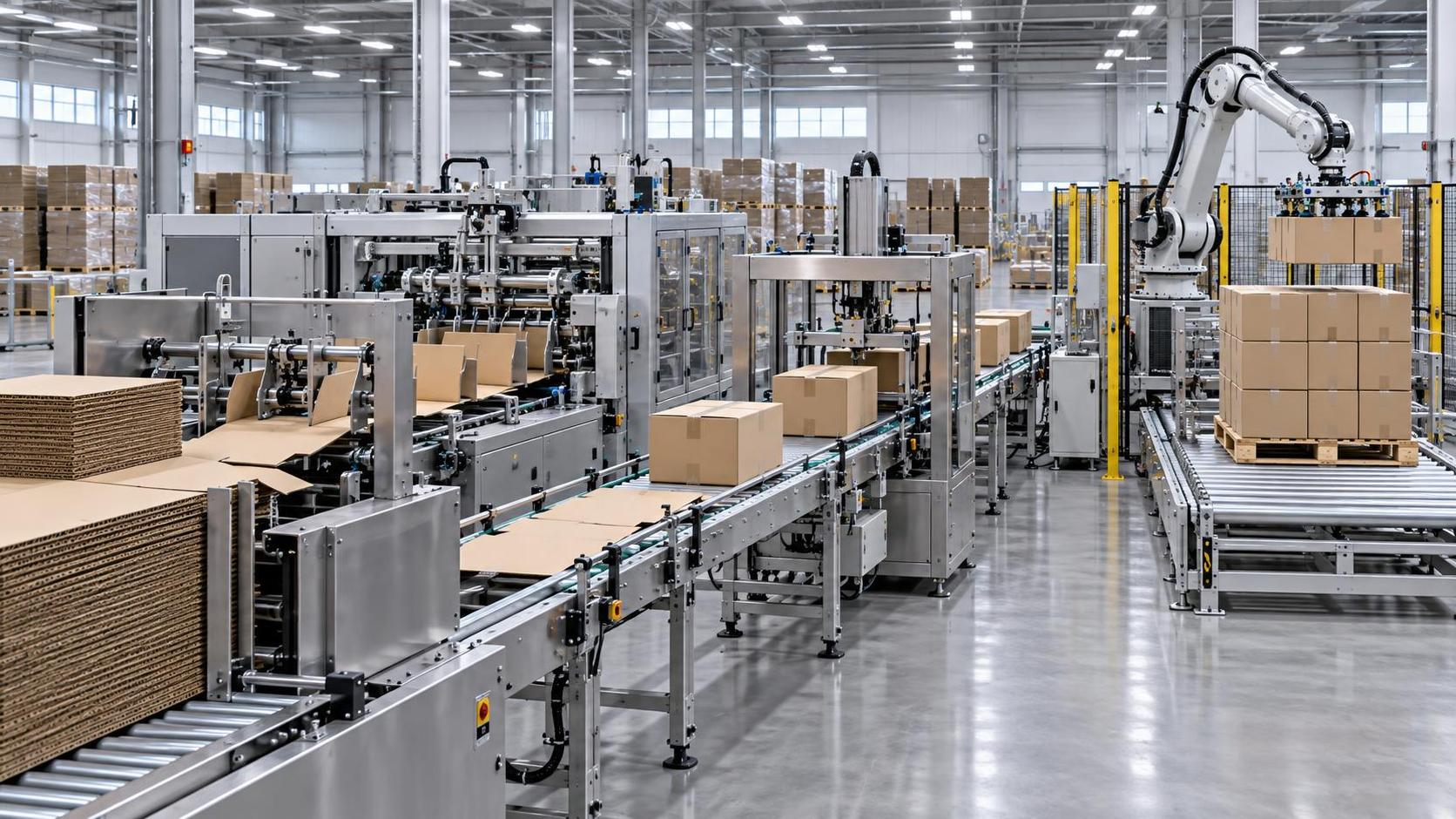
Packaging automation can save substantial labor, but the useful question is not “How many people can be removed?” It is: which manual tasks can be eliminated, reassigned, or made more predictable without creating a new bottleneck elsewhere?
For a corrugated converter, carton plant, print finishing operation, or FMCG packaging line, automation usually delivers its strongest labor benefit in repetitive handling: feeding blanks, folding, gluing, case packing, palletizing, inspection, and material transfer. The saving may appear as fewer operators per shift, less overtime, fewer temporary workers during peak periods, or more output from the same team. It can also reduce the hidden labor spent correcting poor folds, clearing jams, sorting rejects, and repacking damaged products.
The answer therefore depends on the packaging format, product mix, line stability, shift pattern, and the amount of manual intervention required today. A highly repetitive, stable carton run can be automated very effectively. A short-run operation with frequent size changes or irregular products may still benefit, but the labor saving will be limited unless changeovers and material flow are addressed at the same time.
Where Packaging Automation Saves the Most Labor
Not every task deserves automation first. The best candidates are tasks that are repetitive, physically demanding, sensitive to pace, and easy to define in a repeatable sequence. In paper and board packaging, labor demand often accumulates at the points where flat material becomes a finished, shippable product.
Automatic folder gluers are a clear example. A manual or semi-manual operation may need people to guide blanks, apply or monitor adhesive, correct folding issues, count bundles, and move finished cartons. A properly configured folder gluer can carry out much of this work continuously. The remaining labor shifts toward setup, in-process verification, adhesive management, and handling unusual faults.
That distinction matters. Automation rarely makes skilled people unnecessary. It reduces the amount of time skilled people spend doing work that a stable machine sequence can perform more consistently.
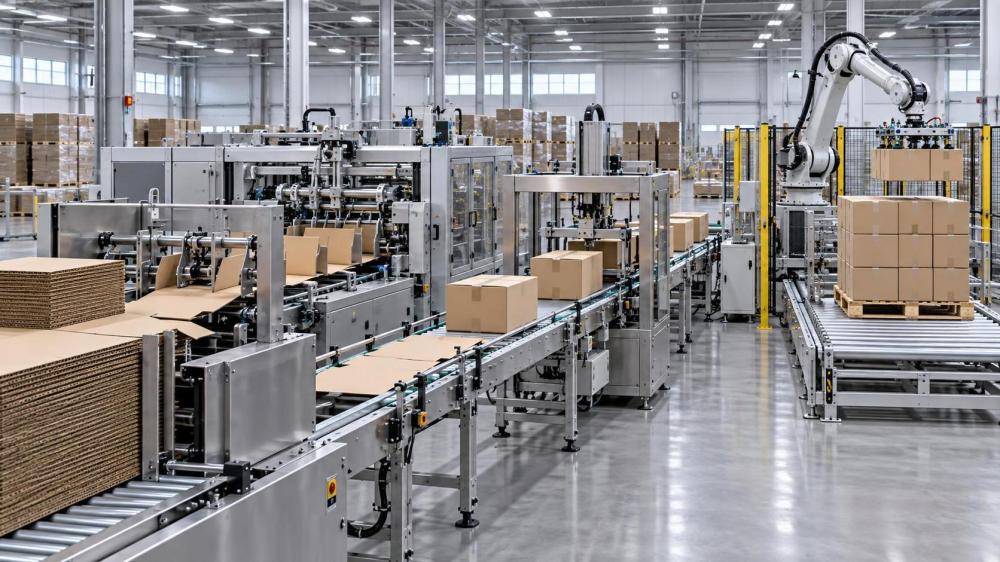
Labor Savings Are Usually Constrained by the Slowest Handoff
A high-speed machine does not automatically create a high-efficiency line. If operators still have to fetch materials, separate mixed blanks, wait for curing, hand-stack finished packs, or repeatedly clear poorly presented product, the automation may simply move labor to another part of the process.
This is why equipment should be assessed as a flow, not as a standalone purchase. Consider a die-cutting machine feeding a folder gluer. Increasing die-cutting output may reduce labor at the cutting stage, yet create more manual sorting and staging before folding. Likewise, automating carton erection can leave a packaging team waiting if product delivery from upstream remains inconsistent.
Before estimating savings, map the work around the machine as closely as the work on the machine. Include:
- Material loading and replenishment
- Product orientation and spacing
- Changeovers between sizes, board grades, or artwork versions
- Manual quality checks and reject handling
- Finished-goods stacking, wrapping, labeling, and transport
- Cleaning, glue management, planned maintenance, and fault recovery
The strongest projects remove several connected handling steps. A weak project automates one motion while leaving operators to manage every condition that makes the motion unreliable.
How to Measure the Real Labor Benefit
Headcount alone is a poor measurement. It can hide overtime, idle time, rework, and the labor needed to support an unstable line. A better approach is to compare the full labor requirement for a defined output before and after automation.
Start with a representative product family, rather than the easiest product or the worst one. Record the people required at each stage, the normal shift output, planned breaks, routine stoppages, scrap handling, and time spent on changeovers. Then model the automated process using the same output requirement.
The comparison should separate three outcomes:
Direct labor removed from repetitive work
This is the most visible result. It includes fewer people needed to feed, fold, pack, carry, stack, or palletize product. It is meaningful, but it should not be treated as the only value.
Labor redeployed to higher-value work
Operators may move from repetitive handling to setup, preventive maintenance, quality investigation, material preparation, or supervision of more than one process. This can be operationally valuable even when the workforce does not shrink.
Labor avoided as volume grows
Many plants introduce automation because manual staffing cannot scale smoothly during seasonal demand, promotional runs, or growth in e-commerce formats. In this case, the equipment prevents the need to add labor at the same rate as output. That can be more practical than attempting to recruit and train additional staff for repetitive line work.
A useful calculation is labor hours per accepted unit, case, or pallet. “Accepted” is important: output that later requires rework, repacking, or disposal should not be counted as a labor success. Track this measure alongside waste, downtime, and changeover time. A labor-saving system that produces frequent rejects or needs constant intervention may not improve total operating performance.
Product Mix Decides Whether Full Automation Makes Sense
Stable, high-volume packaging formats are generally the easiest to automate. Regular carton dimensions, consistent board quality, predictable glue patterns, and repeatable product placement allow equipment to operate with fewer adjustments. Typical examples include established FMCG cartons, standard shipping cases, and high-throughput tissue packs.
Variable work needs a different approach. Short digital-print runs, seasonal graphics, mixed SKU packs, premium structures with delicate finishes, and frequent format changes can all make fully fixed automation less attractive. The problem is not that automation cannot handle variation; it is that every variation has a setup, programming, tooling, or verification cost.
For these operations, modular or semi-automated equipment can be the better answer. A machine may automate the repetitive core task while preserving an operator-controlled step for product presentation, special inserts, or final inspection. This can still remove the most tiring work without forcing every job into an inflexible line design.
Digital print systems are relevant here because they shorten the distance between artwork changes and printed output. However, faster digital production only creates labor savings downstream when finishing, folding, sorting, and packing can keep pace with the added job variability. The print workflow and the physical packaging workflow should be planned together.
Common Mistakes That Make Labor-Saving Projects Underperform
Buying for rated speed instead of usable output. Equipment speed is only useful when materials, operators, downstream handling, and maintenance routines support it. A realistic assessment focuses on sustained good production, not the fastest possible cycle.
Ignoring changeovers. A line can look highly automated during a long run but lose much of its benefit when operators spend significant time resetting guides, tools, glue systems, labels, or software. Plants with frequent product changes should put changeover design near the top of the equipment evaluation.
Automating poor-quality inputs. Warped blanks, inconsistent corrugated board, unreliable crease lines, variable moisture, or inaccurate die-cutting will create stoppages further downstream. Automation exposes upstream variation quickly. Improving material control and process consistency may be necessary before a labor-saving target is realistic.
Leaving end-of-line work manual. Finished cartons or tissue packs still need to be accumulated, packed, identified, and moved. A fast folder gluer followed by manual stacking can create an exhausting bottleneck. End-of-line integration often determines whether labor savings are sustained through an entire shift.
Counting only operator reduction. A system may need fewer line operators but require stronger maintenance, controls, and process knowledge. The right question is whether the overall labor model improves, not whether every role disappears.
What to Confirm Before Selecting Equipment
Packaging automation should be selected around the work that must be repeated reliably, not around a generic promise of “unmanned production.” Build the specification from real jobs and real constraints.
- Identify the product families that consume the most labor hours and separate stable formats from highly variable ones.
- Map each manual touchpoint from incoming board or product to the finished pallet or dispatch unit.
- Determine whether delays come from machine operation, material presentation, quality variation, changeovers, or end-of-line handling.
- Define the expected role of operators after installation: setup, monitoring, replenishment, inspection, maintenance support, or exception handling.
- Evaluate integration with upstream printing, corrugation, die-cutting, and downstream logistics before finalizing a machine configuration.
For paper-based packaging, material behavior deserves particular attention. Web tension, board flatness, crease accuracy, adhesive performance, and moisture condition can all influence machine stability. A corrugated line, die-cutter, and folder gluer should not be evaluated as isolated assets when their tolerances directly affect one another.
Industry intelligence platforms such as Global Industrial Print & Paper Systems can be useful when the decision involves multiple process stages, especially digital printing, corrugated board forming, post-press equipment, and automated tissue production. The practical value lies in comparing how process variables influence throughput, yield, finishing quality, and automation readiness across the line.
Labor Saving Is a Workflow Result, Not a Machine Feature
Packaging automation equipment can reduce manual work significantly where tasks are repetitive and the operating conditions are controlled. Its larger benefit often comes from making output more consistent, reducing dependence on difficult-to-staff positions, and allowing production teams to handle higher volumes without adding the same amount of manual effort.
The best investment is rarely the machine with the highest headline speed. It is the configuration that removes the most unnecessary touches while fitting the plant’s product mix, material quality, changeover frequency, and end-of-line capacity. Measure labor per accepted unit, examine every handoff, and decide where people add judgment rather than simply motion. That is where automation produces durable operational value.
Industry Briefing
Get the top 5 industry headlines delivered to your inbox every morning.
Recommended News