
E-commerce Packaging Trends Reshaping Fulfillment in 2026
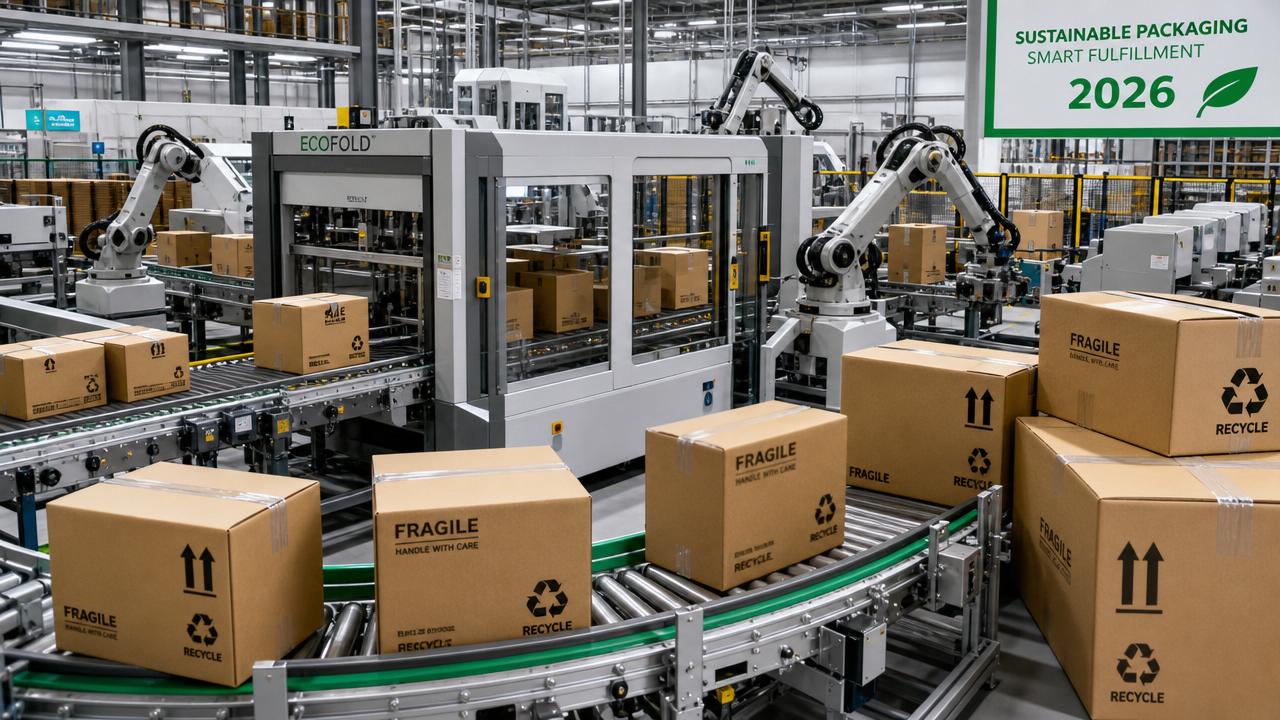
E-commerce packaging is moving from cost center to fulfillment strategy
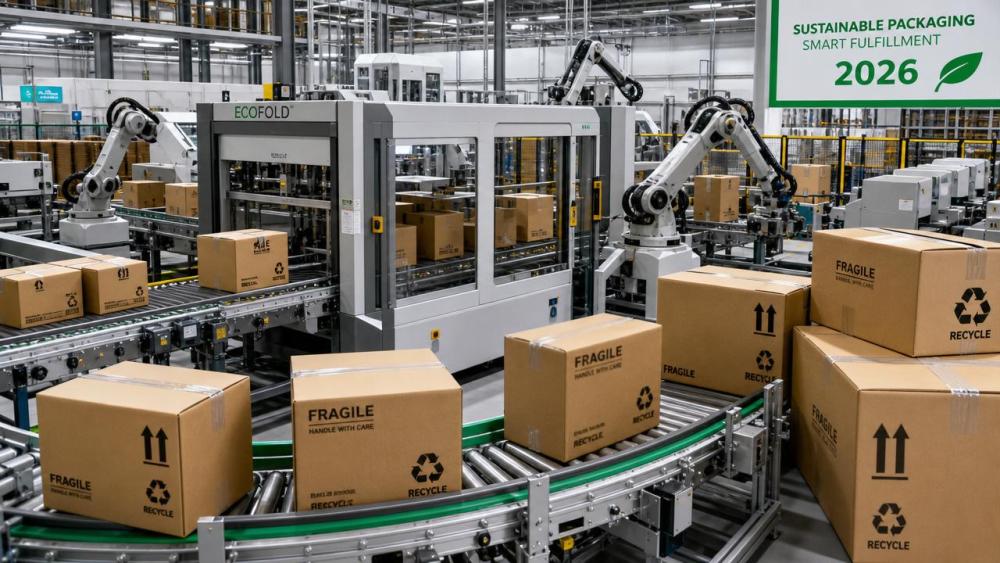
In 2026, e-commerce packaging sits closer to the center of operational strategy than many expected even two years ago.
It now shapes freight cost, automation stability, damage rates, unboxing perception, and compliance readiness at the same time.
That shift matters across the broader industrial chain, from digital print systems to corrugated board lines and high-speed folder gluers.
The more visible signal is that e-commerce packaging decisions are no longer made around material price alone.
They are increasingly tied to throughput, SKU diversity, return risk, sustainability claims, and how fast packaging formats can change.
For organizations watching fulfillment economics closely, this is less a packaging story than a systems story.
Packaging design, print flexibility, board performance, and finishing precision are becoming interdependent parts of one response model.
That is also why industry observers such as IPPS continue tracking not just materials, but the machinery logic behind modern paper-based commerce.
Why the change is becoming obvious now
Several pressures are converging, and each one pushes e-commerce packaging toward higher intelligence and tighter execution.
Order fragmentation keeps rising.
Brands need shorter runs, more campaign variation, and packaging that works across online channels without slowing fulfillment lines.
At the same time, parcel networks are punishing empty space.
Dimensional pricing makes oversized cartons more expensive, even when material consumption seems manageable on paper.
Regulation is another force.
FSC requirements, EUDR scrutiny, recycled content targets, and demands for measurable carbon reporting are moving into practical procurement criteria.
Then comes automation.
A box that looks sustainable but runs poorly through erecting, gluing, scanning, or palletizing equipment creates hidden costs very quickly.
- Smaller batch sizes increase demand for digital print adaptability.
- Faster fulfillment raises tolerance requirements for board forming and box conversion.
- Higher return expectations elevate the value of protective yet lightweight paper-based formats.
- Sustainability disclosure pushes e-commerce packaging toward traceable fiber and lower-emission production.
What looks like a market trend is really a coordinated tightening of cost, technology, and compliance conditions.
The format of e-commerce packaging is becoming more adaptive
One of the clearest developments is the move away from standardized box portfolios that stay unchanged for long periods.
In their place, companies are building packaging ranges that respond to product mix, shipping distance, and channel-specific presentation needs.
This is where digital printing technology starts to matter beyond graphics alone.
High-speed inkjet systems make variable artwork, event-driven designs, and versioned instructions easier to deploy without plate dependency.
That flexibility supports e-commerce packaging strategies built around personalization, rapid testing, and regional compliance labeling.
More importantly, adaptive packaging is also structural.
Corrugated board lines are under pressure to deliver lighter formats without losing crush strength or stacking reliability.
A/B/C/E-flute selection now has stronger links to parcel handling behavior, automation speed, and void reduction targets.
In practical terms, e-commerce packaging is being redesigned as a dynamic operating asset, not a fixed consumable.
Where adaptation is showing up first
Automation is changing what good packaging means
For years, packaging quality was judged mainly by appearance and transit protection.
In 2026, e-commerce packaging is also judged by machine behavior.
Boxes must open consistently, feed accurately, hold crease integrity, accept print clearly, and close at speed with minimal adhesive variation.
This is especially relevant in environments moving toward unmanned or lightly staffed production cells.
IPPS has long framed this as a smart manufacturing issue rather than a single-machine issue.
That perspective fits today’s reality.
Micron-level inkjet behavior on corrugated surfaces, glue bonding curves, and tension control inside converting lines now affect fulfillment performance downstream.
A visually attractive box that warps under variable humidity or misfolds at line speed weakens the entire e-commerce packaging system.
More operations are therefore prioritizing process capability over isolated material claims.
That includes cleaner data between print, die-cutting, and folder gluer stages, where small tolerances create large downstream differences.
Sustainability is becoming more technical and less symbolic
Another major shift is that sustainability in e-commerce packaging is becoming harder to simplify into marketing language.
Claims now need operational proof.
Can the board use less fiber without raising damage rates?
Can inks and coatings preserve recyclability?
Can glue usage be reduced or replaced in selected applications?
Can sourcing pass increasingly strict traceability checks?
The strongest responses are technical, not rhetorical.
They include paper molding expansion, glue-free bonding exploration, lighter corrugated constructions, and digitally managed production waste reduction.
This is where the print and paper equipment ecosystem has strategic relevance.
Efficient corrugators, precise die-cutting systems, and stable folder gluers do not just improve output.
They make lower-impact e-commerce packaging commercially repeatable, which is far more valuable than one-off green pilots.
Signals worth tracking over the next planning cycle
- Rising preference for mono-material paper-based packaging in replace-plastic programs.
- More scrutiny on fiber origin, recycled content, and export documentation readiness.
- Broader adoption of right-sized e-commerce packaging to reduce cubic shipping waste.
- Stronger demand for equipment that supports lower labor dependency and tighter process traceability.
The impact is spreading across the entire paper-based value chain
The effects of these shifts do not stay inside the packaging department.
They move upstream into machinery decisions and downstream into customer experience and reverse logistics.
Digital printer platforms gain importance where packaging variation is frequent and turnaround time is commercially sensitive.
Corrugated board producers face growing pressure to align strength profiles with parcel realities rather than legacy board assumptions.
Post-press systems need higher precision because poorly controlled converting errors erase gains made in print or material optimization.
Even adjacent sectors feel the influence.
Consumer hygiene and tissue packaging formats are also being evaluated through the lens of automated packing, lightweight paper use, and waste visibility.
The broader lesson is that e-commerce packaging now acts as a demand signal for smarter paper-based manufacturing.
That is exactly the kind of cross-process pattern IPPS is positioned to observe, interpret, and connect.
What deserves attention before the next investment cycle
The immediate question is not whether e-commerce packaging will keep changing.
It is where attention should go before those changes become expensive to catch up with.
A useful starting point is to compare packaging performance across four dimensions at once.
- Format agility: how quickly packaging can be revised for new SKUs or channels.
- Automation fitness: how reliably boxes run through print, converting, packing, and scanning stages.
- Material efficiency: whether board weight, flute design, and protective structure are still economically balanced.
- Compliance resilience: whether sourcing and environmental claims can withstand stricter verification.
From there, the better next step is usually phased rather than dramatic.
Track damage and void-space data more closely.
Review whether current e-commerce packaging formats fit automated fulfillment goals.
Compare digital print readiness, corrugation capability, and post-press tolerance against planned packaging complexity.
The organizations that respond early will not simply buy new packaging.
They will build a more adaptive paper-based fulfillment system around the realities of 2026.
That is where e-commerce packaging stops being a box and starts becoming infrastructure.
Industry Briefing
Get the top 5 industry headlines delivered to your inbox every morning.
Recommended News