
Industrial Microwave Technology Trends in 2026
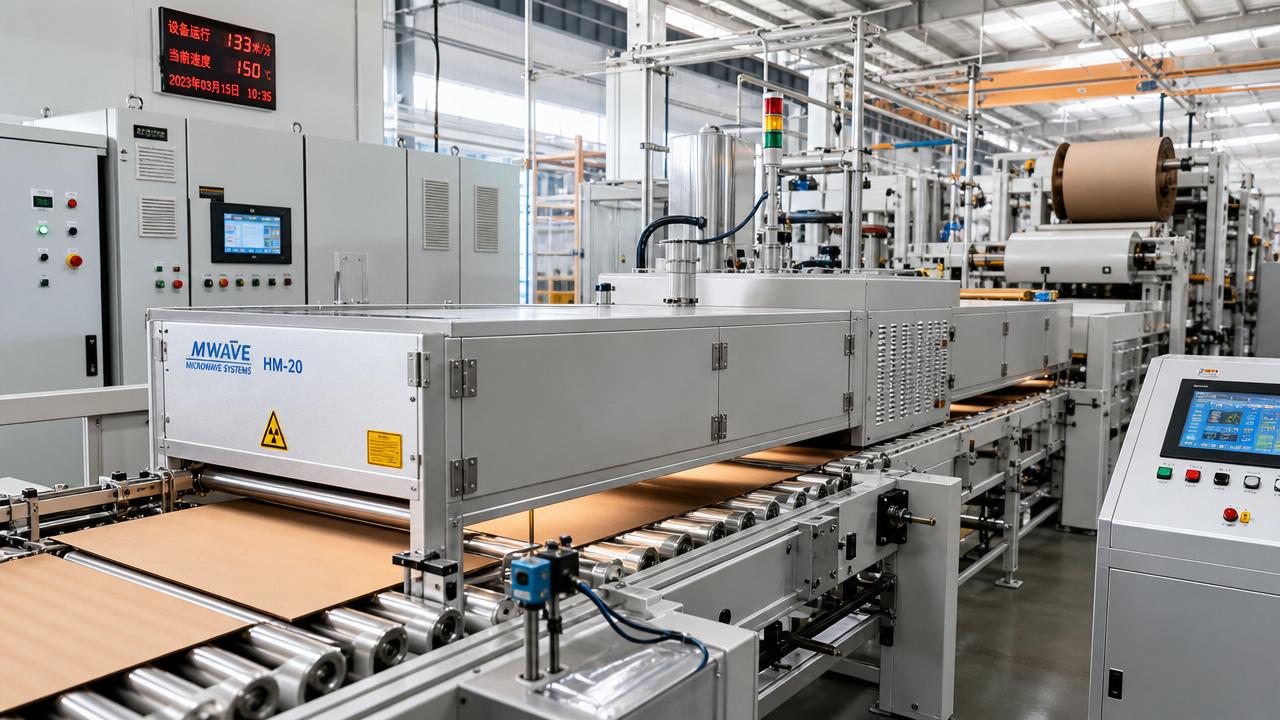
Industrial Microwave Technology moves from niche efficiency tool to strategic production asset
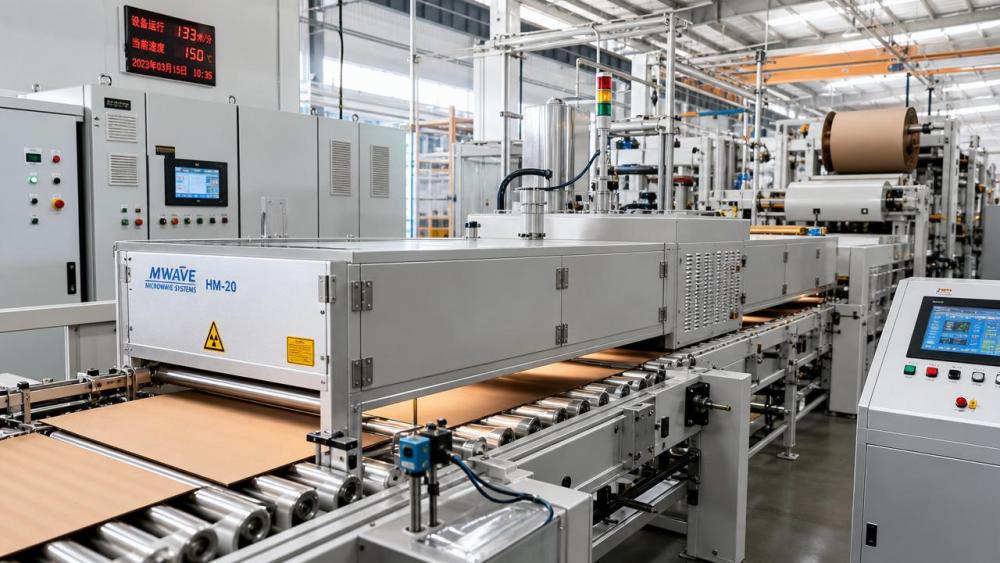
Industrial Microwave Technology is entering 2026 with a different role than it had only a few years ago.
It is no longer viewed only as a faster heating option.
It is increasingly evaluated as a control technology for throughput, energy balance, and material consistency.
That shift matters across the broader industrial landscape, especially where moisture, bonding, coating, curing, and temperature uniformity influence product value.
The signal is particularly strong in paper, packaging, converting, engineered materials, and hybrid production lines.
These are sectors where speed alone is not enough.
What now counts is stable quality at higher line rates, lower energy waste, and tighter digital process visibility.
For IPPS and its view of smart printing, corrugation, post-press, and tissue machinery, this evolution fits a larger pattern.
Production systems are becoming more intelligent, more sustainable, and less tolerant of thermal inefficiency.
Industrial Microwave Technology sits directly inside that transition.
Why the market is paying closer attention in 2026
Several pressures are converging at the same time.
Energy price volatility remains a board-level concern in many regions.
At the same time, output expectations continue to rise because supply chains are pushing for shorter lead times and more flexible production.
This is especially visible in packaging systems serving e-commerce, FMCG, and hygiene products.
In those environments, conventional heating often creates bottlenecks that are difficult to solve with speed increases alone.
Industrial Microwave Technology becomes attractive because it heats volumetrically rather than only from the surface.
That changes drying curves, curing times, and moisture control behavior in ways conventional systems cannot always match.
More importantly, recent system design improvements are reducing one of the old concerns.
Microwave platforms are becoming easier to integrate with sensors, PLC environments, MES layers, and predictive maintenance tools.
Once connected, Industrial Microwave Technology stops being a stand-alone machine feature.
It becomes part of a measurable production architecture.
The strongest demand drivers are practical, not theoretical
- Moisture-sensitive materials need tighter control to reduce warping, weak bonding, and downstream defects.
- High-mix production requires faster switching between substrates, adhesives, coatings, and thickness profiles.
- Carbon and energy reporting now influence investment timing, especially in export-oriented operations.
- Automation programs need heating systems that respond quickly to recipe changes and real-time feedback.
- Labor constraints favor technologies that stabilize processes instead of depending on manual thermal adjustment.
The real shift is happening in application design
The most meaningful change is not simply that more factories are buying microwave equipment.
It is that Industrial Microwave Technology is being specified earlier in line design.
That changes procurement logic, plant layout, and performance expectations.
In printing and paper-related systems, this has clear implications.
Digital printing depends on precision drying and substrate stability.
Corrugated converting depends on controlled moisture movement and bond reliability.
Folder-gluing and post-press steps depend on consistent adhesive behavior at line speed.
Tissue processing adds another layer, where softness, hygiene, and energy intensity must be balanced carefully.
This is why Industrial Microwave Technology is gaining attention beyond traditional food or chemical applications.
It is now intersecting with web handling, coating chemistry, sustainable packaging, and intelligent converting.
A more digital Industrial Microwave Technology stack is taking shape
Another notable development is software maturity.
Earlier microwave systems often delivered speed, but not always transparent control logic.
That is changing as machine builders link field data with closed-loop temperature, moisture, and power tuning.
This is highly relevant to IPPS-style smart manufacturing thinking.
In paper-based production, performance is rarely determined by one station alone.
It depends on the relationship between tension control, material behavior, energy input, and finishing precision.
Industrial Microwave Technology is becoming valuable because it can now participate in that wider orchestration.
When connected to machine vision, inline sensors, and quality analytics, it helps reduce variation before defects become visible.
This improves OEE in a more durable way than simple line acceleration.
The technologies getting more attention
- Hybrid microwave and hot-air systems for balanced surface and core treatment.
- Inline dielectric sensing to match power delivery with substrate condition.
- Recipe-driven controls for frequent product changes.
- Condition monitoring for magnetrons, solid-state components, and shielding integrity.
- Energy dashboards linking thermal performance with sustainability reporting.
The impact extends beyond energy savings
Energy efficiency remains a major reason to evaluate Industrial Microwave Technology.
Yet the stronger business case in 2026 often comes from quality economics.
A small improvement in moisture uniformity or adhesive curing can unlock fewer stoppages, lower scrap, and more reliable finishing.
That effect compounds in fast-moving lines.
In corrugated packaging, weak heat management can distort board performance before die-cutting even starts.
In digital printing, uneven drying can compromise image integrity and convertibility.
In tissue machinery, overexposure can affect texture and resource intensity at the same time.
This is why Industrial Microwave Technology should be judged as a value-chain lever, not a utility upgrade.
The broader the line integration, the more visible that leverage becomes.
What deserves closer scrutiny before any roadmap is set
Not every installation will produce the same return.
The quality of the business case depends on material behavior, process bottlenecks, and control readiness.
The best starting point is usually not the machine brochure.
It is a disciplined review of where thermal inconsistency is already eroding output or margin.
From recent deployment patterns, several checkpoints stand out.
- Map heat-sensitive defects by station, substrate, and shift pattern before comparing technologies.
- Test Industrial Microwave Technology against actual product recipes, not ideal lab assumptions.
- Verify integration with existing controls, safety protocols, and data collection layers.
- Measure value through scrap reduction, speed stability, and quality consistency, not energy alone.
- Consider regulatory and sustainability reporting requirements that may affect future operating economics.
This more grounded approach matters because 2026 investment decisions are less forgiving of isolated upgrades.
Capital is moving toward systems that support digitalization, lower emissions, and resilient production quality together.
The next phase will favor selective, data-backed adoption
Industrial Microwave Technology is unlikely to replace every conventional heating method.
The stronger pattern is selective expansion into processes where precision and responsiveness are becoming more valuable than thermal familiarity.
That includes advanced packaging, intelligent converting, engineered paper applications, and high-speed lines under sustainability pressure.
For organizations tracking the future of printing and paper systems, the message is clear.
Industrial Microwave Technology should be watched where material science, automation, and eco-efficiency intersect.
That is where competitive advantage is likely to emerge first.
A practical next move is to review current lines for hidden thermal bottlenecks, compare substrate-specific performance data, and build a phased evaluation plan.
The companies that do this well in 2026 will not simply install new heating capacity.
They will redesign how heat, data, quality, and sustainability work together.
Industry Briefing
Get the top 5 industry headlines delivered to your inbox every morning.
Recommended News