
What determines e commerce packaging system pricing for retailers
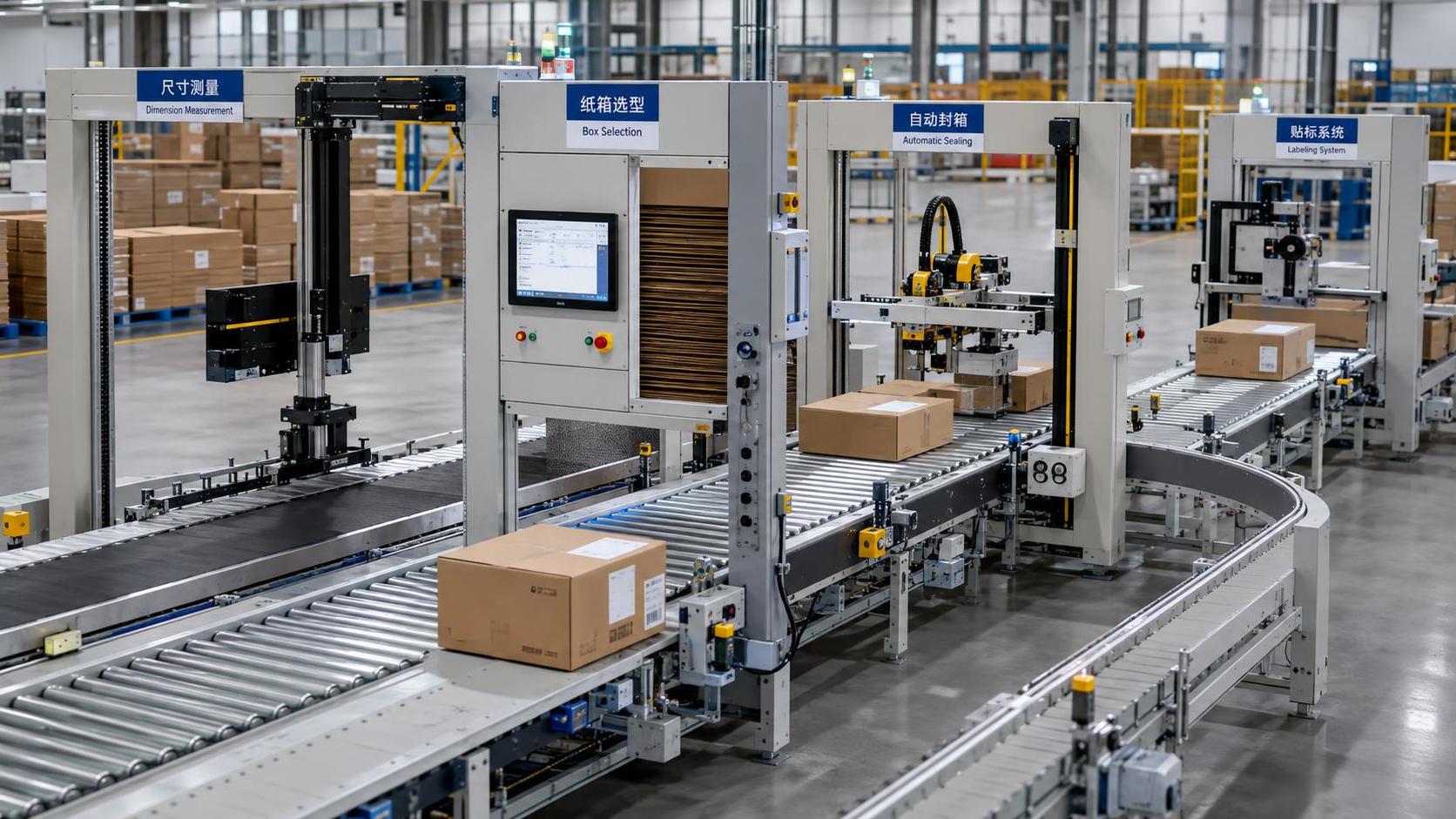
Retailers asking about e commerce packaging systems price are usually trying to answer a larger question: how much packaging capability should be brought in-house, and what will that capability actually cost once it is running?
The purchase price matters, but it rarely explains whether a system is economical. A low-cost machine can become expensive when it creates labor bottlenecks, requires frequent size changes, produces excess void fill, or cannot maintain uptime during peak fulfillment periods. Conversely, a more automated line may be difficult to justify for a retailer with volatile order volumes, a broad product mix, or a warehouse layout that cannot support continuous flow.
For procurement teams, pricing should be evaluated as a match between the system's operating model and the retailer's order profile. The relevant variables are not only machine speed and specification. They include package formats, product protection requirements, carton supply strategy, labor availability, data integration, maintenance coverage, and the cost of changing the process later.
System scope determines the starting price
An e-commerce packaging system can describe anything from a bench-mounted carton sealer to a fully integrated line that measures an item, selects or creates a right-sized box, inserts documentation, applies labels, closes the parcel, and diverts it to shipping. Comparing prices without defining that boundary is one of the most common procurement errors.
A simple semi-automatic station has a relatively limited capital requirement because operators still perform much of the work: selecting cartons, placing products, adding dunnage, folding flaps, and moving parcels onward. The equipment cost may be modest, but labor remains a major part of the cost structure. This approach can fit lower-volume operations or fulfillment environments where order composition changes constantly.
At the other end, automated packaging systems combine conveyor handling, dimensional data, carton cutting or selection, sealing, printing, label application, and software controls. Their quoted price reflects several linked systems rather than one machine. A retailer may also need electrical work, compressed air, guarding, conveyor modifications, warehouse management system integration, operator training, and commissioning support. These costs should be requested as distinct line items, not left inside a broad “installation” allowance.
Procurement should therefore begin with a functional definition: which tasks must the system perform, which tasks can remain manual, and where in the fulfillment flow the system begins and ends. A quote for automated cartonization is not comparable with a quote for a conveyorized packing bench simply because both are described as packaging automation.
Throughput is important, but usable throughput sets the value
Vendors often describe capacity in packages per hour or cycles per minute. Those figures are useful only when the tested product mix resembles the retailer's own order profile. A line running repeatable, similarly sized parcels will perform differently from one handling mixed apparel, fragile cosmetics, boxed electronics, irregular home goods, and multi-line orders.
The system price rises when it must handle more variation reliably. Features that may add cost include automatic size recognition, multiple carton magazines, dynamic routing, automatic void-fill dispensing, print-and-apply labeling, vision inspection, and controls capable of managing exceptions. The expense can be justified where variation is high enough that manual packing creates material waste, damage claims, or inconsistent shipping presentation.
Yet maximum output should not become the procurement target by itself. A system sized for a short peak season may spend most of the year operating well below its productive range. It may also require a continuous supply of pre-arranged cartons and items to achieve its rated speed. If upstream picking, replenishment, or sortation cannot feed it consistently, the packing system will wait idle while its fixed costs continue.
- Use normal-day, promotional-period, and peak-day order volumes separately.
- Measure order lines per shipment, item dimensions, product weight, and the share of single-item versus multi-item orders.
- Identify the percentage of orders that need manual checks, gift inserts, special handling, or protective packaging.
- Ask suppliers to explain how their stated throughput changes when box sizes, order composition, or materials are changed.
A retailer does not need the fastest line available. It needs a line whose sustained output, changeover time, and exception handling fit the actual fulfillment operation.
Carton strategy can outweigh equipment savings
Packaging material is often the largest recurring cost around an e-commerce packaging system. This is why a less expensive machine designed around a narrow range of standard cartons can be more expensive over time than a system that reduces box volume or uses fewer packaging formats.
Retailers commonly face a tradeoff between standardization and right-sizing. A limited carton range simplifies purchasing, storage, replenishment, and packing training. It can also improve equipment reliability because the system handles predictable materials. The downside is excess air in shipments, additional paper fill, greater dimensional shipping charges where applicable, and lower protection for products that move inside an oversized box.
Right-size packaging equipment can reduce those costs by cutting corrugated material to the required dimensions or by selecting a closer-fit format. However, this equipment introduces other requirements: dependable corrugated supply, material specifications compatible with cutting and creasing, scrap handling, maintenance for blades or forming components, and adequate floor space for material feed. Its financial case is strongest when shipment sizes vary enough that standard cartons routinely create avoidable material and freight expense.
Material quality belongs in the price discussion as well. Corrugated board grade, flute selection, moisture resistance, print requirements, adhesive performance, and recycled-content targets can affect both operating reliability and unit cost. A packaging line that works well with one board specification may become less reliable if purchasing substitutes a lower-cost material without validating it. Procurement, packaging engineering, and operations should agree on approved material ranges before contract award.
Automation changes labor costs, but also changes labor risk
Labor savings are often used to support automation proposals, but they should be treated carefully. A system does not eliminate labor simply because it closes cartons automatically. Operators may still be required to replenish blanks, load consumables, remove jams, process exceptions, inspect parcel quality, replenish void fill, and manage product flow into the line.
The better question is how automation changes the labor model. Some systems reduce the number of people needed at each pack station. Others allow the same team to process more orders while reducing repetitive work. In facilities with difficult hiring conditions, a stable automated process may have value beyond a direct headcount calculation. In smaller operations, however, the labor released by automation may not be fully redeployed, weakening the projected savings.
System design also determines whether labor becomes more flexible or more constrained. A bank of manual or semi-automatic stations can be scaled up and down with order volume. A centralized high-speed line may be efficient at steady volume but create a single operational dependency. If it stops, a retailer needs a documented fallback process and enough equipment or space to keep orders moving.
Digital printing and presentation features should earn their place
Retailers increasingly consider on-demand graphics, variable messaging, shipping information, or branded outer packaging. Digital printing can avoid some of the inventory and lead-time burden associated with large runs of preprinted cartons. It is especially relevant when campaigns change frequently, when regional messaging differs, or when packaging carries variable information.
That flexibility has a cost. Industrial print capability requires printheads, ink management, data handling, color control, cleaning routines, and maintenance support. Printing onto corrugated material can also be affected by surface characteristics, board quality, and production speed. A procurement decision should separate the value of branded or variable print from the value of basic automation. Combining them in one project may be appropriate, but only when the retailer can identify a clear operational or commercial reason for both.
Premium finishes, complex die-cut forms, and elaborate structural designs can also raise packaging costs through tooling, conversion complexity, lower packing speed, and higher material consumption. They may be appropriate for selected categories or customer segments. They are rarely a sound default for high-volume parcels where damage prevention, shipping efficiency, and easy returns matter more than visual impact.
Integration and service are frequently underbudgeted
The quoted equipment price may exclude the work needed to make a packaging system useful in a live fulfillment environment. Software integration can be substantial when the system needs order data, shipping rules, item dimensions, routing information, label formats, or carton-selection logic from a warehouse management system, enterprise platform, or carrier application.
Clarify who owns each integration task. Retailers should establish whether the supplier provides a standard interface, whether middleware is required, what data fields must be available, and how changes to order rules will be managed after go-live. A technically capable machine can underperform if the data controlling it is incomplete or late.
Service coverage also affects the real e commerce packaging systems price. Automation depends on mechanical components, controls, sensors, adhesives, belts, cutting tools, and consumables. The practical cost of downtime is often much higher than the cost of a spare part. Before selecting a supplier, procurement should examine response commitments, remote diagnostic capability, local technical coverage, recommended spare-parts stock, preventive maintenance requirements, and the availability of trained operators.
A system with a lower initial quote may carry greater exposure if critical components have long lead times or service requires travel from another region. This risk increases for fulfillment sites that must meet tight carrier collection windows.
Compliance and sustainability requirements influence specification
Packaging choices increasingly need to satisfy internal sustainability goals, customer expectations, and market-specific material requirements. For paper-based systems, retailers may need traceability for fiber sourcing, documentation from material suppliers, and confidence that packaging claims can be supported. Requirements vary by sales region and product category, so they should be defined before selecting board grades, coatings, adhesives, inks, and protective materials.
Sustainability does not automatically mean using the lightest possible package. Reducing material while increasing damage rates, return volumes, or product loss can make the outcome worse commercially and environmentally. Packaging equipment should be assessed against a balanced set of measures: material use per shipment, pack density, product protection, recyclability of the final pack, and the need for additional plastics or void fill.
Equipment designed for a wider range of recyclable paper materials may cost more than a narrowly optimized solution, but it can reduce future material-switching constraints. The right level of flexibility depends on how settled the retailer's packaging specifications are and how often they expect to revise them.
Build the comparison around total operating cost
A useful procurement model should compare suppliers over an expected operating period rather than ranking them by capital price. The model does not need false precision. It should make the assumptions visible and show which ones materially change the decision.
- Capital equipment, installation, site preparation, controls, and integration.
- Packaging materials, consumables, scrap, and storage requirements.
- Labor by role, including replenishment, exception handling, supervision, and maintenance.
- Energy use, compressed air, cleaning, and planned service costs.
- Expected downtime, spare-parts needs, and fallback packing capacity.
- Freight effects from package dimensions and fill rates.
- Damage, return, and customer-service costs linked to packaging performance.
- Expansion costs if volume, SKU mix, or fulfillment locations change.
Run the model under more than one operating condition. A base case may favor a simple system, while peak-volume and high-variation cases may reveal the value of greater automation. It is also useful to test the impact of material-price changes and lower-than-expected labor savings, since both can materially alter the investment case.
The most defensible purchase decision is usually the one with transparent limits. Retailers should know which order characteristics the system handles well, which orders will be diverted to manual packing, what service support is required to protect operations, and what future changes would trigger another investment. That discipline produces a more reliable packaging cost decision than any headline equipment price alone.
Industry Briefing
Get the top 5 industry headlines delivered to your inbox every morning.
Recommended News