
Sustainable Paper Packaging Cost Tradeoffs in 2026
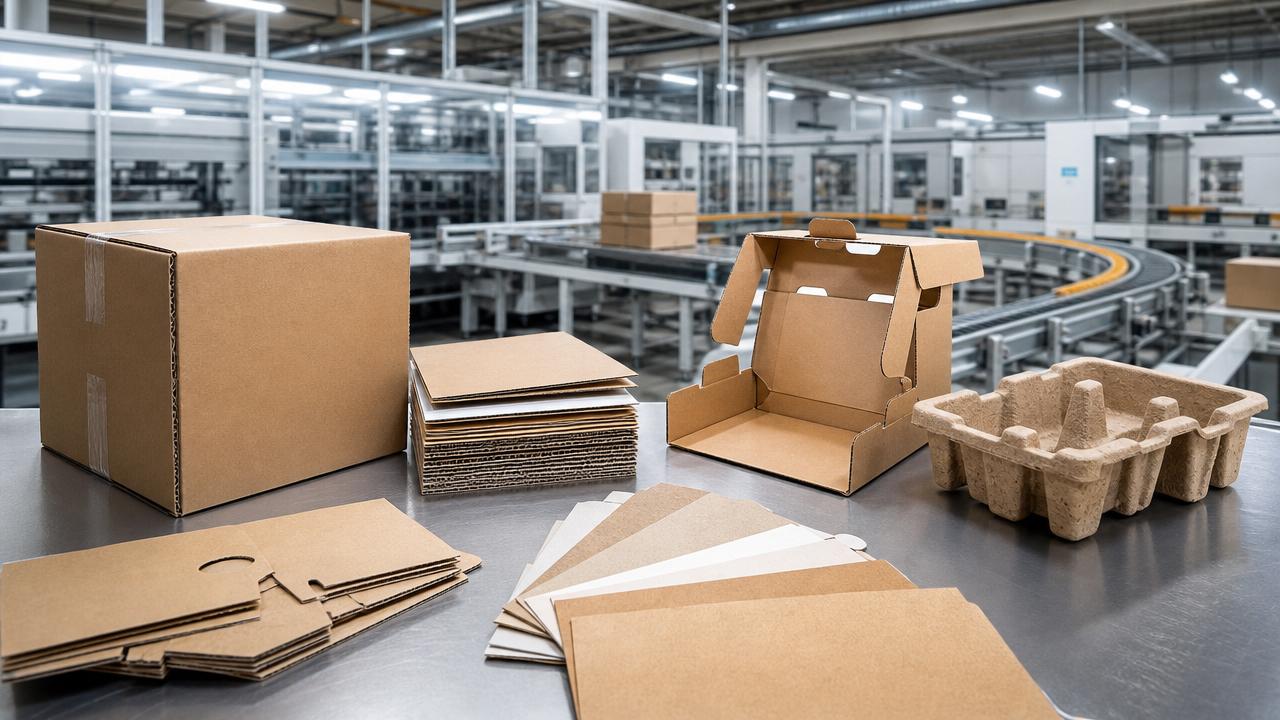
In 2026, sustainable paper packaging is no longer judged by unit price alone. For finance approvers, the real question is how material shifts, compliance pressure, equipment efficiency, and supply chain volatility combine to affect total cost, margin protection, and long-term ROI. This article breaks down the key cost tradeoffs behind sustainable paper packaging decisions, helping leaders balance environmental targets with measurable financial performance.
Why sustainable paper packaging now demands a finance-first review
For many companies, sustainable paper packaging has moved from a branding option to a board-level cost and compliance issue. The shift is driven by retailer expectations, anti-plastic regulation, recycled fiber targets, and stricter traceability requirements across global sourcing networks.
That creates a challenge for finance approvers. A paper-based switch may improve environmental positioning, yet it can also change raw material exposure, line speed, glue usage, freight density, spoilage rates, and working capital requirements. The cheapest quote often hides the most expensive operating profile.
IPPS follows this cost chain across digital printing, corrugated board forming, die-cutting, folder gluing, and paper converting. That cross-process view matters because the real cost of sustainable paper packaging is rarely decided by paper price alone. It is decided by how substrate behavior interacts with machines, throughput, labor, and compliance risk.
- Material economics: virgin fiber, recycled content, barrier coatings, basis weight, and flute selection all affect direct spend.
- Operational economics: press compatibility, warp control, crush resistance, glue setting, and waste rates shape conversion cost.
- Risk economics: certification gaps, supply interruptions, and non-compliance penalties can damage margins faster than a small unit-price increase.
Which cost drivers matter most in 2026?
Finance teams usually start with cost per thousand units. That metric still matters, but it is incomplete. In sustainable paper packaging, five cost layers deserve equal attention because they influence total landed cost and capital efficiency.
The table below summarizes the cost drivers that most often change approval outcomes when companies compare conventional packs with more sustainable paper packaging formats.
The key takeaway is simple: a lower board grade or a greener specification does not automatically create savings. Finance approvers should ask whether the packaging system improves total throughput and reduces downstream losses, not just whether the material invoice looks smaller.
Hidden costs that often escape approval sheets
Three hidden costs commonly appear after implementation. First, weaker process stability can raise waste during printing and converting. Second, packaging redesign may lower shelf or transit performance, increasing returns. Third, supplier fragmentation can lock more cash into safety stock.
- Ask for waste-rate assumptions by substrate type, not blended averages across the whole plant.
- Model freight and damage together, because lightweighting gains can be erased by higher breakage or deformation.
- Review lead times for certified paper grades, especially where sourcing depends on a narrow mill base.
How material choices change the real economics
Not all sustainable paper packaging is built the same. The cost profile changes depending on whether the pack uses recycled linerboard, virgin kraft for strength, molded fiber, coated paper, or corrugated structures with different flute combinations. Material choice should reflect use case, not marketing language.
For e-commerce and industrial distribution, the priority is often compressive strength and dimensional stability. For FMCG shelf packaging, print quality, premium finish, and conversion speed may matter more. A finance approver should connect material decisions to the exact performance risk being paid to avoid.
This comparison table helps evaluate where sustainable paper packaging options tend to create either savings or extra cost pressure.
In practice, the best sustainable paper packaging option is often a hybrid answer. A company may keep stronger kraft in high-risk transit lanes, while using higher recycled content in local distribution where humidity and stacking stress are easier to control.
Why machinery compatibility can outweigh material savings
IPPS closely tracks how paper behaves across industrial digital printers, corrugated lines, die-cutters, and folder gluers. A lower-cost substrate can still become expensive if it causes board warp, unstable ink holdout, inaccurate creasing, or poor glue bonding at speed.
Finance teams should therefore request conversion evidence, not just board specifications. If a supplier cannot show stable performance under realistic speed, humidity, and finishing conditions, the quoted savings remain theoretical.
What finance approvers should ask before approving a switch
A good approval process turns sustainable paper packaging from a sustainability debate into a measurable business case. The right questions should test cost durability, supply resilience, and implementation feasibility in the same review.
Core approval checklist
- What is the expected total cost per shipped unit after waste, freight, damage, and compliance administration are included?
- Does the sustainable paper packaging design require new dies, print settings, glue formulation changes, or moisture-control measures?
- How dependent is the proposal on a limited group of certified mills or converters?
- What are the payback drivers: material reduction, faster output, lower claim rates, improved tender eligibility, or premium positioning?
- Has transit testing been aligned with actual load profiles, warehouse dwell time, and climate conditions?
Decision framework by business scenario
Different sectors within the broader market need different approval logic. A tissue packaging line, a corrugated shipper for e-commerce, and a premium printed carton do not carry the same operational sensitivities.
This scenario-based review prevents one common mistake: applying a single sustainability metric to all packaging families. Finance should approve by use case, not by slogan.
How compliance, traceability, and certification affect total cost
In 2026, sustainable paper packaging is tightly connected to documentation quality. Forest-source traceability, recyclability claims, chemical restrictions, and market-specific declarations can all affect sales continuity. A low-cost pack with weak paperwork can become an expensive commercial risk.
Finance approvers should not view compliance as a soft cost. It influences tender eligibility, customs friction, customer audits, and the credibility of environmental claims. For international programs, it also affects how quickly a packaging change can be approved across regions.
- Traceability frameworks such as FSC chain-of-custody can support sourcing confidence, but they may narrow supplier choice and alter lead times.
- EUDR-related due diligence pressure can raise documentation demands for some supply chains, especially where fiber origin transparency is incomplete.
- Recyclability claims should be checked against local collection and processing realities, not only lab assumptions.
IPPS monitors these market signals because certification thresholds and raw paper price swings often move together. That intelligence helps buyers avoid approving a package that looks compliant today but becomes constrained or overpriced six months later.
Common mistakes when evaluating sustainable paper packaging
Many approval delays happen because teams frame the decision too narrowly. Finance receives either a sustainability pitch without process data, or an engineering proposal without a clear payback model. Both are incomplete.
Frequent misconceptions
- “Recycled content always lowers cost.” In reality, performance variability, regional supply tightness, and moisture sensitivity can reverse expected savings.
- “A lighter board always saves money.” If pallet collapse or product damage rises, the freight gain disappears quickly.
- “Digital print flexibility has no cost penalty.” It can reduce inventory and plates, but substrate suitability and color consistency still matter for economics.
- “Certification is only for marketing.” In many channels, it is a market-access condition tied to customer scorecards and supplier approval.
The practical fix is to create a joint scorecard across procurement, operations, packaging engineering, and finance. Sustainable paper packaging should pass all four tests: supply reliability, machine compatibility, commercial acceptance, and return on capital.
FAQ: finance questions that come up most often
How should we compare sustainable paper packaging suppliers fairly?
Use a normalized total-cost model. Compare quoted material price, expected waste, machine speed, freight effect, certification coverage, and lead-time reliability. If possible, request trial data under similar humidity, print coverage, and conversion settings rather than lab-only summaries.
When does a higher-cost paper format still make financial sense?
It makes sense when the format protects margin elsewhere. Examples include fewer transit failures, better cube efficiency, lower packaging inventory through digital customization, or faster access to customers that require documented sustainable paper packaging standards.
What implementation period should finance expect?
That depends on complexity. A board-grade substitution may move faster than a structural redesign or a plastic-to-paper transition. Time is usually consumed by substrate trials, die adjustments, glue tuning, print calibration, transit testing, and customer sign-off.
What data should we request before release of budget?
Request basis weight details, performance specifications, waste assumptions, transit validation, certification scope, and a line-by-line estimate of capex or setup cost. For high-volume programs, add sensitivity analysis for paper price movements and supplier lead-time risk.
Why work with IPPS when reviewing sustainable paper packaging economics?
Finance approvers need more than a material brochure. They need a view across machinery, substrate behavior, compliance trends, and commercial risk. That is where IPPS brings value. Our intelligence tracks digital print behavior, corrugated process dynamics, post-press accuracy, and automation constraints that directly shape packaging cost outcomes.
Because IPPS follows paper price movements, certification pressure, converting technology, and packaging demand together, we help decision makers ask sharper questions before funds are committed. That improves approval quality and reduces the risk of expensive packaging revisions later.
- Clarify parameter assumptions for board grade, print process, glue system, and converting speed.
- Compare solution paths for cost, compliance, and production stability across different packaging formats.
- Discuss delivery timing, trial planning, and supplier-risk considerations for regional or global rollout.
- Review certification expectations, documentation gaps, and practical implications for tenders and customer approvals.
- Explore sample support, packaging redesign logic, and quote communication based on actual operating conditions.
If your team is evaluating sustainable paper packaging in 2026, contact IPPS for a more decision-ready review. We can help frame the discussion around parameters, product selection, delivery cycle, customization pathways, certification requirements, sample evaluation, and budget-sensitive quotation alignment.
Industry Briefing
Get the top 5 industry headlines delivered to your inbox every morning.
Recommended News