
Industrial Printing Systems: When ROI Beats Lower Capex
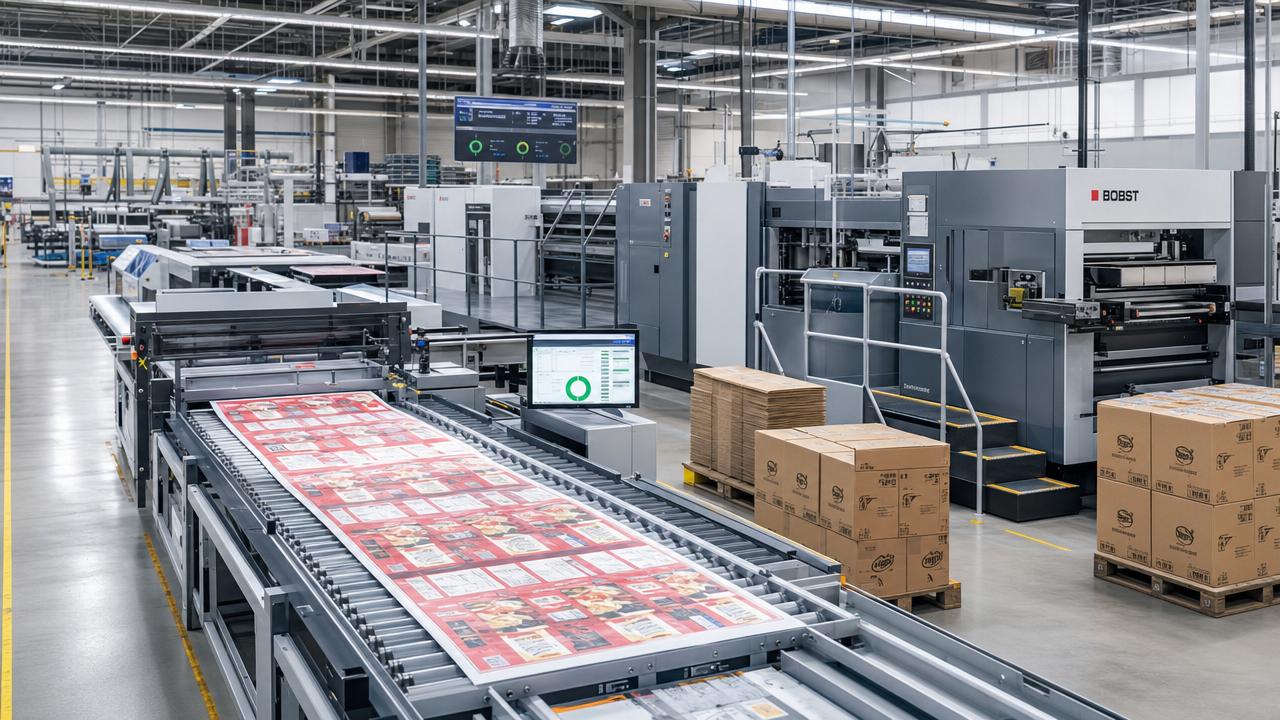
For finance decision-makers, the real question is not which equipment costs less upfront, but which industrial printing systems return more value over time. In capital-intensive print and paper operations, stronger uptime, lower waste, faster changeovers, and scalable output often outweigh lower capex. This article explores why lifecycle ROI has become the smarter benchmark for evaluating modern industrial printing investments.
That shift matters across digital printers, corrugated board lines, die-cutting and stamping equipment, folder gluers, and tissue converting machinery. In each case, procurement teams are no longer comparing machine prices alone. They are evaluating how many saleable units a line can produce in 1 shift, 3 shifts, or over 5 to 7 years.
For an approval committee, the practical questions are straightforward: How quickly will the equipment pay back? How much waste can be reduced from the current baseline? What is the impact of 2% more uptime or 15 minutes less setup time per job? And how does better automation support sustainability, labor stability, and tender competitiveness?
Within the print and paper value chain, these questions are especially relevant because margins can tighten quickly when paper costs fluctuate, delivery windows shrink to 7–10 days, and SKU counts keep rising. In this environment, industrial printing systems must be judged as profit engines, not just fixed assets.
Why Lower Capex Can Cost More Over the Equipment Lifecycle
A lower purchase price often looks attractive in budget reviews, but it can hide recurring losses in labor, substrate waste, maintenance stops, and missed delivery capacity. In industrial printing systems, a machine that is 12% cheaper at purchase can become 20% to 30% more expensive over 3 to 5 years if utilization stays below target.
This is particularly true in operations handling variable data printing, short-run corrugated jobs, premium finishing, or high-volume tissue conversion. The more frequent the job change, the more important makeready time, registration stability, glue accuracy, and web tension consistency become. Finance teams should track these operating effects in monthly rather than annual-only reviews.
The hidden cost categories that distort capex comparisons
When evaluating industrial printing systems, 4 cost buckets usually change the ROI outcome: downtime, waste, labor intensity, and throughput ceiling. These costs rarely appear fully in vendor quotations, yet they can determine whether a plant reaches target gross margin by quarter 2 or falls behind for the full year.
- Downtime: unplanned stops, slower recovery, and delayed restarts.
- Waste: board, paper, ink, adhesive, foil, and packaging scrap during setup.
- Labor intensity: more operators, more manual checks, and more intervention points.
- Throughput ceiling: inability to handle peak seasonal demand or higher SKU complexity.
For example, a corrugated line producing e-commerce packaging may process thousands of square meters per shift. If flute consistency or tension control causes even a 1.5% scrap increase, the annual paper loss can exceed the initial savings from choosing a lower-priced line. Similar logic applies to digital printheads, die-cut registration, and folder gluer bond reliability.
ROI should be modeled at line level, not machine price level
Finance teams often improve decision quality by shifting from a single-machine capex view to a line-economics view. A printer that outputs faster but creates bottlenecks at finishing may not improve ROI. On the other hand, balanced industrial printing systems with synchronized print, converting, and packing stages can increase sellable output by 8% to 18% without adding floor space.
The comparison below shows how finance teams can frame lower capex versus higher lifecycle return in practical procurement discussions.
The key takeaway is that industrial printing systems should be measured by output quality, usable capacity, and cost per saleable unit. Capex remains important, but it should be only 1 of at least 5 approval dimensions, not the only one.
The ROI Drivers Finance Teams Should Measure First
Not every KPI carries the same financial weight. In most print and paper plants, 5 metrics influence lifecycle return more than headline machine speed alone: uptime, setup duration, spoilage rate, labor per shift, and energy or consumables per unit. These metrics allow finance teams to compare industrial printing systems on business terms rather than technical brochures.
1. Uptime and maintenance predictability
A line that runs at 92% planned uptime instead of 85% can change the economics of an entire plant. Across 2 shifts per day and 26 operating days per month, that difference may create dozens of extra production hours without adding another machine. For corrugated, post-press, and tissue operations, those hours often matter most in seasonal peaks.
Finance teams should ask for preventive maintenance intervals, typical wear-part replacement cycles, and remote diagnostic capabilities. A system that helps detect nozzle issues, glue inconsistencies, or tension drift before failure can reduce both emergency service cost and missed customer deliveries.
2. Changeover speed in high-SKU environments
As packaging runs become shorter and personalization increases, setup time becomes a profit lever. A digital print line or folder gluer that saves 10–15 minutes per job change can recover substantial capacity over 30 to 50 jobs per week. In FMCG, e-commerce, and private-label packaging, this gain directly affects invoiceable output.
3. Waste reduction across paper, ink, glue, and board
Waste is not just a materials issue. It also includes labor, machine time, and delayed shipment risk. Better industrial printing systems reduce startup spoilage through stable droplet control, accurate die-cutting registration, and more consistent folding and bonding. Even a 1% waste improvement can be meaningful when substrate prices remain volatile.
4. Labor efficiency and skill risk
Plants everywhere face labor turnover, training gaps, and rising wage pressure. Equipment with stronger HMI design, recipe storage, auto-correction, and integrated inspection can reduce operator dependence. If one line can run with 2 operators instead of 3, or reduce retraining time from 6 weeks to 3 weeks, the ROI case strengthens quickly.
5. Expansion flexibility and sustainability alignment
Finance leaders increasingly review whether a machine supports future business models, not only current orders. Industrial printing systems that handle lighter grammages, more flute profiles, variable job data, or lower-emission production can protect asset value over a 5- to 10-year horizon. This is especially relevant where customers request recyclable packaging, FSC-aligned sourcing, or EUDR-sensitive supply chains.
How ROI Logic Applies Across the Print and Paper Equipment Chain
Different assets create return in different ways. A finance team should not expect the same payback logic from a digital inkjet system and a tissue rewinder. However, the ROI framework remains consistent: what reduces cost per good unit, what lifts sellable throughput, and what protects future demand?
Industrial digital printers
In digital printing, ROI often comes from versioning flexibility, shorter makeready, and elimination of plate-related constraints. For converters producing multiple SKUs, seasonal graphics, or regional campaigns, industrial printing systems based on high-speed inkjet can open revenue that conventional workflows struggle to capture efficiently.
Corrugated board lines
For corrugators, lifecycle return depends heavily on moisture control, web tension stability, flute consistency, and energy management. A line that maintains stable board quality at high speed can reduce warp, improve downstream converting, and minimize rework. In e-commerce packaging, this operational consistency can be more valuable than a lower purchase quote.
Die-cutting, stamping, and folder gluing
Post-press equipment earns ROI through precision and repeatability. Misregistration, weak creasing, foil inconsistency, or glue defects quickly create hidden losses. For premium cartons or high-volume transport boxes, industrial printing systems with reliable finishing reduce returns, customer complaints, and manual sorting time.
Tissue processing machinery
In tissue converting, finance teams should look at reel change efficiency, embossing consistency, packing automation, and hygiene control. Since tissue demand is often volume-driven, small gains in line availability and pack integrity can generate large cumulative value over 12 months.
The table below maps typical ROI priorities by equipment category, helping approval teams compare value logic across the full paper-based manufacturing chain.
This comparison makes one point clear: the right industrial printing systems are selected by business model fit. Finance should link equipment economics to order structure, product mix, and customer promise, not just to procurement budget limits.
A Practical Approval Framework for Finance Decision-Makers
The strongest capital approvals usually come from a disciplined framework. Instead of asking suppliers for a generic quote, finance teams should request operational assumptions that can be tested against actual plant data from the last 6 to 12 months. This makes ROI discussions more defensible internally.
A 5-step evaluation process
- Define the current baseline: uptime, waste, labor per shift, output per hour, and maintenance events.
- Match the equipment to the real job mix: run lengths, substrate range, SKU count, and finishing needs.
- Model 3 scenarios: conservative, expected, and peak-season demand.
- Calculate payback using saleable output rather than theoretical speed only.
- Stress-test service support, spare parts lead times, and operator training requirements.
Questions worth asking every supplier
Approval teams should ask how long commissioning typically takes, whether recipe-based setup is available, what remote support windows look like, and which wear parts require replacement every 3, 6, or 12 months. These questions often reveal more about long-term cost than headline speed claims do.
They should also ask how the system performs under imperfect conditions: recycled paper variation, humidity swings, short labor ramp-up, and frequent artwork changes. In many plants, ROI is won or lost under these real-world stresses, not in ideal demonstration conditions.
Common approval mistakes to avoid
- Using theoretical top speed as the main ROI input.
- Ignoring downstream bottlenecks in converting or packing.
- Underestimating training and process stabilization time in the first 60–90 days.
- Comparing quotes without normalizing for automation level and inspection capability.
- Leaving sustainability and compliance demands out of asset planning.
In modern paper and packaging operations, the best industrial printing systems are the ones that sustain margin under volatility. They support shorter lead times, greener materials, and more complex order structures without multiplying cost or quality risk.
Why Intelligence-Led Procurement Improves Asset Returns
Equipment decisions improve when finance teams combine technical evaluation with market intelligence. Paper price movement, sustainability regulation, converting trends, and demand from e-commerce or personalized FMCG all influence the useful life of industrial printing systems. A machine that fits today but limits tomorrow’s product mix can become an expensive compromise.
This is where a specialized intelligence source such as IPPS becomes valuable. By following digital print evolution, corrugation process behavior, post-press precision requirements, tissue automation trends, and compliance-related procurement shifts, finance leaders can compare assets against broader market direction rather than isolated quotations.
For example, if a converter expects rising demand for paper-based alternatives to plastic packaging over the next 24 to 36 months, the approval logic should account for flexibility in substrates, adhesive strategies, and downstream finishing. Likewise, if private-label SKU complexity is rising, setup reduction may deserve more weight than nominal speed.
In other words, lifecycle ROI is strongest when industrial printing systems are selected with both factory data and sector intelligence. That combination supports smarter approvals, lower operational surprises, and better long-term asset productivity.
For finance decision-makers, the most reliable benchmark is not the lowest capex figure on day 1, but the total business value created over years 3, 5, and beyond. Better uptime, lower spoilage, faster conversion, and more resilient output can outweigh a cheaper quote very quickly in print and paper manufacturing.
If you are evaluating industrial printing systems for digital print, corrugated production, post-press converting, folder gluing, or tissue processing, IPPS can help frame the decision with sector-focused intelligence and practical ROI logic. Contact us to discuss your investment scenario, request a tailored evaluation framework, or explore more solutions aligned with smart, efficient, and sustainable paper-based manufacturing.
Industry Briefing
Get the top 5 industry headlines delivered to your inbox every morning.
Recommended News