
Industrial Printing Systems: Upgrade or Maintain?
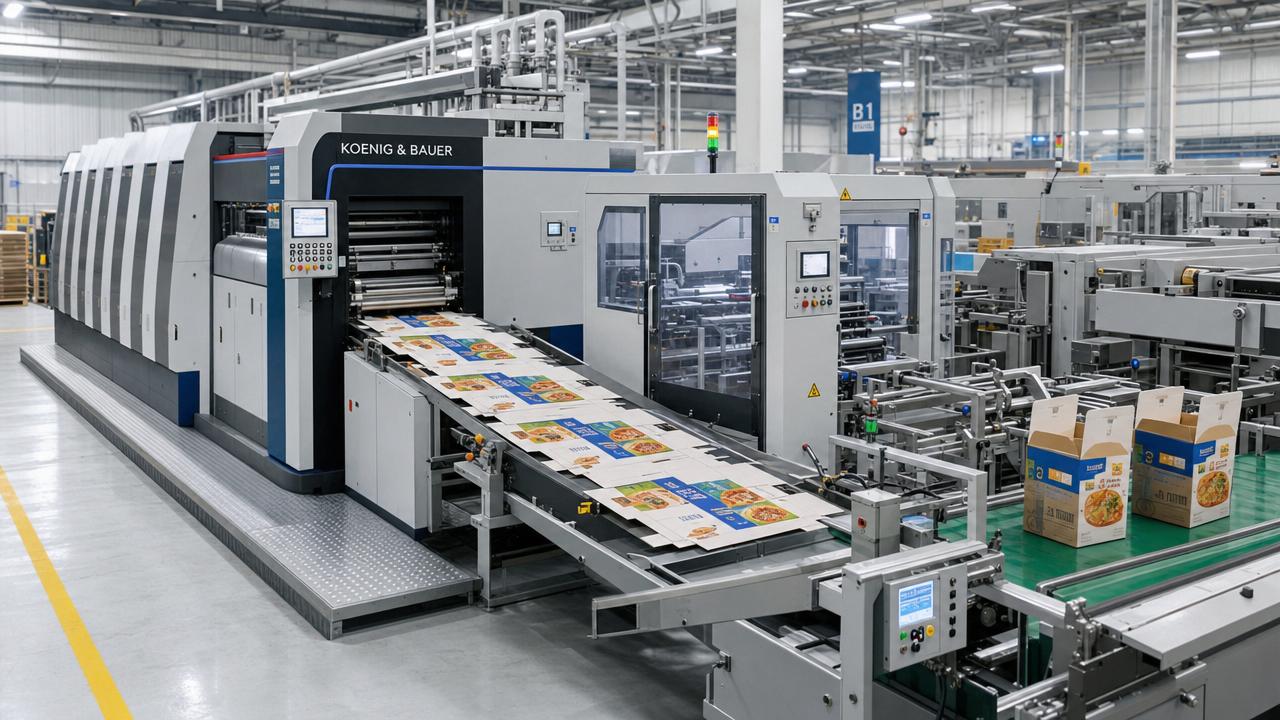
Should you upgrade or maintain your industrial printing systems? For business decision-makers facing rising demand for speed, customization, and sustainable packaging, the answer affects productivity, cost control, and long-term competitiveness. This article explores how to evaluate equipment performance, lifecycle value, and market trends to make smarter, lower-risk investment decisions across modern print and paper operations.
How should decision-makers assess industrial printing systems today?
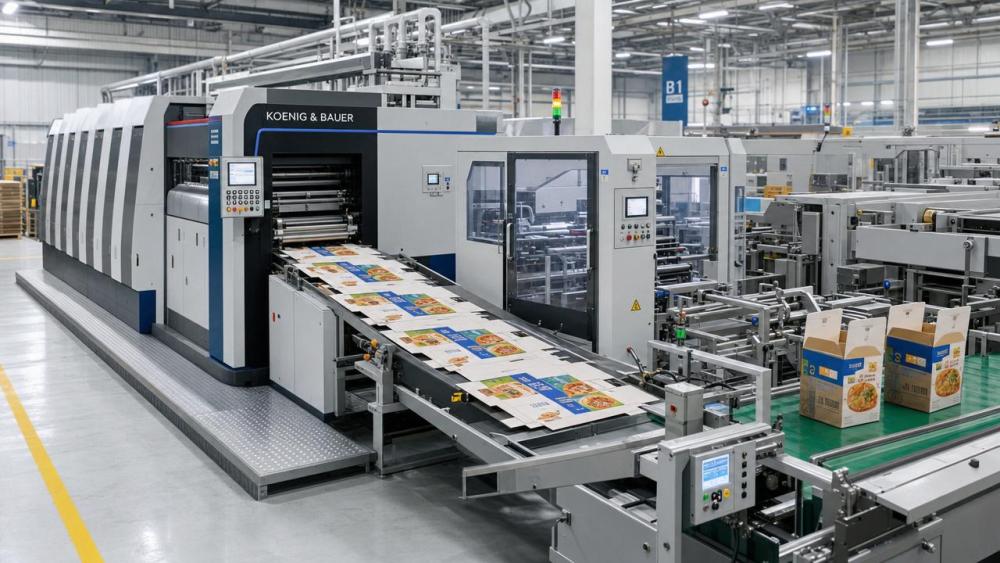
Industrial printing systems no longer operate as isolated machines. In many plants, they are part of an interconnected production chain that includes corrugated board lines, die-cutting equipment, folder gluers, inspection modules, rewinding units, and packaging automation.
That changes the upgrade-versus-maintain decision. A press that still runs may no longer fit current production logic if it creates bottlenecks, wastes substrate, limits variable data jobs, or struggles with traceability and compliance demands.
For business decision-makers, the real question is not simply machine age. It is whether existing industrial printing systems still support margin protection, order flexibility, uptime stability, labor efficiency, and sustainable packaging requirements.
Why the pressure is increasing
- Shorter order cycles are pushing converters and print manufacturers to deliver smaller batches without sacrificing unit economics.
- E-commerce packaging requires fast graphics changes, durable print quality, and reliable converting across corrugated substrates.
- Sustainability targets are forcing closer control over waste, energy use, paper sourcing, and ink or adhesive performance.
- Labor constraints make automation, diagnostics, and easier setup increasingly valuable across the full print and paper process.
This is where IPPS brings value. By tracking digital print technology, corrugation, post-press precision, and tissue machinery together, IPPS helps management teams evaluate machines in the context of the full production ecosystem rather than through a narrow equipment lens.
Upgrade or maintain: what signals matter most?
A practical decision framework should balance current performance with future demand. The table below highlights common signals that indicate whether maintaining industrial printing systems remains rational or whether an upgrade should move higher on the capital plan.
The key takeaway is that aging industrial printing systems are not automatically obsolete. If reliability is high and output matches market needs, maintenance can still be a strong strategy. But if the machine weakens the entire line, delay costs often exceed the savings from postponing investment.
Questions worth asking internally
- Are our most profitable jobs constrained by print speed, substrate handling, drying, or finishing compatibility?
- Do we lose tenders because our current industrial printing systems cannot meet sustainability, traceability, or personalization requirements?
- Are maintenance costs predictable, or are they masking deeper risks such as control obsolescence or operator dependency?
Which production scenarios favor maintenance and which justify an upgrade?
The right path depends heavily on application. Industrial printing systems used in digital packaging, corrugated production, premium post-press work, or tissue converting face different stress points and return drivers.
In broad terms, maintenance works best when market demand remains predictable and your existing line still protects yield. Upgrades become compelling when production variability, sustainability pressure, and digital workflow requirements start to outgrow machine architecture.
What technical indicators reveal hidden lifecycle risk?
Many companies focus only on visible failures. That is a mistake. The more expensive problems in industrial printing systems are often gradual: drifting registration, inconsistent tension, unstable droplet placement, fluctuating bonding quality, or weak interoperability with modern workflow tools.
Key indicators to review before deciding
- Print quality stability under speed: Evaluate whether quality drops sharply at higher throughput, especially on corrugated or recycled grades.
- Tension and substrate control: In paper and board applications, web handling often determines both print consistency and downstream converting accuracy.
- Control system obsolescence: Legacy PLC or HMI environments can increase support risk even if the mechanical platform remains sound.
- Consumables efficiency: Ink laydown, adhesive usage, steam consumption, and waste ratios should be reviewed against current production economics.
- Inspection and data capture: Without reliable production data, management cannot accurately compare maintenance cost against upgrade benefit.
IPPS closely follows exactly these technical fault lines. Its intelligence across micron-level inkjet behavior, corrugated surface interaction, glue bonding curves, and tension decoupling helps decision-makers identify whether a problem is serviceable, systemic, or strategically limiting.
How to compare the real cost of maintenance versus upgrade
Capital budgets often favor deferral, but deferral has its own price. To compare options properly, decision-makers should include direct and indirect costs across the whole equipment lifecycle, not just spare parts or purchase price.
The best cost decision is rarely the lowest first-year spend. It is the option that preserves delivery reliability, protects material yield, and aligns industrial printing systems with the revenue mix you expect over the next three to five years.
What should procurement and operations evaluate together?
Upgrade decisions often fail when procurement looks at price while operations looks at speed and maintenance looks at parts. Industrial printing systems should be reviewed through a shared scorecard that reflects business, process, and compliance reality.
Cross-functional procurement checklist
- Define target job profile: board grades, print resolution needs, run lengths, SKU variability, and downstream finishing requirements.
- Verify workflow fit: data handling, RIP compatibility, inspection integration, ERP or MES connectivity, and reporting depth.
- Review serviceability: local support availability, remote diagnostics, critical spare lead times, and upgrade paths for controls.
- Check sustainability impact: waste reduction potential, energy use, recyclability considerations, and alignment with fiber sourcing expectations.
- Evaluate operator readiness: training burden, HMI usability, job change procedure complexity, and staffing requirements.
For international packaging and paper businesses, standards and compliance also matter. Depending on the market, FSC-related sourcing expectations, EUDR-related traceability pressure, and documentation requirements around substrate and production control may influence whether older industrial printing systems remain commercially viable.
Common mistakes that distort the decision
Several recurring mistakes lead companies to either over-invest too early or hold on too long. Recognizing them can materially improve capital allocation.
Frequent misconceptions
- “If the machine still runs, it is still competitive.” Running is not the same as matching current market economics.
- “Maintenance cost is cheaper than capital cost.” That ignores waste, missed orders, overtime, and unstable quality.
- “A new press solves everything.” If bottlenecks sit in corrugation, die-cutting, gluing, or rewinding, upgrading print alone may not improve total output.
- “All digitalization projects have the same value.” The value depends on whether the data captured actually improves uptime, planning, and yield.
This broader systems view is central to IPPS. Because the portal covers digital printers, corrugated board lines, post-press machinery, and tissue processing equipment together, it helps management teams avoid isolated decisions that shift problems from one process step to another.
FAQ: practical questions about industrial printing systems
How do I know whether my industrial printing systems are underperforming?
Look beyond average speed. Track unplanned downtime, startup waste, color or registration drift, operator interventions per shift, spare part delays, and the percentage of jobs that require workarounds. If these metrics are worsening, the system may be eroding margin even before a major breakdown appears.
Are upgrades only worthwhile for digital printing lines?
No. Corrugated lines, die-cutting and stamping systems, folder gluers, and tissue converting equipment can all justify upgrades if they constrain quality, throughput, or automation. In many cases, targeted modernization of controls, inspection, gluing accuracy, or web handling creates stronger returns than a full replacement.
What should be included in an investment review?
Include job mix forecasts, substrate plans, waste records, maintenance history, labor impact, service availability, digital integration needs, and commercial requirements such as customization or compliance. A decision based only on machine age or supplier quotation usually misses the real economics.
How long does an upgrade decision usually take?
That depends on complexity, but serious industrial printing systems reviews typically require technical assessment, capacity modeling, supplier discussions, and implementation planning. For multi-machine environments, decision-makers should allow enough time to validate interoperability with corrugation, finishing, and packaging stages.
Why informed market intelligence matters before you commit
The best upgrade decisions are informed by more than vendor claims. They require visibility into paper price volatility, sustainability regulation, substrate trends, automation pathways, and the shifting economics of digital and converting technologies.
IPPS supports that decision process by connecting machine-level technical insight with commercial context. From ink behavior on corrugated surfaces to bonding behavior in folding-gluing and from global packaging demand to green paper-based manufacturing trends, the platform helps business leaders evaluate industrial printing systems with greater clarity and lower strategic risk.
Why choose us for your next equipment decision?
If you are weighing whether to upgrade or maintain industrial printing systems, IPPS can help you structure the decision around measurable business outcomes rather than assumptions. Our coverage spans digital printing, corrugation, post-press processing, folder gluing, and tissue machinery, giving you a full-chain perspective.
You can consult us on parameter confirmation, equipment selection logic, delivery cycle considerations, sustainability and certification-related questions, workflow compatibility, customization direction, and quotation-stage comparison points. This is especially useful when one machine decision could affect the efficiency of the entire paper and packaging line.
For decision-makers who need clearer investment priorities, lower implementation risk, and better alignment between technology and market demand, a focused discussion with IPPS can shorten evaluation time and improve confidence before capital is committed.
Industry Briefing
Get the top 5 industry headlines delivered to your inbox every morning.
Recommended News