
Green Paper-Based Civilization: What Changes in 2026
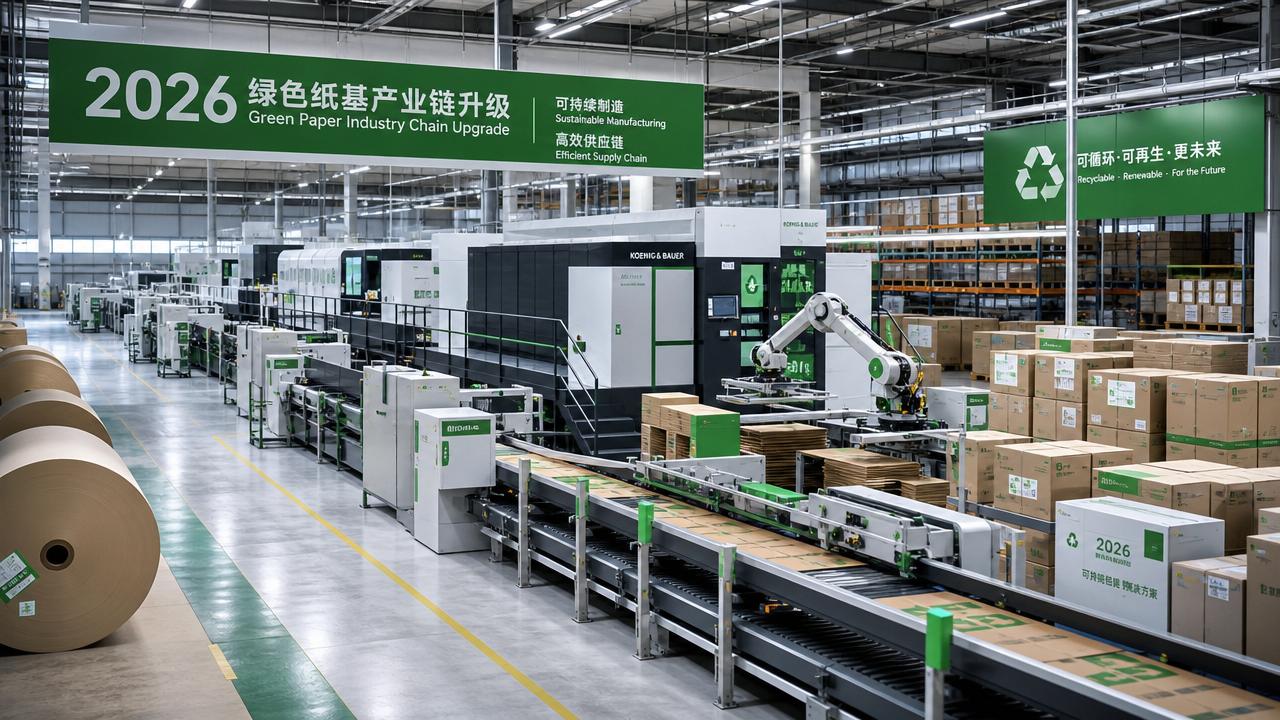
As 2026 approaches, green paper-based civilization is shifting from sustainability rhetoric to measurable business value. For commercial evaluators, the real question is no longer whether paper-based transformation will happen, but which technologies, supply chain upgrades, and compliance strategies will define competitive advantage. From digital printing to corrugated automation, this article examines the market signals reshaping investment logic across the global print and packaging industry.
Why is green paper-based civilization becoming a business filter in 2026?
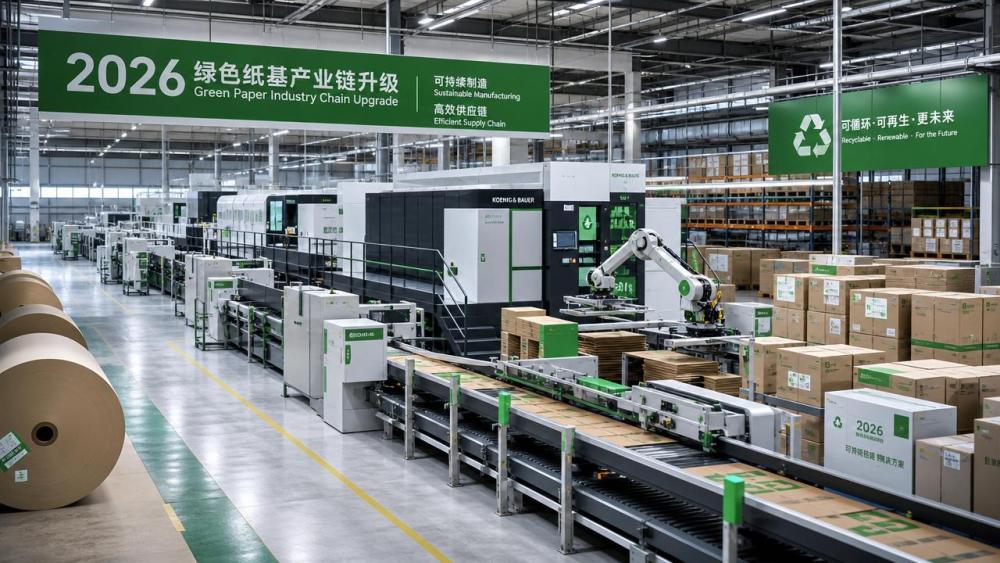
Green paper-based civilization is no longer a soft branding phrase. In 2026, it functions as a commercial filter for procurement, financing, export approval, and supply chain qualification across packaging, tissue, logistics, and consumer goods.
For business evaluators, the shift matters because paper-based transformation now affects three measurable areas: unit economics, compliance resilience, and delivery flexibility. A supplier that cannot prove control over fiber sourcing, converting efficiency, and print adaptability will increasingly lose bid priority.
This is where IPPS holds strategic relevance. Its intelligence scope spans industrial digital printers, corrugated board lines, die-cutting and stamping systems, folder gluers, and tissue processing machinery. That full-chain visibility helps evaluators connect machine capability with market timing, not just with catalog specifications.
- Digital printing reduces setup friction and enables shorter, versioned runs for personalized FMCG and regional packaging compliance.
- Corrugated automation supports lightweighting while preserving compression performance for e-commerce logistics.
- Post-press precision determines whether premium packaging can scale without quality drift or glue-related waste.
- Tissue converting remains a demand-stable category, but its profitability increasingly depends on automation, hygiene control, and energy use.
What has changed from sustainability messaging to procurement reality?
In earlier cycles, buyers often treated eco-friendly paper packaging as a reputational add-on. In 2026, the evaluation model is tougher. Buyers compare uptime, waste rate, ink behavior on challenging substrates, glue consumption, board strength retention, and certification-readiness.
That means green paper-based civilization must be assessed as an operating system, not as a design trend. The winning companies are those that integrate substrate science, machine productivity, data handling, and regulatory traceability into one decision framework.
Which market signals should commercial evaluators watch first?
If you are screening investments or suppliers, broad sustainability claims are not enough. The most useful market signals are the ones that affect margin stability, qualification speed, and replacement risk across the paper-based value chain.
The table below summarizes how green paper-based civilization is influencing commercial assessment priorities in 2026.
These signals show why green paper-based civilization should be reviewed through operational metrics. IPPS is especially useful here because it tracks not only news flow, but also process-level issues such as droplet behavior on corrugated surfaces, bonding curves in folding-gluing, and rewinder tension decoupling logic.
Why do these signals affect supplier ranking?
Because procurement teams increasingly ask whether a machine line can support both today’s SKU mix and tomorrow’s regulatory demands. A corrugator with weak tension consistency or a printer with unstable substrate handling may still run, but it will score lower when buyers model long-term waste, rework, and compliance exposure.
How do the five core equipment pillars shape investment decisions?
Commercial evaluation becomes clearer when green paper-based civilization is broken down into equipment pillars. Each pillar influences a different part of return on investment, and each has different risk points that affect budgeting and vendor comparison.
Industrial digital printers
These systems are central when a buyer values versioning, rapid design turnover, and elimination of plate-making delays. Evaluators should focus on printhead reliability, data pipeline stability, substrate range, and maintenance logic under sustained output.
Corrugated board lines
Corrugated lines carry the economics of logistics protection. The true purchasing issue is not only speed, but flute consistency, adhesive control, steam balance, warp prevention, and the ability to handle lightweight papers without unacceptable crush loss.
Die-cutting and stamping machines
In premium packaging and retail display work, these machines determine edge quality, registration precision, and value-added decoration capability. Buyers should compare feeding stability, tooling adaptability, stroke efficiency, and the cost of setup errors.
Automatic folder gluers
Folder gluers often decide whether a plant captures the margin created upstream. High-speed gluing means little if box geometry drifts, bonding fails in humid logistics environments, or quick-switch orders create unacceptable stoppage time.
Tissue processing machinery
For tissue, demand is persistent, but margins can be thin. Evaluation should cover embossing quality, rewinding accuracy, hygiene safeguards, packaging automation, and labor intensity per output unit. Green paper-based civilization in tissue depends as much on efficient converting as on fiber messaging.
- Use digital printers when SKU fragmentation and personalization pressure are rising.
- Prioritize corrugated process control when freight protection and lightweighting are strategic goals.
- Invest in post-press precision when premium branding depends on structural and visual finish quality.
- Evaluate tissue lines through labor, hygiene, and uptime metrics rather than headline speed alone.
What should you compare when selecting paper-based production solutions?
Many buyers compare equipment using general claims such as automation level or energy efficiency. That approach is risky. Green paper-based civilization requires a more practical comparison model tied to output quality, material behavior, and commercial responsiveness.
The comparison table below is designed for business evaluators who must shortlist technologies and vendors under deadline pressure.
A useful takeaway is that green paper-based civilization rewards systems thinking. A cheaper machine may create higher total cost if it cannot handle recycled fiber variability, short-run customization, or certification-driven customer reviews.
A practical shortlist checklist
- Define whether your main driver is volume, customization, export compliance, or packaging upgrade.
- Map machine capability to the most difficult substrate, not the easiest one.
- Ask for evidence of waste control during startup, changeover, and long continuous runs.
- Review service, spare parts rhythm, and operator training impact on real ramp-up time.
How do compliance and certification affect green paper-based civilization projects?
Compliance is no longer a separate legal task handled after procurement. It now shapes specification writing, supplier approval, and even machine configuration. For paper-based projects, certification-readiness can influence contract timing as much as equipment speed.
The table below highlights common compliance checkpoints relevant to green paper-based civilization decisions.
For evaluators, the important lesson is simple: a technically strong line may still carry commercial risk if its traceability or documentation support is weak. IPPS helps reduce that blind spot by combining technology intelligence with regulatory and sourcing signal monitoring.
Common compliance mistake
A frequent mistake is assuming certification pressure only affects raw material procurement. In reality, machine settings, glue selection, print chemistry, batch records, and supplier response speed can all influence whether an account passes customer review smoothly.
Where do costs rise or fall in 2026 paper-based transformation?
The cost question around green paper-based civilization is more nuanced than “paper versus plastic.” For commercial evaluators, the real calculation includes material utilization, energy use, labor demand, downtime, rejects, and the cost of missing customer qualification windows.
Cost improvement often comes from process integration rather than one machine purchase. A digital print line that cuts setup waste, paired with stable corrugated forming and fast gluing, can outperform a lower-capex setup that produces more stoppages and board loss.
- Material savings often come from basis weight optimization and reduced startup waste, not from raw paper price alone.
- Labor savings depend on automation depth and training requirements, especially in post-press and tissue packaging stages.
- Hidden costs usually appear in unstable print quality, glue failures, warped board, and frequent micro-stoppages.
- Opportunity cost appears when a supplier cannot meet fast-turn customization or compliance-linked tender requirements.
This is why IPPS frames green paper-based civilization as a linked industrial system. The best investment decisions are made when evaluators look across print, board forming, converting, and finishing together, instead of approving each area in isolation.
FAQ: what do buyers usually ask before approving a paper-based upgrade?
How should we choose between digital printing and conventional methods?
Start with order structure. If your business faces frequent SKU variation, regional language changes, seasonal campaigns, or lower minimum order quantities, digital printing usually strengthens responsiveness. If volumes are highly stable and design turnover is limited, conventional methods may still remain competitive in some scenarios.
Which scenarios are best suited to green paper-based civilization investments?
The strongest fit appears in e-commerce logistics, FMCG secondary packaging, premium retail boxes, tissue products, and export-oriented packaging programs where sustainability claims must be operationally supported. In all these cases, fiber efficiency, converting precision, and compliance readiness matter together.
What should procurement focus on first: machine speed or yield?
Yield usually deserves priority. A line with impressive nominal speed but unstable quality, high waste, or difficult changeovers often underperforms financially. For green paper-based civilization projects, yield, substrate adaptability, and traceable process control create more durable value than headline output alone.
How long does evaluation typically take for a new paper-based solution?
The timeline depends on application complexity, internal approval layers, and compliance needs. In practice, evaluators should budget time for parameter confirmation, substrate review, process matching, vendor comparison, and documentation checks. Rushed decisions often miss hidden operating costs that only appear after commissioning.
Why choose us when evaluating green paper-based civilization opportunities?
IPPS supports commercial evaluators who need more than general market commentary. Our value lies in connecting strategic demand shifts with equipment-level realities across digital printing, corrugated production, precision post-press, folder gluing, and tissue processing.
If you are assessing green paper-based civilization projects for 2026, you can consult us on practical issues such as parameter confirmation, technology selection logic, delivery-cycle expectations, converting workflow matching, certification-related review points, sample evaluation pathways, and quotation comparison frameworks.
We also help clarify where investment risk actually sits: printhead-substrate compatibility, corrugation stability under lightweight papers, post-press tolerance consistency, glue system performance, and the commercial meaning of compliance thresholds such as FSC and EUDR-related expectations.
For teams preparing procurement reviews, supplier shortlists, or international tender strategies, a focused discussion can save weeks of internal comparison time and reduce the chance of selecting a line that looks efficient on paper but performs weakly in live production.
Industry Briefing
Get the top 5 industry headlines delivered to your inbox every morning.
Recommended News