
Flexographic Printing Cost Traps in Short-Run Packaging
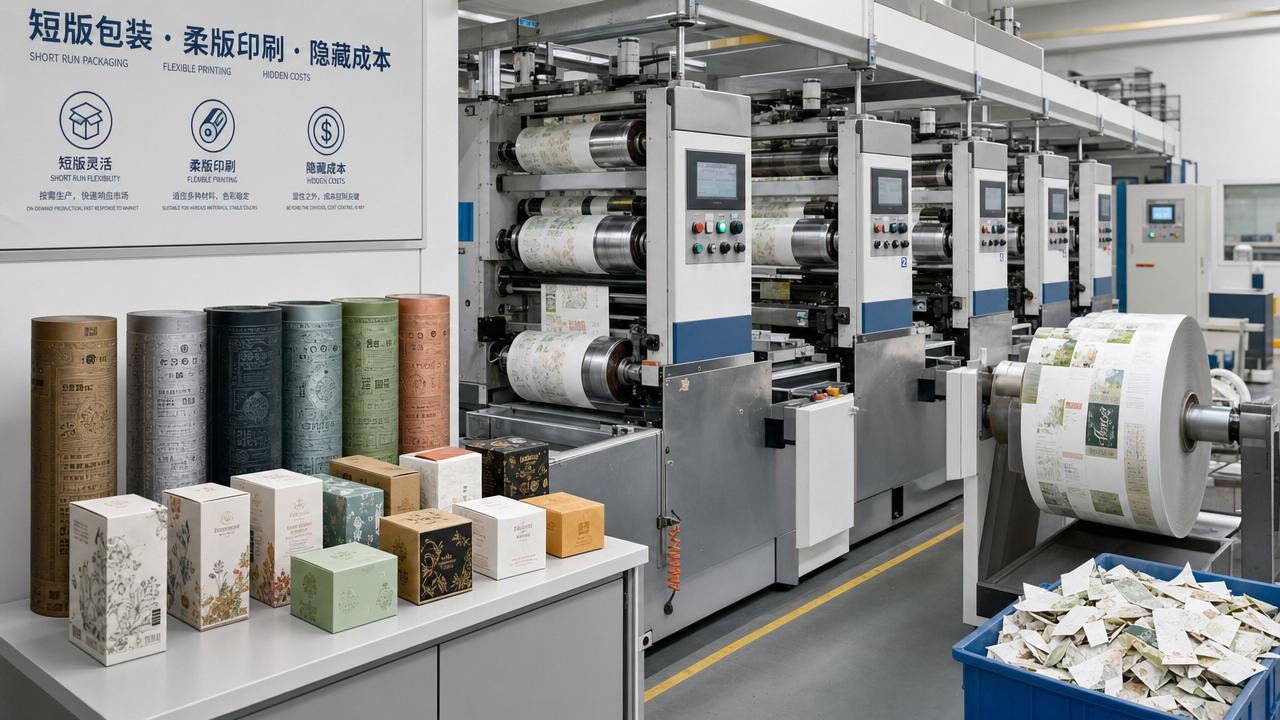
Short-run packaging can look cost-efficient on a quotation sheet, yet flexographic printing often becomes more expensive than expected once setup labor, plate amortization, waste, and changeovers are fully counted.
For finance approvers, the real issue is not whether flexo can print well. It is whether the total landed cost of a low-volume job still makes economic sense after hidden production variables appear.
This matters especially when SKU counts rise, brand versions multiply, and procurement teams compare suppliers using only unit price instead of full-job economics. The cheapest quote can become the most expensive order.
In practice, the main cost traps in flexographic printing are predictable. They usually sit in prepress preparation, tooling, substrate choices, press downtime, color management, minimum order logic, and quality risk.
A finance-led review can prevent margin leakage. The goal is to understand where fixed costs stop flexo from being efficient, and when another process or sourcing model creates better ROI.
Why short-run flexographic printing often breaks the budget logic
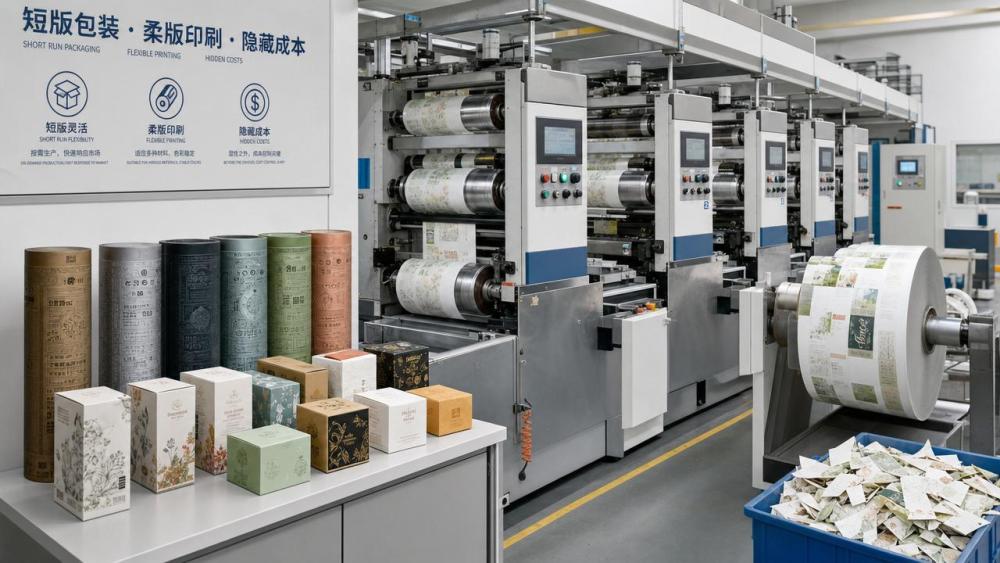
The core search intent behind “Flexographic Printing Cost Traps in Short-Run Packaging” is commercial and evaluative. Readers want to identify where low-volume flexo jobs become financially inefficient and how to avoid avoidable overspending.
For financial decision-makers, the biggest concern is not print technology theory. They want practical criteria for approving budgets, comparing suppliers, forecasting true job cost, and reducing the risk of hidden overruns.
The most useful content, therefore, is cost diagnosis. Finance teams need a clear map of which cost elements scale poorly in short runs and which supplier assumptions deserve closer scrutiny before purchase approval.
That is why the discussion should focus on total cost of ownership per job, not just quoted price per thousand sheets or boxes. In short runs, fixed cost concentration changes everything.
Flexographic printing remains highly effective for many packaging formats, especially where repeat volumes are stable. But when order lengths shrink, setup-heavy economics begin to work against profitability.
The first mistake many buyers make is applying long-run cost logic to short-run packaging. Flexo spreads setup costs well across large volumes, but low-volume jobs carry a much heavier fixed-cost burden.
This means plate creation, mounting, press calibration, wash-up, and trial waste can account for a surprisingly high share of total job value. On some short runs, these activities dominate cost more than print speed.
Finance approvers should therefore ask a simple question early: how much of this quotation is variable production cost, and how much is setup-related cost that would barely change if the run were twice as large?
If the setup share is too high, the job may be structurally mismatched to flexographic printing. That does not mean the supplier is wrong. It means the process economics may be wrong for the order profile.
Cost trap 1: Plate costs that look small individually but scale badly across SKUs
Printing plates are one of the clearest hidden burdens in flexographic printing for short-run packaging. A single plate set may appear manageable, but costs rise quickly when artwork versions multiply.
Seasonal designs, retailer-specific variants, compliance language changes, and regional labeling all create additional plate requirements. Finance teams often approve the first job without seeing the cumulative tooling burden across the year.
This is particularly dangerous in businesses moving toward personalization or frequent design refreshes. Each variation may seem minor from a marketing view, yet each version can trigger real prepress and plate expense.
The correct financial question is not “What does this plate set cost?” but “What is the annual plate cost per active SKU family, including revisions, remakes, and obsolescence?”
Plate replacement risk also matters. If artwork changes due to regulation, barcode updates, or branding revisions, the remaining value of previous plates can vanish. That sunk tooling cost rarely appears in basic supplier comparisons.
Buyers should ask suppliers whether plate ownership, storage, remake policy, and future revision charges are included. If these terms are vague, expected cost can be materially understated.
Cost trap 2: Setup time and changeover losses that are hidden inside quoted unit prices
Short-run packaging usually means more frequent job changes. In flexographic printing, every changeover can require plate mounting, anilox selection, ink preparation, registration adjustment, and startup verification.
Even when suppliers do not list these steps separately, someone pays for them. The cost appears through higher unit prices, reduced line efficiency, or scheduling premiums for urgent and fragmented orders.
For finance reviewers, one of the most important indicators is average productive runtime versus total press time consumed. If setup consumes a large share of machine hours, profitability erodes quickly.
Some converters are highly efficient and have reduced makeready through automation. Others still rely on labor-intensive processes that make small jobs disproportionately expensive. The difference between suppliers can be substantial.
Ask for evidence, not promises. Useful metrics include average changeover time, startup waste levels, repeat-job setup consistency, and whether the supplier has automated registration and color control systems.
When procurement teams compare only price per unit, they may miss the operational reality that one supplier’s lower efficiency is simply embedded in the quote. Finance teams should challenge that opacity.
Cost trap 3: Startup waste and substrate loss that distort true job economics
Waste is often underestimated because it is spread across materials, machine time, and quality control. In short runs, startup waste becomes a much larger percentage of the total order.
Before acceptable print quality is reached, substrate can be consumed during registration tuning, color matching, impression setting, and defect checking. That loss is particularly painful on premium or specialized materials.
In corrugated, paperboard, or flexible packaging applications, substrate cost may already be under pressure from market volatility. Adding high waste ratios can turn a seemingly acceptable order into a margin problem.
Finance decision-makers should request waste assumptions by job type, not generic waste percentages. The right benchmark depends on substrate, color count, repeat length, design complexity, and whether the job is a repeat order.
If a supplier cannot explain startup waste with confidence, then the quote likely contains uncertainty. That uncertainty should be treated as financial risk, especially for short-run or multi-SKU campaigns.
Cost trap 4: Too many color requirements for the run length
Brand owners often demand precise color consistency across channels and markets. In flexographic printing, additional spot colors and tight tolerances can significantly increase setup complexity and approval time.
This is not just a technical issue. More complex color work may require longer makeready, more ink adjustments, more wash-ups, and more operator intervention, all of which raise job cost.
For a long production run, those costs can be diluted. For a short run, they can dominate. Finance teams should be especially cautious with jobs that combine small quantities and demanding color specifications.
A useful approval question is whether the packaging truly needs the full color architecture requested. Sometimes artwork simplification, expanded gamut strategies, or design standardization can reduce cost without harming shelf impact.
Cross-functional alignment matters here. Marketing may optimize for visual nuance, while operations and finance need to optimize for reproducibility and cost control. Short-run flexo punishes avoidable complexity.
Cost trap 5: Minimum order quantities created by economics, not by real demand
Another hidden issue in flexographic printing is the tendency to inflate order quantity simply to make setup cost appear reasonable. This can create excess inventory and tie up working capital.
From a plant perspective, printing more may improve unit cost. From a finance perspective, however, lower unit cost does not automatically mean lower total business cost if unsold packaging becomes obsolete.
This is common when product assortments change quickly, promotions are uncertain, or compliance wording may be updated. In these cases, buying beyond demand can convert manufacturing efficiency into inventory risk.
Approvers should compare print cost savings against carrying cost, warehouse usage, write-off probability, and the opportunity cost of cash locked into packaging stock. The true financial answer is often different from the production answer.
If a supplier pushes a run length far above demand, that is not necessarily bad advice. But it should trigger a broader ROI review rather than an automatic acceptance based on lower price per piece.
Cost trap 6: Artwork revisions, approval cycles, and hidden prepress administration
In short-run packaging, administrative friction can become a real cost center. Artwork changes, version control, proof approvals, and compliance checks often multiply when many SKUs move through the same timeline.
These activities may be billed directly, buried in prepress fees, or simply reflected in higher quotation structures. Either way, they consume budget and slow speed to market.
Finance approvers should look beyond manufacturing and examine process discipline. How many approval rounds are typical? How often do files arrive incomplete? How frequently do urgent corrections require rush fees?
Packaging cost control improves when organizations standardize file preparation, approval authority, and artwork governance. Many flexo overruns begin upstream, long before material reaches the press.
Cost trap 7: Supplier comparisons that ignore technology fit
One of the most expensive mistakes is asking multiple converters to quote the same short-run job and then selecting purely on price, without evaluating whether flexographic printing is the best-fit process.
Some short-run packaging jobs are structurally better suited to digital printing or hybrid production, especially where versioning is high, turnaround is tight, and plate costs are hard to recover.
Finance leaders do not need to choose the machine. But they do need to insist on process transparency. Ask suppliers what assumptions make flexo economical in this case, and what run length is the crossover point.
A capable supplier should be able to explain when flexo wins, when digital wins, and when a mixed strategy reduces total cost. A partner who avoids that conversation may be protecting utilization rather than your margin.
How finance teams can evaluate flexographic printing quotes more accurately
For short-run packaging, a strong approval framework should separate fixed costs, variable costs, risk costs, and inventory effects. That is the only way to understand the real economics of flexographic printing.
Start with five cost buckets: plates and prepress, setup and changeover, substrate waste, print run cost, and downstream inventory exposure. Reviewing these separately reveals where cost concentration is hiding.
Then request scenario pricing. Ask for the same job at multiple run lengths, with and without artwork variations, and with clear assumptions on waste and setup. This shows whether the proposed volume is economically rational.
It is also wise to ask for repeat-order economics. Many first jobs are expensive, but repeat runs may become attractive if plates remain valid and setup learning improves. The key is validating that forecast.
Finally, compare total campaign cost, not isolated job cost. A process that looks expensive for one order may be more economical over a predictable annual volume. The reverse is also true.
When flexographic printing still makes sense for short-run packaging
Despite the traps, flexographic printing is not automatically the wrong choice for low-volume work. It can still perform well where designs are stable, substrates are standardized, and converters have strong automation.
If the supplier has fast changeovers, disciplined color control, low startup waste, and efficient plate management, flexo may remain viable at lower volumes than many buyers assume.
It can also make sense when short-run orders are part of a broader repeat program, where tooling costs are spread across future demand and specification consistency is high.
The financial lesson is simple: do not reject flexo categorically, but do not accept it on unit price alone. The right decision depends on cost structure, order frequency, SKU complexity, and inventory risk.
Conclusion: the cheapest flexo quote is rarely the full financial picture
For finance approvers, the biggest short-run packaging risk in flexographic printing is not visible on the surface. It sits in fixed setup economics, tooling repetition, waste, changeovers, and excess quantity decisions.
Understanding these cost traps leads to better budgeting, stronger supplier evaluation, and more realistic ROI control. It also helps procurement and operations speak the same economic language.
When reviewing any low-volume packaging proposal, focus on total cost logic rather than printed price alone. In short runs, hidden costs move faster than expected, and they often decide whether margin survives.
The best outcome is not simply a lower quote. It is a packaging sourcing decision that matches production method, commercial demand, and financial discipline with far fewer surprises after approval.
Industry Briefing
Get the top 5 industry headlines delivered to your inbox every morning.
Recommended News