
Corrugated Packaging Solutions That Cut Damage in Transit
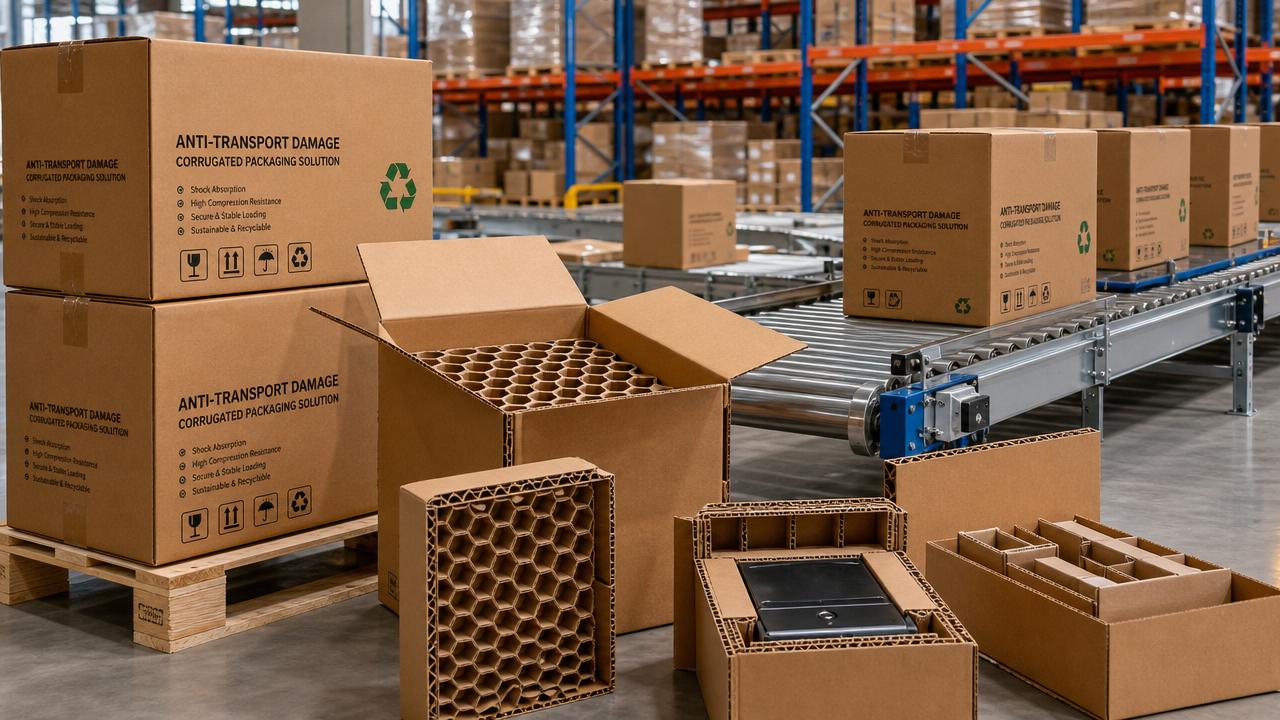
For quality control and safety teams, transit damage is not a minor logistics problem. It affects product integrity, return rates, claims handling, brand trust, and total operating cost.
Well-designed corrugated packaging solutions reduce impact, compression failure, abrasion, and vibration damage across storage, sorting, and final-mile delivery. Better structures also support material efficiency and sustainability targets.
In today’s mixed supply chains, packaging must survive pallet loads, conveyor turns, parcel drops, humidity changes, and stacking pressure. That is why corrugated packaging solutions now depend on both smart engineering and stable converting quality.
Core Definition of Corrugated Packaging Solutions
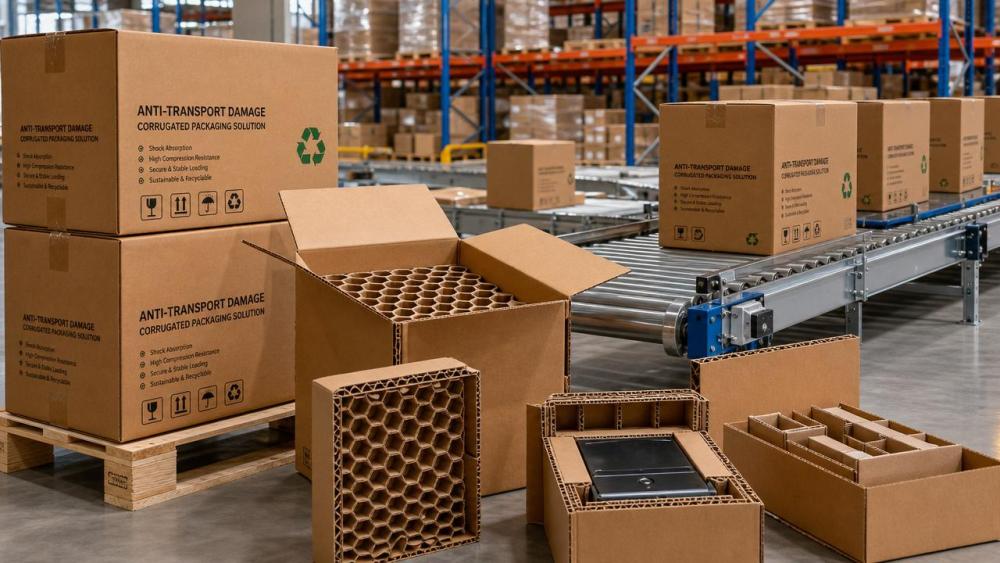
Corrugated packaging solutions combine paperboard structure, flute profile, box design, cushioning logic, printing, and post-press accuracy to protect products during transport and handling.
A corrugated board typically includes liners and a fluted medium. This geometry creates strength with low weight. Different flute types deliver different balances of rigidity, cushioning, and print surface quality.
Effective corrugated packaging solutions are not limited to the outer box. They may include inserts, partitions, pads, sleeves, edge protection, and load-stabilizing features.
Performance depends on several linked factors:
- Board grade and flute selection
- Box compression strength
- Joint quality and adhesive consistency
- Die-cut precision and crease accuracy
- Fit between package and product
- Environmental resistance to moisture and handling stress
When these elements align, corrugated packaging solutions can cut breakage without excessive material use. That balance is increasingly important across broad industrial and consumer applications.
Industry Pressures Shaping Packaging Performance
Modern distribution systems are faster, denser, and less predictable than before. Goods may pass through automated sortation, cross-border warehousing, and direct-to-door delivery within a single order cycle.
This creates stronger demand for corrugated packaging solutions that can handle multiple stress points while staying lightweight and recyclable.
In this setting, packaging design can no longer rely on generic board grades alone. Better results come from integrating corrugator capability, converting precision, and actual transit data.
That systems view is central to the broader paper-based manufacturing ecosystem tracked by IPPS, where board formation, print behavior, and post-press consistency influence final packaging reliability.
How Corrugated Packaging Solutions Reduce Transit Damage
Board strength matched to distribution risk
Transit damage often begins with mismatch. A box may be too weak for stacking, too rigid for shock absorption, or too large for the product inside.
Good corrugated packaging solutions match flute type, edge crush strength, burst resistance, and caliper to the actual route and load pattern.
Internal cushioning and movement control
A strong outer box cannot compensate for uncontrolled product movement. Inserts and partitions reduce collision energy inside the pack.
For fragile items, corrugated packaging solutions often use die-cut nests, folded retention frames, or layered pads to create stable positioning with recyclable materials.
Precision converting and sealing quality
Poor creasing, inaccurate slots, or weak glue lines can turn a sound design into a failure point. Compression strength drops quickly when box geometry is inconsistent.
Reliable corrugated packaging solutions depend on precise die-cutting, controlled folding, and stable gluing. These factors support squareness, closure strength, and repeatable pack performance.
Moisture and environmental resilience
Humidity softens paper fibers and reduces stacking strength. Long-distance routes, cold chains, and port storage can increase this risk.
Corrugated packaging solutions may address this through better liner selection, coatings, adhesive tuning, and storage discipline before shipment.
Business Value Across the Broader Industry
The value of corrugated packaging solutions extends beyond damage reduction. They improve packaging efficiency, support automation, and enable more predictable quality outcomes.
- Lower replacement and return costs
- Reduced customer complaints and claim disputes
- Better cube utilization in transport and storage
- Improved compatibility with automated packing lines
- Higher recycled-content potential with controlled design
- Progress toward paper-based sustainability goals
This matters across the comprehensive industry landscape, from consumer goods and electronics to industrial parts, household products, and hygiene-related distribution chains.
As digital printing and converting become more flexible, corrugated packaging solutions can also support short runs, versioned graphics, and region-specific logistics needs without losing structural reliability.
Typical Application Scenarios and Packaging Approaches
Different products fail in different ways. The best corrugated packaging solutions respond to the dominant damage mode rather than applying one universal format.
These examples show why corrugated packaging solutions must be selected by route intensity, product fragility, and handling pattern, not by price alone.
Practical Implementation Points and Control Priorities
Better outcomes usually come from process discipline as much as from material upgrades. Several practical controls deserve priority during evaluation and rollout.
- Map actual failure modes using claim data, drop observations, and warehouse feedback.
- Test board grades under realistic humidity and stacking conditions.
- Reduce empty space to limit internal movement and secondary impact.
- Verify converting accuracy, especially crease depth, slot alignment, and glue application.
- Review palletization, wrap tension, and case orientation during transport.
- Reassess packaging after route changes, automation upgrades, or product redesigns.
It is also useful to connect packaging decisions with upstream equipment intelligence. Corrugator stability, digital print behavior, die-cut repeatability, and folder-gluer performance all affect final protection.
This integrated view helps corrugated packaging solutions stay consistent at scale, especially when production runs vary by market, product format, or promotional cycle.
Next-Step Direction for Stronger Transit Protection
Transit damage rarely has one single cause. It usually comes from interaction between board choice, box geometry, converting quality, load conditions, and handling intensity.
That is why effective corrugated packaging solutions should be reviewed as a full system. The most reliable improvements often come from small structural and process changes combined.
A practical next step is to compare current damage patterns with packaging design assumptions, then test targeted changes in board grade, internal fit, and sealing precision.
With better data and tighter process control, corrugated packaging solutions can lower breakage, support operational efficiency, and strengthen the shift toward high-performance paper-based packaging.
Industry Briefing
Get the top 5 industry headlines delivered to your inbox every morning.
Recommended News