
Ultra-High Pressure Valves: Key Checks Before Specifying
Before specifying Ultra-High Pressure Valves, it helps to slow down and verify the basics that often get skipped under schedule pressure.
A valve may look fine on paper, yet fail early once real media, pressure spikes, thermal cycling, and control logic enter the picture.
That matters across industrial systems, including print and paper equipment, where precise pressure behavior supports ink delivery, hydraulic motion, steam handling, cleaning circuits, and stable converting performance.
In IPPS-observed production environments, one wrong specification can affect uptime, waste rates, safety margins, and even product consistency across corrugated, digital print, post-press, and tissue lines.
Start with the checks that define fit, not just pressure
The most common mistake is treating pressure class as the main decision factor. It is important, but it is never enough.
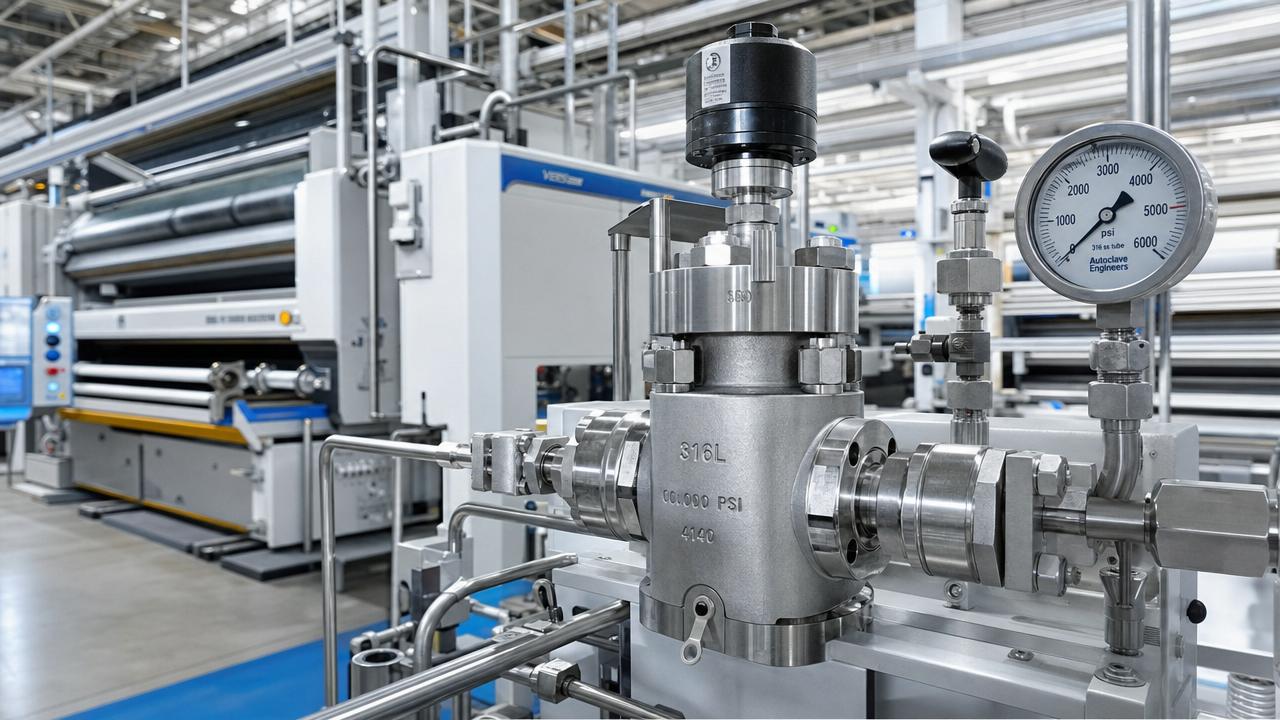
[Image 01: Technical review of Ultra-High Pressure Valves for media compatibility, sealing design, and fatigue checks in industrial equipment]
Good specification work usually begins with five practical questions: what flows through the valve, how pressure behaves over time, how quickly the valve must respond, what failure mode is acceptable, and how expensive maintenance really is.
- Confirm actual media properties, not only the fluid name. Check viscosity, solids, moisture, corrosiveness, additives, and cleaning chemistry before selecting body, trim, seat, and seal materials.
- Verify full pressure profile, including start-up surge, pulsation, shock, and pressure decay. Many Ultra-High Pressure Valves fail from cycling stress rather than steady-state load.
- Match sealing design to leakage tolerance. A bubble-tight seat may be necessary for safety or precision, but it can raise wear, friction, response lag, and maintenance frequency.
- Check temperature together with pressure. Material strength, seal elasticity, lubricant behavior, and dimensional stability all shift when the process sees hot washdown or cold startup conditions.
- Review installation geometry early. Orientation, available wrench clearance, tubing stress, vibration, and support design can shorten service life even when the valve itself is correctly rated.
Why media compatibility deserves extra attention
Media incompatibility rarely announces itself on day one. It often appears later as seal swelling, sticking, slow actuation, unstable cracking pressure, or particle generation.
In paper-based manufacturing, that risk can show up in hydraulic units, coating circulation, wash systems, steam service accessories, and specialty high-pressure cleaning loops.
If additives, recycled-water contaminants, or aggressive cleaning agents are involved, ask for chemical resistance data tied to the exact concentration and temperature range.
Look beyond catalog ratings and ask how the valve survives real duty
Catalog pressure ratings are useful, but they do not describe fatigue behavior, seat wear pattern, or actuator stability under repeated cycling.
That is especially relevant where machines run fast and continuously, such as corrugated board lines, folder gluers, or digital printing platforms with high uptime expectations.
- Ask for cycle-life evidence under comparable duty. A pressure test certificate alone does not prove long-term reliability in frequent-open, frequent-close, or pulsating service.
- Check response repeatability, not just response speed. Stable opening and closing behavior matters more than peak speed when process accuracy and synchronization are critical.
- Review contamination tolerance. Small particles, degraded seal fragments, or upstream wear debris can damage seats and guidance surfaces inside Ultra-High Pressure Valves.
- Confirm traceability of wetted parts and pressure-boundary materials. This simplifies root-cause work later and reduces uncertainty during audits or safety reviews.
- Request failure-mode details. It is important to know whether the valve tends to leak externally, pass internally, stick shut, drift, or lose control stability under wear.
A quick note on fatigue and pulsation
High static pressure is only part of the story. Repeated pressure waves can be more damaging than a steady load.
Where pumps, accumulators, fast solenoids, or reciprocating equipment are present, ask for guidance on pulsation damping and fatigue limits for the exact valve configuration.
Check how the valve interacts with the full machine system
A technically sound valve can still behave poorly if the surrounding system is overlooked.
This is common in integrated machinery, where controls, tubing layout, filtration, thermal drift, and motion timing all affect Ultra-High Pressure Valves in practice.
- Verify upstream filtration level and maintenance discipline. Clean fluid assumptions often fail in real plants, especially during commissioning, repairs, or media changeovers.
- Review control logic and sensor feedback together. Valve performance can appear unstable when the real issue is delayed feedback, poor tuning, or noisy pressure signals.
- Check connection standards and torque requirements carefully. Thread mismatch, improper make-up, or over-tightening can create leaks and hidden stress concentrations.
- Plan for safe isolation and depressurization. High-pressure service needs clear procedures, not just hardware, to protect maintenance quality and restart consistency.
- Estimate spare strategy before approval. If lead time is long, a lower-priced valve may create a much higher operational risk during unplanned stoppages.
Where this shows up in print and paper systems
In industrial digital printers, pressure consistency can influence jetting stability, cleaning effectiveness, and ink supply behavior. Small fluctuations can turn into visible print defects or nozzle reliability issues.
On corrugated lines and post-press equipment, hydraulic and pneumatic subsystems depend on repeatable valve action. Unstable control can affect forming pressure, cutting precision, glue application timing, or machine synchronization.
In tissue machinery, washdown conditions, long shifts, and hygiene-driven maintenance routines can expose sealing materials to tougher chemical and thermal combinations than initial specifications assume.
Common misses that create expensive problems later
A few issues come up again and again during failure reviews. Most are preventable with a better front-end check.
- Do not assume test media equals process media. Water-based validation may hide problems that appear with oils, solvents, slurries, or additive-rich recirculating fluids.
- Do not ignore temperature swings during shutdown and cleaning. Many sealing issues begin during transient conditions, not during normal production hours.
- Do not compare Ultra-High Pressure Valves only by purchase price. Service interval, leakage risk, downtime exposure, and spare availability often matter more.
- Do not overlook external loads from piping and vibration. A strong valve body cannot compensate for poor support design or misaligned installation.
- Do not approve a valve without documentation depth. Material certificates, pressure test records, seal details, and installation limits should be easy to review.
A practical way to compare options
When two valves look similar, compare them using a weighted view: media compatibility, fatigue evidence, leakage class, response repeatability, maintenance access, and supplier documentation quality.
That approach is usually more useful than comparing maximum pressure numbers alone. It also makes internal technical reviews easier to defend later.
What to confirm before final specification approval
Before release, it is worth doing one last structured pass. This helps catch hidden assumptions while changes are still cheap.
- Confirm valve selection against the worst credible operating case, not average production data. Design margin should reflect reality, including upset and restart conditions.
- Verify supplier recommendations in writing for installation, filtration, seal kits, and service intervals. Verbal assurances are difficult to use during future troubleshooting.
- Check whether qualification testing should include thermal cycling, pulse loading, or contamination exposure. These tests often reveal weaknesses earlier than standard pressure checks.
- Align valve choice with plant maintenance capability. Even strong Ultra-High Pressure Valves underperform if service procedures or spare parts are unrealistic.
- Document acceptance criteria clearly: allowable leakage, response tolerance, pressure hold, and inspection interval. Clear criteria reduce argument and speed up commissioning.
For IPPS-related industrial environments, this final step is especially valuable because uptime, quality, and sustainability goals are increasingly linked. A poor valve choice can ripple into waste, scrap, energy loss, and avoidable service events.
The safest path is simple: treat Ultra-High Pressure Valves as system components, not isolated parts. Check media, cycling, sealing, control interaction, and maintainability together.
If those points are verified before specification release, the final selection is far more likely to support stable operation, cleaner troubleshooting, and lower lifecycle cost.
As a next step, build a one-page internal review sheet using the checks above and apply it to every shortlisted valve. That small habit usually prevents the biggest specification mistakes.
Industry Briefing
Get the top 5 industry headlines delivered to your inbox every morning.
Recommended News