
Paper Converting Equipment Downtime Risks Explained
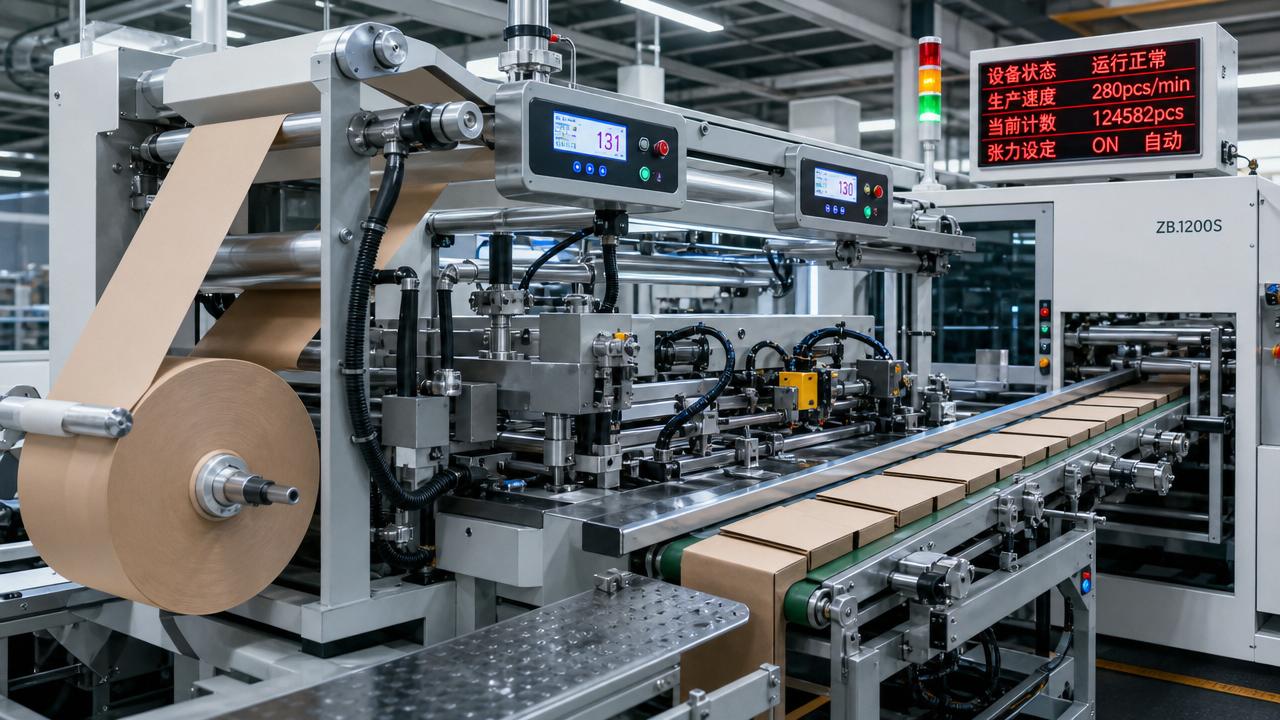
Unplanned stoppages in paper converting equipment rarely begin with a dramatic breakdown. More often, downtime starts with small instability signals that grow under production pressure.
A slight web wander, inconsistent glue laydown, a delayed sensor response, or rising drive temperature can quickly affect yield, schedule reliability, and carton or tissue quality.
As packaging demand becomes faster, more customized, and more sustainability-driven, paper converting equipment must run with tighter tolerances than before.
That shift changes maintenance priorities. The main issue is no longer only fixing failures, but identifying downtime risks early enough to protect throughput and delivery confidence.
Downtime risks in paper converting equipment are becoming more interconnected
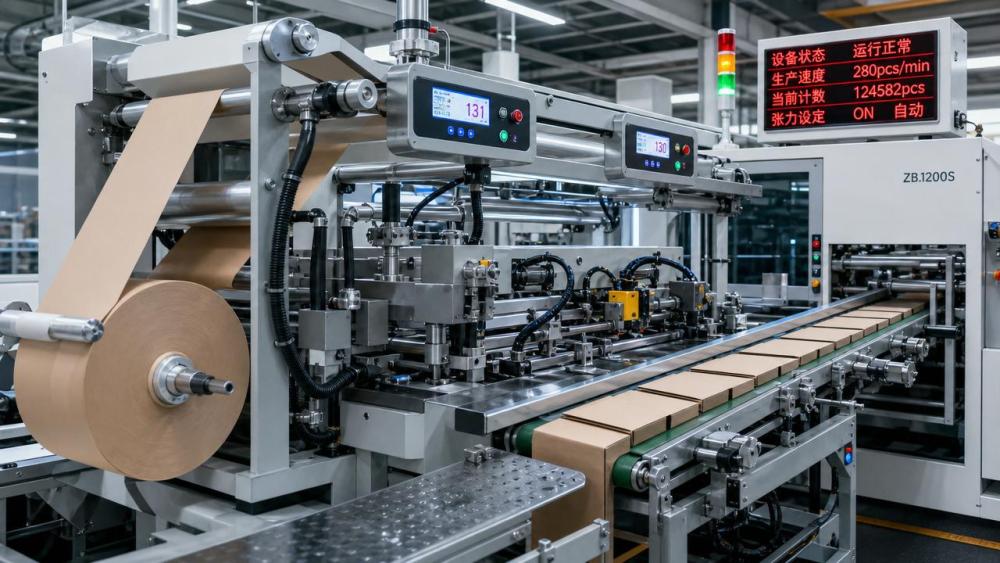
In modern converting lines, mechanical wear, control logic, materials variation, and operator adjustments now interact more closely than in older setups.
A single fault can trigger multiple losses. Web tension instability may cause registration drift, adhesive defects, jam events, and extra waste within minutes.
This is especially true for corrugated converting, folding-gluing, die-cutting, rewinding, and tissue processing lines running at higher speeds and shorter job cycles.
The practical meaning is clear. Paper converting equipment downtime risks should be assessed as a system issue, not only as isolated component failures.
Several market signals are changing how downtime should be judged
Shorter runs and mixed SKU production increase changeover frequency. Each restart creates fresh opportunities for alignment loss, glue imbalance, and sensor mismatch.
At the same time, recycled fiber variation and lightweight paper structures reduce process tolerance. Machines must hold control quality under less forgiving substrate conditions.
Automation also raises expectations. When a line is designed for minimal labor, a minor hidden fault can remain unnoticed until it becomes a line-wide stoppage.
These signals show why paper converting equipment maintenance is moving from reactive repair toward condition-based risk control.
The main drivers behind paper converting equipment downtime risks
Each driver can appear small in isolation. In practice, paper converting equipment stops usually emerge when two or three drivers overlap during speed-up or changeover.
Tension control remains the earliest warning point on many lines
Across printing, laminating, rewinding, and tissue converting, web tension is often the first stability indicator to move out of range.
If braking, dancer response, roller condition, or servo tuning weakens, the machine may still run, but quality loss starts before a hard stop appears.
Common tension-related signals
- Wrinkles near unwind or slitting zones
- Intermittent lateral web drift
- Inconsistent register during acceleration
- Telescoping or loose rewind formation
- Unexpected web breaks after roll changes
For paper converting equipment, these signs should trigger immediate inspection of roller surfaces, air pressure, dancer mechanics, load cells, and control parameter history.
Glue and bonding faults are no longer just quality issues
In folder gluers, tissue packaging units, and specialty paper converting equipment, adhesive inconsistency often develops into downtime, not only customer complaints.
Cold glue and hot melt systems both depend on stable viscosity, pressure, temperature, and nozzle cleanliness. Drift in any one factor can contaminate downstream sections.
Once build-up begins, sensors misread, products slip, belts foul, and clean-up time expands. The stop then becomes longer than the initial defect seemed to justify.
Bonding risk points worth watching
- Adhesive temperature drift during long production windows
- Nozzle clogging after idle periods or frequent starts
- Pump pulsation affecting glue bead uniformity
- Board dust or fiber contamination in bonding areas
- Mismatched adhesive settings after substrate changes
Sensors, controls, and drives now shape downtime more than before
As more paper converting equipment uses vision inspection, servo synchronization, and automated reject logic, hidden control errors carry greater production risk.
A contaminated photoeye or unstable encoder signal may look minor, but these faults often create repeated nuisance stops that erode line efficiency.
Drive components also deserve closer attention. Bearings, couplings, chains, and belts rarely fail without warning, but warning signs are often missed during busy output periods.
When vibration rises or servo load trends upward, paper converting equipment reliability is already weakening, even if finished packs still appear acceptable.
The operational impact spreads across multiple business links
Downtime in paper converting equipment affects more than hourly output. It also changes waste ratios, maintenance cost timing, spare part urgency, and delivery predictability.
In corrugated packaging, repeated stops can distort board moisture balance and stacking quality. In tissue lines, stoppages may affect embossing consistency and final roll geometry.
In post-press operations, unstable starts often increase make-ready scrap. That is especially costly when premium finishing or personalized work is involved.
- Production planning becomes less accurate
- Customer lead times become harder to protect
- Energy use per accepted unit increases
- Consumable waste rises faster than expected
- Root-cause analysis becomes harder after repeated resets
The highest-value focus areas for maintenance attention
For daily control of paper converting equipment downtime risks, the strongest return usually comes from a small number of disciplined checks.
- Trend web tension behavior during acceleration, deceleration, and roll change events
- Verify glue temperature, pressure, and application repeatability by shift
- Clean and validate sensors before nuisance stops become recurring
- Track vibration, heat, and load changes on motors and drive elements
- Compare stoppage data with substrate type, speed, and changeover timing
- Separate chronic micro-stops from major breakdowns in reporting logic
- Review wear parts by actual condition, not only calendar interval
This approach helps paper converting equipment teams move from symptom chasing to pattern recognition.
A practical way to judge response priority
The next step is building a risk map around real stoppage patterns
The best way to reduce paper converting equipment downtime is to map failures by trigger, not only by damaged part number.
Group events around tension, bonding, sensing, drive wear, substrate variation, and changeover timing. Then rank them by frequency, waste impact, and restart difficulty.
That structure reveals where prevention will outperform repair. It also supports smarter spare planning, better parameter control, and more stable production windows.
For any operation running paper converting equipment, downtime risk is now a strategic performance issue. Early signals are available. The value comes from acting before the stop arrives.
Industry Briefing
Get the top 5 industry headlines delivered to your inbox every morning.
Recommended News