
Industrial Equipment CE Standards: Common Compliance Gaps to Check
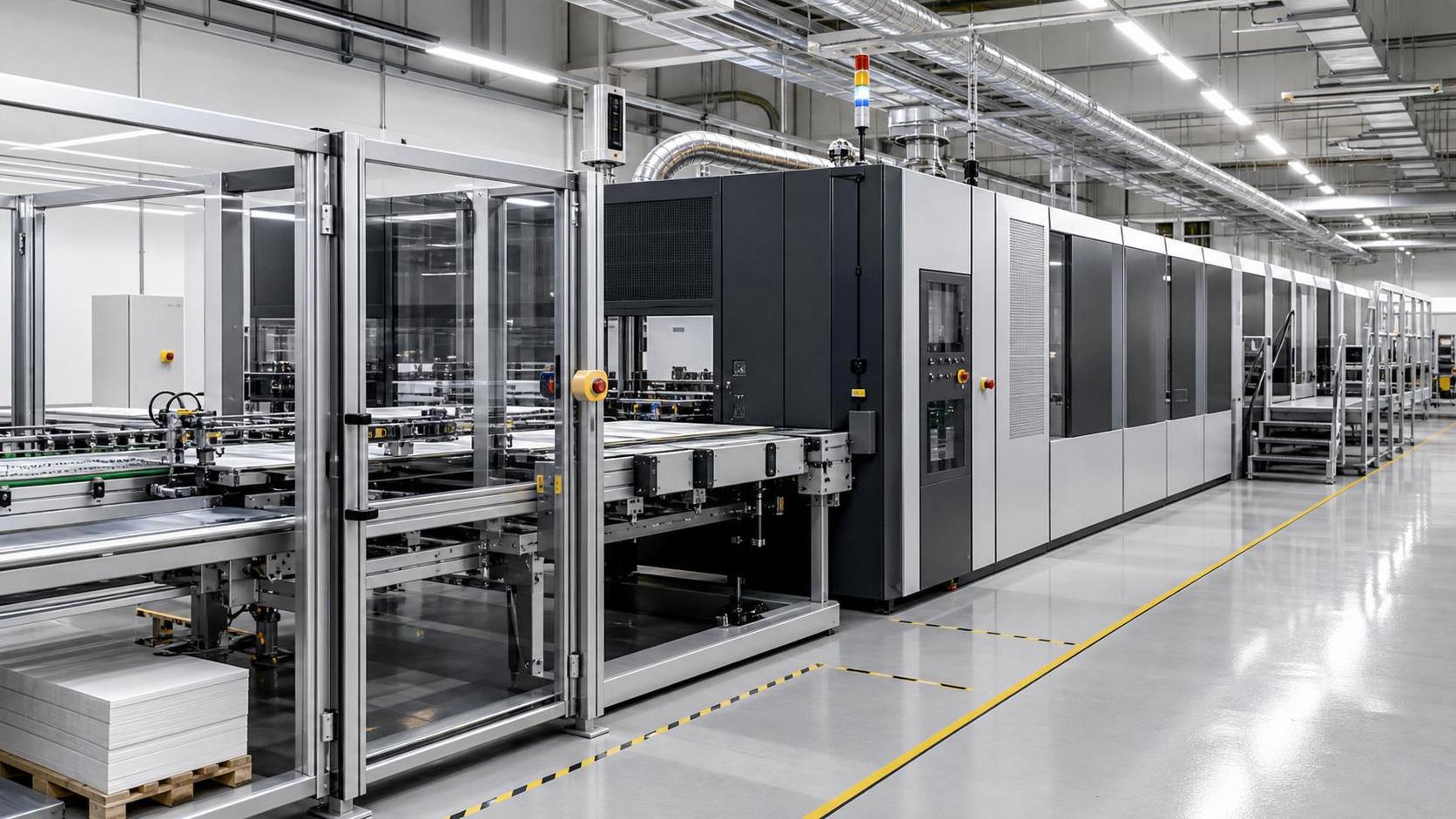
Industrial equipment CE standards are often discussed near delivery, yet the real business impact appears much earlier. In printing, corrugation, post-press, and tissue converting projects, CE compliance shapes design choices, supplier coordination, installation methods, and startup timing.
That matters even more in fast-moving packaging markets. Equipment now combines higher speed, tighter automation, remote diagnostics, energy controls, and traceability functions, which means common compliance gaps can spread across mechanics, electrics, software, and documentation.
For operations tied to e-commerce packaging, sustainable paper conversion, and digital production flexibility, delays at the CE stage are rarely administrative. They usually point to missing risk decisions made earlier.
Why CE standards deserve early attention
In practical terms, industrial equipment CE standards are the framework used to show that machinery placed on the EU market meets essential health, safety, and related compliance expectations.
The label on the machine is only the visible end. Behind it sits technical documentation, risk assessment, design evidence, validation records, operating instructions, and a declaration that the complete machine conforms.
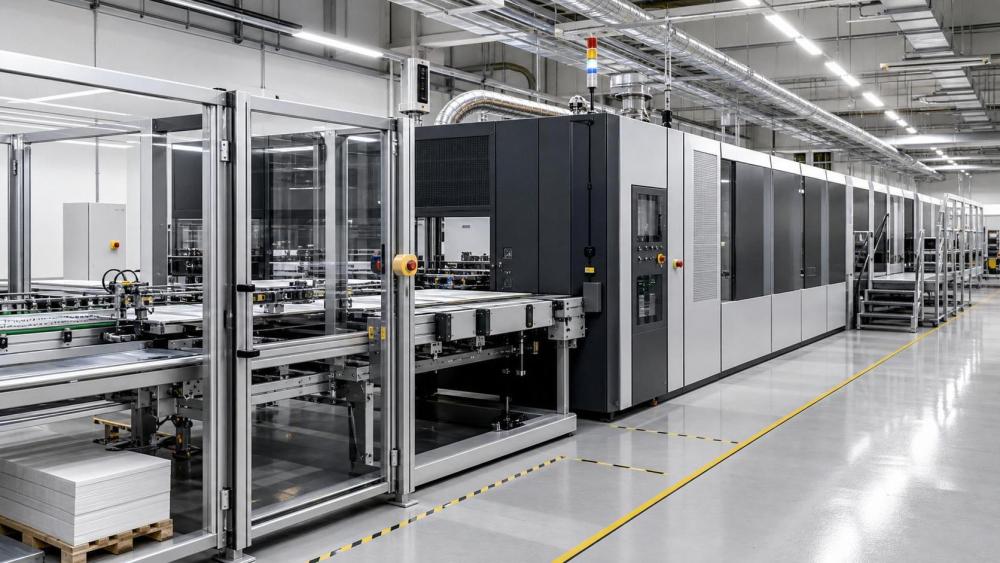
In IPPS-tracked sectors, this becomes complex quickly. A digital printer may combine motion systems, UV curing, software interlocks, web handling, and operator access points in one line. A corrugator adds heat, steam, long conveying sections, and tension-sensitive zones.
The same pattern appears in die-cutting, folding-gluing, and tissue lines. The faster and more integrated the process, the less room there is for vague compliance assumptions.
Where projects most often go wrong
Most CE setbacks do not come from one dramatic failure. They come from several small omissions that only become visible during factory acceptance, site installation, or final document review.
The machine boundary is unclear
This is one of the most common issues in multi-vendor projects. Teams know who supplied each module, but not always who owns compliance for the integrated line.
A standalone printer, feeder, stacker, robot palletizer, and dust extraction unit may become one functional assembly. If interfaces are not defined, gaps appear in guarding, emergency stop logic, and final declarations.
Risk assessment is generic
Some suppliers reuse broad templates. Those documents may mention crushing, cutting, and electrical shock, but miss real operating conditions such as web breaks, glue contamination, jam clearing, or reel changeovers.
For industrial equipment CE standards, a useful risk assessment must reflect the actual machine, actual access points, and actual intervention tasks across setup, cleaning, maintenance, and restart.
Safety functions are not validated
Interlocks, light curtains, safe torque off, and emergency stop circuits are often installed correctly but poorly evidenced. Validation reports may be incomplete, or software changes may not be reflected in the final safety file.
This is especially sensitive on high-speed lines where stopping distance matters. A guard that opens properly is not enough if the hazard remains reachable before motion stops.
Documentation trails are fragmented
Industrial equipment CE standards rely heavily on traceable records. Drawings, wiring diagrams, manuals, declarations, and component certificates often sit across different suppliers and revision levels.
When the document pack does not match the installed machine, approval slows down. In serious cases, a technically safe machine still cannot be released smoothly.
High-risk gaps in print and paper machinery
The print and paper sector has several recurring exposure points. They deserve closer checking because they combine speed, heat, sharp tooling, automation, and frequent operator intervention.
These examples show why industrial equipment CE standards cannot be isolated from process engineering. The real issue is not paperwork volume. It is whether the compliance file reflects how the machine behaves in production.
Signals worth checking before commissioning
Several warning signs appear before final approval. Spotting them early can prevent expensive rework at the site stage.
- The supplier says CE will be handled later, but cannot show a machine-specific risk file.
- Electrical diagrams and PLC safety descriptions are on different revision levels.
- Guarding design changes after layout approval, yet no updated validation is issued.
- Operating manuals describe normal production, but not clearing jams or safe maintenance access.
- Line integrator and equipment vendors disagree on who signs the final declaration.
- Site modifications are treated as minor, even though they affect safety functions or machine linkage.
In real projects, these are stronger indicators than a late promise that certification is “under control.” Industrial equipment CE standards depend on alignment, not confidence alone.
How to build compliance into the project flow
The most effective approach is to treat CE work as part of project governance. That means linking compliance reviews to engineering milestones instead of waiting for shipment.
During specification
Define the intended use, machine boundaries, utilities, linked equipment, and expected intervention tasks. Require document deliverables and validation responsibilities in the purchase package.
During design review
Check guarding concepts, access zones, lockout points, emergency stop architecture, and safety performance assumptions. Review these before steel is cut and cabinets are finalized.
During FAT and SAT
Use test scripts that reflect real interventions. Include start-up, stop-time checks, interlock defeat resistance, fault recovery, and line-to-line coordination, not only nominal production runs.
During final handover
Confirm that the technical file, declaration, manuals, markings, and installed configuration match each other. A complete package should describe the machine as delivered, not as originally quoted.
Why this is becoming more relevant now
The pressure on modern paper-based manufacturing is changing the compliance landscape. Shorter runs, higher personalization, labor constraints, and sustainability targets push equipment toward more automation and tighter data integration.
IPPS follows this shift closely across digital print systems, corrugation process lines, precision finishing equipment, and tissue converting platforms. As machines become smarter, industrial equipment CE standards increasingly touch software behavior, connected modules, and lifecycle updates.
The parallel rise of green packaging also matters. New fiber formats, glue-reduction concepts, and paper-replacing-plastic applications can introduce altered handling, feeding, bonding, and waste extraction risks that legacy compliance templates do not cover well.
A practical checklist for the next review
Before the next equipment gate review, it helps to test a few direct questions against the project file.
- Is the complete machine clearly defined, including third-party modules and site interfaces?
- Does the risk assessment cover cleaning, setup, maintenance, jams, and restart conditions?
- Have all safety functions been validated on the final hardware and software revisions?
- Do manuals and labels match the installed operating reality?
- Is there one accountable owner for the final CE conformity package?
- Have late modifications been reviewed for compliance impact, not only schedule impact?
Those questions keep industrial equipment CE standards tied to project control, which is where they are most valuable. They help reduce approval surprises, protect startup timing, and make future upgrades easier to manage.
The next sensible step is to review one active line against these gaps before commissioning pressure peaks. In most cases, the fastest gains come from clarifying machine boundaries, validating safety functions, and tightening the final document trail.
Industry Briefing
Get the top 5 industry headlines delivered to your inbox every morning.
Recommended News