
CE Compliance Checks for Industrial Equipment Sourcing
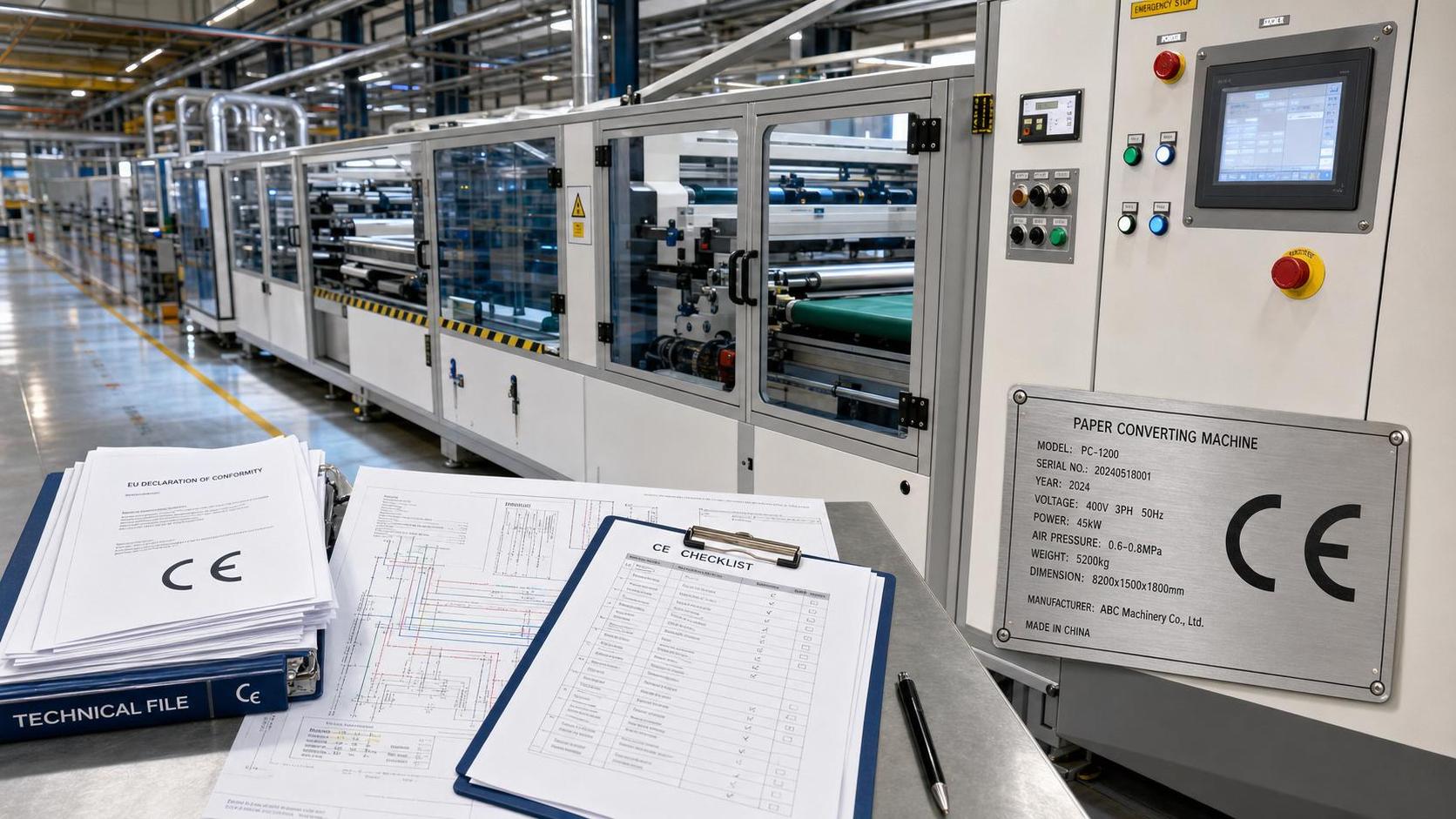
Why does CE compliance matter so early in industrial equipment sourcing?
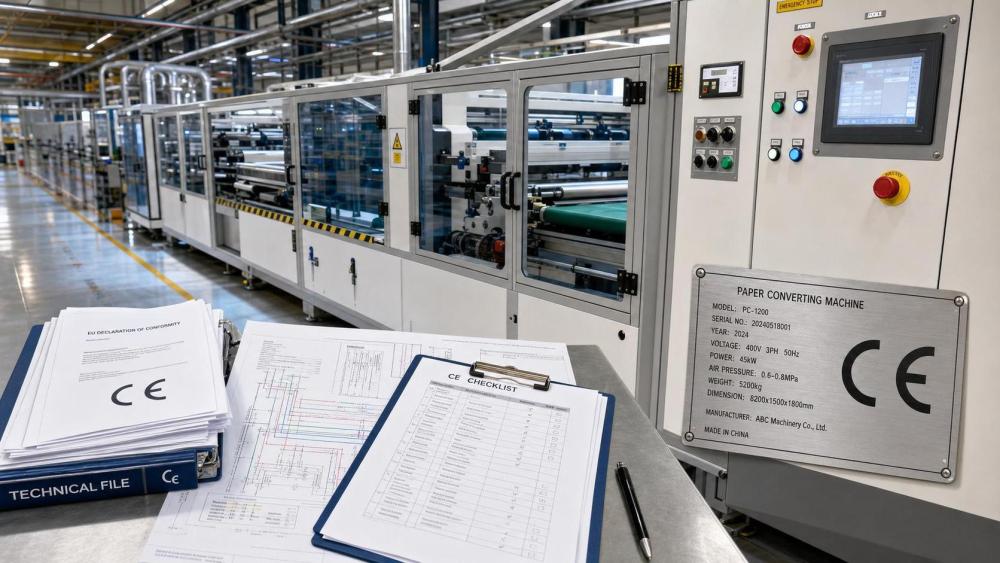
In industrial equipment sourcing, CE compliance should start before price talks become serious. Waiting until shipment often turns a manageable review into a customs, safety, and liability problem.
That is especially true for digital printers, corrugated board lines, die-cutting systems, folder gluers, and tissue machinery. These machines combine motion, heat, pressure, software, and operator interaction.
A practical industrial equipment sourcing reference CE compliance process helps confirm whether a machine is legally marketable, technically documented, and realistically safe for commissioning.
The point is not paperwork for its own sake. The real value is avoiding hidden redesign, missing guarding, invalid declarations, and unclear responsibility between integrator and builder.
In print and paper converting, risk often sits in details. Web tension zones, infeed pinch points, high-speed rotary sections, hot surfaces, glue systems, and access doors all need evidence-based review.
This is why many teams use an industrial equipment sourcing reference CE compliance checklist as a gate in technical evaluation, not as a final document collection exercise.
When is a CE mark not enough?
A CE mark on the nameplate is only the starting signal. It does not prove that the machine, line, or partly completed assembly has been assessed correctly.
More common problems appear in the supporting file. The Declaration of Conformity may cite outdated directives, omit harmonized standards, or describe a model different from the quoted machine.
For complex lines, another issue appears. One supplier may CE-mark the main section, while conveyors, stackers, glue units, or robotics are treated as separate packages with unclear integration duties.
That gap matters because line-level hazards often emerge at interfaces. A safe die-cutter and a safe feeder do not automatically create a safe production line.
A stronger industrial equipment sourcing reference CE compliance review checks whether the legal status matches the real delivery scope. It also checks whether safety logic stays valid after installation, guarding access, and software setup.
In practice, ask for evidence, not slogans. If documents arrive slowly, look generic, or avoid machine serial references, the sourcing risk is already visible.
The first document set should answer these points
- Exact machine description, model, serial reference, and delivery boundaries.
- Declaration of Conformity or Declaration of Incorporation, as applicable.
- Risk assessment summary linked to actual hazards and protective measures.
- Electrical drawings, safety circuit architecture, and emergency stop logic.
- Operating manual with installation, maintenance, residual risk, and lockout instructions.
- List of standards used, especially machinery, electrical, guarding, and control system standards.
Which CE checks are most useful before placing an order?
The most useful checks are the ones that expose redesign risk early. A late document request rarely changes the machine. An early technical question often does.
For that reason, industrial equipment sourcing reference CE compliance should combine document review with application review. The machine must fit both legal requirements and site reality.
The table below works well as a compact pre-order screening tool.
In actual projects, the strongest warning sign is inconsistency. When the quotation, drawing package, and declaration do not describe the same machine, further checking is necessary.
This is where sector intelligence becomes useful. Sources such as IPPS help connect document review with machine reality across printing, corrugation, post-press, and tissue processing workflows.
How do CE risks differ across print, corrugation, post-press, and tissue lines?
The legal framework is shared, but risk patterns are not. An industrial equipment sourcing reference CE compliance review should reflect how each machine family actually operates.
Industrial digital printers often raise questions about moving carriages, ink systems, drying modules, and software-linked safety behavior. Fast changeovers can also create risky operator access routines.
Corrugated board lines add steam, web tension, large rotating sections, and long machine footprints. Interface guarding and emergency stop zoning become more important than a single document set suggests.
Die-cutting and stamping machines concentrate force and repetitive motion. Access during make-ready, tool change, and waste stripping deserves close attention.
Automatic folder gluers may look simpler, but high-speed folding zones, compression sections, glue application units, and jam clearing tasks create recurring exposure.
Tissue machinery combines rewinding, embossing, cutting, packaging, and hygiene expectations. The CE file should address both operator safety and safe intervention during continuous production recovery.
The useful lesson is this: industrial equipment sourcing reference CE compliance should follow process physics, not just paperwork categories.
What are the most common mistakes during CE review?
One common mistake is assuming the supplier owns every compliance task. In line integration, responsibilities can split across builder, importer, installer, and final assembler.
Another mistake is reviewing only declarations. A declaration without usable manuals, drawings, and risk logic offers little support during inspection or incident investigation.
A third problem appears after modification. Extra guarding, local sensors, remote support tools, or speed upgrades may alter the original safety concept.
There is also a timing issue. Teams sometimes push CE review to the pre-shipment stage, when commercial leverage is lower and redesign options are expensive.
More subtle mistakes happen with language and usability. Instructions may exist, yet fail to explain cleaning access, blade changes, interlock resets, or residual risks in normal service conditions.
A disciplined industrial equipment sourcing reference CE compliance process reduces these errors by linking review milestones to quotation, FAT, installation, and acceptance.
Useful red flags during supplier evaluation
- Generic declarations with no serial or configuration reference.
- No clear answer on who performs line integration conformity.
- Risk assessment unavailable until after full payment.
- Manuals focused on operation, but weak on maintenance hazards.
- Safety devices shown on drawings, but missing in quoted scope.
How should the final sourcing decision be made?
The final decision should balance machine performance, commercial terms, and CE readiness. A lower equipment price can disappear quickly if compliance gaps trigger retrofit, delay, or revalidation work.
A practical industrial equipment sourcing reference CE compliance decision usually asks three closing questions. Is the legal status clear? Is the technical file credible? Can the machine stay compliant after site integration?
If one answer remains uncertain, the contract should reflect that uncertainty. Hold points, document deadlines, FAT safety checks, and modification approval rules are worth stating clearly.
For complex print and paper projects, outside intelligence also improves judgment. IPPS is relevant here because it follows the operating realities behind modern printing, corrugation, converting, and tissue systems.
That context helps teams read beyond the CE mark itself. It becomes easier to judge whether the machine’s safety logic fits its speed, materials, tension behavior, and changeover pattern.
In the end, industrial equipment sourcing reference CE compliance works best as a decision framework. Build the review around real hazards, complete documentation, and integration responsibility before the purchase becomes difficult to change.
The next step is straightforward: define the machine scope, request the first CE evidence package, compare it against site conditions, and close responsibility gaps before contract release.
Industry Briefing
Get the top 5 industry headlines delivered to your inbox every morning.
Recommended News