
Sustainable Paper Packaging: Key Trade-Offs Before Switching
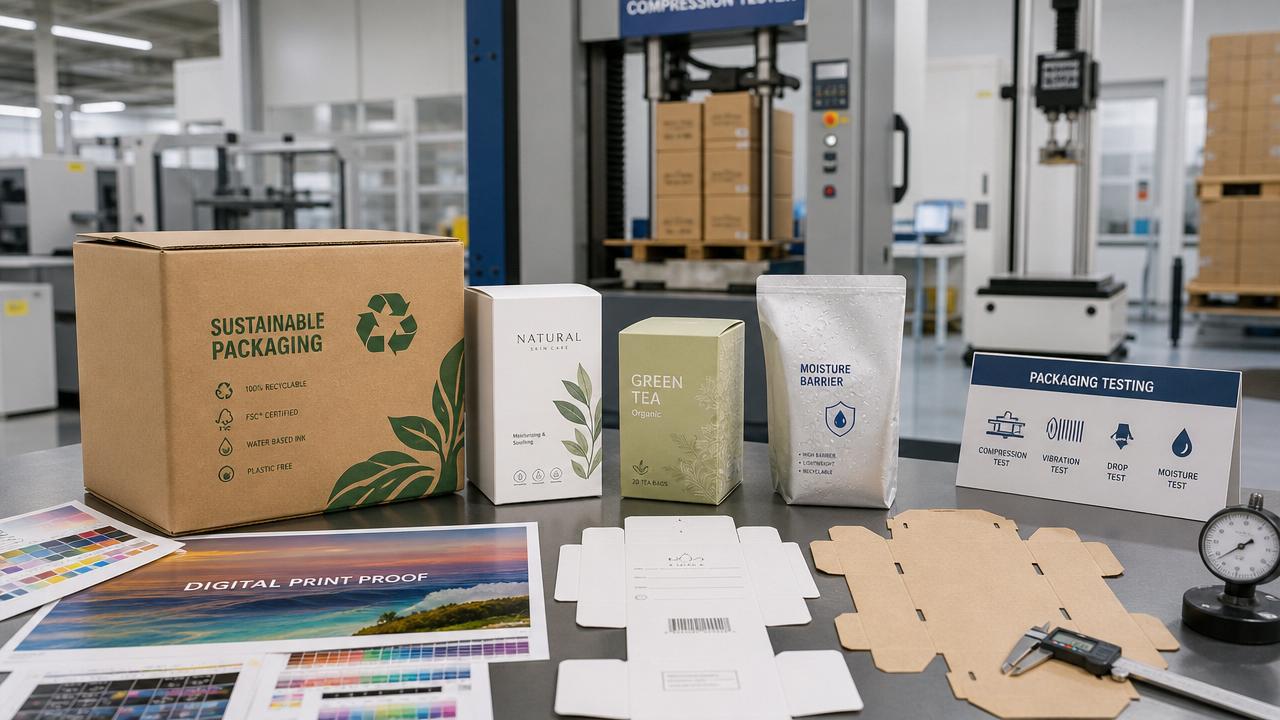
Sustainable paper packaging can improve credibility, support compliance, and answer rising pressure from retailers, regulators, and end users.
Yet switching too quickly can create failures in print quality, box strength, moisture tolerance, machine uptime, and freight performance.
For industrial operations, sustainable paper packaging is not only a material choice. It is a system decision involving substrates, inks, corrugation, converting, logistics, and data-driven quality control.
A sound evaluation compares sustainability targets with real production conditions before any broad rollout begins.
Why sustainable paper packaging decisions vary by application scenario
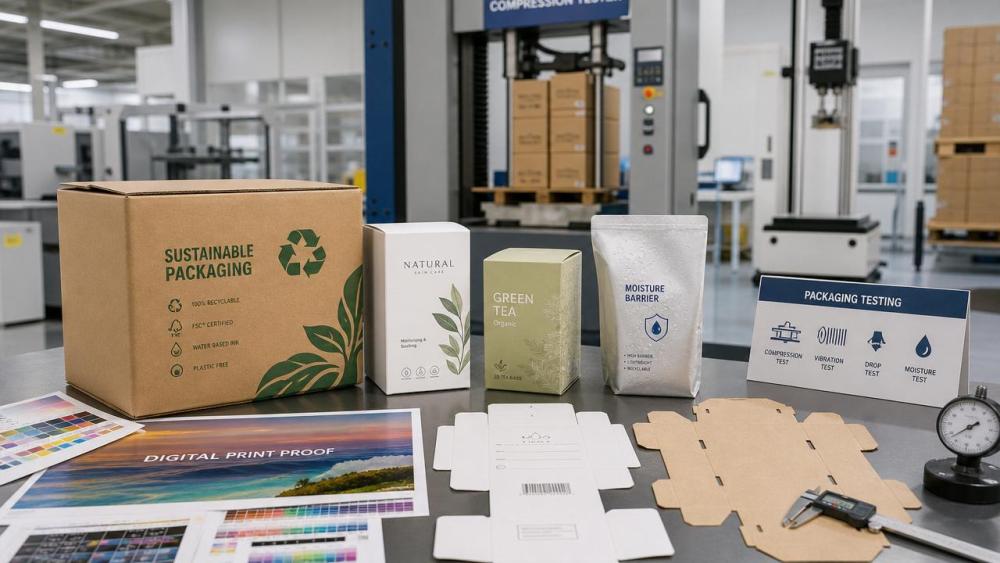
Not every packaging line faces the same constraints. E-commerce parcels, premium cartons, frozen food sleeves, and tissue wraps each demand different performance balances.
That is why sustainable paper packaging should be judged by scenario, not by broad claims about recyclability or fiber content alone.
In practical terms, the main trade-offs often appear in five areas:
- compression strength versus lightweighting
- print vibrancy versus ink absorption
- moisture resistance versus recyclability simplicity
- machine speed versus board variability
- lower plastic use versus higher total process cost
For sectors linked to digital print, corrugated converting, folder gluing, and tissue processing, these trade-offs directly affect yield, setup time, and claims risk.
Scenario 1: E-commerce shipping needs sustainable paper packaging that protects through rough logistics
This scenario prioritizes drop resistance, stacking strength, and dimensional consistency. Lightweight papers may reduce material use, but weak flute structures can increase transit damage.
Sustainable paper packaging for parcel shipping should be tested with real fulfillment conditions, not only laboratory board data.
Core judgment points
- Can lighter liners maintain edge crush strength?
- Will recycled fiber increase warping under humidity changes?
- Can digital print stay sharp on rough corrugated surfaces?
- Will box geometry remain stable on high-speed folder gluers?
In this setting, the best sustainable paper packaging often combines optimized flute profiles, controlled moisture, and print process tuning rather than simply increasing recycled content.
Scenario 2: Retail and premium packs need sustainable paper packaging without losing shelf impact
Retail packaging lives under different rules. Visual quality, tactile finish, die-cut precision, and color consistency influence commercial performance as much as sustainability claims.
Here, sustainable paper packaging must support coatings, embossing, hot stamping, and variable graphics without cracking or excessive dusting.
Core judgment points
- Does the substrate hold fine print and barcodes cleanly?
- Can decorative finishing remain compatible with recycling streams?
- Will fiber variation affect creasing and die-cut accuracy?
- Can lower basis weight still deliver a premium feel?
For branded cartons, sustainable paper packaging works best when design teams and converting specialists validate aesthetics together with line efficiency.
Scenario 3: Food, chilled, and humid-use formats face barrier and safety trade-offs
Moisture, grease, condensation, and temperature shifts can quickly expose weak assumptions. A paper format that performs well in dry distribution may fail in cold-chain use.
Sustainable paper packaging in these applications often requires coatings, laminations, or molded structures, which can complicate recyclability and repulpability.
Core judgment points
- How much barrier performance is truly necessary?
- Can water-based or dispersion barriers replace multilayer films?
- Will sealing, folding, or gluing change after material substitution?
- Are compliance and migration standards fully covered?
The most effective route is often selective barrier engineering, applied only where the use case genuinely demands it.
Scenario 4: High-volume FMCG and tissue-related formats depend on converting stability
In fast-moving production, small material changes can create major uptime losses. Curl, dust, tensile variability, and bonding inconsistency all hurt output.
Sustainable paper packaging for wraps, cartons, and secondary packs must therefore be judged by machine behavior as much as by sustainability labels.
Core judgment points
- Will web tension remain stable at target speeds?
- Do fibers and coatings affect glue open time?
- Can embossing, rewinding, or folding stay within tolerance?
- Will increased breakage offset material savings?
A successful shift usually depends on trial data from actual equipment, including printers, die-cutters, folder gluers, and tissue converting systems.
How scenario requirements differ across sustainable paper packaging uses
Practical fit recommendations before switching to sustainable paper packaging
A better transition starts with structured screening instead of broad substitution. Use a staged method that connects ESG goals with process reality.
- Map the exact use environment, including humidity, compression, handling, and display needs.
- Compare substrate options by total performance, not sustainability claims alone.
- Run print and converting trials on production-speed equipment.
- Measure waste, downtime, glue use, and quality rejects during pilot runs.
- Verify certification, traceability, and regional compliance requirements.
- Scale only after logistics and shelf-life validation are complete.
This approach keeps sustainable paper packaging aligned with operational stability and commercial expectations.
Common misjudgments when evaluating sustainable paper packaging
Several mistakes repeat across projects and often delay results.
- Assuming recycled content automatically improves overall sustainability outcomes
- Ignoring machine settings after changing board stiffness or surface energy
- Evaluating raw material cost without including waste and damage rates
- Overlooking barcode readability and ink behavior on porous surfaces
- Treating moisture resistance as optional in variable climates
- Using sustainability language unsupported by traceable data
The strongest sustainable paper packaging programs avoid these traps by linking material science, converting performance, and lifecycle evidence.
A smarter next step for sustainable paper packaging decisions
The switch to sustainable paper packaging works best when decisions are made through scenario testing, equipment data, and compliance review together.
For operations connected to industrial digital printers, corrugated board lines, die-cutting systems, folder gluers, and tissue machinery, material changes should never be isolated from process conditions.
A practical next move is to build a short evaluation matrix covering substrate strength, print response, converting efficiency, moisture behavior, certification status, and total landed cost.
That framework turns sustainable paper packaging from a broad ambition into a controlled and scalable improvement path.
Industry Briefing
Get the top 5 industry headlines delivered to your inbox every morning.
Recommended News